


If there’s one topic that’s historically been the “final boss” for electric vehicle adoption in Australia, it’s towing. For years, the skeptics at the pub or on the job site have had one go-to line: “Yeah, it’s fast, but it can’t pull a caravan to the coast, can it?”
Well, it’s February 2026, and that line is officially past its use-by date.
At EV evolution, we’ve watched the “towing barrier” crumble. Manufacturers have realized that for an EV to win in Australia, it doesn’t just need a massive screen and a fancy sunroof—it needs to pull a horse float, a boat, or a 22-foot caravan through the Great Dividing Range without breaking a sweat. Today, we’re looking at the heavy hitters: the BYD Shark and the Kia EV9, and answering the million-dollar question: Can they really handle the 3.5-tonne benchmark?
🦈 The BYD Shark: The Ute That Changed the Game
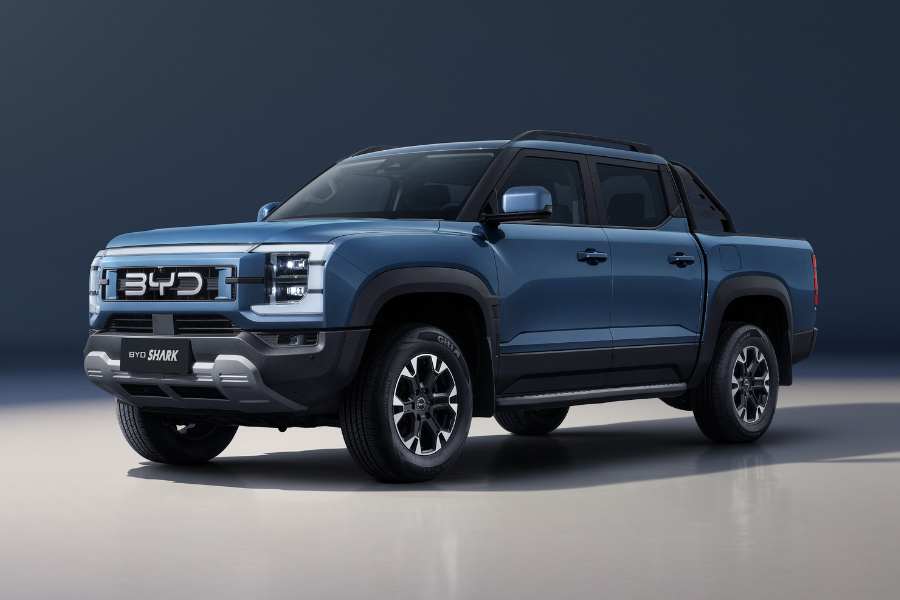
Let’s start with the most talked-about pickup of the year. The BYD Shark 6 (PHEV) was already a sales monster in 2025, but the 2026 update has changed the conversation entirely.
Early versions of the Shark 6 were critiqued for a 2,500kg braked towing capacity—fine for a jet ski, but a bit light for a heavy-duty tradie ute. However, the 2026 BYD Shark 6 2.0L Turbo upgrade has officially landed with a segment-matching 3,500kg braked towing capacity.
Why the BYD Shark Towing Capacity Matters
By swapping the 1.5L generator for a beefier 2.0L turbocharged unit and upgrading the front electric motor to 200kW (combined system output now sitting at a massive 345kW), BYD hasn’t just added numbers to a brochure. They’ve addressed the “sustained pull” problem.
When you’re EV towing in Australia, the instant torque is your best friend. Electric motors provide peak torque from 0 RPM, meaning that “lugging” feeling you get in a diesel when trying to pull a trailer out of a boat ramp is a thing of the past. The Shark 6 feels effortless off the mark, and with the new 2.0L engine acting as a high-output generator, the “battery anxiety” on a long haul is significantly reduced.
Before you hitch up, it’s worth checking the math. Running a 3.5-tonne load will hit your efficiency. Use our EV fuel savings calculator to see how much you’re still saving compared to a Ford Ranger or Toyota HiLux diesel—even when pulling a heavy load.
🇰🇷 The Kia EV9: The Family Hauler That Actually Hauls
If the Shark is for the tradies, the Kia EV9 is for the modern Aussie family that refuses to compromise. While it’s a pure BEV (Battery Electric Vehicle), the EV9 has set a new standard for SUV utility.
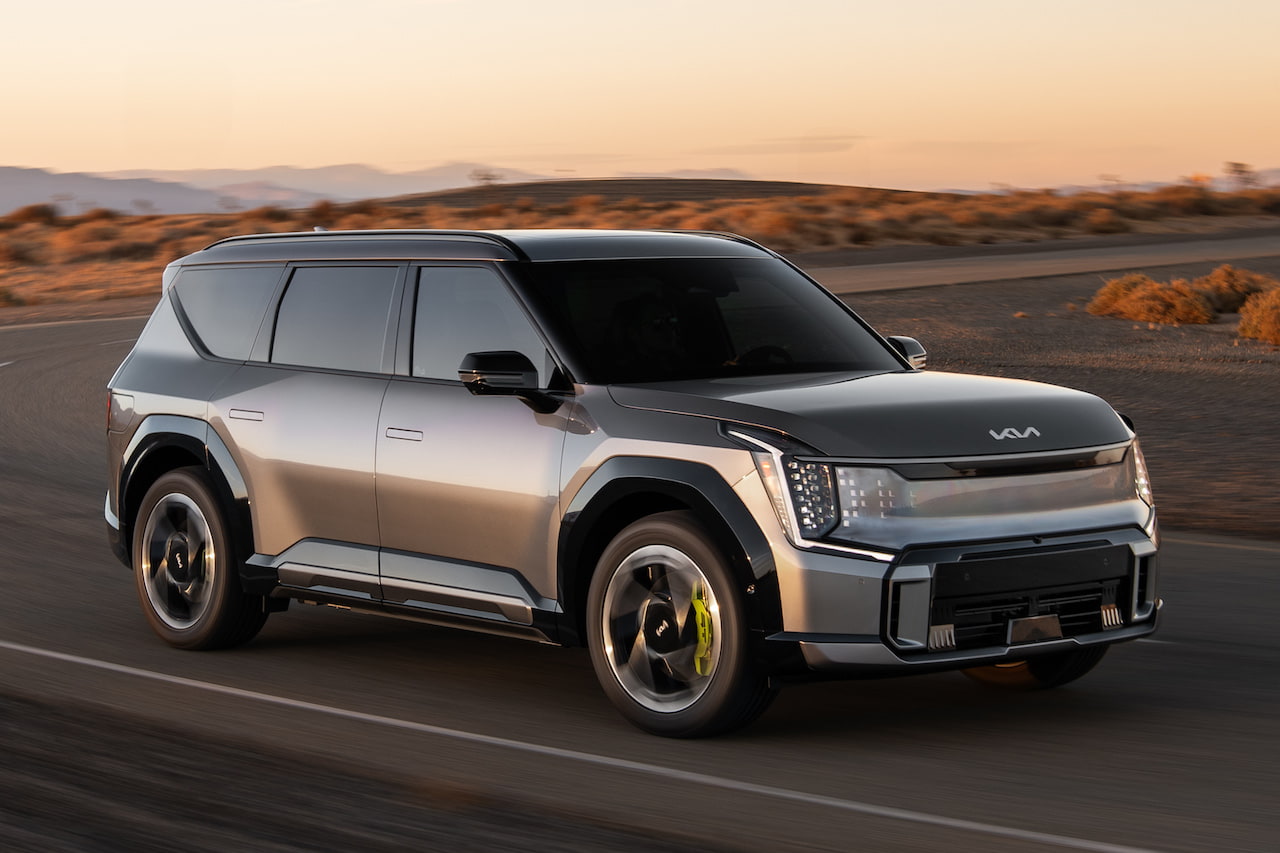
The 2026 Kia EV9 (specifically the Earth and GT-Line trims) offers a 2,500kg braked towing capacity. While it’s not the 3.5-tonne limit of a dedicated ute, it’s more than enough for a standard camper trailer, a medium-sized caravan, or a couple of jet skis.
Torque is the “Secret Sauce”
The EV9 GT-Line produces 700Nm of torque almost instantly. In a petrol or diesel SUV, you’re waiting for the turbo to spool and the gears to downshift. In the EV9, you just push the pedal, and the horizon comes to you.
However, pure electric towing brings up the “Range Conversation.” Towing a large, non-aerodynamic box (like a caravan) can slash your real-world range by up to 40-50%. If your EV9 usually gets 500km, expect closer to 250km when hitched to a heavy load.
To plan your trip properly, jump into our EV charging time calculator to see how your pit stops will look when you need that 80% top-up in the middle of a trip.
🛣️ The Practicality of EV Towing in Australia (2026 Edition)
Towing with an EV in 2026 is a different experience than it was five years ago. The infrastructure has finally started to accommodate us.
Pull-Through Charging: The Real “Vibe Check”
In the past, the biggest headache for EV towing was the “unhitch dance.” Most chargers were designed like supermarket parking spots—you had to unhook your trailer just to get the cable to reach.
In 2026, networks like Evie and Tesla have rolled out “Pull-Through” bays at major highway hubs (like Goulburn, Tarcutta, and Coomealla). These allow you to pull in with your trailer attached, charge, and pull out—just like a traditional servo.
Before you head off, check the EV vibe check to find chargers that are “trailer-friendly.” There’s nothing worse than arriving at a charger with 5% battery only to realize you have to spend 15 minutes unhitching in the rain.
The Cost of the Tow
Electricity prices haven’t stayed still in 2026, and pulling 3 tonnes uses a lot of juice. To see what a full “tank” for your towing trip will cost, check out our EV charge cost tool. You might find that even with the increased consumption, charging an EV at a fast charger is still significantly cheaper than the $2.15/L “Premium Diesel” you’d be pumping into a traditional 4WD.
🥊 Electric Ute Towing Capacity: The Rivals
The BYD Shark isn’t the only dog in the fight. In 2026, the electric ute towing capacity race is heating up:
- LDV eTerron 9: This pure BEV ute has hit the 3.5-tonne towing milestone, making it a direct rival for those who want to ditch petrol entirely.
- Ford Ranger PHEV: Combining the legendary Ranger chassis with an electric boost, it also targets that 3.5-tonne sweet spot.
What makes the Shark stand out in this crowd is its “Dual Mode Off-road” (DMO) platform. It provides the best of both worlds: silent electric torque for the heavy lifting and a petrol backup for those deep outback trips where chargers are still scarce.
🤖 Still Have Towing Questions? Ask the Expert
Choosing between a 3.5t PHEV like the BYD Shark or a 2.5t pure electric beast like the Kia EV9 is a big call. Will the EV9’s range hold up on a trip to the Snowies with a full load? Can the Shark’s 2.0L engine actually keep the battery charged while pulling a 3-tonne van up a mountain?
Start the conversation with the EV evolution AI Agent. Our AI is the ultimate technical co-pilot for the Aussie explorer. It has all the latest 2026 towing data, real-world range degradation stats, and charging map info. You can ask it the tough questions:
- “Compare the 2026 BYD Shark and LDV eTerron 9 for towing 3 tonnes.”
- “How much range will my Kia EV9 lose if I tow a 1.5-tonne boat at 110km/h?”
- “Where are the trailer-friendly chargers on the Pacific Highway?”
- “What is the payload impact of the new 2.0L engine in the BYD Shark 6?”
The Final Word: The Myth is Busted
In 2026, “Electric” and “Towing” are no longer enemies. Whether it’s the massive torque of the Kia EV9 or the segment-matching 3.5-tonne capacity of the BYD Shark, the evolution is here.
Ready to hitch up and go? Head over to our EV fuel savings calculator to see how much more beer money you’ll have for your next trip, or ask our AI Agent to help you pick the perfect tow-ready EV today.
About EV Evolution
EV Evolution is Australia’s authoritative strategic platform for electric vehicle market, dedicated to providing a high-fidelity knowledge base for the next generation of drivers. In a year defined by the Federal statutory review of FBT exemptions and the rapid arrival of record-breaking affordable models, we serve as your professional co-pilot to ensure every automotive decision is data-driven and future-proof. Our EV Strategy Suite—including the EV Tax Savings Estimator, Vibe Check Tool, and 24/7 AI Strategy Agent—empowers young professionals and families to navigate complex technical and regulatory shifts with total transparency. At EV Evolution, we don’t just track the market, we provide the strategic roadmap for your transition to the new electric standard.
