



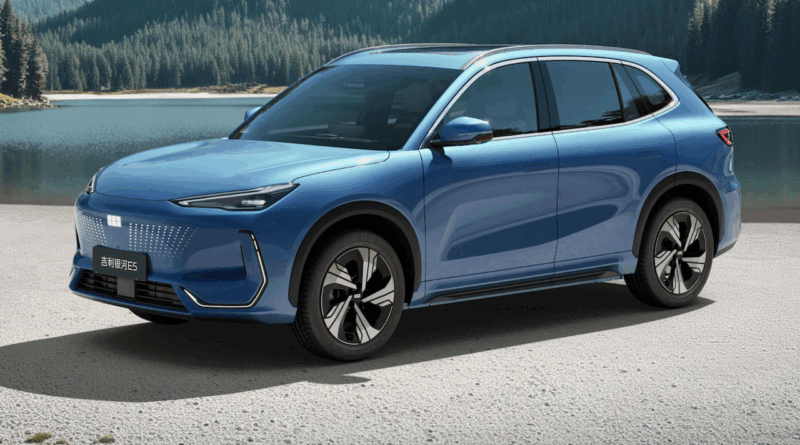
The arrival of a new automotive brand in Australia is always a moment of intense interest, but when that brand is Geely—the powerhouse parent company behind established names like Volvo, Polestar, and Lotus—and their debut vehicle is a sharply priced electric SUV, you know it’s time to pay attention. The 2025 Geely EX5, especially in its top-tier Inspire specification, is more than just another contender in the crowded mid-size SUV segment; it’s a statement of intent.
We’ve just completed a week navigating the urban sprawl and stretching the legs of the EX5 Inspire on Australian highways. While the entry-level Complete model grabs headlines with its ultra-competitive sub-$41,000 price point (before on-roads), the $44,990 Inspire is where the value proposition truly shines, piling on features that genuinely redefine what ‘premium’ means at this price.
💎 Premium Cabin Experience Redefines the Budget Segment
Step inside the EX5 Inspire, and you’re instantly transported into a cabin that feels like it belongs in a vehicle easily $15,000 to $20,000 more expensive. Geely has leveraged its group-wide experience to craft an interior that prioritises quality, comfort, and technology.
The first thing you notice is the sheer abundance of features. The Inspire variant takes the already well-equipped base model and adds a layer of genuine luxury. Forget basic heated seats; the EX5 Inspire includes ventilated and massaging front seats, a feature still rare in this segment. The front passenger even gets a reclining ‘lounge chair’ with an adjustable leg rest, a clever touch for those on long drives. The overall fit-and-finish is excellent, with soft-touch materials on the dash and doors, giving the cabin an upmarket, solid feel that rivals struggle to match at this price.
The tech is front-and-centre, dominated by a huge, crisp 15.4-inch central touchscreen and complemented by a clear 10.25-inch digital driver’s display. The Inspire also adds a 13.4-inch Head-Up Display (HUD), a safety and convenience feature that prevents you from taking your eyes off the road. Audio quality is boosted by a superb 1000W 16-speaker Flyme premium sound system, which includes speakers embedded in the front headrests for a truly immersive experience.
- Key Inspire Interior Upgrades:
- Ventilated and Massaging Front Seats
- 1000W 16-speaker Flyme Premium Audio
- 13.4-inch Head-Up Display
- Panoramic Sunroof
- 256-colour Ambient Interior Lighting
It’s not perfect, however. While the screen is bright and responsive, it controls too much of the car’s functionality. Simple tasks like adjusting the temperature require a screen interaction, although a welcome, large rotary dial for volume control offers a small reprieve. A critical note for Aussie buyers: Apple CarPlay and Android Auto were not available at launch, with Geely promising them via over-the-air (OTA) updates throughout 2025. This reliance on the native, somewhat convoluted Flyme operating system is the most significant user-experience flaw and something buyers should be aware of.
🔋 Performance, Range, and Charging for Australian Life
Underpinning the EX5 is Geely’s new GEA (Global Intelligent New Energy Architecture) platform. Both the Complete and Inspire variants utilise the same front-wheel-drive single-motor setup, producing a respectable 160kW of power and 320Nm of torque. This translates to a punchy and smooth 0–100km/h sprint of around 7.0 seconds, which is more than enough for city driving and merging onto the freeway.
The EX5 is fitted with a 60.2kWh Lithium Iron Phosphate (LFP) battery. This chemistry is known for its durability and safety, making it ideal for daily use.
| Model Variant | WLTP Range (Claimed) | DC Fast Charging Speed (Max) | 0-100 km/h (Claimed) |
| Complete | 430 km | 100 kW | 6.9 seconds |
| Inspire | 410 km | 100 kW | 7.1 seconds |
The Inspire’s slightly lower 410km range is due to the larger 19-inch wheels and heavier specification. While 410km is competitive for the price, the 100kW DC charging speed is on the slower side compared to some newer rivals, but still allows for a respectable 30% to 80% top-up in approximately 20 minutes at a compatible station. Crucially for Australian owners, the EX5 also offers Vehicle-to-Load (V2L) capability, allowing you to power external appliances up to 3.3kW—perfect for camping or working remotely.
In the real world, the EX5’s energy consumption is competitive, hovering around 16.6kWh/100km for the Inspire in mixed driving.
🛣️ On the Road: Tuned for Comfort
Geely has invested in local suspension tuning for the Australian market, and its preference is clear: comfort. The EX5 Inspire glides over most minor road imperfections with a soft, compliant ride that makes for a refined daily commute. The cabin remains whisper-quiet, even at highway speeds, a testament to its solid build and good sound insulation.
However, this focus on comfort does have a drawback when the going gets twisty. The suspension can feel a little too soft, occasionally taking a moment too long to settle after larger bumps or during quick directional changes. It’s a comfortable cruiser, not a sporty handler, but for the vast majority of Australian EV buyers focused on commuting and family duties, this trade-off will be a welcome one.
Safety is also a major focus, with a full suite of Advanced Driver Assist Systems (ADAS) standard, including Autonomous Emergency Braking (AEB), Adaptive Cruise Control, Blind Spot Monitoring, and Evasive Manoeuvre Assist. The 360-degree camera system is particularly clear and useful in tight parking situations.
🇦🇺 The Ownership Proposition: Geely is Here to Stay
For a new brand, a major selling point is peace of mind. Geely has aggressively tackled this by offering one of the strongest ownership packages in the industry:
- 7-year/Unlimited Kilometre Vehicle Warranty
- 8-year/Unlimited Kilometre High Voltage Battery Warranty
- Up to 7 Years of Roadside Assistance
- Capped-Price Servicing (7 years for around $2052 total, averaging just over $290 a year)
This level of backing demonstrates Geely’s confidence and commitment to the Australian market, effectively neutralising many of the traditional concerns associated with buying from an unfamiliar brand.
✅ Verdict: More Than Just the Price Tag
The 2025 Geely EX5 Inspire is a serious disruptor. While the initial attention was drawn by its starting price—which undercuts major rivals like the Tesla Model Y and Kia EV5 by thousands—our week with the car proves the proposition runs much deeper.
It excels in delivering a premium, feature-packed experience that is simply unmatched in the budget and mid-range EV market right now. The lavish interior comfort, exceptional sound system, and generous space make it a genuinely pleasant place to spend time.
If you can forgive the initial lack of Apple CarPlay/Android Auto and the slightly softer, comfort-focused suspension tuning, the EX5 Inspire emerges as one of the most compelling and feature-rich electric SUVs currently available to Australian buyers. It’s not just a cheap EV; it’s an extraordinarily good value EV that brings true first-class comfort to the everyday.
Geely EX5 Inspire vs. BYD Atto 3 and Kia EV5: A Feature and Price Comparison in the Australian Mark
The Geely EX5 is generally positioned as a larger mid-size SUV than the BYD Atto 3, and is aggressively priced to undercut both it and the newer Kia EV5, while offering premium features usually found on more expensive models.
Below is a direct comparison of the top-spec Geely EX5 Inspire against the comparable entry-to-mid-level Australian rivals, the BYD Atto 3 Extended Range and the Kia EV5 Air (as a new market entrant):
⚡ EV Mid-Size SUV Feature Comparison (Australia)
| Feature | Geely EX5 Inspire | BYD Atto 3 Extended Range | Kia EV5 Air (Base Model) |
| Approx. Price (Excl. ORC) | A$44,990 | A$48,011 | A$56,770 |
| Body Style | Mid-size SUV | Small/Mid-size SUV | Mid-size SUV |
| Drivetrain | FWD (Single Motor) | FWD (Single Motor) | FWD (Single Motor) |
| Power/Torque | 160kW / 320Nm | 150kW / 310Nm | 160kW / 310Nm |
| Battery Size (Usable) | 60.22 kWh (LFP) | 60.48 kWh (Blade LFP) | 64.28 kWh (LFP) |
| WLTP Range (Claimed) | 410 km | 480 km | 430 km |
| DC Peak Charging | Up to 100 kW | Up to 88 kW | Up to 141 kW |
| V2L (Vehicle-to-Load) | Yes (Optional cable) | Yes (Standard) | Yes (Standard) |
| Infotainment Screen | Large 15.4-inch HD | 12.8-inch (Rotates) | Dual 12.3-inch Displays |
| Premium Audio | 16-speaker 1000W Flyme System | 8-speaker Dirac System | 6-speaker System |
| Front Seats | Power Adj, Heated, Ventilated, Massaging | Power Adj, Heated | Power Adj, Heated |
| Sunroof | Panoramic Glass Sunroof | Panoramic Glass Sunroof | No (Available on higher trims) |
| Power Tailgate | Standard | Standard | No (Available on higher trims) |
| Smartphone Integration | No Apple CarPlay/Android Auto at launch (OTA update promised) | Apple CarPlay/Android Auto (Standard) | Apple CarPlay/Android Auto (Standard) |
| Warranty (Vehicle) | 7 Years / Unlimited km | 6 Years / 150,000 km | 7 Years / Unlimited km |
Note: Prices are Manufacturer Suggested Retail Price (MSRP) before on-road costs and are approximate based on current available market data. Specifications are for the listed variants.
🔑 Key Takeaways from the Comparison
1. Price and Value
- Geely EX5 Inspire is the clear value leader, significantly undercutting both the BYD Atto 3 Extended Range and especially the Kia EV5 Air, while being fitted with features typically reserved for top-spec premium models.
- The Kia EV5 Air is the most expensive of the three base/mid-spec models, reflecting its positioning from a more established Australian brand and its slightly larger battery/faster charging capability.
2. Features and Luxury
- The Geely EX5 Inspire heavily leverages a ‘more for less’ strategy. Its inclusion of ventilated and massaging front seats, a 16-speaker 1000W premium sound system, and a large infotainment screen as standard are significant premium features that neither base-model rival offers.1
- Both the Geely and the Atto 3 include a panoramic sunroof, which is often an option on rivals.2
- The BYD Atto 3 has a unique, rotating 12.8-inch screen and a highly polarizing, fitness-inspired interior.
3. Range and Charging
- The BYD Atto 3 Extended Range surprisingly offers the longest claimed WLTP range despite a similar battery size to the EX5, suggesting greater efficiency.
- The Kia EV5 Air offers the fastest DC charging speed among the base models, which is a practical advantage for road trips.
- The Geely’s charging speed of 100kW is respectable but slower than the Kia, and its range is the shortest of the three.
4. Software and Connectivity
- This is the Geely’s biggest drawback at launch: the lack of Apple CarPlay and Android Auto.3 While a third-party OS is included, this is a significant barrier for many Australian buyers who rely on smartphone mirroring. An OTA update is promised, but not guaranteed on arrival.4
- The BYD Atto 3 and Kia EV5 both offer full smartphone integration.
In Summary:
- Choose the Geely EX5 Inspire if you prioritize maximum luxury features (massaging seats, premium audio, power tailgate, panoramic roof) and size for the absolute best price, and you are willing to wait for (or live without) full smartphone integration.
- Choose the BYD Atto 3 Extended Range if you want the best all-round value from an established budget EV brand, a strong warranty, and the best claimed range in this group.
- Choose the Kia EV5 Air if you prioritize a larger battery, the fastest charging speed, a more conservative interior design, and the backing of a highly established Australian dealer network.
Comparing the performance and acceleration of these three base model electric SUVs provides a clear look at their character and everyday usability. Based on the available specifications for the base (single-motor, front-wheel-drive) models in the Australian market:
⚡ Performance and Acceleration Comparison
| Vehicle | 0–100 km/h (Claimed Seconds) | Power (kW) | Torque (Nm) | Battery Capacity (kWh) | Drivetrain |
| Geely EX5 Complete | 7.1 | 160 kW | 320 Nm | 60.22 kWh | FWD |
| BYD Atto 3 Standard Range | 7.3 | 150 kW | 310 Nm | 49.92 kWh | FWD |
| Kia EV5 Air | 8.5 | 160 kW | 310 Nm | 64.2 kWh | FWD |
Key Takeaways
- Acceleration (0-100 km/h):
- The Geely EX5 Complete and BYD Atto 3 Standard Range are the quickest of the three, with the Geely having a slight edge at a claimed 7.1 seconds. These will feel notably brisk and responsive in city driving.
- The Kia EV5 Air is the slowest at 8.5 seconds. While still quick enough for daily driving, it is clearly the least performance-focused of the trio.
- Power and Torque:
- The Geely EX5 and Kia EV5 share the highest power output at 160 kW, though the Geely edges out the Kia in torque (320 Nm vs 310 Nm).1
- The BYD Atto 3 has slightly lower figures across the board (150 kW and 310 Nm).
- Battery and Size Considerations:
- The Kia EV5 Air has the largest battery capacity (64.2 kWh) and, despite sharing power output with the Geely, its slower acceleration suggests it is likely the heaviest of the group, which aligns with its classification as a mid-size SUV.2
- The Geely EX5 Complete offers the best balance of battery size (60.22 kWh) and acceleration.
- The BYD Atto 3 Standard Range has the smallest battery (49.92 kWh) and is generally considered a slightly smaller EV, which helps it maintain comparable performance to the Geely despite lower power output.
⚖️ Value and Overall Context
If your priority is the best initial performance and value, the Geely EX5 Complete is a strong contender, offering the quickest acceleration and a decent battery size for a competitive price point (which generally undercuts the EV5).
The BYD Atto 3 Standard Range is very close in acceleration and often the most affordable of the three, making it excellent value for money, but it has the smallest battery for range.
The Kia EV5 Air is the slowest but has the largest battery, likely offering a better driving range (depending on efficiency). It is typically priced higher, but comes from a more established brand in Australia and is lauded for comfort and cabin polish.
Range, charging, and features are often the most important factors for EV ownership.
Below is a detailed comparison of the Range, Charging, and Key Features of the base model Geely EX5 Complete, BYD Atto 3 Standard Range, and Kia EV5 Air.
🔋 Range and Charging Comparison
| Feature | Geely EX5 Complete | BYD Atto 3 Standard Range | Kia EV5 Air |
| Battery Size (Usable) | 60.22 kWh | 49.92 kWh | 64.2 kWh |
| WLTP Range (Claimed) | 430 km | 345 km | 400 km |
| Max DC Charging Speed | 100 kW | 70 kW | 141 kW (Up to 141kW in some specs) |
| DC Charging Time (10-80%) | Approx. 40 mins | Approx. 45-50 mins | Approx. 35 mins |
| Max AC Charging Speed | 11 kW (Standard) | 7 kW (Standard) | 11 kW (Standard) |
| Battery Chemistry | LFP (Lithium Iron Phosphate) | LFP (Blade Battery) | LFP (Lithium Iron Phosphate) |
Analysis of Range and Charging
- Range Winner: Geely EX5 Complete. Despite the Kia EV5 having a larger battery, the Geely achieves a better WLTP range of 430 km, suggesting superior efficiency in its base form. The BYD Atto 3, with the smallest battery, offers the shortest range.
- Charging Speed Winner: Kia EV5 Air. The Kia is the clear winner in DC fast charging, boasting a peak rate significantly higher than its rivals. This translates to the quickest time to top up on a road trip. The Geely’s 100 kW is respectable, while the BYD’s 70 kW is the slowest.
- AC Home Charging: The Geely EX5 and Kia EV5 both offer the faster 11 kW AC charging as standard, compared to the BYD’s 7 kW. This is a considerable advantage for owners with three-phase power at home, allowing for faster overnight or daytime top-ups.
- Battery Chemistry: All three use LFP batteries, which are known for their enhanced durability, stability, and longer lifespan, especially when regularly charged to 100%.
🔑 Key Features and Practicality
| Feature | Geely EX5 Complete | BYD Atto 3 Standard Range (Essential) | Kia EV5 Air |
| V2L (Vehicle-to-Load) | Yes (External) | Yes (External) | Yes (Internal & External) |
| Infotainment Screen | Large Dual Screens (10.2″ + 15.4″) | 12.8-inch Rotating Screen | Dual 12.3-inch Displays |
| Smartphone Integration | Apple CarPlay (Now available via OTA/update) | Apple CarPlay & Android Auto | Apple CarPlay & Android Auto |
| Boot Space (VDA/Litres) | 302 L (Smallest in class) | 440 L | 513 L |
| Frunk (Front Trunk) | No | No | No |
| Warranty | 7 Yr/Unlimited Km (Vehicle & 8 Yr Battery) | 6 Yr/150,000 Km (Vehicle & 8 Yr Battery) | 7 Yr/Unlimited Km (Vehicle & Battery) |
Analysis of Features and Practicality
- Technology & Connectivity: The Kia EV5 is the strongest offering fully-integrated Apple CarPlay and Android Auto from the start, a must-have for many drivers. The BYD’s rotating screen is a party trick, and the Geely’s CarPlay inclusion has been a more recent update via over-the-air (OTA) software.
- Practicality & Boot Space Winner: Kia EV5 Air. The Kia boasts the largest and most usable boot space (513 L). The Geely EX5, despite being a larger SUV externally than the BYD, has a surprisingly small official boot capacity of 302 L, a notable compromise.
- V2L Functionality: All three offer Vehicle-to-Load (V2L) to power external devices, but the Kia EV5 is the most flexible by offering both an internal and an external socket.1
- Warranty: The Geely EX5 and Kia EV5 both offer the superior 7-year/unlimited kilometre vehicle warranty (with strong battery warranties), offering greater peace of mind for high-mileage drivers compared to the BYD’s mileage cap.
Summary Decision Points
- Choose the Geely EX5 Complete if: Your priority is the best range (430 km) for the lowest price, and you value a generous warranty. You must, however, accept the significantly smaller boot space.
- Choose the BYD Atto 3 Standard Range if: Your priority is the lowest initial price and quick acceleration, and you can manage with the shortest range and slowest DC charging speed.
- Choose the Kia EV5 Air if: Your priority is the fastest charging speed, the largest and most practical boot space, and a reputable established brand with a strong warranty and fully-integrated tech.
Below is a detailed breakdown of the Pricing, Servicing, and Expected Running Costs for the base models of the Geely EX5 Complete, BYD Atto 3 Standard Range (Essential/Base), and the Kia EV5 Air.
💲 Pricing and Cost of Ownership Comparison
| Feature | BYD Atto 3 Standard Range (Essential) | Geely EX5 Complete | Kia EV5 Air |
| Price (Before On-Road Costs) | A$39,990 | A$40,990 | A$56,770 |
| Price Winner | BYD Atto 3 (Cheapest by A$1,000) | ||
| Servicing Interval | 12 months / 15,000 km | 12 months / 20,000 km | 12 months / 15,000 km |
| 7-Year Capped Service Cost | Not consistently advertised/structured (Historically low) | A$1,642 (Pre-paid plan, ~A$235/year) | A$2,455 – A$2,555 (Capped price plan) |
| Energy Consumption (WLTP est.) | 16.0 kWh/100km | 15.8 kWh/100km | Varies (16.6-17.5 kWh/100km for larger battery) |
| Est. Annual Charging Cost | ~$796 – ~$842 | ~$777 – ~$796 | ~$840 – ~$890 |
Note: Pricing is based on available Australian market figures (before on-road costs/ORC) and may fluctuate based on current promotions, state incentives, and model year updates. Annual charging cost estimates are based on industry-standard calculations (e.g., 14,000 km/year at $0.30/kWh).
💰 Initial Price: The Clear Budget Battle
- Winner: BYD Atto 3 Standard Range. The BYD is the most aggressively priced, coming in at $39,990 before on-road costs (ORC) for the base Essential model.
- The Geely EX5 Complete is a close second, priced just $1,000 higher at $40,990 (ORC).1 Given the Geely offers a larger battery and better range than the base Atto 3, this $1,000 difference represents an excellent value proposition in terms of range for dollar.
- The Kia EV5 Air is in a different price tier entirely, starting significantly higher at $56,770 (ORC).2 While it’s a larger vehicle with faster charging and more boot space, its price premium is substantial.
🛠️ Servicing Costs: Low Cost of Ownership
All three EVs demonstrate the inherently low servicing costs of electric vehicles compared to petrol/diesel cars.
- Servicing Cost Winner: Geely EX5 Complete. Geely has been transparent and competitive with its maintenance plans. A 7-year pre-paid service plan at roughly $1,642 is the lowest annualised cost among the three, making it exceptionally cheap to run.
- Kia EV5 Air is also competitive with capped-price servicing, though it’s marginally more expensive than the Geely over the 7-year period.
- BYD Atto 3 servicing is generally considered low, but official long-term capped-price plans are less consistently structured or advertised in a comparable 7-year package. Historically, their costs are very low for standard maintenance items.
⚡ Running Costs (Energy)
- Energy Efficiency Winner: Geely EX5 Complete. The Geely EX5 Complete has a slightly lower estimated energy consumption rate (15.8 kWh/100km) than the Atto 3 and the EV5.
- Overall Impact: All three are extremely close in terms of estimated annual charging costs. The differences are marginal, primarily dictated by the vehicle’s efficiency and battery size. The biggest variable in running costs for any EV owner will be where and when they charge (e.g., home solar, off-peak rates, or public fast chargers).
🏆 Value Conclusion
| Model | Primary Cost Advantage | Primary Performance Advantage |
| BYD Atto 3 | Lowest Starting Price (A$39,990) | High Feature-to-Price Ratio |
| Geely EX5 | Lowest Long-Term Servicing Cost and Best Range-for-Money | Best WLTP Range (430 km) |
| Kia EV5 | Strong Brand and Dealer Network Support | Fastest DC Charging and Largest Boot Space |
The choice hinges on whether you prioritise the absolute lowest entry price (BYD), the best long-term running costs and range (Geely), or the best charging performance and practicality (Kia).
About EV Evolution
EV Evolution is the leading online platform dedicated to Australian electric vehicle owners and enthusiasts. We foster a vibrant community, delivering essential EV news and insights, and enhancing user engagement through our innovative, AI-powered chatbot for dynamic discussions. Our mission is to empower Australian electric vehicle owners and enthusiasts by fostering a vibrant, AI-driven online community that connects, informs, and advances the nation’s electric vehicle landscape.
