


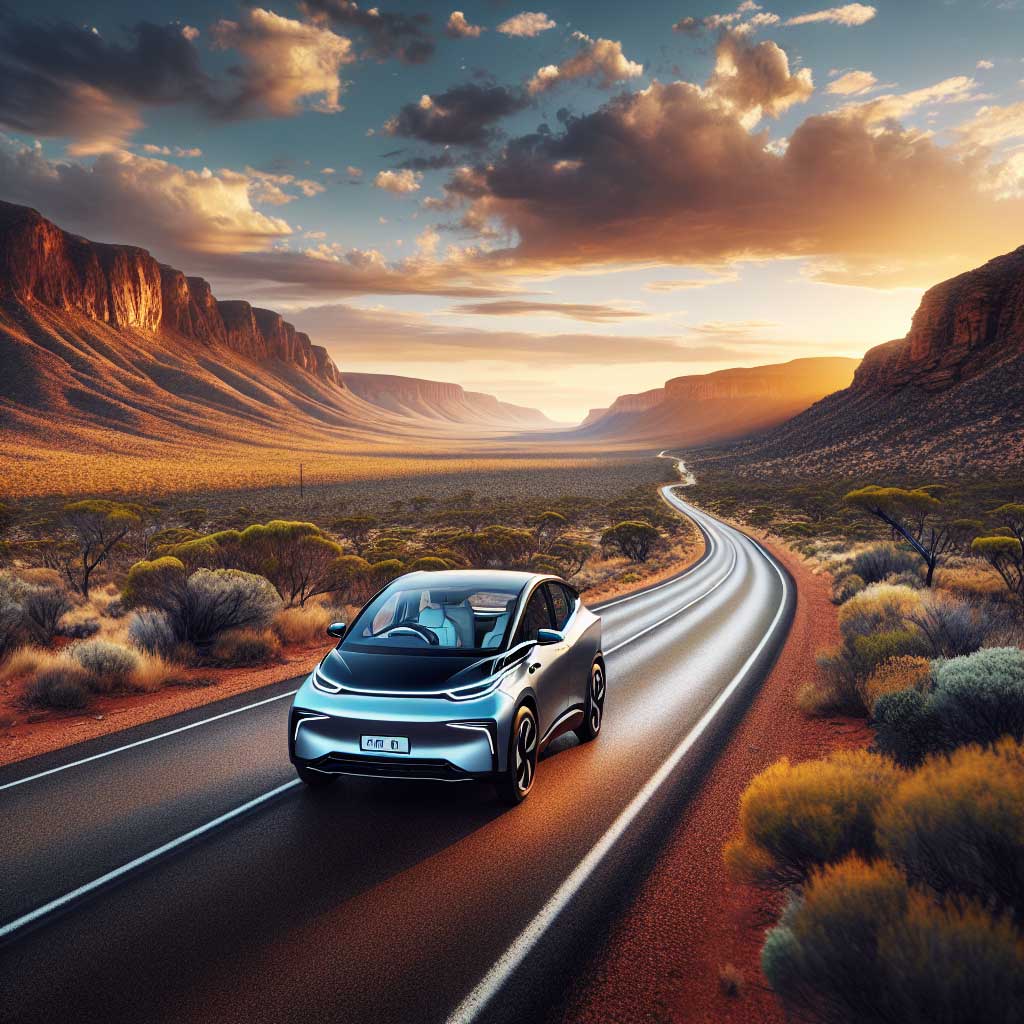
If you’ve ever spent a dusk hour driving between Dubbo and Orange, or navigating the winding, unsealed tracks of the Otways, you know that “safety” in Australia means something very different than it does in downtown Sydney. Out here, a 5-star safety rating isn’t just about how many airbags you have; it’s about whether your car can see a six-foot Eastern Grey kangaroo through a cloud of bulldust before you do.
For a long time, the knock on electric vehicles was that they were “city cars”—fancy golf carts for people who never leave the 40km/h zones. But as we move through 2026, the tech has evolved. At EV Evolution, we’re seeing a new breed of EVs that aren’t just capable of rural driving; they’re actually safer than their petrol predecessors.
However, not all safety tech is created equal. Today, we’re moving beyond the standard ANCAP EV ratings to look at the real-world hardware that actually matters when you’re 200km from the nearest Macca’s.
Beyond the Stars: Why 2026 ANCAP Ratings are a Different Beast
In the old days (like, 2023), getting a 5-star ANCAP rating was mostly about surviving a crash. But the Safest EVs in Australia for 2026 have to run a much tougher gauntlet.
The new 2026–2028 ANCAP protocols now specifically penalise “irritating” tech. You know the ones—lane-keep assist systems that try to wrestle the steering wheel out of your hands when you’re just trying to give a wide berth to a cyclist or a pothole. In 2026, a car gets more points for intuitive safety that works with the driver, not against them.
More importantly for rural drivers, ANCAP has started rewarding cars that bring back physical buttons. If you’re bouncing along a corrugated dirt road, the last thing you want to do is hunt through three sub-menus on a touchscreen just to turn on your fog lights or adjust the wipers. The best EVs for rural driving in 2026—like the updated Kia EV9 and the Volvo EX90—have realised that stalks and dials are actually safety features.
Seeing Through the Dust: Lidar vs. Vision
This is the big debate of 2026. On one side, you have Tesla, which still relies entirely on “Vision” (cameras). On the other, you have the “Lidar Guard” led by Volvo and Polestar.
- Tesla Vision: It’s brilliant in the city. But on a dusty regional road where the sun is low and hitting the lens, or where a truck has kicked up a massive cloud of red dirt, cameras can struggle. We’ve seen reports of “phantom braking” when the car’s “eyes” get confused by digital speed signs or heavy dust.
- The Lidar Advantage: Cars like the Volvo EX90 and Polestar 3 now come standard with rooftop Lidar. Unlike cameras, Lidar doesn’t need light to “see.” It pulses laser light to create a perfect 3D map of the world around it, even in a total blackout or a dust storm.
For a rural driver, Lidar is the “fair dinkum” choice. It can detect an object the size of a football from 250 metres away, giving you those precious extra seconds to react.
The “Skippy” Factor: Advanced Wildlife Detection
Let’s talk about the national icon that causes the most grief on our roads: the kangaroo. Traditional Autonomous Emergency Braking (AEB) was designed to spot cars and pedestrians. It often struggled with the erratic, hopping movement of a roo.
In 2026, the software has finally caught up. The top-tier safety suites now include specific Animal Detection algorithms. These systems use thermal imaging and high-speed processing to differentiate between a swaying tree branch and a kangaroo about to commit “suicide-by-bumper.”
The Polestar 3 is a standout here. Its “Pilot Pack” is specifically calibrated for the types of large animals we see in the Northern Hemisphere (like moose), which, as it turns out, makes it incredibly effective at spotting a big buck on the side of the New England Highway.
Want to know which rig is best at spotting a roo at 100km/h?
Start a conversation with the EV Evolution AI chatbot. We’ve compiled the latest real-world testing data from across the Outback. Simply ask: “Which 2026 EVs have the best wildlife detection systems for night driving?”
Rough Tracks: Emergency Braking on Unsealed Roads
One of the biggest hidden dangers of modern safety tech is how it behaves on gravel. Most AEB systems were tuned on perfectly paved European test tracks. If you slam on the anchors on a loose gravel surface, a standard AEB system can actually cause the car to skid or “panic” because the sensors detect a loss of traction.
The best electric car for rural driving in 2026 is one with “Multi-Terrain AEB.” The Toyota HiLux EV (launching in the first half of this year) and the Rivian R1T have dedicated gravel modes. These adjust the ABS and the emergency braking sensitivity so the car actually digs into the gravel to stop, rather than just sliding over the top like a bar of soap in a bathtub.
Our 2026 Rural Safety Leaderboard
| Model | Why it Wins for Rural Drivers | Key Tech |
| Volvo EX90 | The absolute gold standard. Incredible ground clearance and the best Lidar in the business. | Roo-ready Lidar, 3D mapping. |
| Polestar 3 | Combines long-range (700km+) with advanced animal detection and a “driver-first” cockpit. | Animal welfare tech, long-range battery. |
| Kia EV9 | Huge road presence and a very “Aussie-tuned” suspension that eats up corrugations. | Physical controls, 2026 ANCAP 5-star. |
| Toyota HiLux EV | Finally, an electric ute that understands unsealed roads and heavy-duty AEB. | Gravel-tuned braking, dual-motor AWD. |
The Verdict: Don’t Just Trust the Sticker
At EV Evolution, we always tell our community: “A 5-star rating tells you how the car crashes; the tech tells you how it avoids the crash.”
If you’re living in the regions, your priority list should be:
- Lidar/Redundant Sensors (for dust and night visibility).
- Animal Detection (for the roos).
- Physical Controls (for your sanity on bumpy roads).
- Suspension Tuning (to handle the “pothole season”).
The 2026 EV market has finally realised that Australia isn’t just one big city. We have the longest, loneliest, and often most dangerous roads in the world, and we need cars that are up to the task.
Ready to find your perfect rural partner? Our AI has the latest specs on ground clearance, Lidar range, and regional service center locations.
Start a conversation with the EV Evolution AI chatbot now. Ask our AI: “Which 2026 EVs have the best wildlife detection systems for night driving?” and get the “Fair Dinkum” truth before you head out into the bush.
About EV Evolution
EV Evolution is the leading online platform dedicated to Australian electric vehicle owners and enthusiasts. We foster a vibrant community, delivering essential EV news and insights, and enhancing user engagement through our innovative, AI-powered chatbot for dynamic discussions. Our mission is to empower Australian electric vehicle owners and enthusiasts by fostering a vibrant, AI-driven online community that connects, informs, and advances the nation’s electric vehicle landscape.
