



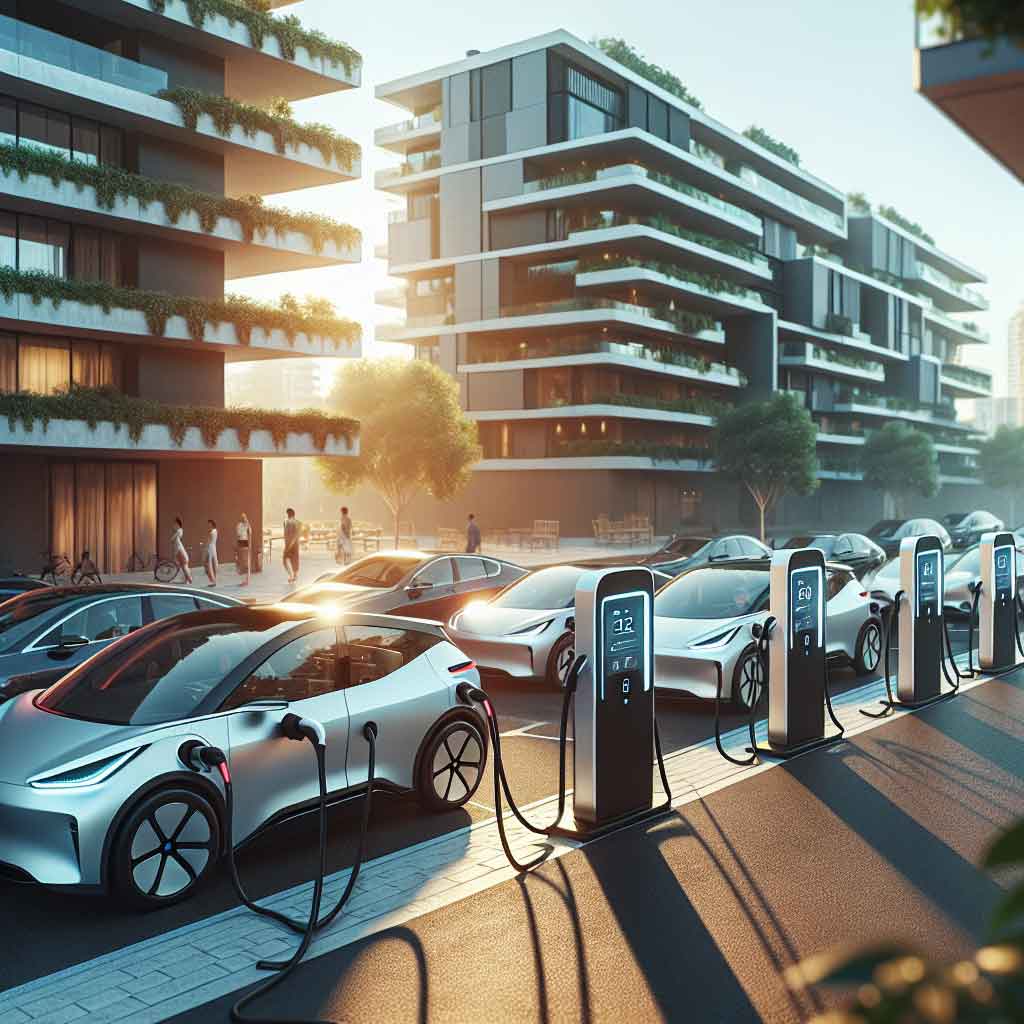
It’s March 2026, and the results from the February sales wrap-up have just sent a shockwave through the Aussie automotive industry. As we recently covered at EV evolution, China has officially overtaken Japan as our top source of new cars. But if you look beneath the surface of those 11,134 BEV sales last month, a new technical battleground is emerging. It’s no longer just about who has the biggest battery; it’s about who has the best plumbing.
While the Tesla Model Y continues to dominate the charts with 2,791 units, and the Zeekr 7X is rapidly climbing the ranks with 628 sales, the conversation in local garages and on the M1 is shifting toward a high-fidelity tech debate: 800V vs 400V.
At EV evolution, we’re here to tell you that in 2026, your car’s architecture matters more than its battery size. If you want to spend 18 minutes at a charger instead of 48, you need to understand the “Resolved” math behind the voltage.
Why Architecture is the New Horsepower
For the last decade, we’ve been conditioned to think that a “bigger battery” equals a better car. But a massive battery is just a bigger bucket; if the tap you’re using to fill it is a garden hose, you’re going to be standing there a long time.
Most EVs on our roads today—including the Tesla Model Y and the BYD Sealion 7—run on a 400V architecture. It’s the “Old Guard” standard. It works, it’s reliable, and it’s what most of our current infrastructure was built for.
However, the New Guard—led by the Kia EV6, Hyundai Ioniq 5, Zeekr 7X, and the newly updated 2026 Polestar 3—has moved to 800V EV charging Australia. By doubling the voltage, these cars can pull the same amount of power with half the current (amps). This means less heat, thinner (and lighter) internal wiring, and, most importantly, staggering fast charging speeds.
To see how this tech translates to your hip pocket over time, jump over to our EV fuel savings calculator. Saving 30 minutes at a charger isn’t just about time; it’s about optimizing your high-fidelity life.
400V vs 800V: The “Aussie Hume Highway” Reality Check
So, what does this actually look like on a road trip from Sydney to Melbourne? At EV evolution, we’ve been monitoring the threads on Whirlpool and r/AustralianEV to see how drivers are finding the “Real World” difference.
On Whirlpool, users have been comparing the charging curves of the Tesla Model Y (400V) against the Kia EV6 (800V). One user, Mad-Mel, pointed out that while a Model Y takes about 27–30 minutes to do a 10–80% charge on a Supercharger, an EV6 can do the same jump in 18 minutes on a 350kW ultra-rapid station.
“For longer trips, the Kia EV6 charges a lot faster at 350kW on 800V… The trip from Brisbane to Melbourne in a Tesla Model Y takes roughly 2h 27m of total charging time, whereas the EV6 does it in 1h 15m.” — xjrh8, Reddit.
That’s over an hour of your life back, just because of the “plumbing” under the floor. But there’s a catch.
The 400V Infrastructure “Gotcha”
Here is the “Tradie Truth” of 2026: Australia’s charging network is currently in a state of transition. While 800V EV charging Australia is the future, many of our most reliable plugs—specifically the older Tesla Superchargers—are 400V systems.
When you plug an 800V car (like a Zeekr 7X) into a 400V charger, the car has to use an on-board “step-up converter” to boost the voltage so the battery can accept it. On r/EVAustralia, drivers are discovering that this process often caps their speed at around 80–100kW, even if the charger is rated for 250kW.
“Most DC chargers (including all Superchargers) in Australia are 400V. That means the Zeekr has to step up the voltage… This process is limited to about 80-90kW. Until we see more 800V chargers, the Zeekr 7X will actually charge slower than many 400V vehicles at those specific sites.” — net_fish, Reddit.
Before you head out on your next mission, run a The EV Vibe Check. Our map helps you find the 350kW Kempower or Tritium units that do support 800V, ensuring you aren’t the one stuck at 80kW while the “Old Guard” cars zoom past you.
Why Architecture Matters More Than Battery Size
In 2026, we are seeing a shift where “Smaller Battery + 800V” is often better than “Huge Battery + 400V.”
Look at the 2026 Polestar 3. By switching to an 800V architecture, Polestar improved their 10–80% charge time by 25%, down to just 22 minutes. Even though they used a slightly smaller battery (92kWh) in the base model to save weight and improve efficiency, the car is faster to live with because it fills up so much quicker.
Use our EV Charging Time Calculator to compare a 77kWh 800V car against a 100kWh 400V car. You’ll be surprised to find that the “smaller” car often wins the weekend trip because its “pit stops” are high-fidelity sprints, not marathon waits.
🤖 Start Your Evolution with the AI Agent
Are you still debating whether the Tesla Model Y Juniper or the Zeekr 7X belongs in your driveway? Or maybe you want to know if the upcoming 2027 Toyota HiLux EV will finally bring 800V tech to the building site?
Don’t leave your transition to guesswork—start a conversation with our EV evolution AI Agent. Our AI is updated in real-time with the latest fast charging speeds 2026, dealership stock, and the “no-filter” truth from the Aussie community. You can ask:
- “Compare the Tesla Model Y vs Zeekr 7X for real-world charging times on the M1.”
- “Which 800V EV charging Australia hubs currently offer the most reliable speeds?”
- “Explain why 400V vs 800V matters if I only charge at home.”
- “Find a vibe-checked 350kW charger between Sydney and Canberra.”
Request Your VIP Test Drive
Reading about 800V efficiency is one thing—seeing that charging percentage climb by 1% every 15 seconds is another. Through our AI Agent, you can now request a VIP Test Drive for your dream EV. Whether it’s the Ioniq 5, EV6, or the high-performance 7X, we’ll get you behind the wheel so you can experience the “New Guard” of the EV evolution first-hand.
The Verdict: High-Fidelity Plumbing Wins
The 400V vs 800V debate is the “Resolved” tech story of 2026. While 400V cars like the Model Y are still great daily drivers, 800V architecture is the key to unlocking the true potential of the electric road trip. By choosing the right “plumbing,” you aren’t just buying a car—you’re buying back your time.
About EV Evolution
EV evolution is Australia’s AI-powered hub for the modern driver. Through our signature EV Strategy Suite—including the EV Vibe Check and our real-time AI Agent—we provide the transparent, fact-based data you need to navigate the electric transition with total confidence. Our mission is to empower every Aussie to trade the petrol pump for a plug with zero guesswork and high-fidelity precision.
