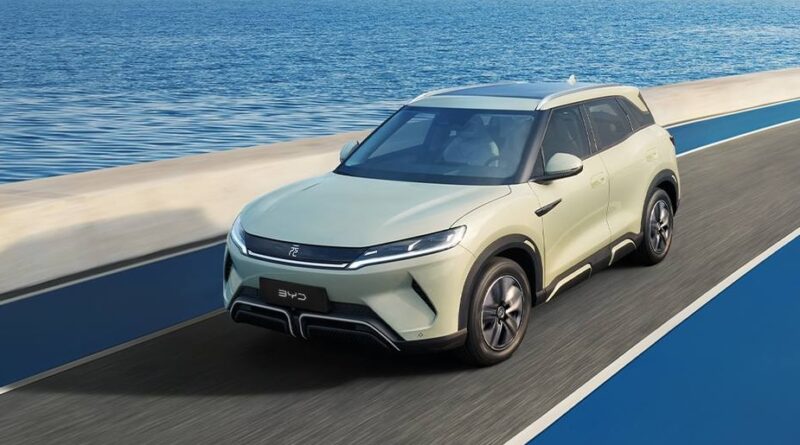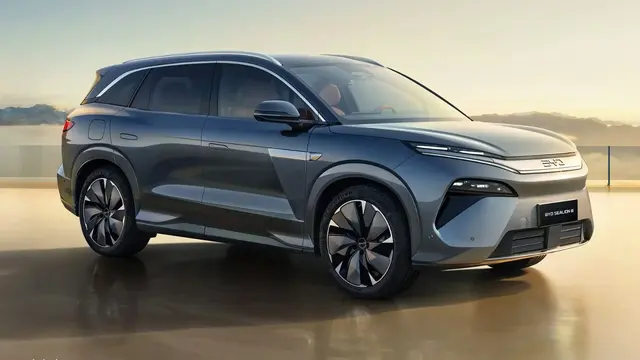



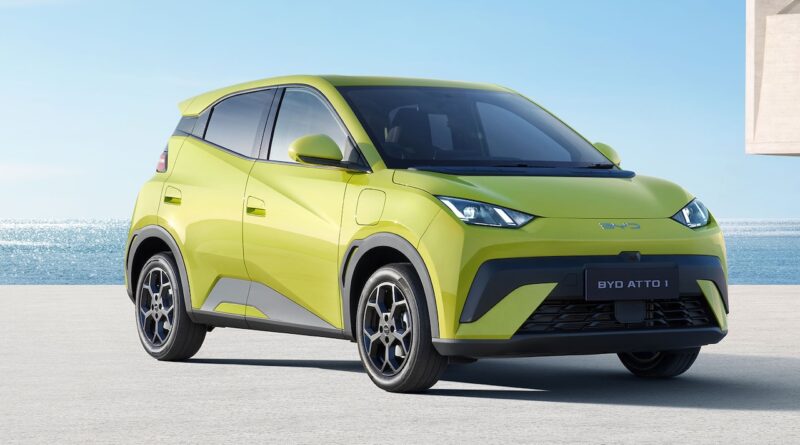
BYD Australia has signalled another step-change in its local assault on the electric-vehicle market, confirming arrival plans for two compact battery-electric models (the Atto 1 and Atto 2) and two plug-in hybrid SUVs (Sealion 5 and Sealion 8). The company’s announcement confirms the brand’s strategy of offering a broad price and segment spread – from an entry-level city EV to family-sized, three-row PHEV options – and will intensify competition in an already fast-moving Australian EV market.
The announcement in brief
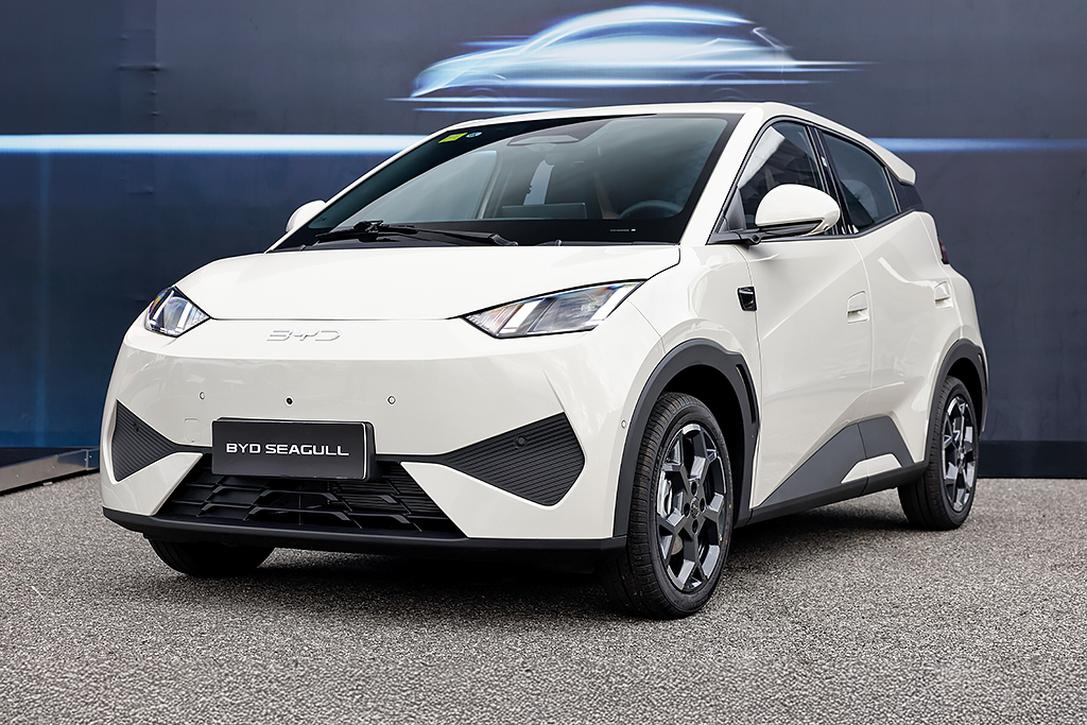
- Atto 1 (based on the Seagull) and Atto 2 due in Australia imminently, according to BYD Australia’s statement. The Atto 1 is positioned as the brand’s entry-level EV.
- Sealion 5 and Sealion 8 (both PHEVs) are scheduled to arrive in early 2026. The Sealion 5 will slot between the Atto 3 and Sealion 6 in size; the Sealion 8 is a three-row PHEV contender.
- Local pricing and final specifications are to be confirmed prior to each model’s launch in Australia.
Why these models matter
BYD’s regional strategy is straightforward: capture buyers across price points and vehicle types. The Atto 1 targets first-time EV buyers and people seeking an affordable city runabout; the Atto 2 returns BYD to the compact SUV sector; Sealion PHEVs provide a bridge for buyers who want electric driving capability without full BEV dependence, particularly in regional areas or households with limited charging access.
Technical highlights (based on overseas specifications)
Because BYD has not released full Australian specifications for all models, the following summarises confirmed overseas figures that give a realistic indication of what Australia might see.
Atto 1 (Seagull)
- Battery options: 30 kWh LFP (lithium iron phosphate) or 38.88 kWh Blade battery.
- Claimed WLTP-ish ranges: approximately 305 km (30 kWh) or 405 km (38.88 kWh) – note real-world range varies with testing standard and equipment.
- Electric motor: single 55 kW unit; 0-100 km/h around 14.9 seconds.
- Positioning: ultra-affordable city EV; lightweight with emphasis on value.
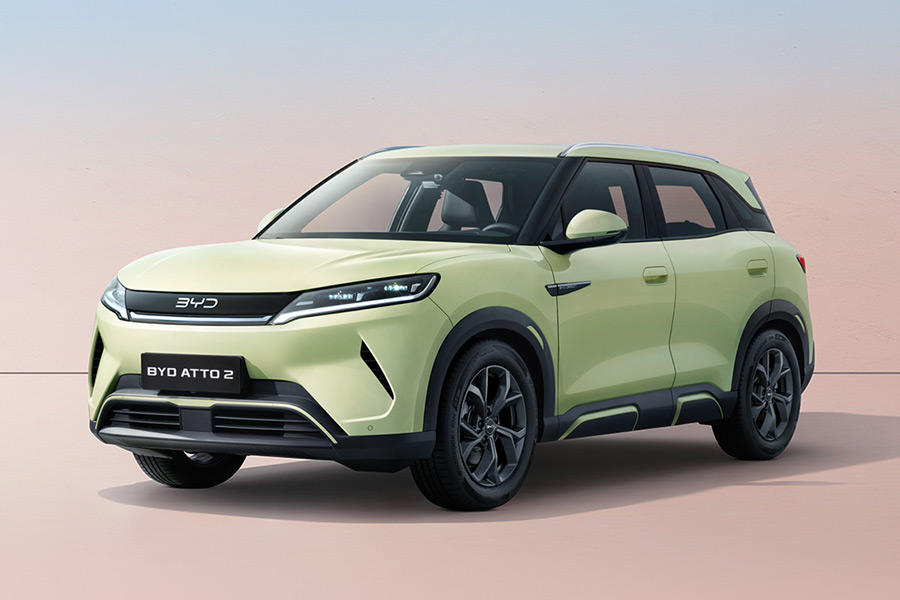
Atto 2
- Motor: roughly 130 kW and 290 Nm.
- Battery: about 51.1 kWh Blade pack.
- Range: up to c.345 km (dependent on local specs and testing cycles).
- Positioning: compact SUV with stronger performance and range than Atto 1.
Sealion 5 (PHEV)
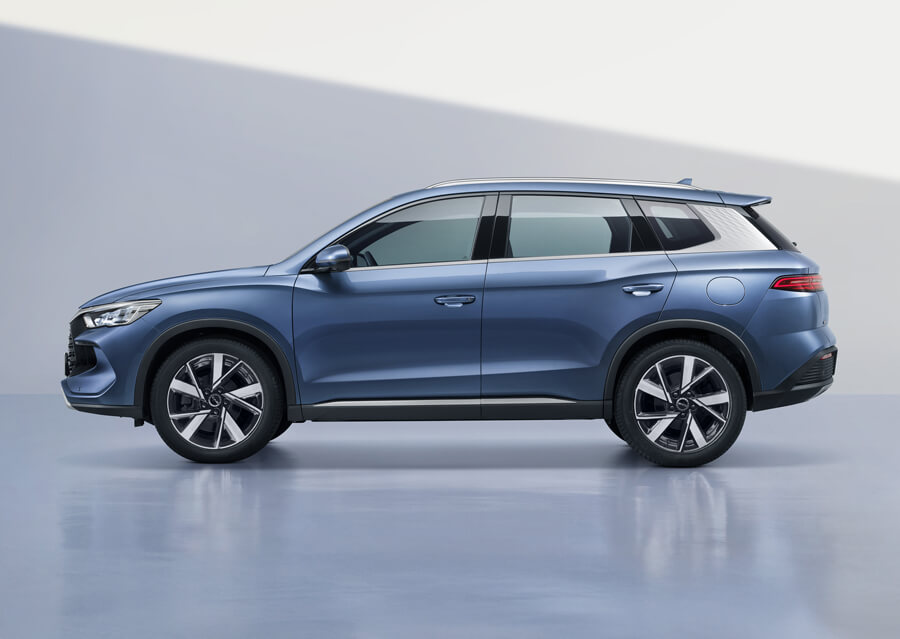
- Powertrain: 1.5-litre petrol engine (c.74 kW) coupled to a 120 kW electric motor, CVT-style transmission.
- Battery options reported overseas: 12.9 kWh (approx. 75 km EV range) or 18.3 kWh (approx. 115 km EV range).
- Combined fuel consumption (over combined cycles listed overseas): c.1.1-1.9 L/100 km, depending on pack and usage.
- Positioning: medium SUV PHEV that could be Australia’s lower-cost plug-in option in its segment.
Sealion 8 (three-row PHEV)
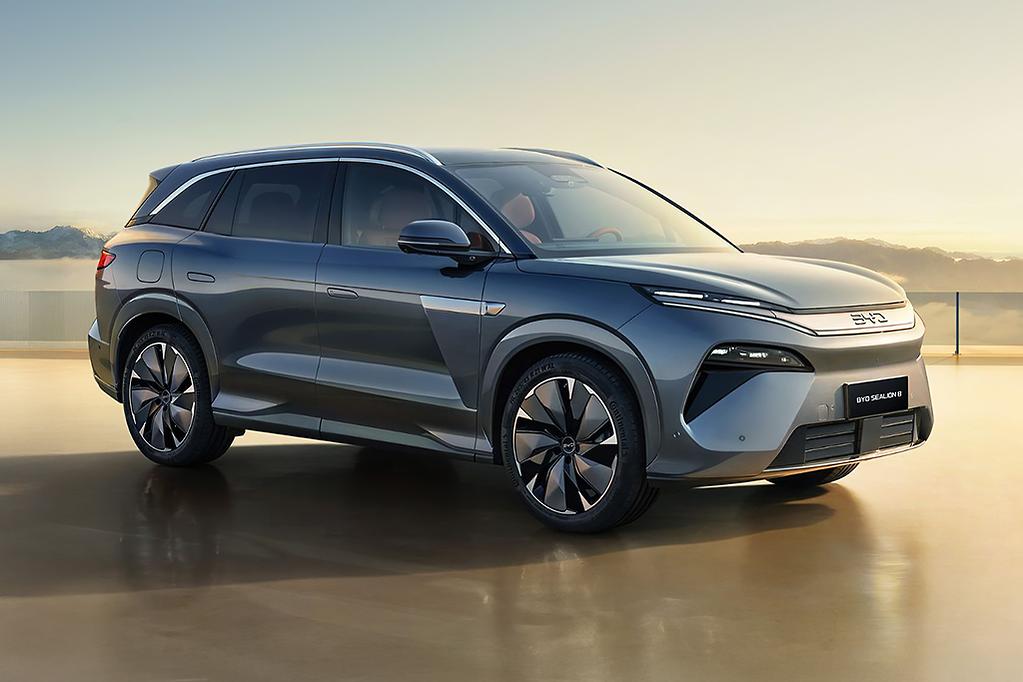
- Two drivetrain choices reported: front-wheel-drive PHEV and all-wheel-drive ‘DM-p’ PHEV with a rear electric motor.
- Power: single-motor PHEV combines a 110 kW petrol engine and 200 kW e-motor; the dual-motor setup adds a powerful rear e-motor (reported overseas at around 141 kW) for a combined output quoted as high as ~341 kW/675 Nm in top-spec form.
- Battery: reported options include modest and larger PHEV-capable packs – overseas figures cite up to 35.6 kWh for the higher-output version.
- Performance: manufacturer-claimed 0-100 km/h of around 4.9 seconds for the strongest dual-motor variant.
- Positioning: three-row family car that can double as a performance PHEV in higher-spec variants.
What this means for Australian buyers and the market
- Affordability pressure: BYD’s stated intention to field the Atto 1 as a very low-cost EV will apply downward price pressure across the entry-level BEV field. Even if final Australian pricing varies from overseas models, BYD’s strategy is clear: make EV ownership accessible to more households.
- Choice across drivetrain types: adding multiple PHEV options gives buyers more flexibility – particularly useful for consumers in regional areas or those constrained by limited home charging facilities.
- Technology and value: the Blade LFP battery technology and BYD’s in-house systems continue to be central selling points: LFP chemistry delivers durability and lower thermal risk, which can translate to robust long-term ownership economics and simplified battery management.
- After-sales and network considerations: BYD’s aggressive model rollout requires a matching investment in sales, service, parts and charging support. Buyers should check local dealer support, warranty terms, and access to authorised service centres before purchase.
Competition and market dynamics
BYD’s expansion comes as other brands push into value EV territory and traditional players scale up electrified offerings. Expect established volume brands (both legacy OEMs and other Chinese entrants) to respond with competitive pricing and feature sets. For consumers, that translates into more choice and an increasingly crowded, price-competitive market – but it also means buyers should be diligent about warranty fine print, servicing arrangements and realtime ownership costs.
Charging, range and real-world usage
- Urban buyers with reliable home charging can maximise the benefits of smaller-battery, lower-cost models like the Atto 1. For longer trips or regional owners, PHEVs such as the Sealion models offer an appealing compromise.
- Public DC fast-charging networks in Australia have been expanding, but availability remains uneven in many regional corridors. Prospective buyers should map typical routes and charging options before choosing models with smaller battery packs.
- Charging speeds and onboard AC charging rates for these models have been published in overseas spec sheets; confirm local figures once Australian specifications are released.
Regulatory and incentive context (Australia)
- Australia’s EV policy mix is largely state-driven rather than federally prescriptive. Some states offer rebates, concessional stamp duty, or registration incentives for low-emission vehicles; these change frequently, so buyers should check current state schemes.
- Broader infrastructure investments (public charging rollouts, grid upgrades) are ongoing and will influence the practicality of BEV vs PHEV ownership depending on where you live.
What to watch between now and launch
- Confirmed Australian specifications: official local battery capacities, charging speeds, safety equipment, and wet-weather/road handling packs.
- Pricing and trim levels: BYD Australia has said prices will be released prior to launches; these will determine the degree to which each model disrupts incumbent segments.
- Warranty and servicing: length of warranty (battery and vehicle), roadside assistance, and the extent of BYD’s authorised service network.
- Local crash-test ratings and independent range/efficiency testing by Australian outlets – vital for assessing real-world performance.
Conclusion
BYD’s announced expansion of its Australian model range is a deliberate play to broaden appeal – from cost-conscious urban buyers to families wanting three-row versatility with PHEV practicality. The global manufacturer’s emphasis on value, LFP Blade battery technology and rapid model rollouts has the potential to accelerate EV uptake in Australia, exert pricing pressure on rivals and widen consumer choice. As always, final Australian specifications, pricing and after-sales support will determine how disruptive these launches become on the ground. Prospective buyers should wait for local spec releases, compare true running costs and assess servicing networks before committing.
FAQs
When will the Atto 1 and Atto 2 arrive in Australia?
BYD Australia has indicated the Atto 1 and Atto 2 will reach local showrooms shortly; exact dealer arrival dates will be confirmed by BYD Australia ahead of retail availability.
Are local prices and specifications available now?
At the time of BYD’s announcement, full Australian pricing and final specifications had not been published. BYD Australia has stated prices will be revealed before each model is released – watch the brand’s local media statements and dealer updates for confirmation.
What range can I realistically expect from the Atto 1 and Atto 2?
Overseas specs suggest the Atto 1 may offer around 300-400 km depending on battery chosen (30 kWh vs 38.88 kWh Blade), while the Atto 2’s larger battery can reach up to roughly 345 km in quoted figures. Real-world range will depend on driving conditions, climate, load and accessory use; independent local testing will provide more accurate Australian figures.
How do the Sealion PHEVs perform on electric-only mode?
Reported overseas figures indicate the Sealion 5 could offer EV-only ranges of around 75 km (smaller battery) to 115 km (larger battery), while the Sealion 8’s larger battery options will provide extended electric driving in hybrid mode. Australian EPA/WLTP-equivalent testing and real-world evaluations will confirm local expectations.
Are these BYD models suitable for regional or long-distance driving?
PHEVs like the Sealion 5 and 8 provide flexibility for longer trips because of their petrol engine backup. Small-battery BEVs (e.g., Atto 1 base pack) are best suited to urban and short-to-medium daily use unless you have reliable access to DC fast charging for long journeys.
What should buyers check before ordering?
Confirm final Australian specifications, warranty coverage (including battery warranty), local dealer and service centre availability, and real-world running costs (charging, maintenance, expected depreciation). Compare independent test results when they become available.
About EV Evolution
EV Evolution is the leading online platform dedicated to Australian electric vehicle owners and enthusiasts. We foster a vibrant community, delivering essential EV news and insights, and enhancing user engagement through our innovative, AI-powered chatbot for dynamic discussions. Our mission is to empower Australian electric vehicle owners and enthusiasts by fostering a vibrant, AI-driven online community that connects, informs, and advances the nation’s electric vehicle landscape.