

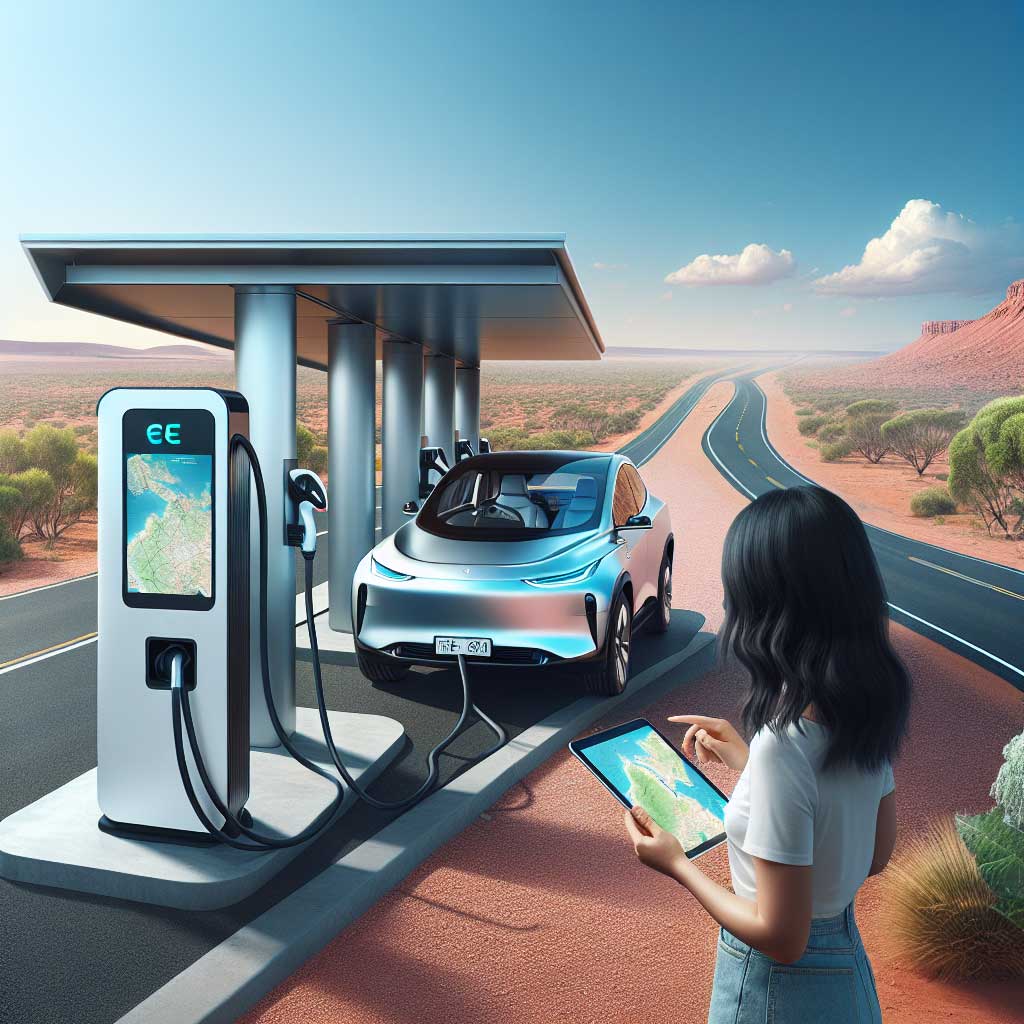
G’day – and welcome to the practical side of electric motoring. Owning an EV in Australia is increasingly straightforward: quieter drives, lower running costs and a growing public charging network. But public charging brings an element of shared responsibility. Unlike a servo forecourt with dozens of pumps, many EV charging sites are limited in number and speed. A little courtesy keeps the network working smoothly for everyone.
This guide updates the best-practice charging etiquette Australians should follow in 2025, with practical tips, the latest considerations for battery chemistry and connectors, and what to do when things go wrong. Think of it as the rulebook for being a decent fellow traveller on Australia’s electrified roads: don’t be a wombat at the charger.
The Golden Rule of Fast Charging – Aim for 80% (Unless You Really Need 100%)
DC fast chargers are designed to deliver high power quickly, but battery chemistry and thermal management mean charging slows significantly after roughly 70-80% State of Charge (SoC). In real terms, the final 10-20% can take as long as the initial 60-70%.
- The etiquette: When other drivers are waiting, plan to unplug around 80% SoC and move on.
- The practical side: Use the charge network’s app or your car’s notifications to set an alert a few minutes before reaching that level.
- Exceptions: If you genuinely need a full charge for a long trip and there’s no queue, topping to 100% is reasonable. If your car uses LFP (lithium iron phosphate) cells – increasingly common in some entry-level EVs – daily 100% charges have lower long-term degradation risk; still, be mindful of queueing and the charging tapers.
Don’t Be a Charger Camper – Move Once Charged
Charging bays are for charging, not long-term parking. Once your session ends, promptly move your vehicle to free the bay for others.
- Networks and councils: Many operators (Chargefox, Evie, Tesla, regional providers and some shopping centres) now apply idle fees or overstay penalties. Those fees are effective at discouraging bay-hogging.
- Use tech: Monitor sessions via the network app and set personal alarms. If you’re doing a long errand, favour AC (slower) bays where possible.
Match the Charger to Your Car’s Capability
Not all chargers are created equal – and using the right one is good manners.
- Choose the charger that suits your car’s maximum input. If your EV is limited to 50 kW, use a 50 kW charger rather than occupying a 350 kW unit that could serve a long-distance traveller.
- Know connector types: CCS2 is becoming the standard for most new public DC installs in Australia, CHAdeMO remains available for older models (notably some Nissan Leafs), and Type 2 AC is common for slower charging. Tesla chargers historically used a proprietary connector, but adapters and CCS-compatible Superchargers have extended interoperability-check your vehicle and network compatibility before you plug in.
PHEV Etiquette – Plug-in Hybrids and Fair Use
Plug-in hybrids are welcome at public chargers, but consider their role in the priority hierarchy.
- Best practice: Use AC (Type 2) bays when practical, especially in shopping precincts, and avoid taking a DC fast slot if pure EV drivers need rapid charging for long trips.
- Understand PHEV charging rates: Most PHEVs accept low AC rates (3.7-7 kW) and can be a poor match for DC fast chargers.
Queuing, Communication and Common Courtesy
Queues can form at popular sites, particularly on holiday routes or during peak hours. How you behave in a queue can make or break the day for fellow drivers.
- First come, first served is the baseline. Be prepared to move quickly when you reach the front.
- If you must leave the vehicle briefly, leave a visible note with a contact number and an estimated return time. Apps such as PlugShare, Chargefox and others also include messaging features to coordinate with other drivers.
- If two plugs serve one charger, exercise caution before unplugging another vehicle. If you do need to free a bay because an owner is absent, leave a polite note and your number; avoid taking matters into your own hands without clear consent.
ICE-ing and Reporting Misuse
“ICE-ing” (Internal Combustion Engine vehicles parking in EV bays) and non-charging EVs blocking chargers remain a frustration
- What to do: Photograph the vehicle, note the time and location, and report the incident to site management, shopping centre security or the relevant council. Many jurisdictions and private operators can levy fines or arrange removal.
- If a charger is faulty, contact the network operator via the phone number on the charging unit and log the issue on mapping apps to warn other drivers.
Practical Safety and Technical Tips
A few extra behaviours make the experience safer and more efficient for everyone.
- Precondition your battery for fast charging if your car supports it – heating or cooling the battery beforehand improves charge rate and reduces tapering.
- Keep cables tidy and avoid tripping hazards; return shared cables to their holders where required.
- Be mindful of weather: wet or flooded sites are unsafe for charging, and some DC chargers may refuse to operate in hazardous conditions.
- Avoid “refuelling” at ultra-rapid chargers where a slower AC top-up would suffice; cheaper, slower charging at shopping centres or overnight at home is kinder to battery health and your wallet.
Planning Tools and Apps – Use Them
Planning reduces stress and avoids unnecessary conflicts.
- Essential apps: PlugShare, Chargefox, A Better Routeplanner (ABRP), Open Charge Map and the native apps of major networks are invaluable for planning and real-time status.
- Route planning: For long trips, plan charging stops with headroom for contingencies and alternate chargers in case a machine is out of service.
- Look for roaming and subscription options: Some providers offer subscriptions or roaming agreements that reduce per-session costs; weigh these against pay-as-you-go pricing for your typical usage.
Pricing, Idle Fees and Enforcement
Charging costs vary by network, site and time of day. Idle fees are increasingly common and are designed to keep turnover high at busy stations.
- Be aware of tariffs: Some networks charge membership rates or have time-of-day pricing. Tap into the operator’s app or website so you’re not surprised.
- Idle fees: These kick in once charging is complete; they’re intended to incentivise prompt removal from bays. If you want to avoid them, either move promptly or use a different parking spot while you wait.
A Note on Accessibility and Inclusion
Chargers should be accessible to all drivers, including those with mobility needs.
- If you park in a designated accessible bay with charging, ensure you have the appropriate permit. Don’t use accessible-charging bays unless you qualify.
The Bottom Line – Be a Legend, Not a Larrikin
Public charging is a shared resource. Follow these simple rules and you’ll help keep the network efficient and pleasant:
- Aim for 80% on fast chargers when other drivers are waiting.
- Move your car promptly when charging ends.
- Use the appropriate charger for your vehicle’s capability.
- Prioritise AC charging for PHEVs in town centres.
- Communicate courteously in queues and report misuse.
Charging etiquette is less about policing and more about common sense. A little planning, a bit of courtesy and the right app open on your phone will get you where you need to go – and keep the road fair for everyone.
Conclusion
Australia’s public charging network has matured rapidly, and so has the etiquette that keeps it functioning well. As more chargers come online and more drivers switch to EVs, good manners at the charger will become as automatic as signalling at roundabouts. By following the 80% guideline, moving on promptly, matching chargers to vehicle capability, and communicating respectfully, every driver can help foster a reliable, efficient and friendly charging culture. It’s good for drivers, good for operators and essential for the broader transition to electric transport.
FAQs
What is the “80% rule” and why does it matter?
Aim to disconnect at about 80% SoC when using DC fast chargers, especially if other vehicles are waiting. Charging slows considerably after that point, so leaving at 80% keeps high-power capacity available for drivers who need quick top-ups.
Can I use a DC fast charger with a plug-in hybrid (PHEV)?
Technically some PHEVs can use DC chargers, but most are limited to low AC rates. As a courtesy, prioritise AC bays in shopping and urban areas so DC fast chargers remain available for pure EVs on longer trips.
Who enforces rules against ICE-ing and bay misuse?
Enforcement depends on the site owner: shopping centre management, councils or private operators can issue fines, arrange towing or apply penalties. Always document incidents (photo, time, location) and report to the relevant authority.
How can I avoid idle fees?
Monitor your charging session with the network or vehicle app, set alarms, and move your car quickly when charging ends. If you need longer to finish errands, use a different parking bay after charging completes.
Are there safety concerns when using public chargers in bad weather?
Yes. Avoid charging in flooded or obviously unsafe conditions. If a charger looks damaged or wet inside, do not use it and report the fault to the operator immediately.
What apps should I use to find chargers and check status?
Common apps in Australia include PlugShare, Chargefox, A Better Routeplanner (ABRP), Open Charge Map, and network-specific apps (Chargefox, Evie, Tesla, etc.). They display live status, user reviews and contact details.
Is charging to 100% bad for my battery?
For many battery chemistries, frequent 100% charging can accelerate degradation. The 80-90% range is a good everyday target. LFP batteries (increasingly used in some models) are more tolerant of full charges, but connection etiquette still applies – don’t hog a fast charger to reach 100% if others are waiting.
About EV Evolution
EV Evolution is the leading online platform dedicated to Australian electric vehicle owners and enthusiasts. We foster a vibrant community, delivering essential EV news and insights, and enhancing user engagement through our innovative, AI-powered chatbot for dynamic discussions. Our mission is to empower Australian electric vehicle owners and enthusiasts by fostering a vibrant, AI-driven online community that connects, informs, and advances the nation’s electric vehicle landscape.