


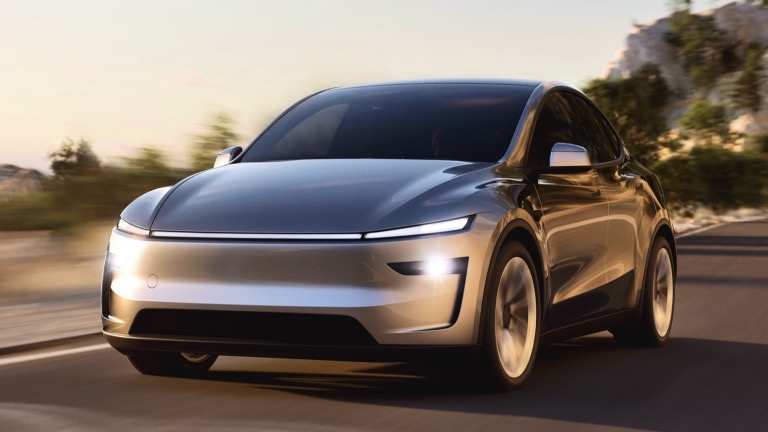
The Australian electric vehicle landscape has never been more competitive. For years, the Tesla Model Y, particularly the entry-level Rear-Wheel Drive (RWD) variant, reigned supreme, becoming a genuine sales phenomenon by offering a compelling mix of technology, performance, and charging convenience.
But the EV world moves fast. The arrival of aggressive, sharply priced competition from Chinese brands like BYD and MG has dramatically reshaped the battleground. The Model Y, even in its most affordable guise, is no longer the automatic value proposition it once was.
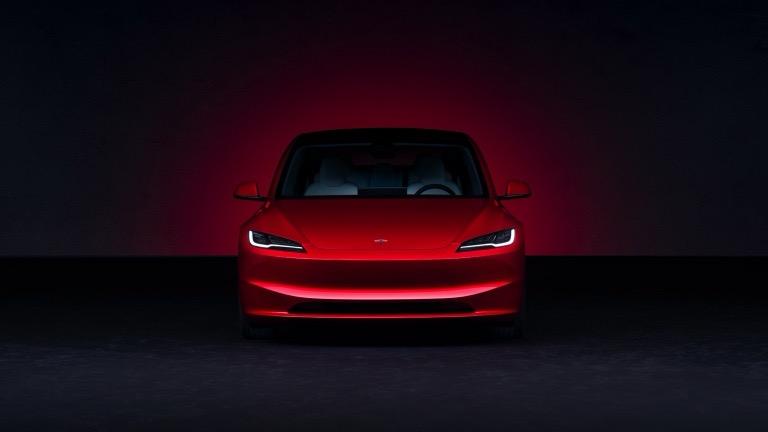
Enter the updated 2025 Tesla Model Y Rear-Wheel Drive, an extremely important vehicle for the brand Down Under. Dubbed the ‘Juniper’ facelift (although Tesla hasn’t formally used that name), this refresh attempts to address the two biggest criticisms of the outgoing model: the firm, noisy ride quality and the increasingly basic-feeling interior materials. The question for Australian buyers is simple: are these upgrades enough to justify its premium over the new wave of even cheaper, feature-packed Chinese rivals?
A Comprehensive Glow-Up: The ‘Juniper’ Updates
The 2025 Model Y RWD, priced from approximately $55,900 plus on-road costs (as of current market context), is a substantial improvement over its predecessor. This isn’t just a sticker-and-software update; Tesla has made meaningful, tangible changes:
- Refined Ride Quality: The most significant change for Australian roads is a comprehensively revised suspension tune. The previous model was often criticised for a harsh, ‘frenetic’ ride that struggled with the coarse, broken bitumen common in our suburbs and on regional highways. Reviews confirm the 2025 update, utilising new dampers, delivers a much more compliant and comfortable experience. The car now “breathes” over broken surfaces, drastically reducing the jarring impacts that plagued the old model.
- A Quieter Cabin: Enhanced sound insulation and the welcome addition of acoustic glass help create a quieter interior. While some wind noise may still be present at high speeds, the reduction in road noise is a crucial step towards a more premium feel, challenging a common complaint against the pre-facelift Model Y.
- Interior and Tech Tweaks: While the minimalist design remains, the cabin feels higher quality thanks to new, better-integrated materials, including more soft-touch surfaces and vegan suede trim in some markets. Importantly, Tesla has listened to feedback from the Model 3 update and re-introduced an indicator stalk behind the steering wheel—a significant ergonomic win for traditional drivers. Passengers also benefit from a new 8.0-inch rear touchscreen for climate and entertainment control, and front seats are now ventilated (cooled), a godsend for Australian summers.
- Performance and Efficiency: While the core 60kWh (usable) LFP battery and single-motor Rear-Wheel Drive setup remain, power output is now estimated to be a healthy 225kW, dropping the 0-100km/h sprint time to a respectable 5.9 seconds (down from 6.9 seconds). WLTP driving range has also seen a marginal increase to 466km.
The New Rivals: Chinese Challengers in the Ring
The Chinese competition is no longer an emerging threat—it is a firmly established force. For the price of the entry-level Model Y, Australian buyers now have several compelling options, most notably the BYD Atto 3 and the new generation of electric SUVs from MG and Chery.
| Model | Indicative Price (Excl. ORC) | WLTP Range (Approx.) | Key Advantage over Model Y RWD |
| Tesla Model Y RWD (2025) | ~$55,900 | 466 km | Tech ecosystem, Supercharger access, performance, updated ride. |
| BYD Atto 3 Extended Range | ~$47,499 | 420 km | Significantly lower entry price, full suite of driver’s buttons/cluster, good interior flair. |
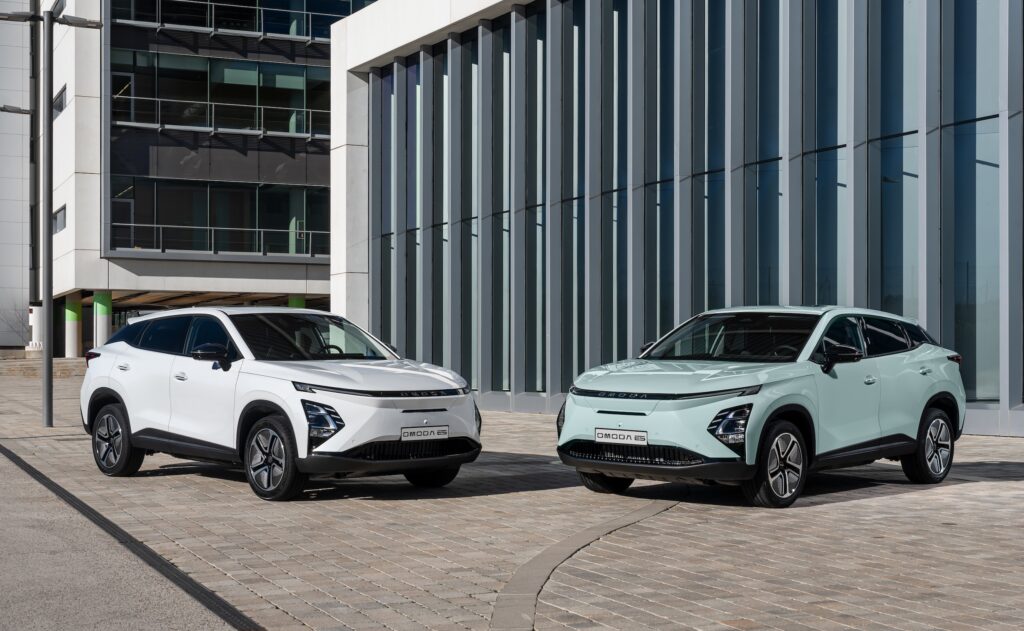
| Chery Omoda E5 | ~$40,500 (Drive-Away) | ~430 km | Aggressive value, long warranty, focus on conventional car controls. |
The key narrative here is price. Vehicles like the BYD Atto 3 offer similar levels of practicality and a decent range for thousands of dollars less. They provide more traditional interiors with a dedicated instrument cluster and physical controls, which many Australian drivers still prefer over Tesla’s ‘single-screen’ philosophy. Crucially, rivals like the Atto 3 often offer better core vehicle warranties (e.g., up to 6 or 7 years) compared to Tesla’s 4-year/80,000km package.
However, the Model Y still holds two aces:
- The Supercharger Network: Unrivalled for convenience and reliability on long journeys in Australia, Tesla’s dedicated charging network remains a massive drawcard, easing range anxiety for first-time EV owners.
- Efficiency and Performance: The Model Y’s powertrain remains one of the most efficient globally, translating to excellent real-world energy consumption (often around 16 kWh/100km or less) and punchier acceleration than most direct rivals.
The Verdict for Australian Buyers: Does it Still Stack Up?
The 2025 Tesla Model Y Rear-Wheel Drive is not just an update; it’s a course correction. The significant improvements in ride comfort and cabin refinement have successfully addressed the car’s most glaring deficiencies, making it a much more pleasant daily driver on Australian tarmac. This means the core Tesla strengths—the unmatched Supercharger network, the innovative central technology, market-leading efficiency, and enormous interior space—now sit atop a much more polished product.
For Whom is the Model Y RWD the right choice?
- The Tech Enthusiast: The Model Y’s software, over-the-air updates, and phone-as-a-key functionality remain class-leading.
- The Long-Distance Traveller: The Supercharger network provides a peace of mind that no competitor can currently match in Australia.
- The Family Requiring Space: With its massive cargo area (including the ‘frunk’) and airy cabin, the Model Y is highly practical.
Where the cheaper Chinese rivals still win:
- Upfront Price: The $10,000 to $15,000 price gap over entry-level Chinese SUVs is significant and a major barrier for budget-conscious buyers.
- Traditional Controls: Drivers who demand a physical instrument cluster, stalks for wipers, and a less screen-dependent interface will be better served by the BYD or MG.
- Warranty: The peace of mind from a longer, comprehensive factory warranty often offered by competitors is a strong selling point.
The 2025 Tesla Model Y RWD is, on merit, a markedly better car. It has maintained its advantage in crucial areas like charging infrastructure and efficiency while closing the gap on refinement and comfort. It can absolutely hold off the even cheaper Chinese competition, but only by repositioning itself from a budget EV champion to a premium-value contender.
In 2025, the Model Y RWD isn’t just selling a price point; it’s selling the complete, refined Tesla ecosystem—a proposition many Australian EV buyers will still find impossible to ignore. The initial price may be higher, but the vastly improved product is now arguably worth the stretch.
2025 Tesla Model Y RWD vs. BYD Atto 3 vs. Chery Omoda E5: Comprehensive Comparison Table and Value Analysis
Below is a detailed comparison table focusing on the base/entry-level variants for the 2025 Model Y and the higher-range/best-value variants for the BYD Atto 3 and Chery Omoda E5 (as those are the most directly competitive):
⚡ 2025 Electric SUV Comparison: Tesla vs. BYD vs. Chery
| Feature | 2025 Tesla Model Y Rear-Wheel Drive (RWD) | 2025 BYD Atto 3 Premium (Extended Range) | 2025 Chery Omoda E5 EX (Top-Spec) |
| Price (Excl. On-Road Costs) | A$58,900 | A$44,990 | A$40,990 (Promotional pricing may apply) |
| Drive-Away Price (Indicative) | $\sim\$65,000 – \$68,500$ | $\sim\$48,500 – \$50,000$ | $\sim\$44,500 – \$47,500$ |
| WLTP Driving Range | 455 km (Estimated for new model) | 420 km | 430 km |
| Usable Battery Capacity | $\sim60$ kWh (LFP) | 60.5 kWh (Blade LFP) | 61.1 kWh (LFP) |
| 0-100 km/h (Claimed) | 6.7 seconds | 7.3 seconds | 7.6 seconds |
| Power/Torque | $\sim200$ kW / $350$ Nm | 150 kW / 310 Nm | 150 kW / 340 Nm |
| Drivetrain | Rear-Wheel Drive (RWD) | Front-Wheel Drive (FWD) | Front-Wheel Drive (FWD) |
| DC Fast Charging Peak | Up to 250 kW (Tesla Supercharger) | 88 kW | 80 kW |
| AC Charging (Max) | 11 kW (Three-Phase) | 7 kW (Single-Phase) | 9.9 kW (Three-Phase) |
| Boot Space (Rear/Max) | 854 L (VDA) / 2158 L (incl. frunk) | 440 L / 1340 L | 300 L / 1079 L |
| Frunk (Front Trunk) | 117 Litres | No | 19 Litres |
| Towing (Braked) | 1,600 kg (Optional Tow Bar) | 750 kg | 750 kg |
| Safety Rating (ANCAP) | 5-star (2022 rating, carry-over expected) | 5-star (2022) | 5-star (2025) |
| Vehicle Warranty | 4 years / 80,000 km | 6 years / 150,000 km | 7 years / Unlimited km |
| Battery Warranty | 8 years / 160,000 km (70% retention) | 8 years / 160,000 km (70% retention) | 8 years / 160,000 km (70% retention) |
| Unique Features | Tesla Supercharger Network, Infotainment Ecosystem, Fastest Acceleration, Largest Cargo, Standard Heat Pump | Large Rotating 15.6″ Screen, V2L (Vehicle-to-Load), Panoramic Sunroof, Excellent Storage | Standard Full-Size Spare Wheel, Longest Vehicle Warranty, Dual 12.3″ Screens, Standard Heat Pump |
(Please note: Specifications for the new 2025 ‘Juniper’ Model Y are based on the latest available Australian information, but specific power/range figures can change slightly upon final release.)
⚖️ Value Proposition Summary
- Tesla Model Y RWD: The value is in performance, brand recognition, and the charging ecosystem. It is the most expensive but offers significantly better acceleration, a massive cargo capacity (especially with the frunk), the most sophisticated charging network (Superchargers), and high-tech minimalist interior features (new for 2025 like ventilated seats and a rear screen).
- BYD Atto 3 Premium: Offers a compelling blend of range, practicality, and price. Its $\sim$A$14,000 saving over the Tesla gets you a decent WLTP range, a spacious interior with a large, fun-to-use rotating screen, and the useful V2L function. It’s a mid-ground option, balancing features and cost.
- Chery Omoda E5 EX: The clear winner on pure affordability and warranty. It offers a competitive WLTP range (best of the two Chinese rivals) and strong performance figures for a front-wheel drive SUV, all for the lowest price. The 7-year/unlimited km warranty and the inclusion of a rare full-size spare wheel are strong arguments for value-conscious buyers.
In short, the Tesla is the best choice for performance and the premium tech experience, the Chery is the best choice for affordability and long-term assurance (warranty), and the BYD offers a great all-rounder package bridging the gap between them.
About EV Evolution
EV Evolution is the leading online platform dedicated to Australian electric vehicle owners and enthusiasts. We foster a vibrant community, delivering essential EV news and insights, and enhancing user engagement through our innovative, AI-powered chatbot for dynamic discussions. Our mission is to empower Australian electric vehicle owners and enthusiasts by fostering a vibrant, AI-driven online community that connects, informs, and advances the nation’s electric vehicle landscape.