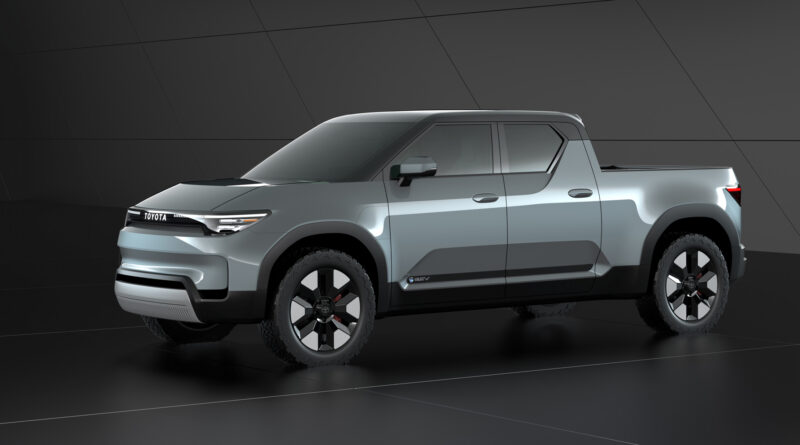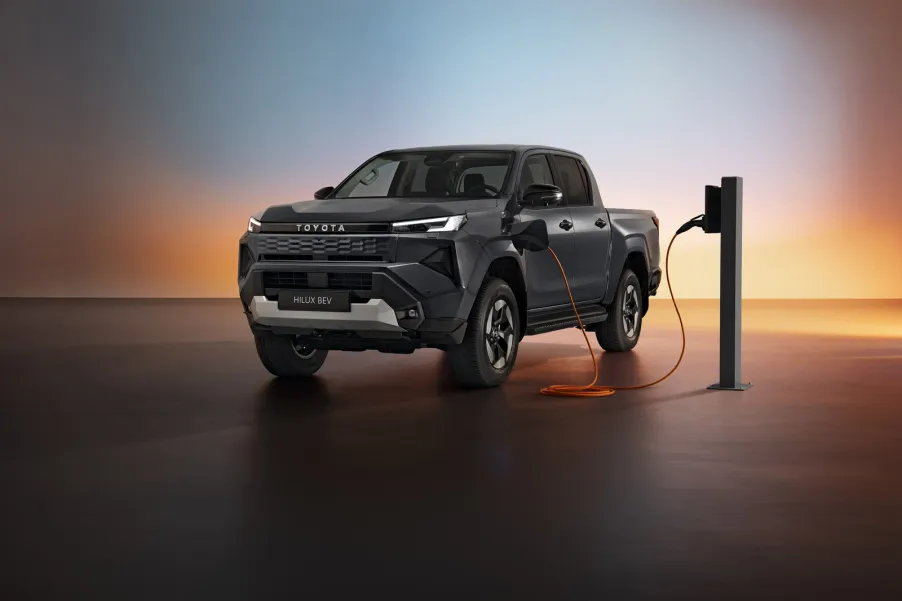


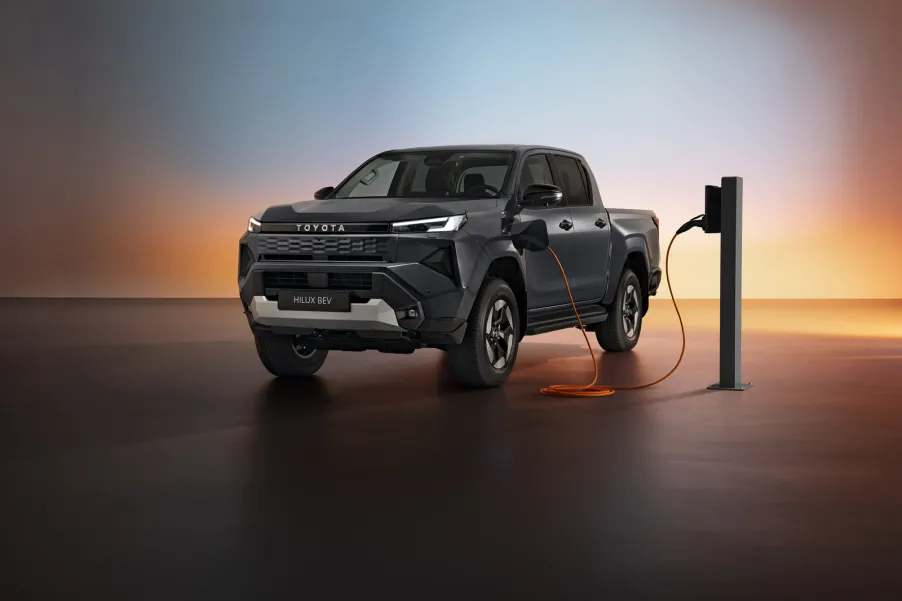
The sleeping giant has finally awoken. After years of watching rivals chip away at its dominance with electric utes and plug-in hybrids, Toyota has officially broken its silence. The undisputed king of the Australian worksite, the Toyota HiLux, is going electric.
In a landmark announcement that has sent ripples through the local automotive industry, Toyota Australia has confirmed that a Battery Electric Vehicle (BEV) HiLux will land in local showrooms in the first half of 2026. But the Japanese titan didn’t stop there. Doubling down on its controversial “multi-pathway” strategy, Toyota executives also confirmed that a Hydrogen Fuel-Cell (FCEV) HiLux is locked in for a 2028 debut.
For the Australian EV enthusiast, this is the moment of truth. Is the electric HiLux a genuine game-changer, or a fleet-focused compliance play? Let’s dig into the details.
⚡ The Electric Workhorse: Arriving 2026
Toyota Australia’s Vice President of Sales and Marketing, Sean Hanley, could barely hide his enthusiasm at the unveiling. “The new HiLux delivers a wide range of improvements… along with a new interior design and features,” he stated, framing the EV launch as a pivotal moment for the brand’s decarbonisation journey.
However, for the hardcore EV enthusiast expecting Tesla-like specs, the numbers might require a reality check.
The Specs That Matter:
- Range: The HiLux BEV is expected to carry a 59.2kWh lithium-ion battery, delivering a targeted WLTP range of just 240km to 300km. In the real world of towing and heavy payloads, this figure will likely be lower.
- Drivetrain: Unlike the rear-wheel-drive prototypes seen previously, the Australian production model will feature a dual-motor All-Wheel Drive setup, delivering around 144kW of power.
- Capability: Towing capacity is rated at 1,600kg, roughly half that of its diesel sibling. Payload sits at roughly 715kg.
The Strategy: Fleet First, Private Second?
Hanley has been refreshingly honest about the target audience. This isn’t a recreational weekend warrior’s tourer; it’s a tool. “These are vehicles that will be used largely in short distance operations that need the payload and passenger capacity,” Hanley explained.
While private buyers can purchase one, Toyota is squarely aiming this at mining companies, councils, and urban fleets. It’s a pragmatic move. For a site manager doing 80km a day on a mine site, a 240km range is plenty. For a family towing a caravan around the Big Lap? Not so much.
💧 The Hydrogen Long Game: Arriving 2028
If the EV HiLux is the short-range sprinter, the Hydrogen FCEV HiLux is being positioned as the marathon runner. Slated for 2028, this model addresses the elephant in the room: heavy towing and long-distance travel.
Toyota argues that battery technology simply isn’t ready to replace diesel for heavy-duty regional work without massive weight penalties. Enter Hydrogen.
The Promise of H2:
- Range: Prototypes tested in the UK (using the Toyota Mirai’s proven stack) have demonstrated a range of 600km.
- Refuelling: Tanks can be refilled in under 5 minutes—comparable to diesel.
- Towing: While official towing specs are yet to be finalized, the FCEV’s lighter kerb weight (compared to a massive battery EV) theoretically allows for better payload and towing potential.
Hanley remains one of the industry’s fiercest advocates for hydrogen, predicting it will eventually overtake diesel as the fuel of choice for heavy transport. “I truly believe that hydrogen will be our future,” he told media, suggesting that by 2035, infrastructure will have matured enough to make this a mainstream reality.
🥊 The Competitive Landscape
The 2026 arrival puts the HiLux EV in a fascinating position. It will arrive after the Ford Ranger PHEV (due 2025) and the BYD Shark 6 (a PHEV ute arriving imminently).
- Ford Ranger PHEV: Offers 45km of EV range but keeps the 3.5t towing and unlimited diesel range. Likely the “safe” step for most tradies.
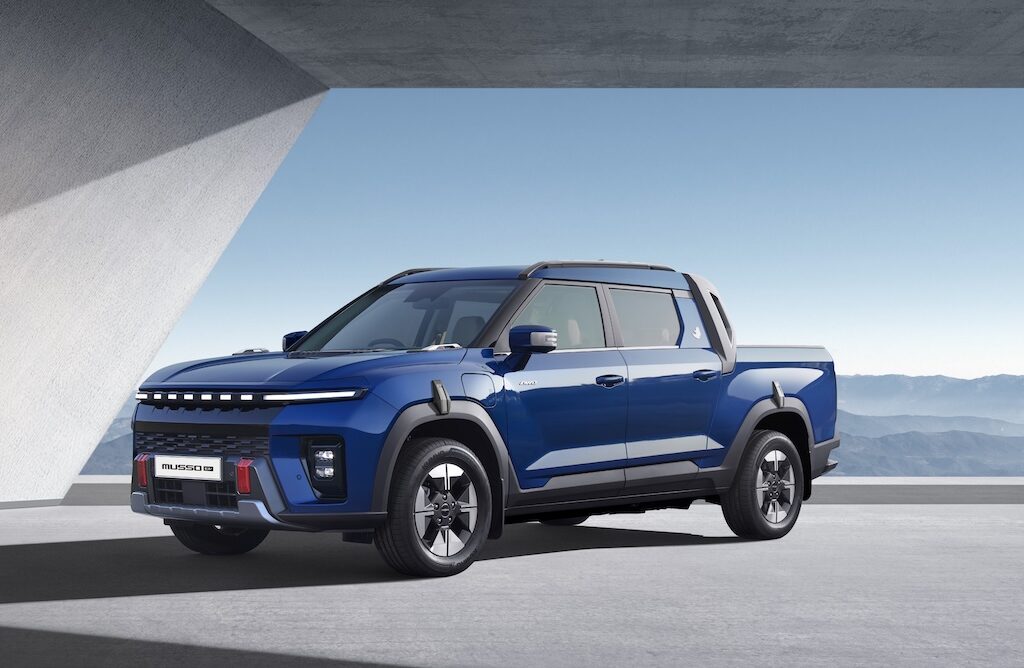
- KGM Musso EV: As we’ve reported, this Korean contender arrives before the HiLux with a bigger 80kWh battery, 420km range, and 1.8t towing—and likely a much cheaper price tag.
- Isuzu D-Max Electric: Also due in 2026, sharing a similar “fleet spec” philosophy to the Toyota.
Toyota is betting that its legendary reputation for “Quality, Durability, and Reliability” (QDR) will trump superior specs on paper. They are banking on fleets choosing the “safe” Toyota option over a higher-spec competitor from a newer brand.
🤖 The “Cyber Sumo” Facelift
Crucially, these new powertrains will launch alongside a comprehensive facelift for the entire HiLux range. Dubbed the “Cyber Sumo” design theme, the 2026 HiLux features a muscular new front end, a completely overhauled interior with a 12.3-inch infotainment screen, and improved suspension for better ride comfort.
This ensures that even if the EV powertrain is “Gen 1” technology, the vehicle wrapped around it feels modern and premium.
🇦🇺 The Verdict for Australian Enthusiasts
The Toyota HiLux EV is a watershed moment. It signals the end of the diesel monopoly on the Australian worksite.
Is it the perfect EV ute? No. The 240km range and 1,600kg towing capacity will disappoint enthusiasts hoping for a “Rivian killer.” It is a conservative, calculated product designed for specific commercial use cases.
However, Toyota’s commitment to a dual-track future—batteries for town, hydrogen for the bush—is a bold strategy that acknowledges the unique challenges of the Australian continent.
Sean Hanley isn’t apologising for the specs; he’s exulting in the fact that Toyota finally has a zero-emissions answer for the customers who need it most. The King is evolving. Whether it can keep its crown against the surging tide of Chinese and Korean innovation is the battle we can’t wait to watch.
About EV Evolution
EV Evolution is the leading online platform dedicated to Australian electric vehicle owners and enthusiasts. We foster a vibrant community, delivering essential EV news and insights, and enhancing user engagement through our innovative, AI-powered chatbot for dynamic discussions. Our mission is to empower Australian electric vehicle owners and enthusiasts by fostering a vibrant, AI-driven online community that connects, informs, and advances the nation’s electric vehicle landscape.