

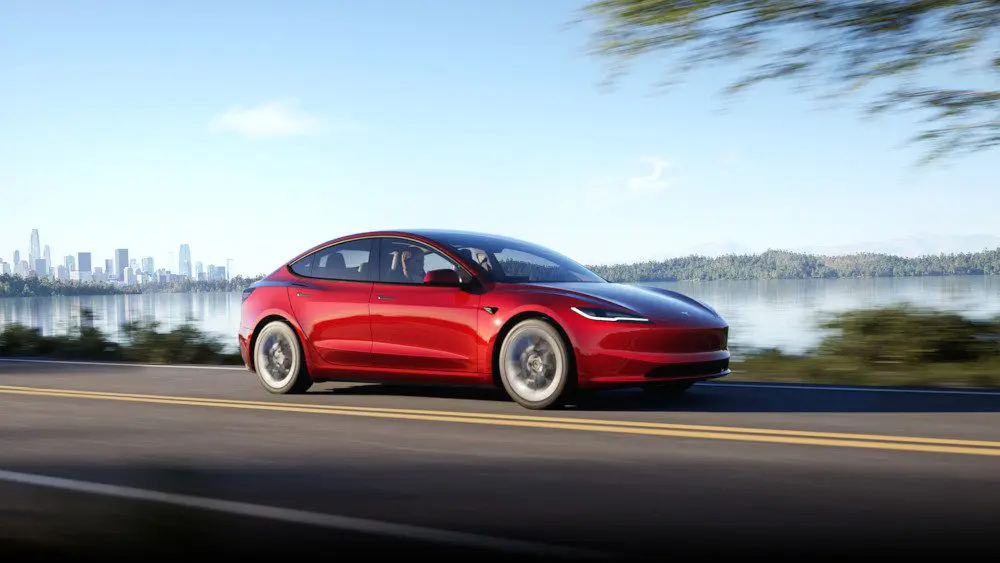
For years, the Australian electric performance sedan market had a singular monarch: the Tesla Model 3 Performance. It was the default answer for enthusiasts who wanted supercar-shaming acceleration without the supercar price tag. But in 2024, the throne is under siege. The challenger? The BYD Seal Performance, a sleek, tech-laden gladiator from China that isn’t just aiming to compete—it’s aiming to usurp the king by undercutting it on price while matching it on presence.
For the Aussie EV enthusiast, this is the most exciting rivalry of the decade. On one side, you have the Silicon Valley pioneer, fresh off a comprehensive “Highland” update that addresses nearly every criticism of the original. On the other, the Shenzhen powerhouse offering a compelling blend of luxury, value, and raw power. We pit these two heavyweights against each other to see which one deserves your hard-earned garage space.
Round 1: The Price of Speed
Let’s address the elephant in the room immediately: the price gap. BYD has come out swinging with an aggressive strategy that is hard to ignore.
The 2024 BYD Seal Performance hits Australian showrooms with a starting price of approximately $68,748 (plus on-road costs). For a dual-motor, all-wheel-drive vehicle with 390kW on tap, this is arguably the best “bang-for-buck” ratio in the entire Aussie car market, electric or otherwise.
In the opposite corner, the 2024 Tesla Model 3 Performance commands a premium, starting at $80,900 (plus on-road costs). That is a roughly $12,000 difference. In the world of optional extras, $12k is a lot—it’s a decent second-hand hatchback, a luxury holiday, or a few years of free charging.
However, Tesla argues that the extra investment buys you more than just a badge. It buys you entry into a more mature ecosystem and a vehicle that has been refined over nearly a decade. But is the gap in driving experience worth the price of a small Suzuki Swift?
Round 2: Straight Line Savagery
If you are buying a “Performance” variant, you care about the traffic light drag race. Both cars use a dual-motor, all-wheel-drive setup to fire themselves off the line, but the results are distinct.
The BYD Seal Performance is fast. Properly fast. With 390kW of power and 670Nm of torque, it will sprint from 0-100 km/h in a claimed 3.8 seconds. In isolation, this is neck-snapping territory. It uses BYD’s iTAC (Intelligence Torque Adaption Control) to manage wheel slip, and the sensation is one of relentless, surging torque.
But the Tesla Model 3 Performance is in a different league. The 2024 update brings a new “Performance 4DU” drive unit, delivering a combined output that rockets the car to 100 km/h in just 3.1 seconds. While 0.7 seconds sounds minor on paper, in the driver’s seat, it is the difference between “wow, that’s quick” and having the breath physically squeezed out of your lungs. The Tesla doesn’t just accelerate; it teleports.
Furthermore, the Tesla continues to pull hard well past legal Australian speeds, topping out at 262 km/h, whereas the BYD hits a limiter at 180 km/h. While irrelevant for the Hume Highway, it speaks to the engineering headroom of the Tesla’s powertrain.
Round 3: Corners & Chassis
Historically, this is where EVs fell apart—fast in a straight line, but a boat in the corners.
BYD has equipped the Seal Performance with Frequency Selective Damping (FSD). It’s a passive system that reacts to road input, firming up in corners and softening over bumps. It works well, offering a ride that is surprisingly compliant for a 2.2-tonne sports sedan. However, when pushed hard on a twisty B-road, the Seal reveals its weight. It’s softer, with more body roll, prioritizing Grand Tourer comfort over razor-sharp dynamics.
The 2024 Model 3 Performance has undergone a massive shift. For the first time, it features Adaptive Damping. This is an active system controlled by software, allowing the car to switch personalities instantly. In ‘Standard’ mode, it’s smoother than the old model ever was. Switch to ‘Sport’ or ‘Track’, and it hunkers down, virtually eliminating body roll. Combined with a stiffer chassis and bespoke Pirelli P Zero tyres, the Tesla offers a level of engagement and agility that the Seal simply cannot match. It feels like a dedicated sports car, whereas the Seal feels like a very fast luxury saloon.
Round 4: The Cabin Experience
Step inside, and the philosophies diverge wildly.
The Tesla Model 3 is an altar to minimalism. The 2024 update introduces the wrap-around ambient lighting and premium materials that were sorely needed. The controversial removal of indicator stalks (replaced by buttons on the steering wheel) and the gear selector (now on the screen) will alienate some traditionalists. However, the tech is peerless. The 15.4-inch front screen is snappy, the software is intuitive, and the new 8-inch rear screen allows passengers to control their own climate and entertainment (hello, Netflix on a road trip).
The BYD Seal feels more “normal.” You get a gear selector. You get indicator stalks. You get physical buttons. The interior is lush, featuring quilted leather seats that are undeniably more plush than the Tesla’s sporty buckets. The party trick is the 15.6-inch rotating screen, which can switch between portrait and landscape. Crucially for many Aussies, the BYD supports Android Auto and Apple CarPlay—features Tesla stubbornly refuses to adopt. If you live in the Apple ecosystem, this alone might sway your vote.
However, the BYD’s software can feel a generation behind Tesla’s. It’s a bit fussier, the menus are deeper, and the translations can occasionally be quirky. Tesla’s OS is the gold standard for responsiveness and ease of use.
Round 5: Charging & Range
Range anxiety is the final hurdle.
- BYD Seal Performance: 82.5 kWh LFP Blade Battery. WLTP Range: ~520 km.
- Tesla Model 3 Performance: ~79 kWh NMC Battery. WLTP Range: ~528 km.
The ranges are functionally identical. Expect about 400-450km of real-world highway driving from either. The difference lies in the chemistry and the network.
BYD uses an LFP (Lithium Iron Phosphate) battery. It’s durable, safe, and prefers to be charged to 100% regularly, which is great for daily usability. However, its max DC charge rate is capped at 150kW.
Tesla uses NMC/NCA chemistry for the Performance model to get that high power density. It charges faster, peaking at 250kW. But the real ace up Tesla’s sleeve is the Supercharger Network. While the network is opening up to non-Teslas, the seamless “plug-and-charge” experience for a Tesla owner—with no apps, cards, or handshakes—remains the single greatest ownership advantage in the EV world.
Verdict
So, which one takes the belt?
If you are looking for a daily driver that offers incredible value, luxurious comfort, and enough speed to scare your passengers, the BYD Seal Performance is a triumph. It’s a better “car” in the traditional sense—more comfortable, more familiar, and $12,000 cheaper. For the pragmatic buyer, it is the rational choice.
But if you are a true driving enthusiast, the 2024 Tesla Model 3 Performance justifies every cent of its premium. The adaptive suspension, the visceral acceleration, and the track-ready dynamics make it a genuine sports sedan that just happens to be electric. It remains the king of the ring—but for the first time, it has to check its rearview mirror.
About EV Evolution
EV Evolution is the leading online platform dedicated to Australian electric vehicle owners and enthusiasts. We foster a vibrant community, delivering essential EV news and insights, and enhancing user engagement through our innovative, AI-powered chatbot for dynamic discussions. Our mission is to empower Australian electric vehicle owners and enthusiasts by fostering a vibrant, AI-driven online community that connects, informs, and advances the nation’s electric vehicle landscape.