


For decades, the name “Suzuki” has been synonymous with two things in the Australian automotive landscape: bulletproof reliability and genuine off-road capability in a pint-sized package. From the cult-hero Jimny to the ubiquitous Vitara, Suzuki has carved out a niche as the champion of the “little car that could.”
But as the automotive world pivots to electrons, Suzuki has been notably quiet. While brands like BYD and MG have flooded the market with affordable electric SUVs, the Japanese giant has kept its powder dry.
That silence is officially over.
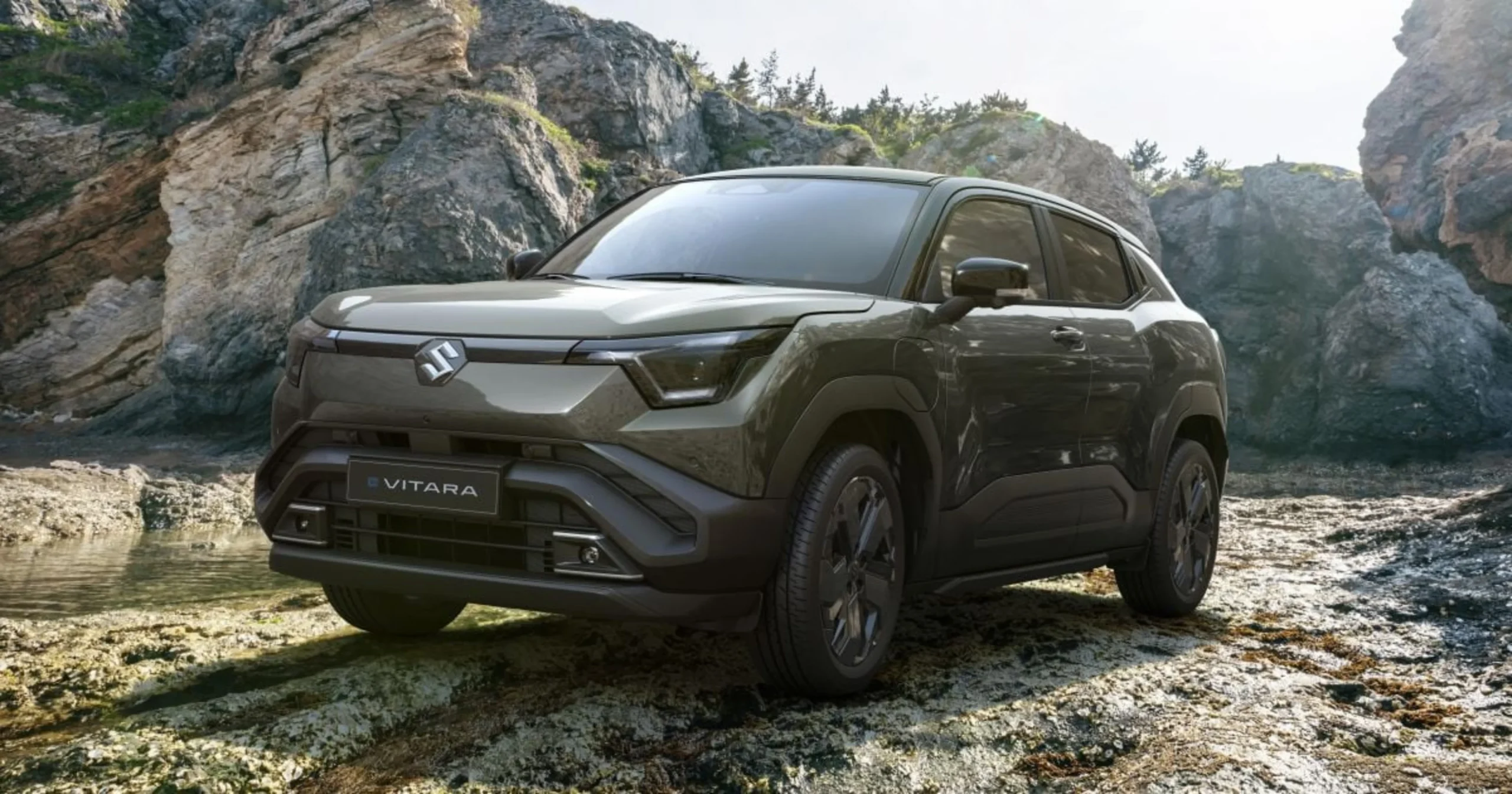
The Suzuki e Vitara is coming to Australia. Confirmed for a local arrival in Q1 2026, this is not just a battery shoved into an existing chassis. It is an all-new, ground-up electric vehicle built on a dedicated platform, developed in strategic partnership with Toyota.
At EV Evolution, Australia’s premier digital platform for EV enthusiasts, we have gathered every confirmed detail to bring you the ultimate preview of this critical new model. Is the e Vitara the rugged, affordable EV explorer we’ve been waiting for?
🌏 Context: A Legend Reborn for the Electric Age
The arrival of the e Vitara marks a pivotal moment for Suzuki Australia. While they have successfully dabbled with “mild hybrid” technology, this is their first full Battery Electric Vehicle (BEV).
The Strategy:
Suzuki isn’t trying to build a Tesla fighter. They aren’t chasing 0-100km/h records or autonomous driving gimmicks. Instead, they are sticking to their DNA: building a compact, robust, and capable SUV that works in the real world.
The Toyota Connection:
Crucially, the e Vitara sits on the brand-new HEARTECT-e platform. This architecture was co-developed with Toyota and Daihatsu. This partnership is significant for Australian buyers because it promises the durability standards of Toyota with the lightweight, 4WD engineering expertise of Suzuki. (Toyota will also launch its own version of this car, likely to be badged as a bZ compact SUV).
Market Positioning:
With an expected starting price hovering around the $40,000 – $45,000 mark, the e Vitara is gunning for the entry-level heavyweights like the BYD Atto 3, the MG ZS EV (and its successor, the MG S5), and the Hyundai Kona Electric. But unlike those urban-focused rivals, the Suzuki has an ace up its sleeve: genuine off-road heritage.
⚡ Confirmed Specifications: The Hardware
Suzuki has confirmed a tiered lineup for global markets, and Australia is expected to receive the full spread. Here is the technical breakdown of what is powering the e Vitara.
1. Battery & Range
The e Vitara utilizes robust Lithium Iron Phosphate (LFP) blade battery cells—the same safe, long-life chemistry found in BYD vehicles.
- Entry Level:49kWh battery.
- Estimated Range: ~340km (WLTP). Perfect for city runabouts.
- Long Range:61kWh battery.
- Estimated Range: ~400km – 426km (WLTP). This puts it right in the sweet spot for a primary family car.
2. Power & Drivetrain
Suzuki is offering three distinct powertrain configurations:
- FWD (Standard): 106kW / 189Nm (Paired with 49kWh battery).
- FWD (Long Range): 128kW / 189Nm (Paired with 61kWh battery).
- AWD (AllGrip-e): Dual-motor setup delivering 135kW and a healthy 300Nm of torque.
The “AllGrip-e” Advantage:
This is the headline feature. Most small electric SUVs in this price bracket are Front-Wheel Drive only (think Atto 3 or ZS EV). The e Vitara offers a genuine electric 4WD system. By placing an independent motor on each axle, it offers precise control over traction. It includes a dedicated “Trail Mode” which acts like an electric limited-slip differential—braking spinning wheels and sending torque to those with grip to help you crawl out of rough terrain.
3. Charging Speeds
If there is an Achilles heel, this might be it.
- DC Fast Charging: The maximum charge rate is capped at roughly 70kW.
- The Reality: A 15-80% charge will take around 45-50 minutes. While adequate for overnight charging or a long lunch stop, it lags behind rivals like the Kia EV3 or updated BYD models which can often pull 100kW+.
- AC Charging: Expected to feature 11kW three-phase charging capability, allowing for a reasonably quick full recharge at home or destination chargers.
4. Dimensions & Practicality
- Length: 4,275mm (Similar to a Hyundai Kona).
- Width: 1,800mm.
- Height: 1,635mm.
- Wheelbase: 2,700mm.
The Boot Space Warning:
Early specs suggest the boot space is modest, ranging from 244L to 306L (seats up) depending on the rear seat position. This is significantly smaller than the BYD Atto 3 (440L). However, the rear seats do slide and recline, allowing owners to prioritize passenger legroom or luggage space as needed.
🧬 Design & Interior: Rugged Modernism
Suzuki has ditched the “cute” look for something much more aggressive. The e Vitara features chunky wheel arches, a high beltline, and large 18 or 19-inch wheels pushed out to the corners. It looks planted and ready for a dirt track.
Inside the Cabin:
The interior is a massive leap forward from the current petrol Vitara.
- Screens: A unified display panel houses a digital instrument cluster and a large central infotainment screen.
- Console: A “floating” centre console adds a modern touch and creates extra storage space.
- Materials: Expect “tough” rather than “plush.” Suzuki typically uses hard-wearing materials designed to take a beating, which aligns perfectly with the car’s adventurous positioning.
🇦🇺 Why the e Vitara Matters for Australia
The Australian market is flooded with “city SUVs” that panic at the sight of a gravel driveway. The Suzuki e Vitara promises to be different.
- The “Weekender” EV: With its AllGrip-e system and Trail Mode, this is an EV you can confidently take camping, to the snow, or down a fire trail to a remote surf spot. It fills the void left by the absence of an electric Jimny.
- LFP Durability: The choice of LFP batteries is perfect for the Australian climate. They are safer, last longer, and degrade less in high heat than standard NMC batteries.
- Compact Size: At under 4.3 metres long, it remains easy to park in inner-city Melbourne or Sydney, making it a versatile dual-purpose vehicle.
⚠️ The Verdict: The Compromise Candidate?
The Suzuki e Vitara is shaping up to be a polarizing but brilliant addition to our roads.
- The Pros: Genuine 4WD capability, Suzuki reliability, LFP battery tech, and a tough design.
- The Cons: Slow 70kW charging and a small boot.
For the young adventurer or the empty-nester couple who wants an EV that can handle a bit of rough stuff without the bulk of a massive 4WD, the e Vitara could be the perfect fit.
🤖 Join the Evolution
The 2026 Suzuki e Vitara brings a unique set of skills to the table, but how does its “Trail Mode” compare to the Subaru Solterra’s “X-Mode”? Is the 70kW charging speed a dealbreaker for your road trip plans?
Don’t navigate the specs alone.
At EV Evolution, we encourage you to try chatting with our AI-powered chatbot. It is trained on the latest global specs, platform comparisons, and off-road capability data.
- “How does the Suzuki e Vitara’s boot space compare to the MG ZS EV?”
- “What is the difference between AllGrip-e and a standard dual-motor AWD system?”
- “Will the e Vitara be eligible for the FBT exemption in 2026?”
About EV Evolution
EV Evolution is the leading online platform dedicated to Australian electric vehicle owners and enthusiasts. We foster a vibrant community, delivering essential EV news and insights, and enhancing user engagement through our innovative, AI-powered chatbot for dynamic discussions. Our mission is to empower Australian electric vehicle owners and enthusiasts by fostering a vibrant, AI-driven online community that connects, informs, and advances the nation’s electric vehicle landscape.