


For decades, the “white van” has been the unsung hero of Australian business. It delivers our parcels, carries our tradespeople, and keeps our cities moving. But let’s be honest: it hasn’t exactly been exciting.
That changes in mid-2026.
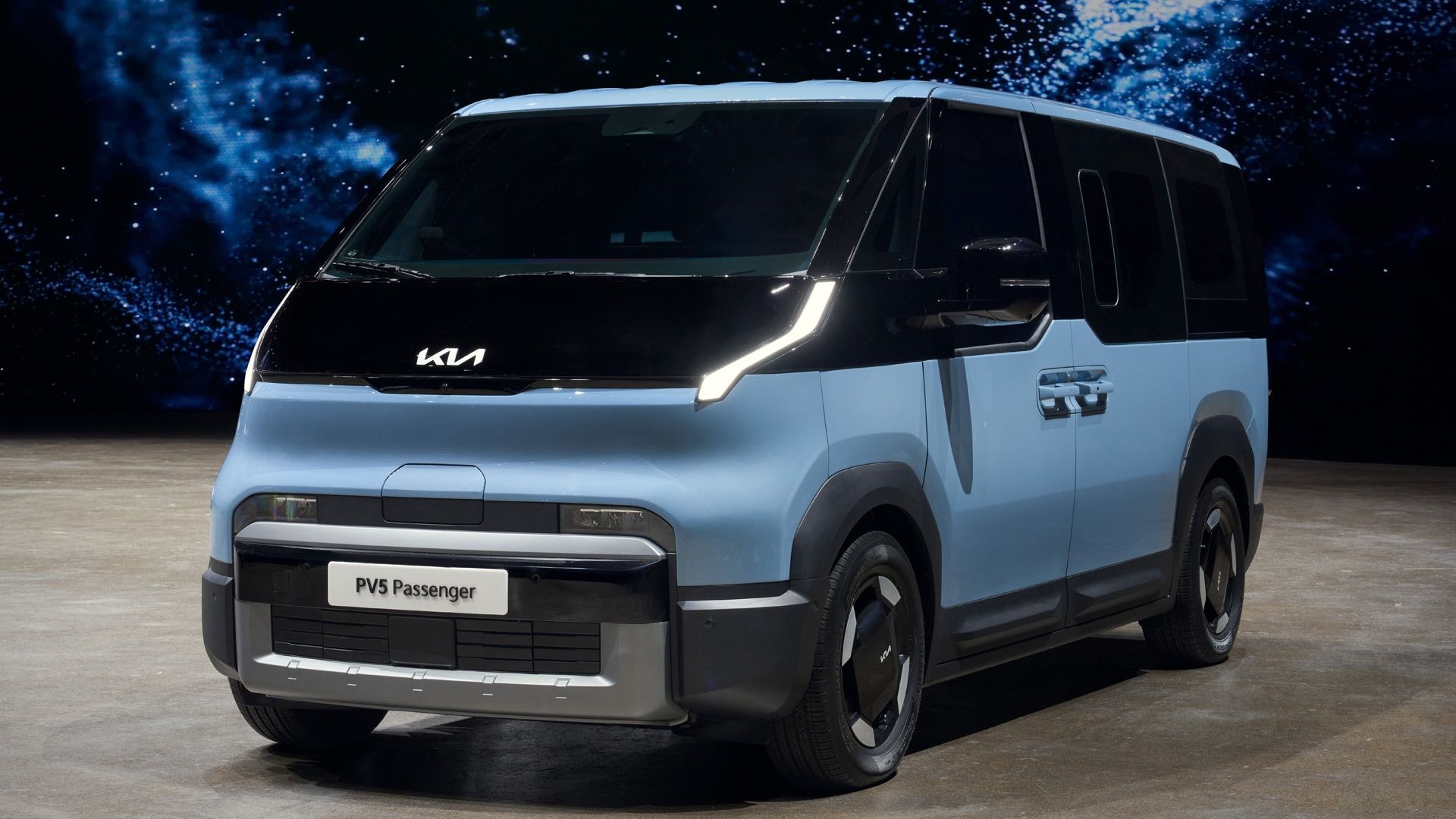
The Kia PV5 is not just an electric van; it is a complete reimagining of what a utility vehicle can be. Built on Kia’s revolutionary “Platform Beyond Vehicle” (PBV) concept, the PV5 promises to be a shapeshifter—a vehicle that adapts to your business, your family, or your lifestyle, rather than forcing you to adapt to it.
At EV Evolution, we believe this is the shake-up the commercial sector has been waiting for. Whether you run a fleet of delivery vehicles or simply want a futuristic people-mover that doesn’t cost the Earth, the PV5 demands your attention.
What is a “PBV”? (And Why Should You Care?)
Before we dive into the specs, we need to talk about the acronym that defines this car: PBV.
“Platform Beyond Vehicle” is Kia’s vision for a modular future. The PV5 isn’t built like a traditional car where the body is welded permanently to the chassis. Instead, it uses a flexible “skateboard” EV platform where different upper bodies can theoretically be swapped or heavily customized during production.
While the “swappable body” dream is the long-term goal, the 2026 reality for Australia means incredible versatility. The PV5 is designed from the ground up to offer:
- PV5 Cargo: A dedicated panel van for logistics and trades.
- PV5 Passenger: A spacious, airy people-mover (think “futuristic taxi” or “family hauler”).
- PV5 Chassis Cab: A blank canvas that can be fitted with a tray, box body, or refrigerated unit.
EV Evolution Insight: Think of the PV5 as the “Lego” of the automotive world. It allows Kia to produce highly specialized vehicles—like a high-roof van with a “walk-through” cabin—without the massive costs usually associated with custom builds.
Specs: The Numbers That Matter for Aussie Roads
Australian fleets and families have specific needs: range, reliability, and charging speed. The PV5 hits the sweet spot between urban efficiency and genuine usability.
1. Battery & Range
The PV5 is expected to launch in Australia with two main battery options, using NMC (Nickel Manganese Cobalt) chemistry for density and performance.
- Standard Range: ~51.5kWh battery.
- Long Range: ~71.2kWh battery.
- Range (WLTP): Up to 416km for the Long Range Cargo variant.
Note: There is also a globally announced entry-level 43.3kWh LFP battery, primarily for city-bound courier runs. We are waiting for confirmation on whether this specific budget-friendly option will land Down Under.
2. Charging Performance
Time is money, especially for business owners.
- DC Fast Charging: 10% to 80% in just 30 minutes.
- V2L (Vehicle-to-Load): This is a game-changer for tradies. The PV5 features internal and external power outlets capable of delivering 3.68kW. You can run drop saws, charge cordless drill batteries, or power a mobile coffee machine directly from the van—no generator required.
3. Dimensions & Capacity
The PV5 strikes a “Goldilocks” size—bigger than a VW Caddy but slightly more compact and easier to park than a Toyota HiAce.
- Length: 4,695mm (perfect for tight city loading zones).
- Wheelbase: 2,995mm (maximising interior space).
- Cargo Volume: Up to 5.2 cubic meters in the High Roof variant.
- Payload: Designed to accommodate up to two Euro pallets with ease.
The “Ute” Question: PV5 Chassis Cab vs. Kia Tasman
We know what you’re thinking: “Is this the electric ute we’ve been promised?”
Yes and no. The Kia Tasman (launching soon) is Kia’s traditional, rugged dual-cab ute, initially arriving with diesel power. The PV5 Chassis Cab, however, offers a different kind of utility.
The PV5 Chassis Cab is perfect for urban trades who need a tray back or a custom box but don’t need to rock-crawl up a mountain. It sits lower to the ground, making loading and unloading significantly easier on your back than a high-riding 4×4. It is the smarter, cleaner choice for the city-based chippy, florist, or last-mile delivery driver.
Interior: A Mobile Office on Wheels
Step inside, and the “commercial” feel vanishes. The PV5 borrows heavily from Kia’s premium passenger EVs like the EV9.
- The “Desk” Steering Wheel: The steering wheel can tilt upwards to become a flat surface—perfect for a laptop or a lunch break.
- Walk-Through Cabin: No centre console barrier means you can easily slide from the driver’s seat to the passenger side (or into the rear in High Roof models) without exiting the vehicle—a huge safety plus on busy roads.
- Tech: A massive 12.9-inch infotainment screen runs the show, featuring advanced fleet management software that can track efficiency and maintenance needs in real-time.
Market Context: Why the PV5 Will Win in 2026
The commercial EV sector in Australia is heating up. The PV5 will be going head-to-head with the Ford E-Transit Custom and the LDV eDeliver 7.
Why choose the PV5?
- Dedicated EV Platform: Unlike the Ford (which shares DNA with its diesel sibling), the PV5 is electric-only. This means a completely flat floor, a tighter turning circle, and better space utilization.
- Price: Industry estimates suggest a starting price around $50,000 – $55,000 AUD. If accurate, this undercuts many rivals and brings the Total Cost of Ownership (TCO) into positive territory for small businesses almost immediately.
- Warranty: Kia’s legendary 7-year unlimited kilometre warranty is expected to apply, providing peace of mind that many emerging commercial brands simply cannot match.
Conclusion: The Future of Work is Here
The 2026 Kia PV5 isn’t just a new van; it’s a tool designed to future-proof Australian businesses. It combines the reliability of a workhorse with the intelligence of a smartphone.
Whether you are looking to decarbonize your fleet, save thousands on fuel and servicing, or simply drive the coolest van on the block, the PV5 is the vehicle to watch.
EV Evolution will be right here, tracking every shipment and spec update as we approach the mid-2026 launch.
🚚 Is the Kia PV5 right for your business?
Choosing the right commercial EV can be tricky. Payload limits, real-world range, and tax incentives vary wildly. Don’t guess—get the facts.
Initiate a chat with our EV Evolution AI Chatbot now!
Our purposely trained AI is available 24/7 to answer your specific questions:
- “What is the payload difference between the PV5 Cargo and the Chassis Cab?”
- “How much can I save on fuel compared to a diesel HiAce?”
- “When can I pre-order the PV5 in Australia?”
About EV Evolution
EV Evolution is the leading online platform dedicated to Australian electric vehicle owners and enthusiasts. We foster a vibrant community, delivering essential EV news and insights, and enhancing user engagement through our innovative, AI-powered chatbot for dynamic discussions. Our mission is to empower Australian electric vehicle owners and enthusiasts by fostering a vibrant, AI-driven online community that connects, informs, and advances the nation’s electric vehicle landscape.