


For the last five years, the performance electric vehicle market in Australia has been a one-horse race. If you wanted sub-3.5-second acceleration without spending supercar money, you bought a Tesla Model 3 Performance. It was the default choice—fast, accessible, and clinically efficient.
But in 2026, the era of default choices is over.
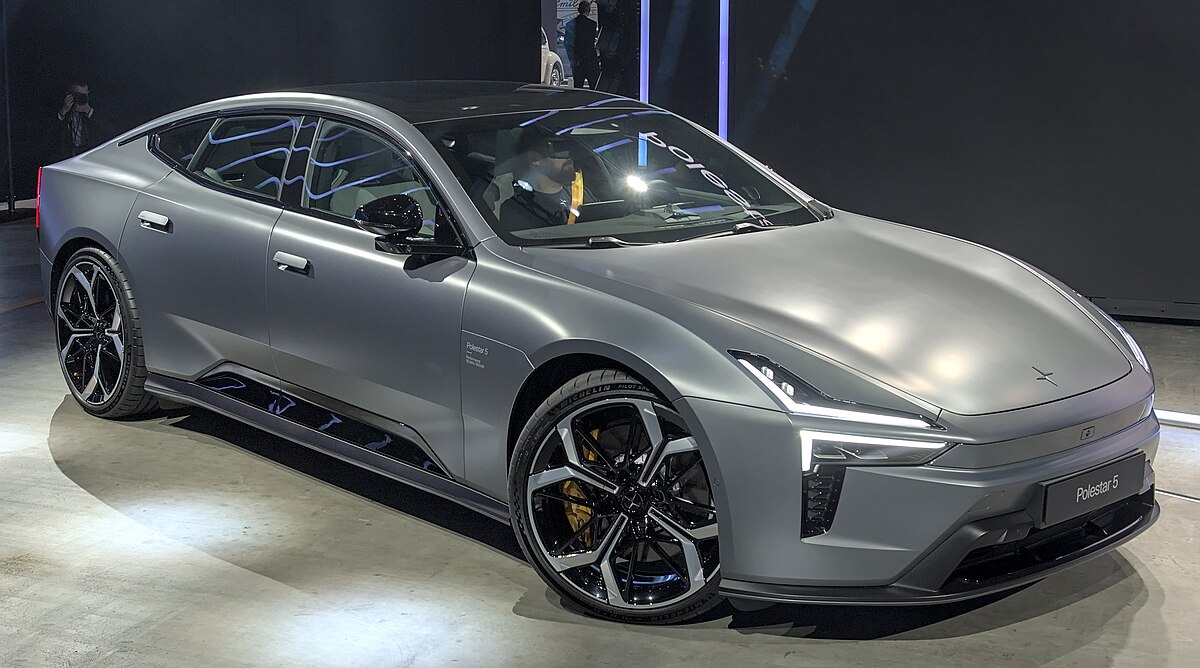
Polestar has unleashed its flagship, the Polestar 5. This isn’t just a tuned-up sedan; it is a bespoke, 650kW four-door Grand Tourer built on a bonded aluminium chassis that claims to be stiffer than a McLaren. It is designed to hunt Porsches, but inevitably, it finds itself in a drag strip stare-down with the reigning king of the traffic light Grand Prix, the Tesla Model 3 Performance.
At EV Evolution, we know that speed isn’t just a number on a spec sheet. It’s about how that power makes you feel. We’ve pitted the “Highland” update of the Model 3 Performance against the incoming Swedish super-GT to see which one truly deserves the title of Australia’s ultimate electric weapon.
🚀 The Drag Strip Numbers: 3.1 vs. 3.2
Let’s address the elephant in the room immediately. In a pure sprint to 100 km/h, the “budget” option wins—by a hair.
- Tesla Model 3 Performance: 0-100 km/h in 3.1 seconds.
- Polestar 5 Performance: 0-100 km/h in 3.2 seconds.
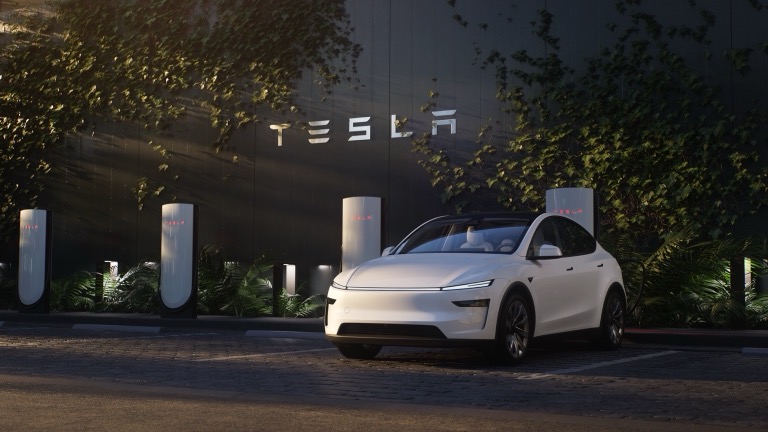
On paper, Tesla retains its crown. Its lighter footprint (approx. 1,850kg) allows it to launch with a violence that defies physics, utilising its sophisticated traction control to snap necks instantly.
However, the Polestar 5 brings a different kind of firepower. With a dual-motor setup generating a colossal 650kW (884hp) and 1,015Nm of torque, it has significantly more raw muscle than the Tesla (approx. 460kW). This suggests that while the Tesla might win the launch, the Polestar 5 possesses the relentless, high-speed pulling power of a true autobahn stormer. Above 100km/h, we expect the Polestar’s horsepower advantage to see it walk away from the Tesla.
🧬 Chassis & Handling: Software vs. Hardware
This is where the two contenders diverge philosophically.
The Tesla Approach: Software Sorcery
The Model 3 Performance relies on Track Mode V3. It’s a masterpiece of digital engineering that allows you to adjust handling balance (understeer vs. oversteer), stability assist, and regenerative braking via sliders on the screen. Combined with its new adaptive damping system, it makes an everyday sedan feel like a go-kart. It is agile, pointy, and playful.
The Polestar Approach: Supercar Engineering
The Polestar 5 doesn’t just use software; it uses exotic hardware. It is built on a bespoke bonded aluminium platform (the PPA), a construction method usually reserved for Lotus and Aston Martin.
- Stiffness: Polestar claims this chassis is stiffer than a two-seat supercar, providing a rigid platform for the suspension to work.
- MagneRide: The Performance variant utilizes MagneRide adaptive dampers, which use magnetised fluid to adjust stiffness up to 1,000 times per second.
- The Feel: While the Tesla feels like a digital toy you play with, the Polestar is engineered to feel like a mechanical instrument. It offers a “GT” maturity—composed and planted at 200km/h, soaking up bumps that would unsettle the firmer Tesla.
💎 Premium Feel vs. Raw Speed
Here lies the $100,000 question.
The Tesla Model 3 Performance (approx. $80,900 + ORCs) is the bargain of the century. You get supercar acceleration for the price of a mid-spec BMW 3 Series. But inside, it remains a Model 3. The “Highland” update added ambient lighting, ventilated sports seats, and carbon fibre dash strips, but it is still minimalist. It feels like a piece of tech—efficient, stark, and screen-focused.
The Polestar 5 (approx. $193,100 + ORCs for the Performance) is in a different stratosphere. This is a true luxury GT.
- The Cabin: It features a “4+1” seating layout wrapped in sustainable Nappa leather, flax composites, and Swedish gold accents. It feels expensive, bespoke, and curated.
- The 800V Advantage: The Polestar 5 runs on an 800-volt architecture, allowing for 350kW DC charging (10-80% in 22 minutes). The Tesla is stuck on 400V architecture (max 250kW).
- Exclusivity: You will see ten Model 3s at every traffic light. You might only see one other Polestar 5 all year. For the premium buyer, that rarity is worth the price of admission.
🏁 EV Evolution Verdict
If your only metric is 0-100km/h per dollar, the Tesla Model 3 Performance is undefeated. It remains the democratization of speed, a car that allows regular Aussies to embarrass Ferraris.
But the Polestar 5 isn’t trying to be a budget drag racer. It is trying to be the best electric GT in the world. It offers a depth of engineering—from that bonded aluminium chassis to the 800V charging—that the Tesla cannot match. It is faster where it counts (high-speed touring), charges quicker, and feels like an event every time you open the door.
- Winner for the Drag Strip: Tesla Model 3 Performance.
- Winner for the Grand Tour: Polestar 5.
🤖 Join the Evolution: Compare the Curves
The 0-100 time is just one data point. How does the Polestar 5’s acceleration hold up past 100km/h? What is the real cost of replacing the 21-inch tyres on a Model 3 Performance after a track day?
Don’t buy based on a brochure number.
At EV Evolution, we encourage you to try chatting with our AI-powered chatbot today. It is trained on the latest dyno charts, track times, and ownership costs for Australia’s fastest EVs.
- “Compare the 100-200km/h times of the Polestar 5 vs Tesla Model 3 Performance.”
- “What are the maintenance costs for MagneRide suspension?”
- “Show me the depreciation curve for high-performance EVs in Australia.”
About EV Evolution
EV Evolution is the leading online platform dedicated to Australian electric vehicle owners and enthusiasts. We foster a vibrant community, delivering essential EV news and insights, and enhancing user engagement through our innovative, AI-powered chatbot for dynamic discussions. Our mission is to empower Australian electric vehicle owners and enthusiasts by fostering a vibrant, AI-driven online community that connects, informs, and advances the nation’s electric vehicle landscape.