

Market Flood or Buyer’s Paradise? Picking the Gems as the First Wave of Leases Ends
If you’ve been keeping an eye on the future of transport in Australia, you’ll know that 2026 has brought a massive shift to the bitumen. We aren’t just seeing new models hit the showrooms; we are witnessing the first great “Lease Release.” Thousands of savvy Aussies who jumped onto the EV bandwagon in 2022 and 2023 via novated leases are now reaching the end of their three-year terms.
The result? The market is officially flooded with high-quality, mid-life electric vehicles. And for the canny buyer, this is the ultimate “Tech Flex.”
As a professional automotive journalist, I’ve watched the depreciation curves of EVs “melt” faster than a Paddle Pop in a Perth heatwave over the last year. New car price cuts from brands like Tesla and BYD have forced used prices down to levels we once thought impossible. We are talking about near-new tech for the price of a used Camry.
At EV Evolution, we’ve crunched the data to find the best second-hand EVs in Australia right now. These aren’t just cars; they are financial hacks. Here are the three models that are a total steal this month.
1. The Benchmark: Tesla Model 3 (2021-2022 RWD)
Estimated 2026 Price: $32,000 – $36,000
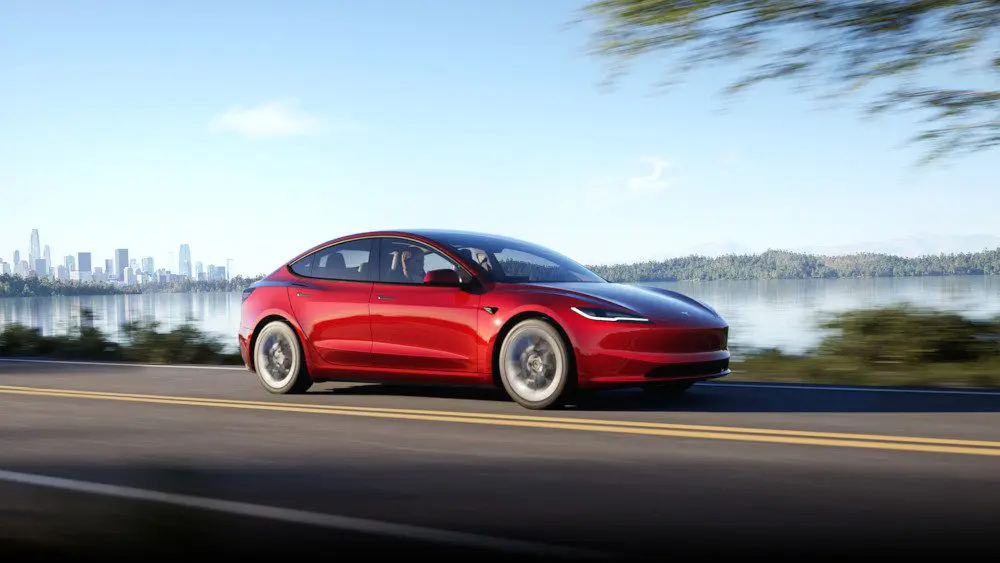
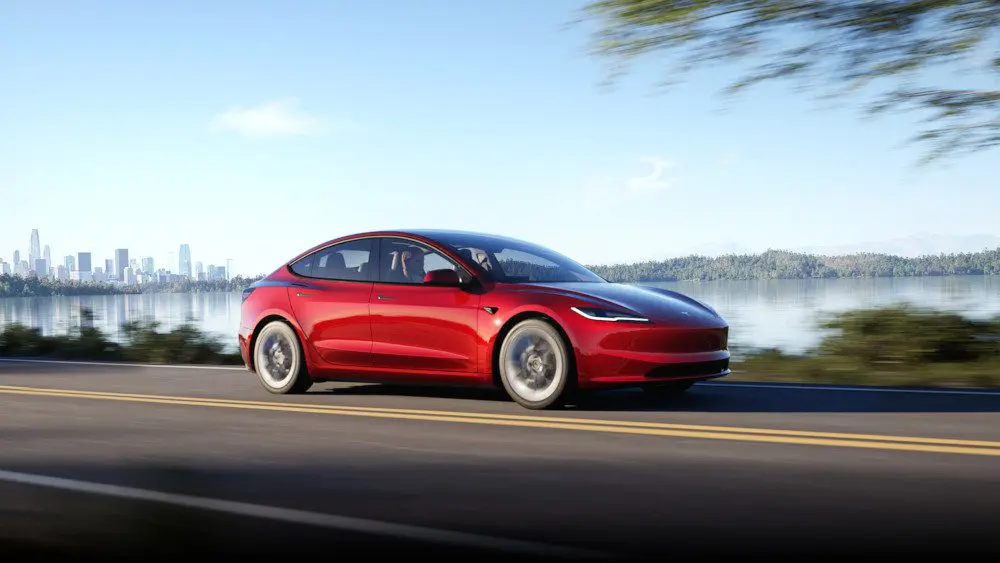
The Used Tesla Model 3 price in 2026 is the biggest story in the industry. What was once a $60,000+ prestige icon is now sitting comfortably in the mid-30s. Specifically, the 2022 Rear-Wheel Drive (RWD) models are the “Goldilocks” choice.
- Why it’s a steal: These models benefit from the 2022 refresh, which included the LFP (Lithium Iron Phosphate) battery. Unlike older chemistries, you can charge this to 100% daily without “cooking” the cells. Plus, you get the faster AMD Ryzen processor for a buttery-smooth Netflix-in-the-car experience.
- The Slay Factor: It still receives over-the-air (OTA) updates. A 2022 Model 3 in 2026 actually has more features today than it did when it was new. It is essentially a rolling smartphone that refuses to age.
Tool Integration: Don’t buy a used Tesla blind. Vibe Check the battery health! Our tool can help you analyze the “indicated range at 100%” to see how much life is left. Ask our AI what to look for when buying a used 2022 Tesla—it knows the specific service mode secrets to reveal the real state of the pack.
2. The Practical Powerhouse: Hyundai Kona Electric (2021-2022 Extended Range)
Estimated 2026 Price: $22,000 – $26,000
While the world was obsessed with Tesla, Hyundai was quietly building one of the most efficient EVs ever made. The first-generation Kona Electric (post-facelift) is currently the best “kilometre-per-dollar” value on the used market.
- Why it’s a steal: The “Extended Range” 64kWh battery is a marathon runner. Even in 2026, finding a car that consistently delivers 400km+ of real-world Aussie highway range for under $25k is a miracle. It’s the perfect car for a young professional who lives in the suburbs but works in the CBD.
- The Vibe: It looks like a “normal” car. For many, the lack of a giant iPad-only interface is actually a plus. It’s tactile, reliable, and backed by a battery that stays cool even in a 40-degree Sydney summer.
3. The Budget Hero: MG ZS EV (2022-2023 Essence)
Estimated 2026 Price: $21,000 – $24,000
In 2022, the MG ZS EV was the “affordable” pioneer. In 2026, it is the absolute bargain king. With the newer MG S5 and MG4 models hogging the spotlight, the older ZS EV Essence models are being traded in at record rates.
- Why it’s a steal: You’re getting a practical SUV with a panoramic sunroof, 360-degree camera, and a decent 320km (NEDC) range for the price of a used petrol hatchback. It uses LFP battery tech (in the 51kWh versions), meaning it’s built to last.
- The Strategy: This is the perfect “second car” for a family or a first EV for a student. It’s cheap to insure, simple to drive, and in 2026, almost every local shopping centre has a charger that fits it.
Why Used is the New “New”
At EV Evolution, we believe the smartest way to enter the electric age in 2026 is often through the “pre-loved” lane. Why? Because the “Early Adopters” have already paid the “Depreciation Tax” for you.
The latest search trends in Australia show that people are moving away from “EV novelty” and toward “EV utility.” You want a car that works, charges fast, and doesn’t break the bank. Buying a three-year-old EV means you get the bulk of the 8-year battery warranty (usually 160,000km) with a significantly lower entry price.
Settle the Used Debate: Talk to the AI
Buying a used petrol car involves checking the oil and listening for rattles. Buying a used EV involves understanding “State of Health” (SoH) and “Cycle Counts.” It can feel like you need a PhD in chemistry just to buy a hatchback.
Don’t get overwhelmed. Our EV Evolution AI-powered Agent is specifically trained on the 2026 used market data. You can ask it to:
- “Compare the battery degradation of a 2021 MG ZS vs. a 2021 Tesla Model 3.”
- “What is the real-world range of a 100,000km Hyundai Kona Electric?”
- “Should I buy a used Nissan Leaf with 10 bars of battery, or wait for a cheap Kona?”
Our AI doesn’t just give you a “yes” or “no”; it gives you a data-driven “Vibe Check” on the specific model you’re looking at.
The Verdict
The 2026 lease-end flood is a once-in-a-decade opportunity. Whether you want the tech-heavy experience of a Used Tesla Model 3, the long-range reliability of a Hyundai Kona, or the pure value of an MG ZS EV, the “Pocket Money” savings are waiting for you.
Vibe Check your local listings today, and let our AI guide you through the battery specs. The future is here, it’s pre-owned, and it’s a total slay.
Buying a used EV in 2026 is a pro-level financial move, but you shouldn’t walk onto a driveway armed with only a “gut feeling.” While there’s no head gasket to blow or timing belt to snap, EVs have their own unique “vitals” that require a specialized eye.
Here is your EV Evolution Pre-Purchase Inspection (PPI) Checklist. Print this out or keep it on your phone for your next test drive to ensure you aren’t buying a “Cooked” battery.
🔋 1. The Battery “Vitals” (The Heart of the Deal)
In a used EV, the battery is roughly 40% of the car’s value. You need to know its State of Health (SoH).
- [ ] The “Range Reality” Check: Ask the seller to have the car charged to 100% before you arrive. Compare the “estimated range” on the dash to the car’s original factory specs. A $10\%$ drop over 3-4 years is normal; $30\%$ is a red flag.
- [ ] Tesla Service Mode Hack: If it’s a Tesla, you can actually run a health test yourself in the “Service Mode” menu. It takes a few hours, so ask the seller if they’ve run it recently.
- [ ] Independent Health Certificate: In 2026, most serious sellers will have an Aviloo or NRMA Battery Health Report. If they don’t, ask if they’re willing to let you get one (it costs about $150-$200 but can save you $15,000).
🔌 2. The “Plug & Play” Hardware
- [ ] Inspect the Port: Open the charging flap. Look for any scorch marks, melted plastic, or bent pins. A damaged CCS2 port can be an expensive fix.
- [ ] Cable Inventory: Check that the car comes with its Mobile Connector (the 3-pin plug for home charging) and a Type 2 to Type 2 cable for public stations. If they’re missing, that’s a $600 negotiation point.
- [ ] The 12V Battery: Even EVs have a standard small battery to run the lights and screens. If it hasn’t been replaced in 3 years, it’s likely near the end of its life.
🛞 3. Mechanical & Exterior (The “Heavy” Truth)
EVs are heavy because of the batteries, which means they stress certain parts more than petrol cars.
- [ ] Tyre Tread Depth: EVs have massive instant torque. Check the inner edges of the tyres; if the previous owner loved “launching” at traffic lights, the rubber will be shredded.
- [ ] Regenerative Braking Test: During the test drive, lift off the accelerator. The car should slow down smoothly without you touching the brake pedal. If it feels “clunky,” the drive unit might have issues.
- [ ] Underbody Inspection: This is crucial. Check for any deep scrapes or dents on the bottom of the car (the battery casing). A punctured battery casing is a “statutory write-off” waiting to happen.
💻 4. The “Tech & Software” Vibe
- [ ] Firmware Version: Check the settings menu. Is the software up to date? If it’s years behind, it might indicate the car hasn’t been connected to Wi-Fi or has a faulty communication module.
- [ ] Screen Health: Look for “yellowing” around the edges of the main screen or any dead pixels. In 2026, the screen is the car.
- [ ] App Connectivity: Ensure the seller is ready to transfer the “Digital Key” or app ownership to you.
📄 5. The Paper Trail
- [ ] Warranty Remaining: Most EVs have an 8-year/160,000km battery warranty. Confirm how many years you have left as a safety net.
- [ ] PPSR Check: Essential. Ensure there is no finance owing and the car isn’t a “repairable write-off.”
🚀 EV Evolution Pro Tip: The “Vibe” Hack
Before you even leave your house to see the car, Vibe Check the seller’s suburb. If the area has a High Vibe Score, it likely means the car has been charged on high-quality public infrastructure or a well-maintained home grid. A car from a “Charging Desert” might have spent its life being “trickle-charged” on sketchy extension leads—not ideal.
Got the VIN or a specific model in mind?
Don’t guess. Ask the EV Evolution AI what specific recalls or “common gremlins” exist for that exact year and model. For example: “What are the common suspension issues for a 2022 Tesla Model 3 in Australia?
About EV Evolution
EV Evolution is the leading online platform dedicated to Australian electric vehicle owners and enthusiasts. We foster a vibrant community, delivering essential EV news and insights, and enhancing user engagement through our innovative, AI-powered chatbot for dynamic discussions. Our mission is to empower Australian electric vehicle owners and enthusiasts by fostering a vibrant, AI-driven online community that connects, informs, and advances the nation’s electric vehicle landscape.