


You’ve seen the headlines. You’ve heard the doom-scrolling “experts” at the Friday afternoon drinks claiming that buying an electric vehicle is like throwing your money into a high-voltage incinerator. The data from late 2025 and early 2026 seems to back them up on the surface: one-year-old EVs have been copping a 25% haircut in value, while hybrids are sitting pretty, retaining nearly 98% of their original RRP. But is this a “meltdown,” or is the Australian market finally just normalizing? At EV Evolution, we’re cutting through the noise to show you why a dropping resale value might actually be the best thing to happen to your bank account.
As a professional automotive journalist, I’ve seen this movie before. We saw it with the first-gen hybrids in the mid-2000s and the first “smartphone” cars a decade ago. Whenever a technology moves from “niche curiosity” to “mass-market utility,” the secondary market goes through a violent reset.
In January 2026, we are officially in that reset. But here is the secret the petrol-heads won’t tell you: Depreciation is only a disaster if you’re a seller. If you’re a buyer—or a savvy leaser—it’s a total slay.
The Data: Used Tesla vs. Hybrid Resale
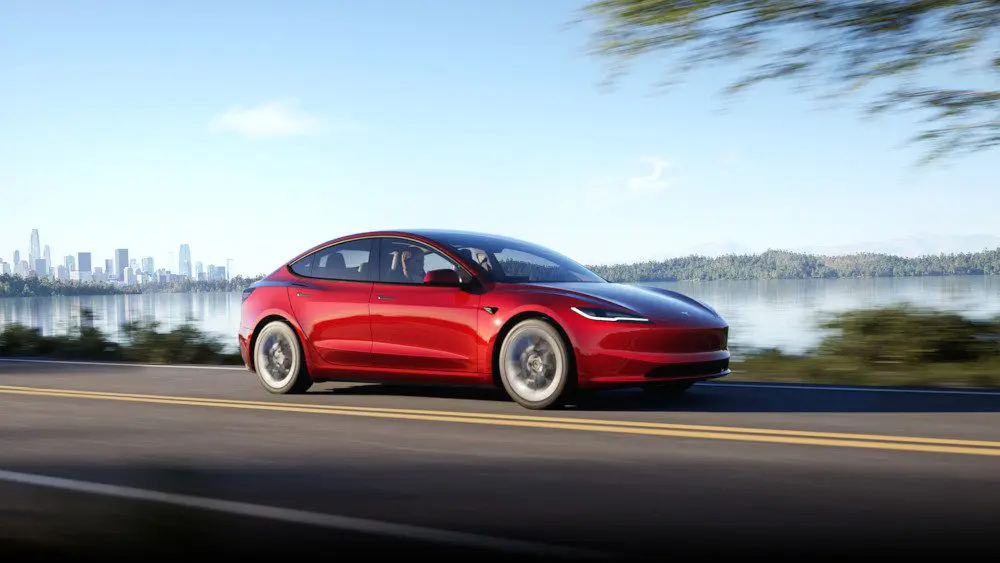
Let’s look at the cold, hard numbers. In 2024 and 2025, the EV resale value in Australia took a significant hit. A Tesla Model 3 that retailed for $65,000 in early 2023 was suddenly fetching mid-$40s on the used market by late 2025. Meanwhile, a Toyota RAV4 Hybrid was—infuriatingly—selling for almost its original sticker price.
Why the massive gap?
- The Tesla Effect: Elon Musk’s aggressive price cuts on new cars instantly wiped billions in “paper value” off used ones. If a new Model 3 drops by $5,000, the one in your driveway drops by $7,000.
- The Influx of Choice: In 2026, we have over 150 EV models on sale in Australia. The “scarcity premium” is gone. You no longer have to wait 12 months for a car, so you no longer have to pay a premium for a “near-new” used one.
- The Tech Leap: With 2026 models like the BMW iX3 and the Mazda 6e pushing 500km–800km ranges, older 300km-range EVs are being viewed through the same lens as an iPhone 12 in a world of iPhone 17s.
Why the “Meltdown” is Actually a Market Normalization
At EV Evolution, we call this the “Used Car Vibe Check.” For years, the used car market in Australia was “cooked” due to COVID-19 supply chain issues. We were living in a fantasy world where cars didn’t lose value.
That fantasy is over.
The 25% drop isn’t a sign that EVs are “failing”; it’s a sign that they are becoming standardised commodities. When you buy a petrol car, you expect it to lose value. Why should an EV be any different?
The Hybrid Anomaly: The reason hybrids are holding 98% value right now is purely based on supply and demand. Many Aussies are still using hybrids as a “safety net” while they wait for more regional chargers. But as the 400kW ultra-fast network completes its rollout in late 2026, expect that hybrid “premium” to evaporate as the world moves toward full electrification.
The Winner: The Strategic Buyer
If you’re looking to enter the market in 2026, the “meltdown” is your best friend. A three-year-old used EV currently offers a lifetime savings of approximately $13,000 compared to a similar-sized petrol SUV.
You are effectively letting the first owner pay the “Technology Tax” for you. You get a car with 95% battery health, a 5-star safety rating, and potentially 5 years of warranty remaining—all for the price of a mid-spec petrol hatch.
The Logic: Why Resale Isn’t Everything
This is where “Old Mate” at the BBQ gets it wrong. He focuses on the Resale Value, but he forgets the Total Cost of Ownership (TCO).
When you factor in the FBT Exemption (which can save you $5,000+ a year in tax), the $0 fuel cost (if you’re charging from rooftop solar), and the minimal servicing costs ($180/year for an EV vs $450+/year for an ICE), the “loss” in resale value is often completely neutralized within the first 24 months.
Pro Tip: Don’t do the math on a napkin. Ask the EV Evolution AI to calculate the ‘Total Life Savings’ for you. It factors in your specific salary, your daily commute, and the current 2026 energy prices to show you why a lower resale is often offset by massive tax and fuel wins.
Stay Ahead of the Evolution
The Australian EV market is moving faster than a BYD Seal in a straight line. Government reviews of the Electric Car Discount, new state-based Road User Charges, and the arrival of Solid State batteries in 2027 are all shifting the value of the car in your driveway every single week.
This is why you need to keep coming back to EV Evolution. We aren’t just here to sell you on the “vibe”; we are here to provide the Strategy Suite of tools you need to stay financially liquid in a changing market.
Before you buy, sell, or lease, use our tools:
- EV Tax Savings Estimator: See the real impact on your take-home pay.
- Vibe Check Tool: Ensure your postcode is ready for your specific car choice.
- AI Agent: Get a 24/7 audit of any used EV listing you find on Marketplace or Carsales.
The Final Word
Is there an EV resale “meltdown”? In terms of raw percentages, yes. Is it a reason to avoid EVs? Absolutely not.
In 2026, the smart money is on utility over equity. You don’t buy a car as an investment; you buy it as a tool to get you from A to B as efficiently as possible. When you look at the 2026 landscape through that lens, the EV evolution is still the only way to play.
The market is normalizing. The tech is maturing. The savings are real.
Don’t get left behind in a “cooked” petrol car. Start the conversation with our AI Agent now and find out how to make the 2026 market work for you.
The 2026 Used EV Pricing Guide: Fair Market Value (FMV) Report
The Vibe Check: In early 2026, the Australian used EV market has finally hit its “normalization” phase. The days of used Teslas selling for more than new ones (2022 was wild, wasn’t it?) are long gone. Thanks to the “July Tax Cliff” anxiety and the arrival of sub-$25k new models like the BYD Atto 1, used prices have recalibrated.
If you’re shopping for a pre-loved electric ride this year, you’re in the box seat. Here is the EV Evolution breakdown of the top 10 most traded models in Australia and exactly what you should be paying in 2026.
📊 2026 Fair Market Value (FMV) Table
Prices based on 2022-2024 models with average mileage (approx. 12,000km/year).
| Rank | Model | 2026 Used Price Range (FMV) | 2026 “Slay” Deal (Great Price) |
| 1 | Tesla Model 3 (RWD) | $32,500 – $38,000 | <$31,000 |
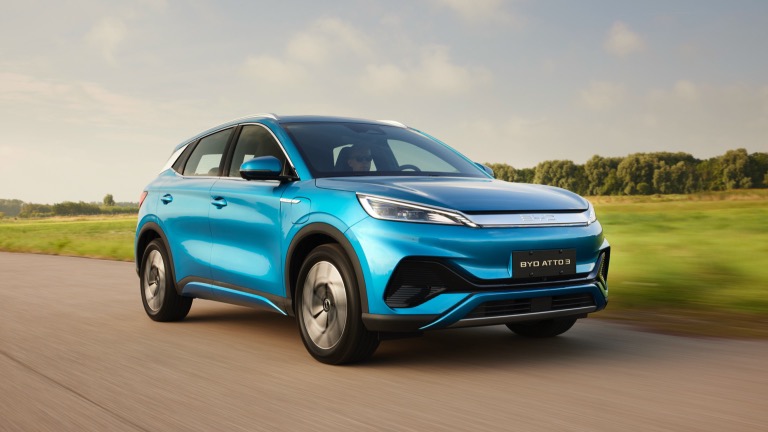
| 2 | BYD Atto 3 (Extended) | $31,000 – $36,500 | <$29,500 |
| 3 | MG4 (Excite 51) | $24,500 – $28,000 | <$23,000 |
| 4 | Kia EV6 (Air) | $46,000 – $49,500 | <$44,500 |
| 5 | Hyundai Ioniq 5 (RWD) | $47,500 – $52,000 | <$46,000 |
| 6 | MG ZS EV (Essence 2022) | $18,500 – $22,000 | <$17,500 |
| 7 | Polestar 2 (Single Motor) | $36,000 – $41,500 | <$34,000 |
| 8 | Hyundai Kona Electric | $23,000 – $27,000 | <$21,500 |
| 9 | Volvo XC40 Recharge | $51,000 – $56,000 | <$49,000 |
| 10 | Nissan Leaf (40kWh) | $16,500 – $21,000 | <$15,000 |
🔍 The Deep Dive: 3 Value Kings of 2026
1. The “Logic” Choice: Tesla Model 3 (2021-2022)
In 2026, the 2022 LFP (Lithium Iron Phosphate) Model 3 is the smartest used buy in the country. These cars were the first to get the AMD Ryzen chip (faster screens) and the battery that you can charge to 100% every day without guilt.
- Negotiation Tip: If the car has over 60,000km, aim for the lower end of the $30k bracket. Check the interior door seals—older ones tend to perish in the Aussie sun.
2. The Suburban Slay: MG4 (Excite 51)
With a new MG4 now significantly cheaper due to the 2026 “Summer Savings” promos, 2024 used models are dropping into the mid-$20s. This is the perfect first EV. It’s Rear-Wheel Drive, has a 5-star ANCAP rating, and is arguably the best-handling small car in the price range.
- Negotiation Tip: Ensure the software is updated to the latest 2026 version to fix the lane-keep “jitters” found in earlier builds.
3. The Family Flex: Kia EV6 (Air)
The EV6 is holding its value better than most because, frankly, it still looks like a spaceship from 2030. In 2026, you can pick up a 2023 model for under $50k. Considering it has 800V charging (350kW), it is more future-proof than almost anything else on this list.
- Negotiation Tip: Check for the V2L (Vehicle-to-Load) adapter. If it’s missing, that’s a $500 discount you should ask for.
🚀 Don’t Buy Blind: Use the EV Strategy Suite
Before you head off to that test drive in Parramatta or Port Melbourne, make sure you’ve done your homework.
- Vibe Check the Battery: Use our EV Vibe Tool to see how the local charging infrastructure in the car’s “home” suburb stacks up. A car that’s been fast-charged daily at a high-output hub might have more degradation than a “home-charged” hero.
- Run the TCO: Use the EV Tax Savings Estimator. Even a used EV can be novated if it’s under 10 years old. You could potentially save another $4,000 a year just by salary packaging a used Tesla instead of buying it with cash.
🤖 Let the AI Settle the Debate
Found a listing on Carsales that looks too good to be true? Start a conversation with our EV Evolution AI Agent. * Copy and paste the listing URL or the specs.
- Ask: “Is $34,000 a fair price for a 2022 Tesla Model 3 with 55,000km in Brisbane?”
- The AI will cross-reference current 2026 market data and tell you if it’s a “Slay” or a “Stay Away.”
The evolution is about being smarter than the market. Use the guide, check the vibe, and never overpay for a plug.
About EV Evolution
EV Evolution is Australia’s authoritative strategic platform for electric vehicle market, dedicated to providing a high-fidelity knowledge base for the next generation of drivers. In a year defined by the Federal statutory review of FBT exemptions and the rapid arrival of record-breaking affordable models, we serve as your professional co-pilot to ensure every automotive decision is data-driven and future-proof. Our EV Strategy Suite—including the EV Tax Savings Estimator, Vibe Check Tool, and 24/7 AI Strategy Agent—empowers young professionals and families to navigate complex technical and regulatory shifts with total transparency. At EV Evolution, we don’t just track the market, we provide the strategic roadmap for your transition to the new electric standard.