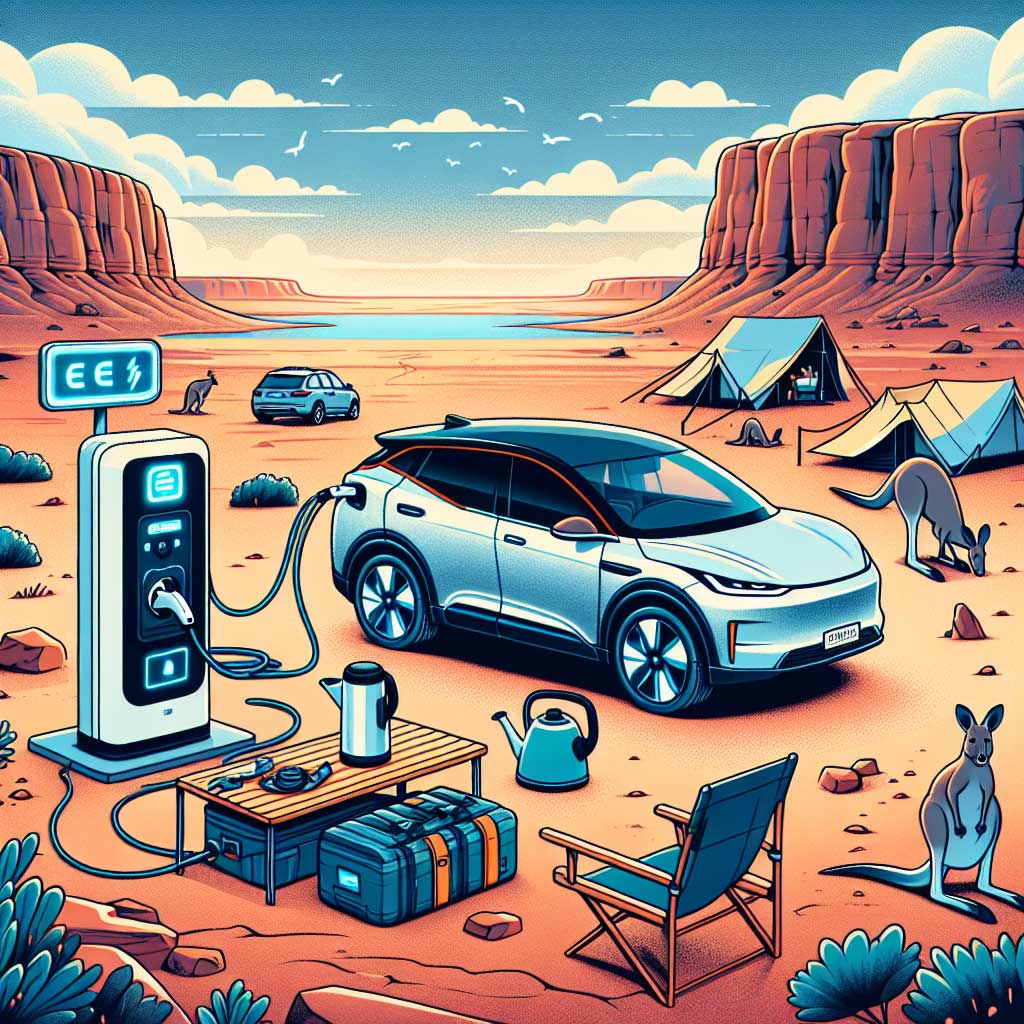


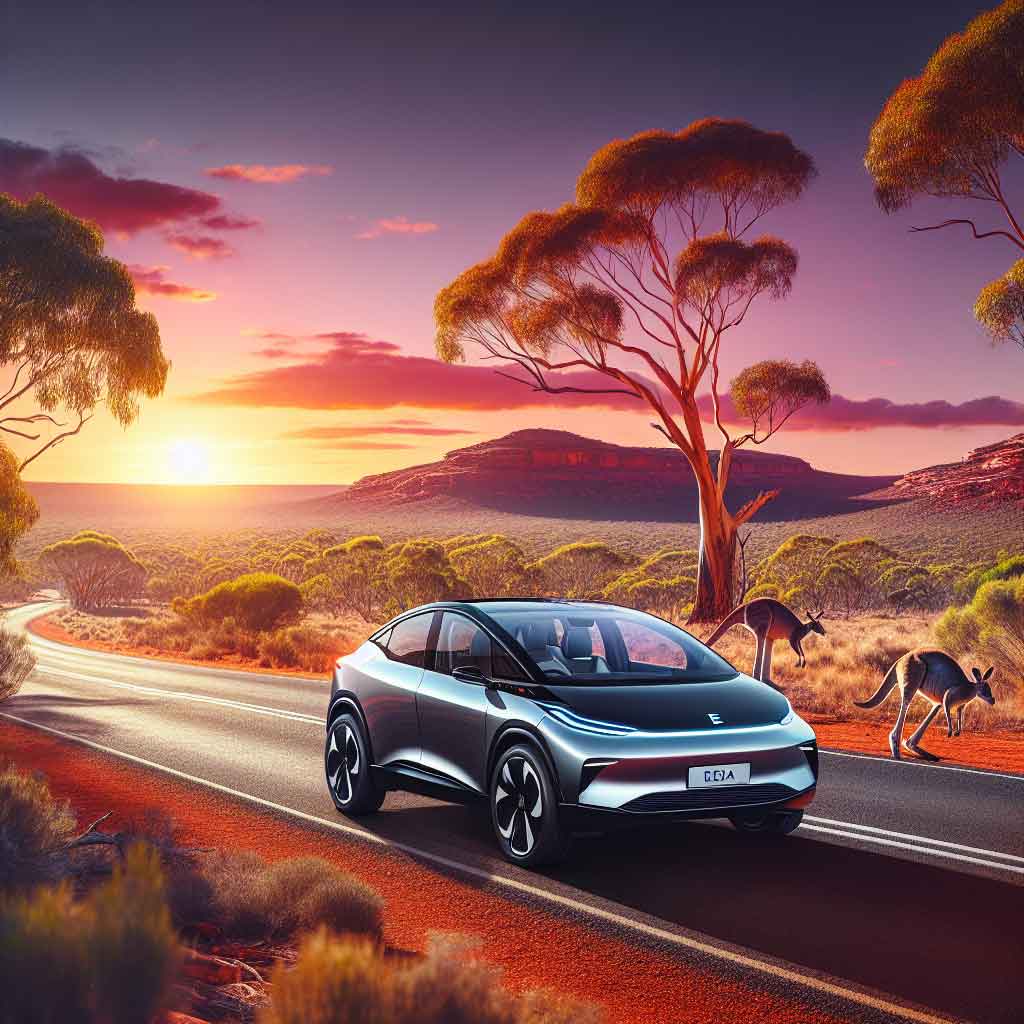
You’ve seen the social media reels—a gleaming Tesla parked in the middle of a red dirt track, thousands of kilometres from the nearest capital city. To the uninitiated, it looks like a recipe for a very expensive tow truck bill. But as we head into 2026, the “Charging Deserts” of Australia are being reclaimed. You don’t need a 350kW ultra-fast charger to see Uluru; you just need to know the “trickle-charge” hacks for regional motels and the secret power points hiding in every caravan park. Welcome to the EV Evolution guide to taking your electric beast where the pavement ends.
At EV Evolution, we believe that “range anxiety” is a fossil fuel of the mind. In 2026, the Australian outback isn’t a dead end for EVs—it’s the ultimate playground for those who know how to play the grid. Whether you’re crossing the Nullarbor or chasing the sunrise at Kings Canyon, here is how you stay “Supercharged” when the fast-chargers disappear.
The State of the Sands: Regional Charging in 2026
The map of Australia looks a lot different today than it did in 2022. The WA EV Network has officially completed its “Kununurra to Mundrabilla” run, creating one of the longest connected EV highways in the world. Meanwhile, the Queensland Electric Super Highway has pushed deep into the dinosaur trail, linking Winton, Hughenden, and Mount Isa.
But let’s be real: even with these massive government rollouts, there are still gaps. There are stretches of the Stuart Highway where the nearest DC fast-charger is a 250km leap. If you’re driving a BYD Sealion 7 or a Mazda 6e, you’ve got the range to make the jump, but what do you do when you arrive at a remote roadhouse that only has a diesel generator?
Hack #1: The Caravan Park “3-Phase” Flex
Every caravan park in Australia is essentially a giant EV charger in disguise. While they might not have a dedicated “Tesla” logo on the wall, they have something better: Powered Sites.
- The 15-Amp Trickle: Most powered sites offer a 15-amp outlet. Using your standard mobile connector (the “trickle-charger” that came with your car), you can add about 15km to 20km of range per hour. Plug in at 6:00 PM, and by 8:00 AM, you’ve added 200km+ of range while you slept in your van or cabin.
- The 3-Phase “Holy Grail”: Many regional workshops and larger caravan parks have 3-phase power outlets (the big red or round 5-pin plugs). If you carry a portable 11kW or 22kW charging cable, you can tap into these to add 80km to 100km of range per hour.
- The Vibe Check: Always call ahead. In 2026, most caravan park owners are “EV-friendly” but appreciate the heads-up. Some charge a flat “EV fee” (usually around $10–$20) to cover the electricity.
Hack #2: The “Destination” Motel Strategy
In 2026, the NRMA Destination Charging program has reached a tipping point. Thousands of regional motels from Bourke to Broome have installed AC destination chargers (7kW to 22kW) to attract the “EV Dollar.”
- The Search Strategy: Use the EV Evolution Strategy Suite to filter for “Accommodation with Charging.”
- The Benefit: Most motels offer free charging for guests. You arrive with 10%, plug in over dinner, and leave with 100% the next morning. It is significantly more convenient than stopping at a petrol station ever was.
- The Hidden Hack: Look for “Telsa Destination” chargers. In 2026, almost all of these have been unlocked to work with any Type 2 EV (like your BYD or MG).
Hack #3: The “Off-Grid” Prototype (Stuart Highway)
If you’re heading to the Red Centre via the Stuart Highway, keep an eye out for the new innovative off-grid prototypes. As part of the Driving the Nation program, roadhouses like Erldunda (200km south of Alice Springs) now feature solar-and-battery-powered fast chargers. These are independent of the “cooked” rural grid and use the 300+ days of outback sunshine to top you up.
Survival Gear: The Outback EV Checklist
You wouldn’t head into the desert without water; don’t head in without the right cables. To master charging an EV in the outback, your boot should contain:
- A 15-Amp Heavy Duty Extension Lead: Not the thin one from the supermarket. You need a dedicated 15-amp lead (with the larger earth pin) to reach those caravan park outlets.
- A Type 2 to Type 2 Cable: Many regional AC chargers are “untethered,” meaning they don’t have a cable attached. You must bring your own.
- A 3-Phase Adapter: This is the ultimate “Tech Flex” for regional travel. It allows you to plug into industrial outlets found at many roadhouses and showgrounds.
Reject the Fear
At EV Evolution, we’ve heard all the stories. “Old Mate” will tell you that an EV will melt in the sun or get stranded in the Simpson Desert. We say: Settle the math, don’t follow the myth.
The outback is actually the perfect environment for an EV. Why? Because when you’re descending a range, your Regenerative Braking is putting free energy back into your battery. While the diesel ute behind you is burning his brake pads and fuel, you’re gaining “free kms.”
Use the Strategy Suite to Plan Your Big Lap
Don’t go “Off-the-Grid” without a plan. Our EV Strategy Suite is designed for exactly this kind of adventure:
- Vibe Check Tool: Use it to see real-time status updates from other drivers in remote areas. If a charger in Coober Pedy is down, you’ll know before you leave Port Augusta.
- EV Tax Savings Estimator: Planning to take the EV on a year-long “Big Lap”? Calculate how much tax you’ll save on your novated lease while you’re exploring.
Start a Conversation with the AI Agent
Got a specific route in mind? Whether it’s the Savannah Way or the Great Ocean Road, Ask the EV Evolution AI: ‘Based on my postcode, is a Hybrid or a Full EV more efficient for me for a trip to the Red Centre?’
Our AI will analyze the 2026 charger density, the current temperature forecasts (don’t get “cooked” in 40-degree heat!), and your vehicle’s specific efficiency to give you a custom “Desert Survival Blueprint.”
The evolution doesn’t stop where the bitumen ends. Keep coming back to EV Evolution for the latest regional search trends, news updates, and outback hacks. Australia is big—let’s see all of it, silently.
Remote Roadhouse Map” for the Stuart Highway, showing exactly which stops have 3-phase power vs. dedicated DC fast-chargers
Navigating the 3,000km stretch of the Stuart Highway (the “Explorer’s Way”) used to be the ultimate test of endurance for an EV. In 2026, the game has changed. While the RAA Charge network in South Australia and the NRMA/Driving the Nation program in the Northern Territory have filled most of the gaps with DC fast-chargers, knowing where the 3-phase “safety nets” are is still the key to a stress-free crossing.
Here is your 2026 Remote Roadhouse Map for the Stuart Highway, categorised from South to North.
📍 Section 1: The South Australian Leg (Adelaide to Marla)
This section is now highly developed thanks to the RAA. You can comfortably “hop” between rapid chargers, but Spud’s is your critical 3-phase backup if the grid is under pressure.
| Location | Distance from Prev. | Primary Charger (DC) | 3-Phase Backup (AC) | The “Vibe” |
| Port Augusta | 0km | RAA Ultra-Rapid (200kW) | Multiple AC Options | The “Gatekeeper” of the North. |
| Pimba (Spud’s) | 170km | RAA Rapid (150kW) | 32A 5-Pin Plug | Legendary roadhouse; 3-phase is behind the workshop. |
| Glendambo | 113km | RAA Rapid (150kW) | 15A Caravan Points | Essential stop before the big Coober Pedy run. |
| Coober Pedy | 252km | RAA Rapid (200kW) | 22kW AC Destination | The “Solar Hub” of the desert. |
| Marla | 235km | RAA Rapid (150kW) | 32A 5-Pin Plug | Last RAA stop before the NT border. |
📍 Section 2: The Red Centre Gap (Marla to Alice Springs)
This is the most isolated stretch. The gap between Marla and Erldunda is roughly 250km. Ensure you leave Marla with 100% SoC (State of Charge).
| Location | Distance from Prev. | Primary Charger (DC) | 3-Phase Backup (AC) | The “Vibe” |
| Kulgera | 180km | N/A (Planned 2026) | 20A/32A 3-Phase | The first pub in the NT. Rely on 3-phase here. |
| Erldunda | 75km | Innovative Solar DC | 22kW NRMA AC | Solar-powered prototype; very reliable in summer. |
| Alice Springs | 200km | NRMA Rapid (150kW) | Multiple 22kW Hubs | Full services, cafes, and specialized EV support. |
📍 Section 3: The Top End Run (Alice Springs to Darwin)
The NRMA has aggressively expanded here. You are rarely more than 200km from a DC plug, but Ti Tree and Threeways are your “Rotary” and “3-Phase” strongholds.
| Location | Distance from Prev. | Primary Charger (DC) | 3-Phase Backup (AC) | The “Vibe” |
| Ti Tree | 193km | DC Coming (Mid-2026) | 32A 3-Phase (Room 14) | The “Trickle-Charge” king. Ask Alice at the counter. |
| Wauchope | 210km | NRMA Rapid (75kW) | 32A 5-Pin Plug | Near Devils Marbles; great for an overnight top-up. |
| Tennant Creek | 115km | NRMA Rapid (150kW) | 22kW AC Destination | Solid infrastructure; usually zero wait times. |
| Threeways | 25km | NRMA Rapid (75kW) | 32A 5-Pin (Rm 20) | The junction to QLD. The 3-phase is a lifesaver. |
| Dunmarra | 335km | NRMA Rapid (75kW) | 15A Caravan Points | Longest gap; watch your speed and AC usage. |
| Katherine | 275km | NRMA Rapid (150kW) | Multiple AC Hubs | The “Hub of the North.” |
| Adelaide River | 220km | NRMA Rapid (150kW) | 22kW AC | Final major stop before the Darwin “finish line.” |
🛠️ The “Desert Survival” Gear List
To use the 3-phase plugs listed above, your EV Strategy Suite “Outback Kit” must include:
- Portable EVSE (3-Phase): A mobile charger with a 5-pin red or round plug (e.g., a Tesla Gen 2 Mobile Connector with an aftermarket 3-phase tail).
- RFID Cards: Don’t rely on phone signal for apps like Chargefox or NRMA. In the “Charging Deserts,” a physical RFID card works when Telstra doesn’t.
- The “Honour System” Cash: Some roadhouses are still setting up their billing. Carry $20–$50 in cash to pay for 3-phase “donations” to the roadhouse generator.
🤖 Let the AI Audit Your Route
Planning to tow a camper trailer behind your Tesla Model Y or Kia EV9 through these gaps? That 335km run from Threeways to Dunmarra gets very “cooked” with a trailer.
Ask the EV Evolution AI Agent: “Based on a 40-degree forecast and a 1.5-tonne trailer, what is my safe speed to clear the Threeways to Dunmarra gap?” Our AI will calculate the wind resistance and thermal load to give you a precise “Cruise Control” target.
About EV Evolution
EV Evolution is Australia’s authoritative strategic platform for electric vehicle market, dedicated to providing a high-fidelity knowledge base for the next generation of drivers. In a year defined by the Federal statutory review of FBT exemptions and the rapid arrival of record-breaking affordable models, we serve as your professional co-pilot to ensure every automotive decision is data-driven and future-proof. Our EV Strategy Suite—including the EV Tax Savings Estimator, Vibe Check Tool, and 24/7 AI Strategy Agent—empowers young professionals and families to navigate complex technical and regulatory shifts with total transparency. At EV Evolution, we don’t just track the market, we provide the strategic roadmap for your transition to the new electric standard.