

It’s February 2026, and the Australian second-hand car market is currently flooded with the first major wave of high-quality, pre-loved electric vehicles. If you’ve been scrolling through the listings, you’ve likely seen 2021-model Tesla Model 3s and Hyundai Kona Electrics at prices that make a brand-new petrol SUV look like a bad investment.
But there’s a nagging fear, isn’t there? It’s the “BBQ myth” that just won’t die. You’ve heard it from your uncle, your neighbour, or that one skeptic on social media: “Don’t buy a 5-year-old EV, mate. The battery will be cooked, and it’ll cost you $20k to replace it next year.”
At EV evolution, we don’t deal in hearsay; we deal in data. We’ve spent the last few months analyzing the State of Health (SoH) reports from thousands of 5-year-old EVs hitting Aussie auctions and private sales. The results? It’s time to stop worrying and start calculating.
📈 The Real-World Data: The First Wave (2021–2026)
The year 2021 was the turning point for EVs in Australia. It was when the Tesla Model 3 became a common sight and the Hyundai Kona Electric proved that an electric SUV could actually handle a trip to the Blue Mountains.
Now that these cars have reached the 5-year mark, the “cliff” that skeptics predicted simply hasn’t materialized.
The Tesla Model 3 (Standard Range Plus/RWD)
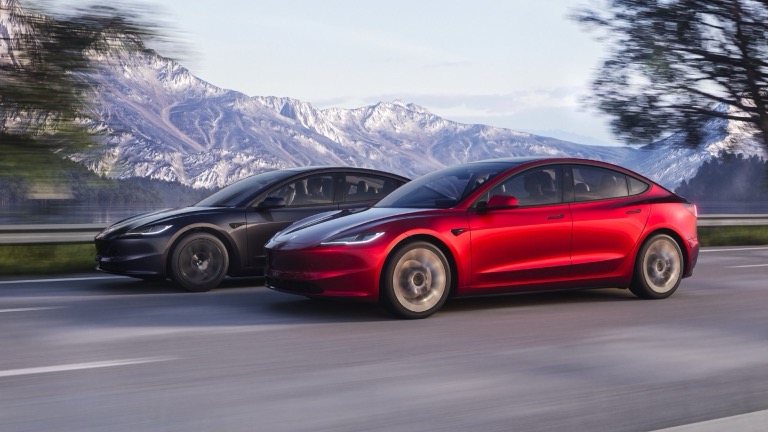
According to 2026 fleet data from across Sydney and Melbourne, the average 2021 Tesla Model 3 with 80,000km on the clock is showing a State of Health (SoH) of 92% to 94%.
- The Reality: That is a loss of only 1.2% to 1.6% per year.
- The Math: If your Model 3 had 440km of range when new, it still has roughly 410km today. For the average Aussie commute, that is practically negligible.
The Hyundai Kona Electric (64kWh)
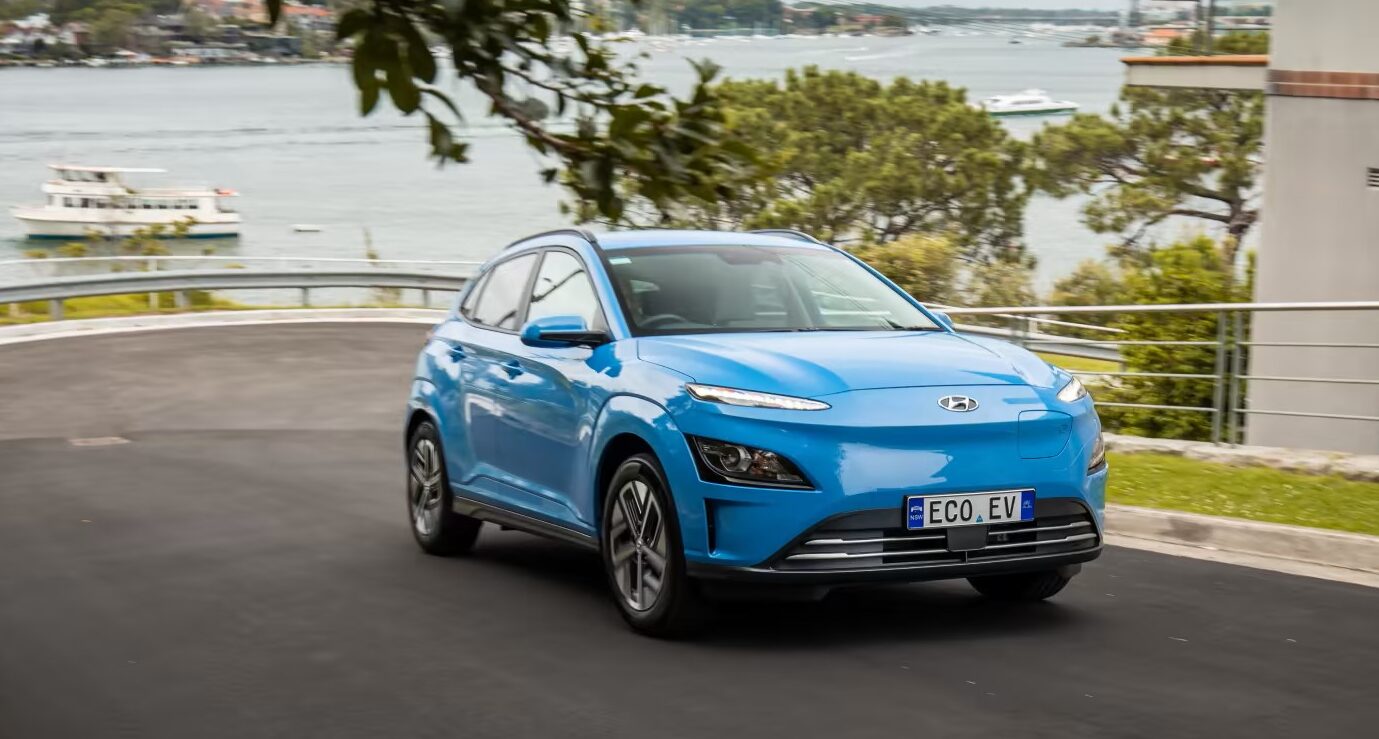
The Kona has proven to be the “over-engineered” hero of the used market. Because Hyundai used a very conservative thermal management system, 5-year-old Konas are frequently testing at 94.5% SoH or higher.
- The Secret: The Kona’s battery chemistry and cooling are so robust that even high-km units (120,000km+) are still comfortably within their “prime” operating window.
Before you dismiss a used EV, jump into our EV fuel savings calculator. You’ll quickly see that the money you’ve saved on petrol over those five years would have paid for a replacement battery twice over—if you actually needed one (which you don’t).
🥊 Myth-Busting: “EV Batteries Die Like iPhones”
This is the most persistent EV battery degradation myth in 2026. People assume that because their 3-year-old smartphone lasts half a day, their 5-year-old car must be ready for the scrap heap.
Why the Comparison Fails
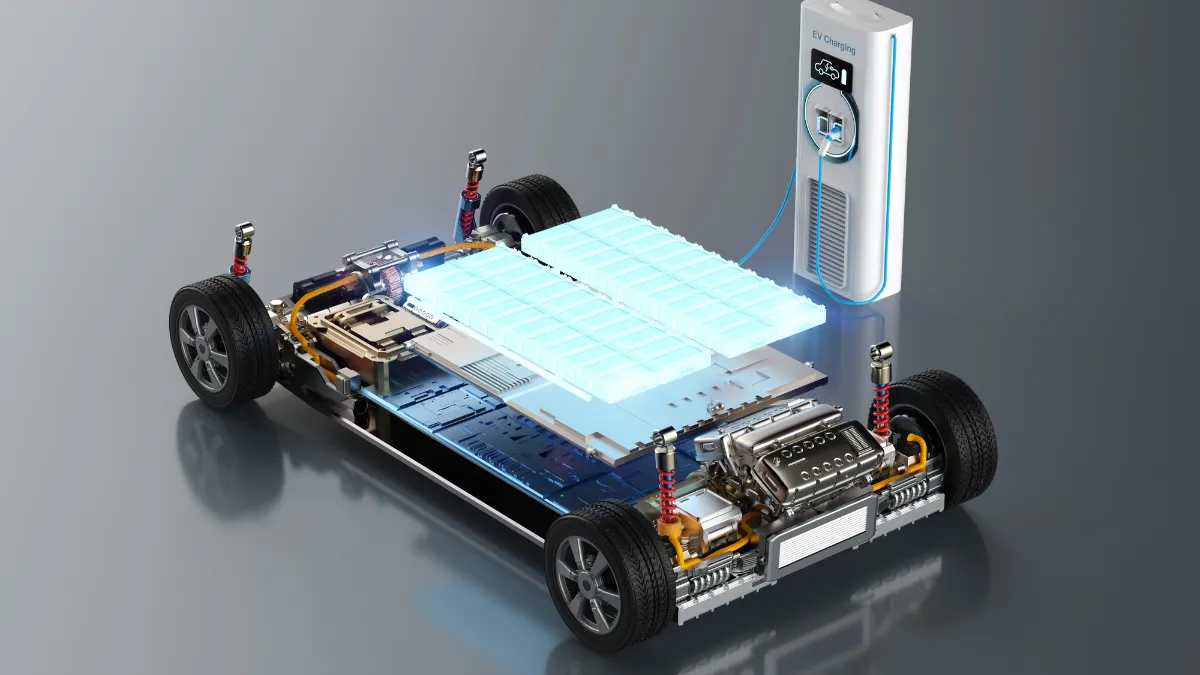
- Thermal Management: Your iPhone sits in your pocket or bakes on a dashboard. An EV battery is surrounded by liquid cooling and heating systems that keep it in a “Goldilocks zone” (usually 20°C to 30°C).
- The “S-Curve” of Degradation: Real-world data shows that EV batteries lose a small chunk of capacity (3-5%) in the first year as the chemistry settles. After that, the degradation “plateaus.” From year two to year eight, the decline is incredibly slow and linear.
- Buffer Zones: Manufacturers “hide” a portion of the battery. When your car says 100%, it might only be 95% of the actual physical capacity. This “buffer” protects the cells from the stress of being truly full or truly empty.
☀️ The Aussie Factor: Does Our Heat Kill Batteries?
In Australia, heat is our biggest variable. Data from 2026 indicates that EVs operated in consistently hot climates (think Darwin or regional WA) degrade roughly 0.4% faster per year than those in cooler climates like Hobart.
However, even a “hot climate” EV in Australia is still projected to maintain over 80% capacity for 15+ years. Unless you’re planning to keep the car until 2041, the Australian sun isn’t the dealbreaker people think it is.
The real key is how you charge. Frequent 350kW ultra-fast charging in 40-degree heat can accelerate wear. To see how your charging habits impact your wallet and your battery, check our EV charge cost tool. Charging at home on a 7kW wallbox is the “healthiest” way to keep a battery happy for the long haul.
🛡️ The 2026 Safety Net: The EV Battery Warranty
If you’re buying a 2021–2022 used EV in 2026, you are likely still under factory battery warranty.
- Tesla: 8 years or 160,000km (whichever comes first) with a guarantee of 70% capacity.
- Hyundai: 8 years or 160,000km for 70% capacity.
This means that if a battery did have a genuine fault or excessive degradation, the manufacturer is on the hook to fix or replace it until 2029 or 2030. It’s the ultimate “peace of mind” for a second-hand buyer.
🛠️ Used EV Hunter’s Toolkit: How to Verify Health
In 2026, we don’t guess—we test. If you’re looking at a used Tesla or Kona, here is your “Hunter’s Strategy”:
- Ask for a SoH Report: Most reputable used car dealers now provide a third-party battery health certificate.
- The 100% Range Check: Ask the seller to charge the car to 100% and take a photo of the dash. Compare that number to the “brand new” range. If a 2021 Model 3 is still showing 415km at 100%, it’s in fantastic health.
- Use the EV charging time calculator: Input the car’s current range to see how it fits into your daily routine. Even a 10% loss of range often only adds a few minutes to your weekly charging time.
- The EV Vibe Check: Before you buy, check the chargers near your home or work. A healthy battery is only half the battle; a convenient charging “vibe” is what makes EV ownership a joy.
🤖 Still Worried About the “Degradation Demon”? Ask the AI
Every car has a story. A 2021 Kona that lived at a 350kW fast-charger its whole life will look different from one that was slow-charged in a garage in Adelaide.
Start the conversation with the EV evolution AI Agent. Our AI is the ultimate 2026 buyer’s advocate. It has access to real-time resale data, technical bulletins, and degradation trends for every EV model in Australia. You can ask:
- “What is the typical battery health for a 2022 Tesla Model 3 with 90,000km?”
- “Compare the long-term battery reliability of a used Hyundai Kona vs. a new BYD Sealion 7.”
- “Can you help me interpret a State of Health (SoH) report for a second-hand Kia Niro?”
- “Is the FBT exemption still a better deal than buying a used 5-year-old EV in 2026?”
The Verdict: Used EVs are the 2026 “Smart Play”
The data is in: EV battery life in Australia is exceeding all expectations. A 5-year-old EV isn’t a “risk”—it’s a high-performance, low-maintenance machine that has already done its biggest chunk of depreciation.
Ready to find your electric bargain? Head over to our EV fuel savings calculator to see how much you’ll save on day one, and then chat with our AI Agent to get the final technical green light on your dream used EV.
About EV Evolution
EV Evolution is Australia’s authoritative strategic platform for electric vehicle market, dedicated to providing a high-fidelity knowledge base for the next generation of drivers. In a year defined by the Federal statutory review of FBT exemptions and the rapid arrival of record-breaking affordable models, we serve as your professional co-pilot to ensure every automotive decision is data-driven and future-proof. Our EV Strategy Suite—including the EV Tax Savings Estimator, Vibe Check Tool, and 24/7 AI Strategy Agent—empowers young professionals and families to navigate complex technical and regulatory shifts with total transparency. At EV Evolution, we don’t just track the market, we provide the strategic roadmap for your transition to the new electric standard.