


It’s March 2026, and the “white van” that has long been the backbone of the Australian courier industry is finally having its “iPhone moment.” For decades, commercial vans were noisy, diesel-chugging boxes that prioritised utility over literally everything else. But as we stand in the midst of the EV evolution, Kia is preparing to drop a vehicle that doesn’t just change the fuel source—it changes the entire definition of what a van can be.
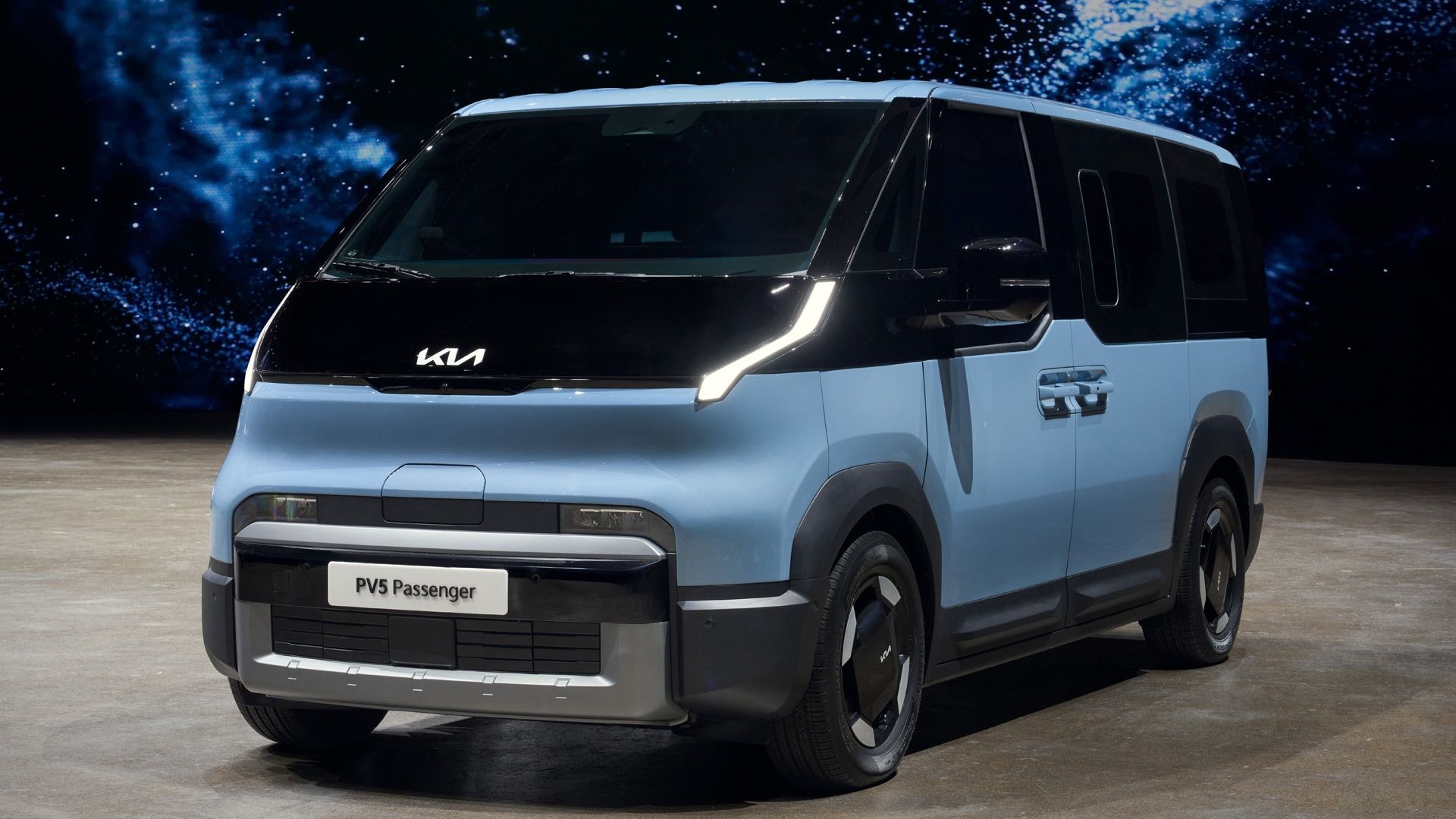
The Kia PV5 is the first of Kia’s “Platform Beyond Vehicle” (PBV) lineup. It’s a futuristic, modular machine that looks like it was plucked from a sci-fi set in 2040 and dropped onto the M1. At EV evolution, we’ve been tracking this “Easy Swap” disruptor since its first appearance as a concept. Now that production units are rolling out and the first Kia PV5 Australia deliveries are locked in for mid-2026, the hype is real.
Is this the tool that finally convinces fleet managers and tradies to trade the diesel pump for a plug? We’ve crunched the technical data and analyzed User Reviews Kia PV5 from the global community to see if the reality matches the modular dream.
Kia PV5 Price Australia: The $60k Game Changer?
One of the biggest hurdles for electric van Australia 2026 adoption has been the “EV tax”—the massive premium businesses had to pay over a reliable diesel HiAce or Transit. However, Kia is coming out swinging.
- Estimated Kia PV5 Price: Industry insiders and European pricing suggest a starting price around $55,000 to $60,000 for the entry-level Cargo variant.
At this price point, the PV5 isn’t just a premium eco-alternative; it’s a direct competitor to the high-spec diesel vans already on the road. When you factor in the massive FBT (Fringe Benefits Tax) savings and reduced maintenance, the EV evolution becomes a savvy business decision. To see the actual return on investment for your fleet, check out our EV fuel savings calculator to compare the 5-year running costs.
Kia PV5 Specs: The “Long Range” Benchmark
Don’t let the “cutesy” LED face fool you; the Kia PV5 specs are built for the daily grind. Australia is expected to receive the flagship 71.2kWh NMC (Nickel-Manganese-Cobalt) battery as standard, which offers a level of endurance that early electric vans simply couldn’t touch.
| Feature | Kia PV5 Australia (Long Range) |
| Battery | 71.2 kWh |
| WLTP Range | ~416 km |
| Power/Torque | 120kW / 250Nm (FWD) |
| Fast Charging | 10% to 80% in 30 minutes |
| Max Payload | ~1,000 kg – 1,100 kg (estimated) |
With a 416km range, the PV5 can handle an entire day of Sydney or Melbourne deliveries with a healthy “buffer” remaining for the drive home. And if you do need a top-up, the 150kW DC charging peak means you can grab a 100km “splash and dash” in the time it takes to grab a meat pie and a flat white.
The Modular Magic: “Easy Swap” Technology
The real “wit” of the PV5 lies in its Easy Swap technology. Behind a fixed driver’s cab, the rear of the vehicle is a “Life Module” that is theoretically interchangeable.
One Chassis, Many Lives
Kia’s vision is that a business could use a Cargo module for deliveries during the week, and then swap it for a Passenger module to use as a family people mover or a weekend camper on Friday night. While the logistics of swapping whole vehicle bodies in a home garage are still a bit “sci-fi,” the modularity means Kia can offer a massive variety of factory configurations:
- Cargo: Solid panels, low floor, and barn doors for forklift access.
- High Roof: Extra vertical space for walk-through delivery access.
- Passenger: Glass-heavy cabin with up to three rows of seats.
- WAV (Wheelchair Accessible Vehicle): A factory-tuned model with a side-entry ramp.
Real-World Review: What Aussie Drivers are Saying
At EV evolution, we value the “boots on the ground” truth. We’ve been monitoring the threads on r/evs_ireland and r/electricvehicles to see how the PV5 handles the transition from tradition.
“Just picked up my PV5. Still giggling at how much car you get for your money. It replaced a car I had for 15 years… so much space. It’s like I’ll need to take on a few more hobbies to make use of the boot. I suspect I won’t need a roof box for camping anymore.” — bigvalen, Reddit.
“The interior feels super spacious, but it has a sort of ‘cheap’ feeling to it. The plastics are very plastic—good thickness, but they don’t seem like they’ll break instantly. My wife loves the massive hole in the centre console for her purse.” — Hot-Comfort8839, Reddit.
The Pros:
- The Turning Circle: With a best-in-class 5.5-metre turning circle, it’s a dream for tight inner-city CBD deliveries.
- V2L Utility: Both indoor and outdoor Vehicle-to-Load (V2L) ports provide up to 3.68kW of power. Tradies can charge power tools or run a fridge directly from the van’s battery.
- Digital Workspace: The 12.9-inch central screen is designed for fleet management, allowing drivers to check delivery routes and battery status with high-fidelity clarity.
The Cons:
- The “Brick” Factor: Like all vans, aerodynamics aren’t its friend. Owners on Reddit have noted that at 110km/h on a cold day, you can expect the range to dip significantly. “It looks like 225km is a realistic motorway range,” warned one user.
- Software Niggles: Early adopters have mentioned that the lane-keeping assist can be a bit “naggy” on narrower backroads.
- Fixed Centre Console: Some owners were disappointed that the front centre console is firmly bolted in, preventing the installation of swivel seats for those looking to convert it into a camper.
Strategise Your Commercial Evolution
Is the Kia PV5 the right modular tool for your business or lifestyle? At EV evolution, we’ve built the tools to help you look past the futuristic lights and see the data:
- EV Charge Cost: Calculate exactly what a 10% to 100% “refill” costs on your business’s electricity tariff.
- EV Charging Time Calculator: Plan your driver’s breaks around the 30-minute fast charge to ensure maximum uptime.
- EV Fuel Savings Calculator: See the dramatic difference between diesel and electric per 100,000km.
- The EV Vibe Check: This is a compact van, but it still has a 1.9m height. Use our map to find chargers with enough clearance and accessibility for a delivery vehicle.
🤖 Start the Conversation with the AI Agent
Are you still torn between the Kia PV5 specs and the larger Ford E-Transit Custom? Or maybe you want to know if the 1,500kg towing capacity is enough for your specific trade trailer?
Don’t leave your business investment to guesswork—start a conversation with our EV evolution AI Agent. Our AI is updated daily with the latest 2026 dealer stock, technical service bulletins, and Reddit sentiment. You can ask:
- “Compare the Kia PV5 Cargo vs the LDV eDeliver 7 for payload capacity.”
- “When is the larger Kia PV7 expected to land in Australia?”
- “Explain the ‘AddGear’ mounting system—what accessories can I actually bolt on?”
- “Does the Kia PV5 support 22kW AC charging for depot top-ups?”
The Verdict: The Future is Flexible
The 2026 Kia PV5 isn’t just an electric van; it’s a “Resolved” solution for the modern Australian business. By combining a 416km range, a $60k price point, and the innovative Easy Swap modularity, Kia has created a vehicle that can evolve alongside your business.
While the “plastics are plastic” and the highway range requires some planning, the sheer versatility and lower running costs make the PV5 the new standard for the electric van Australia 2026 market.
About EV Evolution
EV evolution is Australia’s AI-powered hub for the modern driver. Through our signature EV Strategy Suite—including the EV Vibe Check and our real-time AI Agent—we provide the transparent, fact-based data you need to switch to an EV with total confidence. Our mission is to empower every Aussie to trade the petrol pump for a plug with zero guesswork. We are committed to delivering a high-fidelity knowledge base that enables young professionals and modern families to navigate their electric transition with data-driven precision.