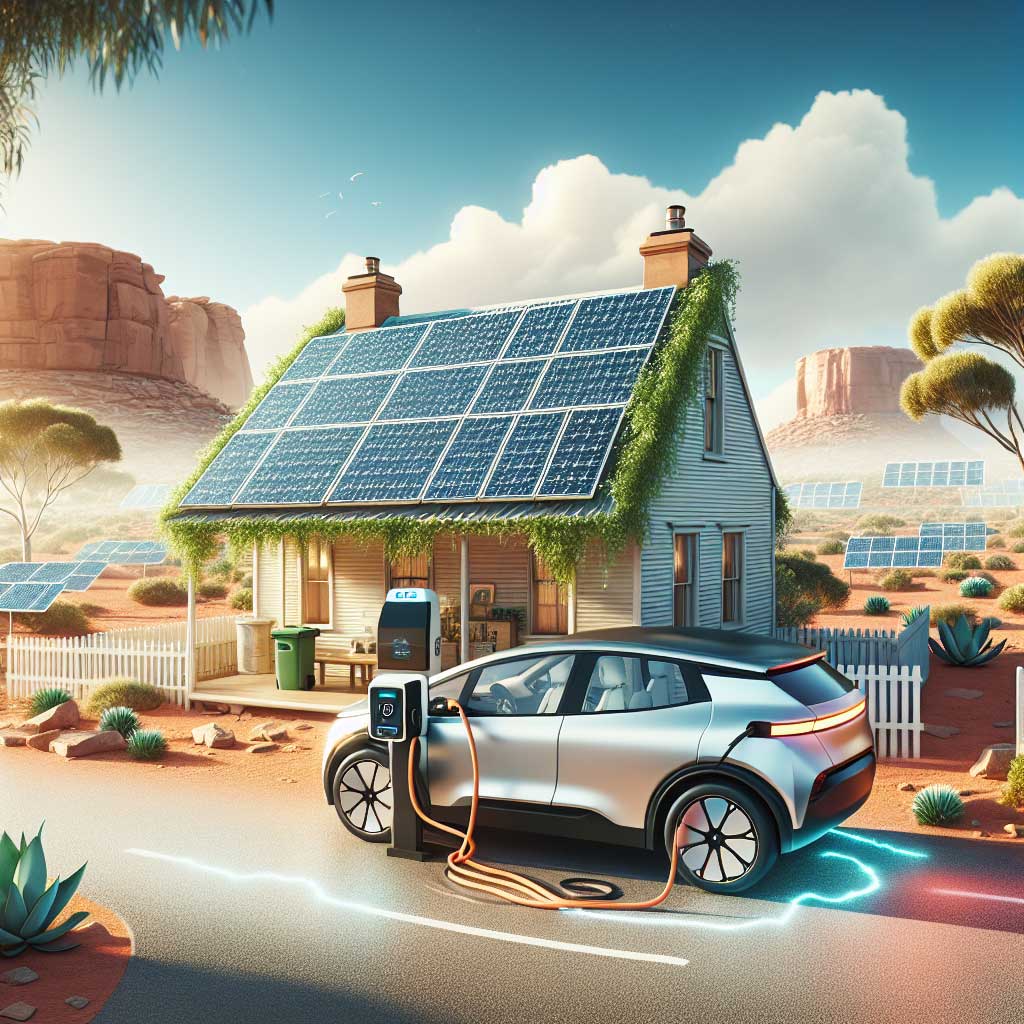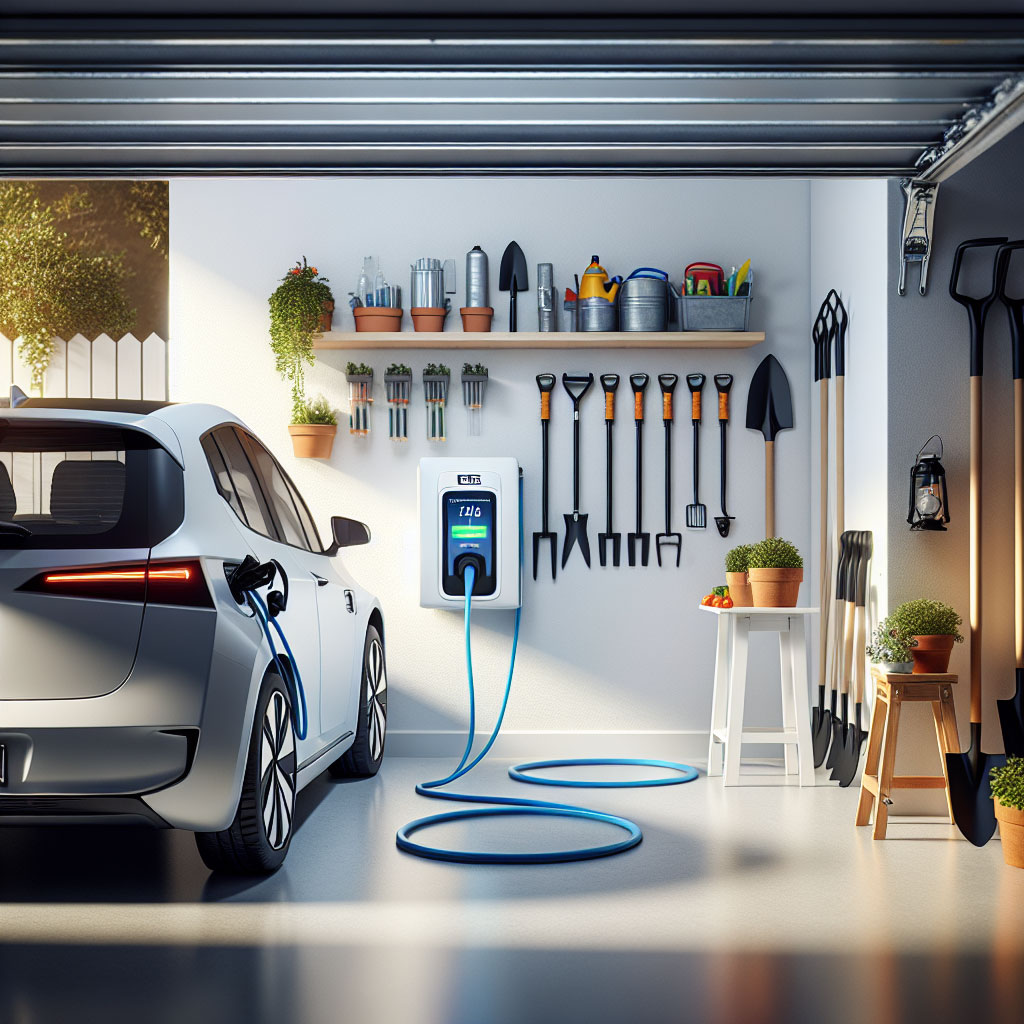


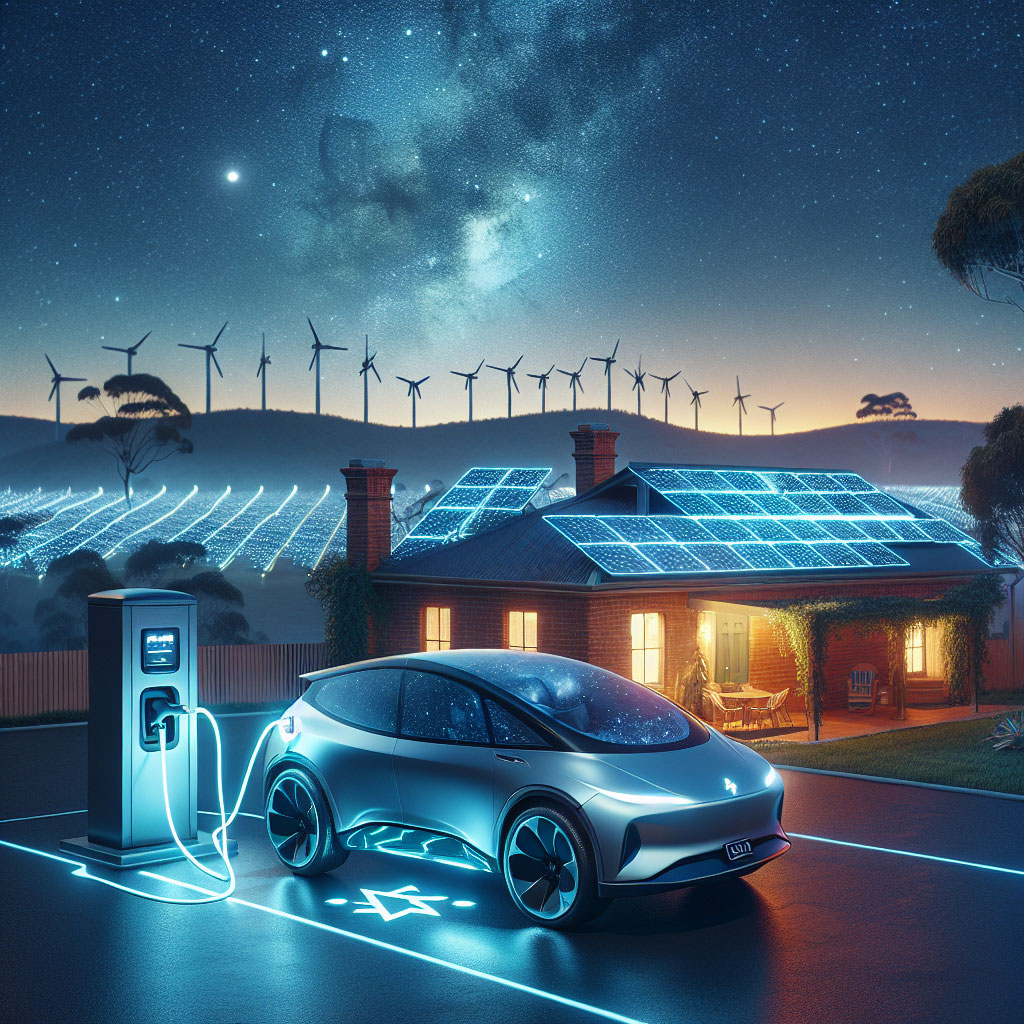
It’s Friday, 13 March 2026, and the “Great Aussie Dream” has officially been upgraded. It used to be a quarter-acre block and a Hills Hoist; now, it’s a 10.4kW solar array on the roof and a high-fidelity EV plugged into the garage. With the EV evolution in full swing across Australia, the most common question hitting our inbox isn’t about 0-100km/h times anymore—it’s about the synergy between the sun and the car.
Specifically: Is a 10kW system enough to ‘fuel’ your daily commute?
At EV evolution, we don’t deal in “maybe” or “she’ll be right.” We deal in data. As electricity prices continue to fluctuate and feed-in tariffs (FiTs) dwindle to almost nothing, the “Resolved” move for 2026 is to stop selling your sunshine to the grid for 5 cents and start putting it into your battery for “free.”
Let’s dive into the “Sustainability Hack” of the decade and calculate the True Zero cost of home charging.
The 10kW Math: Solar vs. The Commute
The average Australian driver covers about 35km to 40km a day. In an efficient EV like the Tesla Model 3 or the BYD Sealion 7, that’s roughly 6kWh to 8kWh of energy.
Now, let’s look at a 10kW solar system. On a decent sunny day in Sydney or Brisbane, a 10kW system will pump out between 40kWh and 60kWh of energy. Even on a gloomy Victorian winter day, you’re likely to see 15kWh to 20kWh.
- The Math: Your car needs 8kWh. Your house (without a heavy AC load) might need 15kWh.
- The Result: A 10kW system doesn’t just “cover” your commute; it effectively swallows it whole, with plenty of juice left over to run the dishwasher and the dryer.
At EV evolution, we call this the “Solar Surplus Strategy.” If you can charge during the day, you are effectively driving for $0 per kilometre. To see how this impacts your long-term wealth, put these numbers into our EV fuel savings calculator—the difference between $2.20/L petrol and $0.00/kWh sunshine is staggering.
EV Charge Cost Solar: The “Charge While You Work” Hurdle
Here is the “Tradie Truth” of the solar-EV synergy: the math only works if the car is actually at home when the sun is shining. If you commute to an office from 9 AM to 5 PM, your 10kW system is sending all that glorious energy back to the grid for a pittance while you pay 45c/kWh to charge at night.
This is why best solar system for EV discussions in 2026 are focused on three high-fidelity solutions:
- Smart Chargers (The Solar Diverters): Units like the Zappi or the Tesla Wall Connector (v3) can communicate with your solar inverter. They “throttle” the charge speed to match exactly what your solar is producing, ensuring not a single drop of grid power is used.
- Home Batteries (The Buffer): Using a Tesla Powerwall 3 or a BYD Battery-Box to “catch” the solar during the day and dump it into the car at night.
- V2H (Vehicle to Home): As we move into late 2026, cars like the Kia EV9 and Nissan Leaf are being used to power the house at night, essentially turning the car into the home’s primary energy storage.
Before you buy a wallbox, check our EV Charge Cost guide to see which smart chargers are currently “Resolved” for the Aussie grid.
Real-World Buzz: Reddit and Whirlpool Insights
The sentiment on Reddit and Whirlpool is that 10kW is the “Sweet Spot,” but the hardware matters. Aussie drivers are increasingly moving away from 6.6kW systems because the price gap to 10kW has narrowed significantly in 2026.
Over on r/AustralianEV, users are documenting their “True Zero” journeys:
“I’ve got a 13kW system with a 10kW inverter. I work from home 3 days a week and that’s when the Tesla gets topped up. My ‘fuel’ bill for the last 12 months has been exactly $0. Actually, it’s negative because of the FiT.” — oz-driver-2026, Reddit.
On Whirlpool’s Electrical/Solar forum, the debate is more technical. One user, Volt-Hunter, pointed out that “oversizing” the panels is the real hack:
“Don’t just get 10kW of panels. Get 13kW of panels on a 10kW inverter. It helps you hit peak production earlier in the morning and stay there later in the afternoon. Perfect for the 4 PM ‘top-up’ when you get home from work.” — Whirlpool User.
The Consensus:
- The Pros: 10kW is the “Unicorn” size for most 4-bedroom Aussie homes with an EV. It provides enough headroom for cloudy days.
- The Cons: Without a smart charger, you’ll end up “accidentally” drawing from the grid when a cloud passes over.
Managing the “Solar Soak”
When you are charging from solar, you aren’t usually charging at the full 7kW or 11kW speed of the wallbox. You are doing a “Solar Soak”—charging at 2kW or 3kW to stay within your solar production.
Use our EV Charging Time Calculator to see how long it takes to add 100km of range at 3kW. It’s a slower process, but in the world of high-fidelity energy, “Slow and Free” beats “Fast and Expensive” every day of the week.
🤖 Start Your Evolution with the AI Agent
Are you trying to decide between a 10kW Jinko Solar setup or a Maxeon premium array? Or maybe you want to know if the BYD Sealion 7 supports the “Solar Divert” functions of the Ocular LTE charger?
Don’t leave your $15k energy investment to guesswork—start a conversation with our EV evolution AI Agent. Our AI is updated in real-time with the latest 2026 solar hardware specs, feed-in tariff changes, and the “no-filter” truth from the forums. You can ask:
- “Is a 10kW system enough for two EVs and a swimming pool?”
- “Compare the Tesla Wall Connector vs Zappi for solar-only charging.”
- “What is the ROI of adding a 10kWh home battery vs. just oversizing my solar?”
- “Does the Kia EV6 support V2H in Australia yet?”
Request Your VIP Test Drive
While we can’t bring the sun to you, we can bring the cars. If you’re planning your solar-EV synergy, you need to know which car handles “smart charging” the best. Through our AI Agent, you can request a VIP Test Drive for your dream EV. We’ll skip the showroom fluff and get you behind the wheel of a Tesla, BYD, or Zeekr so you can test the “Solar Soak” for yourself.
The Verdict: Data Beats the Bill
In March 2026, the Solar & EV Synergy is the ultimate “Resolved” strategy for the Aussie homeowner. A 10kW system is the perfect high-fidelity baseline to ensure your commute costs you nothing but a bit of daylight. By using the tools at EV evolution, you can ensure your transition is as efficient as it is sustainable.
About EV Evolution
EV evolution is Australia’s AI-powered hub for the modern driver. Through our signature EV Strategy Suite—including the EV Vibe Check and our real-time AI Agent—we provide the transparent, fact-based data you need to navigate the electric transition with total confidence. Our mission is to empower every Aussie to trade the petrol pump for a plug with zero guesswork and high-fidelity precision.