


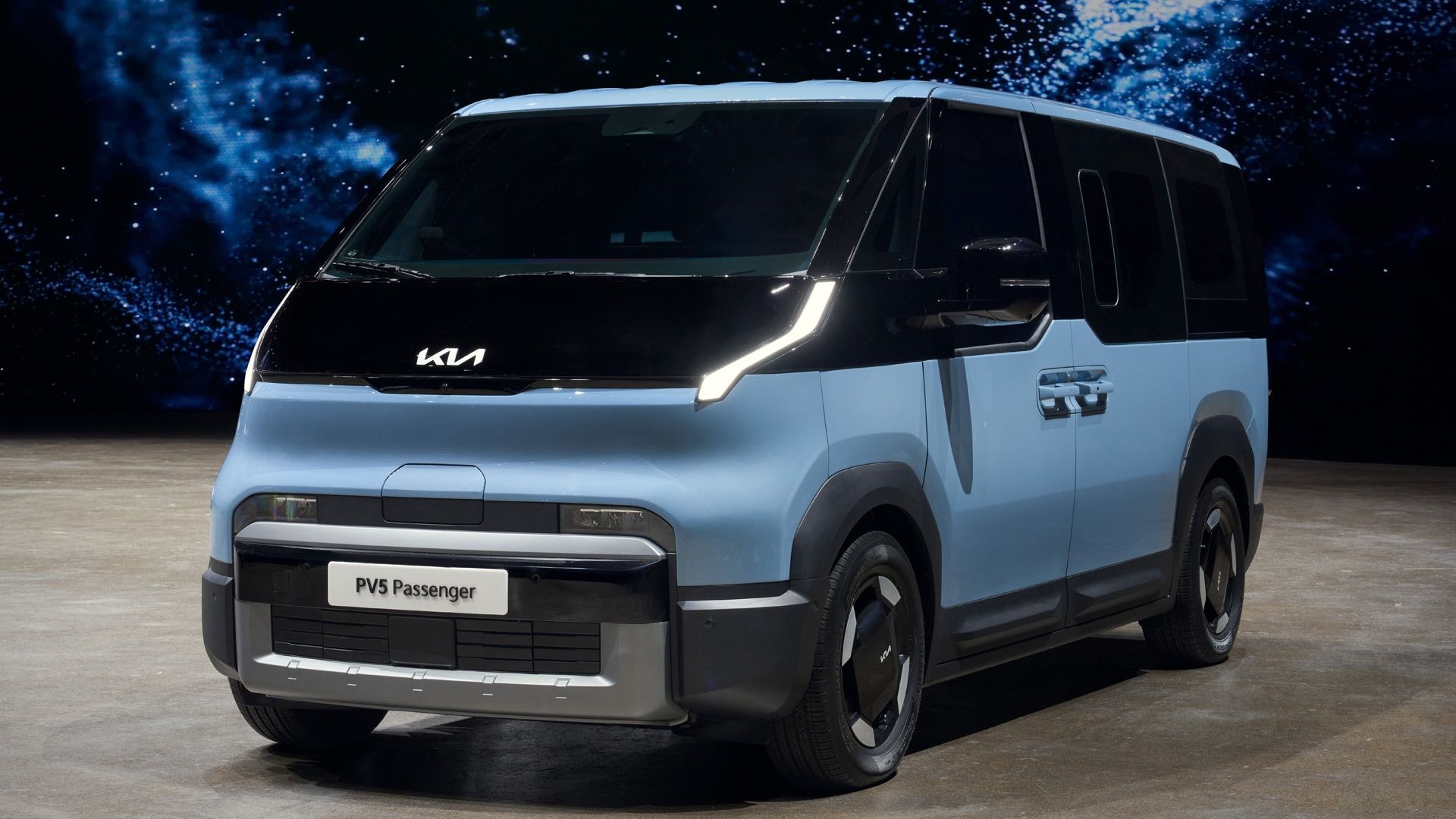
It is Saturday, 21 March 2026, and the “Tradie Truth” in the industrial estates of Western Sydney, Braeside, and Eagle Farm is shifting rapidly. If you’ve pulled up to the bowser this morning, you’ve seen the damage: diesel has touched $2.40/L. With the ongoing volatility in the Middle East and the Strait of Hormuz effectively sidelined, the cost of “doing business” in a traditional internal combustion engine (ICE) van has become a massive, unhedged risk to your bottom line.
At EV evolution, we don’t believe in “greenwashing.” We believe in Resolved financial strategy. While the record 12.2% EV market share in Australia last month was led by passenger cars, the real “Sustainability Hack” is happening in the commercial sector. In 2026, switching to a commercial EV fleet in Australia is no longer an environmental statement—it’s a survival tactic.
The ROI Reality: Why the “Old Guard” is Bleeding Cash
For years, the argument against electric vans was the “Upfront Premium.” But in 2026, that gap has narrowed, while the operating cost chasm has widened into a canyon.
1. The Fuel vs. Electron Math
If your van covers 30,000km a year (a modest average for a local courier or tradie):
- Diesel @ $2.40/L (9.5L/100km): You’re spending $6,840 per year just on fuel.
- EV @ $0.22/kWh (20kWh/100km): Charging via a standard commercial tariff, you’re spending $1,320 per year.
- The Saving: Over $5,500 per year, per vehicle stays in your business account, not the oil company’s.
2. The Maintenance “Experience”
Electric vans like the Ford E-Transit and the Kia PV5 have roughly 20 moving parts in their drivetrain, compared to over 2,000 in a diesel turbo. In 2026, fleet managers are reporting a 40% reduction in scheduled maintenance costs. No oil changes, no fuel filters, and—thanks to regenerative braking—your brake pads can last up to three times longer.
Hardware Audit: The High-Fidelity Heavyweights
To understand the electric van ROI, you need to look at the tools of the trade. The 2026 market is dominated by two distinct philosophies of “New Guard” engineering.
The Workhorse: Ford E-Transit Custom
The Ford E-Transit Custom has become the high-fidelity benchmark for Aussie fleets.
- Expertise: It offers a 300km+ WLTP range and a 1.1-tonne payload, effectively matching its diesel siblings.
- The ROI Clincher: The E-Transit includes a “Digital Rear-view Mirror” and 5G telematics as standard, allowing fleet owners to track real-time efficiency and location without expensive third-party add-ons.
The Disruptor: Kia PV5 (Platform Beyond Vehicle)
Launching in mid-2026, the Kia PV5 is the “Resolved” solution for businesses that need modularity.
- Expertise: Built on the dedicated E-GMP.S platform, the PV5 offers a “walk-through” interior and Vehicle-to-Load (V2L) capability of 3.6kW. This means your van is your power station—charging your Milwaukee or Makita tools on the job site without a generator.
- Fleet Tech: Kia has baked extensive telematics into the PV5, specifically designed for “Smart Fleet” managers to monitor battery health and state-of-charge across 50+ vehicles from a single dashboard.
Business EV Incentives 2026: The “May Budget” Strategy
We are exactly two months away from the 2026 Federal Budget, and the window to maximize business EV incentives 2026 is closing.
- FBT Exemption: Zero-emission commercial vehicles (under the 2.5t GVM limit) remain exempt from Fringe Benefits Tax if they sit under the $91,387 LCT threshold. This can save a business owner up to $11,000 per year in tax per vehicle.
- The DRIVEN Program: The Australian Government’s DRIVEN Charger Rebate is currently offering up to $3,000 per smart charging plug for businesses. If you are installing a depot charging hub before April 30, you can claim up to $21,000 in rebates.
- Instant Asset Write-Off: For small businesses with a turnover under $10m, the $20,000 instant deduction remains a high-fidelity tool for charging infrastructure and equipment.
Real-World Buzz: The “Tradie Truth” on Reddit
The community on r/AustralianEV and r/EVAustralia is vocal about the shift. In 2026, the skepticism of 2022 has been replaced by “Efficiency Envy.”
The Reddit Reality
On r/AustralianEV, users are discussing the “Depreciation Dividend”:
“I switched my electrical contracting fleet to E-Transits last year. Even with the higher lease cost, my ‘fuel’ bill for four vans dropped from $2,200 a month to $450. The ROI was ‘Resolved’ in 14 months. Plus, my sparkies love the instant torque when the back is loaded with cable.” — SparkyFleet_VIC, Reddit.
On r/EVAustralia, the excitement for the new Farizon V7E and Kia PV5 is peaking:
“The Kia PV5 is the first van that actually looks like it was designed in the 21st century. 400km range is more than enough for 95% of urban deliveries. If you’re still buying diesel for city work in 2026, you’re literally burning money.” — CourierKing77, Reddit.
FAQ: Commercial EV Australia
Q: Are electric vans capable of carrying a 1-tonne payload in the Australian heat?
A: Yes. High-fidelity models like the Ford E-Transit Custom and LDV eDeliver 7 are engineered specifically for 1-tonne+ payloads. In 2026, their thermal management systems (liquid-cooled batteries) ensure that even in a 40°C Perth or Brisbane summer, the battery stays in the “Resolved” zone without derating power.
Q: What is the best EV van for a small business in 2026?
A: For urban “last-mile” delivery, the Kia PV5 (launching mid-2026) offers the best tech and modularity. For heavy-duty tradie work, the Ford E-Transit remains the “Authoritative” choice due to its Ranger-derived cabin and robust dealer support.
Q: Can I charge my commercial EV fleet at home?
A: Absolutely. Many small business owners use their FBT-exempt novated lease to install a 7kW or 22kW smart charger at home. With petrol at $2.40/L, “Solar Soaking” your work van on the weekend can give you 300km of “True Zero” range for Monday morning.
Q: How does the Kia PV5 compare to the Ford E-Transit?
A: The Kia PV5 is built on a “Platform Beyond Vehicle” architecture, making it more modular and tech-focused with 800V-style charging speeds (at select hubs). The E-Transit is more traditional in its layout but offers a larger cargo volume in its high-roof variants.
🤖 Start Your Evolution with the AI Agent
Are you still running the numbers on a diesel HiAce? Or maybe you’re wondering if the Kia PV5 or Ford E-Transit has the better whole-of-life cost for your specific delivery route?
Don’t leave your business’s future to guesswork—start a conversation with our EV evolution AI Agent. Our AI is updated in real-time with the latest business EV incentives 2026, fleet telematics data, and the “no-filter” truth from Aussie business owners. You can ask:
- “Compare the electric van ROI for a 5-van fleet over 5 years.”
- “What are the current NSW/VIC grants for installing depot chargers?”
- “Explain the Kia PV5 vs Ford E-Transit payload differences.”
- “Find me a vibe-checked commercial EV dealer in my area.”
Request Your VIP Test Drive
Reading about “Torque” is one thing—feeling how a fully loaded E-Transit handles a steep incline without the diesel groan is another. Through our AI Agent, you can now request a VIP Test Drive for your desired commercial EV. We’ll skip the showroom fluff and get you behind the wheel of a Resolved business asset so you can see why the EV evolution is the ultimate win for your fleet.
About EV Evolution
EV evolution is Australia’s AI-powered hub for the modern driver. Through our signature EV Strategy Suite—including the EV Vibe Check and our real-time AI Agent—we provide the transparent, fact-based data you need to navigate the electric transition with total confidence. Our mission is to empower every Aussie to trade the petrol pump for a plug with zero guesswork and high-fidelity precision.