


It is Sunday, 29 March 2026, and the Australian EV landscape is currently undergoing a high-fidelity separation. If you are standing at a public charger today, you are either experiencing the future, or you are stubbornly “stuck in 2015.” At EV evolution, we’re not just calling the game; we’re calling the “Tradie Truth” on the market. In 2026, the real divide isn’t between petrol and electric anymore—it’s between 800V architecture and the 400V “Old Guard.”
As of today, EV market share in Australia has officially smash through the 12.2% barrier. That’s thousands of new drivers hitting the roads, and they are all looking for the fastest cheap EV Australia. But there’s a trap waiting in the showroom. While models based on 400V—the standard for the last decade—might look appealing, they are rapidly becoming obsolete in terms of charging efficiency, both on the road and at home.
The landscape has resolved into a simple directive for 2026: It’s 800V or Bust.
The Expertise: What is 800V Architecture?
Let’s get technical for a high-fidelity minute. Most first-generation modern EVs (think Tesla Model 3/Y, BYD Atto 3, early Hyundai Konas) run on a 400-volt (400V) electrical system. This architecture handles everything from powering the motors to taking on a charge.
800V architecture effectively doubles that voltage. Now, why does that matter to you when you’re desperate for a coffee at a rural Ampol charger?
The Authoritative Rule: In physics, Power (kW) = Voltage (V) x Current (A).
To charge a 400V EV faster, you have to increase the current (amperage). Higher current means more heat, which means you need thicker, heavier, more expensive cables, and the battery needs massive cooling.
By increasing the system to 800V, you can achieve the same charging power (kW) with half the current. This allows for:
- Sustained Peak Charging: The car can hold its maximum charge rate (e.g., 230kW) for much longer without overheating (thermal throttling).
- Lighter Components: The wiring inside the car can be thinner and lighter, increasing efficiency and range.
- Resolved Efficiency: You spend less time sitting at the charger and more time driving.
Experience: Why the Zeekr 7X and EV9 make everything else feel “stuck in 2015”
This is where the high-fidelity experience of 2026 hits the road. Standing in the hangar today, looking at the Zeekr 7X and the Kia EV9, you can see the obsolescence creeping onto the Old Guard 400V models sitting next to them.
The EV9, with its native 800V setup, can pull 210kW to 230kW at a compatible 350kW ultra-rapid charger. This resolves your “Coffee Stop” strategy completely: a 10% to 80% charge in just 24 minutes.
Conversely, take a 400V “Old Guard” SUV. It might claim a peak charge rate of “150kW.” But experience tells us that it only holds that rate for about 4 minutes before the heat builds up, and the charging curve drops down to 70kW or lower for the rest of the session. You are left sitting there, “stuck in 2015,” while the EV9 driver next to you is already pulling away.
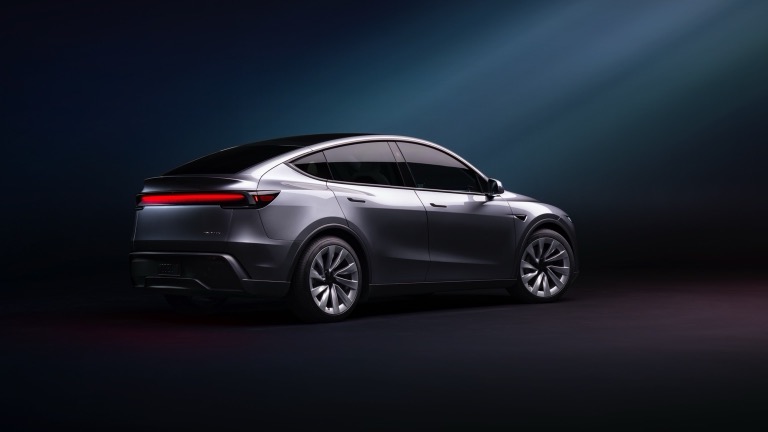
The arrival of the Zeekr 7X in Australia in 2026 has officially broken the price barrier for this high-fidelity tech. It’s no longer just for luxury GT cars. It’s a dedicated family SUV that delivers premium, sustainable speed.
EV Charging Time Calculator: 800V on the Hume Highway
Let’s run the “Real-World Vibe Check” for a standard 1,000km Sydney-to-Melbourne mission.
| Tech Era | Representative Model | Total Charging Stops (Approx.) | Total Time Spent Charging | The Vibe |
| Old Guard (400V) | Tesla Model Y Juniper (75kWh LFP) | 4 Stops | ~2 Hours, 15 Mins | “Stuck in 2015.” Constant anxiety about finding a working 350kW stall just to get 130kW. |
| New Guard (800V) | Zeekr 7X (100kWh Ternary) | 2 Stops | ~50 Minutes | “Resolved.” Two swift 25-minute coffee & bio-breaks. High-fidelity travel. |
The difference is a full hour of your life, per 1,000km. In 2026, the “Tradie Truth” is that time is money, and 800V is the ultimate productivity hack.
The Reddit Pulse: 800V Discussions & “No-Filter” Reality
The community on r/AustralianEV and r/CarsAustralia is currently obsessed with 800V. The tone has shifted from “Will an EV work?” to “Why didn’t anyone tell me a 400V car is slow?”
The “Charge HQ” Discussion
Over on r/SolarAustralia, users are identifying that 800V EV charging home isn’t just about speed, but about managing energy demand:
“People keep thinking 800V means they need a faster charger at home. No! It means the car’s onboard rectifier is more efficient. If my EV9 is charging at 11kW AC from my solar, it’s more efficient than a 400V car pulling 11kW, because it creates less heat converting the AC to DC for the battery.” — tradie-solar-2026, Reddit.
The “Future-Proofing” Warning
On r/AustralianEV, users are giving stern advice to first-time buyers:
“Do not buy a new 400V EV in 2026 unless it is heavily discounted or you only drive 20km a day. The second-hand market for 400V cars is going to collapse because everyone will want an 800V car for road trips. Why would you buy a car that charges in 50 mins when the one next to it charges in 20?” — logical-vermicelli, Reddit.
FAQ: 800V EV Technology Australia
Q: Do I need a special charger for 800V EV charging home in Sydney?
A: No. At home, you charge on Alternating Current (AC) using your standard single-phase (7kW) or three-phase (11kW/22kW) wallbox. The car’s internal components convert this AC to High Voltage DC for the battery. In 2026, 800V cars like the EV9 and Zeekr 7X feature more efficient AC/DC rectifiers, which means less energy is lost as heat compared to 400V cars, saving you slightly on your energy bill.
Q: Which is the fastest cheap EV Australia in 2026?
A: As of March 2026, the Zeekr 7X has set a new high-fidelity benchmark, offering a native 800V architecture and a 100kWh battery at a price point that undercuts older 400V models. The BYD Sealion 7 also offers a quasi-800V experience (using its integrated motor driver as a boost converter) making it a very strong competitor for the fastest charging experience under $65k.
Q: Does 800V technology improve battery life?
A: In many cases, yes. The core challenge in lithium-ion batteries is heat. Because 800V cars use half the current to achieve the same charging speed (kW), they generate less internal resistance and heat. If you consistently use 350kW ultra-rapid chargers, an 800V EV will experience less thermal stress over its lifetime than a 400V EV trying to maintain even half that charging speed.
Q: Are all 350kW chargers in Australia compatible with 800V cars?
A: Yes. All standard CCS2 chargers in the NRMA, Evie, and Chargefox networks are designed to deliver power based on the vehicle’s requests. If an 800V car plugs in, the charger simply delivers higher voltage and lower current.
🤖 Start Your Evolution with the AI Agent
Are you still wrestling with the “Old Guard” concept of 400V? Or maybe you’re wondering if a BYD Sealion 7 or a Zeekr X actually has the EV technology 2026 specs to be “Future-Proof”?
Don’t leave your $70,000 asset to guesswork—start a conversation with our EV evolution AI Agent now. Our AI is updated in real-time with the latest fastest cheap EV Australia availability, 800V charging curve telemetry, and “Vibe-Checked” road-trip times from the community.
You can ask:
- “Compare the Total Cost of Ownership of an 800V Kia EV9 vs. a 400V Hyundai Palisade.”
- “Which EV technology 2026 fits my budget of $60k?”
- “Calculate my charge time savings for a Sydney-to-Southern Highlands run.”
Request Your VIP Test Drive
Reading about “High-Fidelity” driving is one thing—feeling the silent, immediate surge of torque on a mountain pass is another. Through our AI Agent, you can now request a VIP Test Drive for your desired 800V model. We’ll skip the showroom fluff and show you how a Resolved future transforms your life.
About EV Evolution
EV evolution is Australia’s AI-powered hub for the modern driver. Through our signature EV Strategy Suite—including the EV Vibe Check and our real-time AI Agent—we provide the transparent, fact-based data you need to navigate the electric transition with total confidence. Our mission is to empower every Aussie to trade the petrol pump for a plug with zero guesswork and high-fidelity precision.