


It is Tuesday, 7 April 2026, and the Australian logistics landscape has officially entered “Red Alert” territory. If you’ve looked at the news this morning, you’ve seen the reports: petrol and diesel prices have hit a record $2.40/L across Sydney and Melbourne, and the “fuel supply cliff” is no longer a theory—it is a front-page crisis. For the “Old Guard” fleet manager, this is a week of panic. For the “Resolved” business owner who just completed their EV Charging-as-a-Service (CaaS) handover, it is just another Tuesday.
At EV evolution, we know that the word “Trust” is thrown around a lot in the “Starship” era of 2026. But in the world of B2B electrification, trust isn’t a feeling—it’s a service level agreement (SLA). The moment your high-fidelity charging hardware goes live, you aren’t just getting “plugs in a wall”; you’re entering a 100-day transformation.
Here is the “No-Filter” guide to what a high-fidelity CaaS handover actually looks like and why it turns your facility into a 2029-ready compliance asset.
Day 1: The ‘Switch-On’ and the CapEx Ghost
The first thing you’ll notice on Day 1 of your CaaS handover is what didn’t happen. You didn’t just transfer $100,000 of your company’s hard-earned cash to an electrical contractor. Because CaaS is a 100% Funded Solution, your balance sheet is untouched.
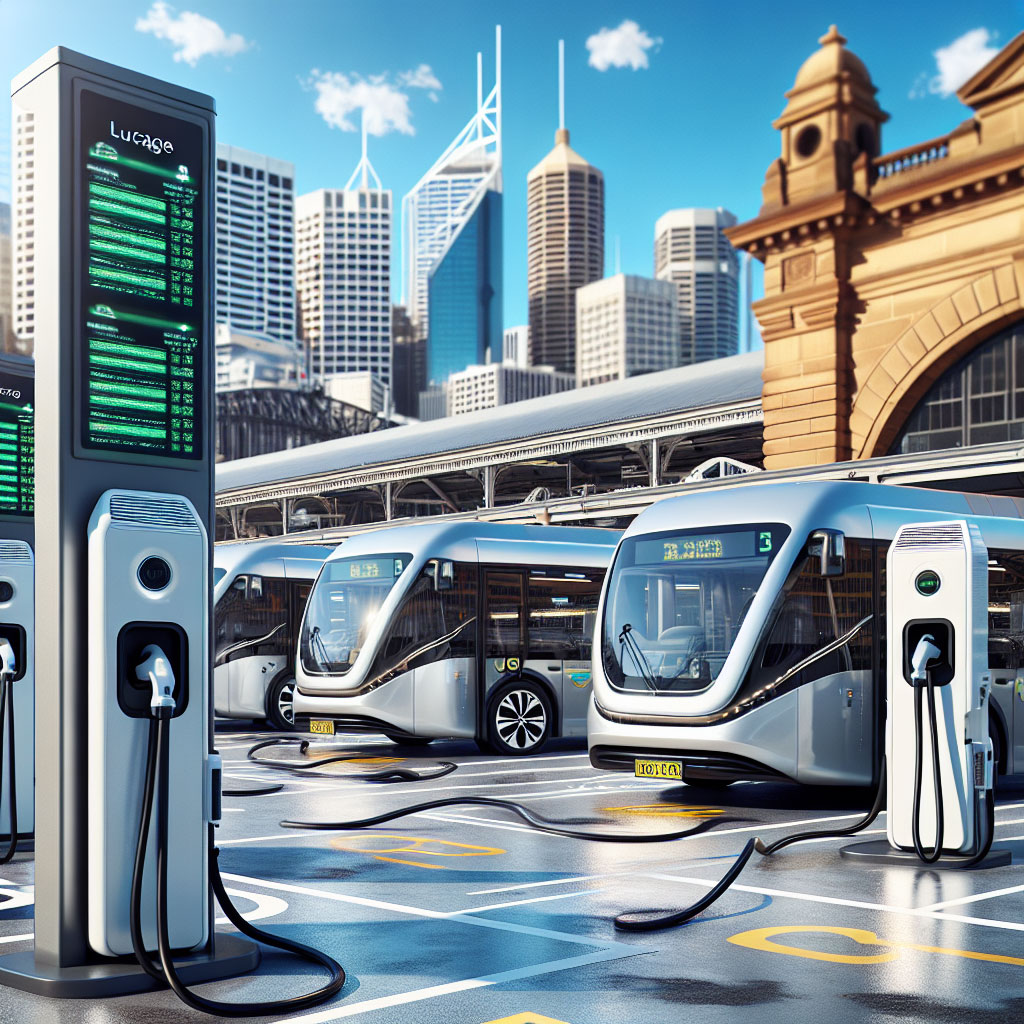
Instead, a specialist from the EV evolution network walks you through the “Resolved” dashboard. You see your first five Zeekr 7X vans or Kia EV9 fleet cars plugged in. In the “Old Guard” model, this was the moment you’d worry about the main breaker tripping. In the CaaS model, you watch the Smart Load Management software “drip-feed” the power, balancing the fleet charge with your warehouse’s air conditioning and machinery.
Month 1: The Invisible Service (99% Uptime)
By Day 30, the novelty has worn off, and the “High-Fidelity” reality sets in. Your drivers have stopped asking, “Where do I fill up?” and have started treating charging like their smartphones—plugging in at 5:00 PM and walking away.
The core of Trust in a CaaS model is that the hardware becomes invisible. Unlike the DIY “bolt-it-to-the-wall” setups of 2023, which often left drivers stranded with “bricked” chargers, your 2026 CaaS agreement includes a 99% Uptime Guarantee.
- Expertise in Action: If a charger glitches at 2:00 AM in your Blacktown or Dandenong depot, the provider’s Network Operation Centre (NOC) usually fixes it via a remote firmware “Refuel” before your first driver even clocks on.
- The “Resolved” Vibe: You haven’t received a single “charger is broken” phone call in 30 days. That is how you build trust with your team.
Month 2: The Data Awakening (AASB S2 Compliance)
As you hit Day 60, the focus shifts from the driveway to the boardroom. With the May 12 Federal Budget approaching and the 1 July 2026 deadline for AASB S2 Mandatory Disclosures looming, your CFO is going to start asking for numbers.
In the “Old Guard” world, you’d be chasing Jim for home-charging receipts or trying to guess the carbon footprint of your diesel fleet. With Resolved CaaS, you simply hit “Export.”
- Scope 3 Reporting: The platform provides NMI-compliant metering data that shows exactly how many tonnes of CO2 your business has abated.
- The Compliance Asset: Your fleet is no longer a liability; it is a high-fidelity data stream that proves your business is meeting the 2026 Australian sustainability standards.
Month 3: The Obsolescence Defense
By Day 100, the technical landscape has likely shifted again. In the 2026 “Starship” era, hardware cycles are brutal. Maybe a new 800V architecture software update has been released, or the “NACS” plug transition has hit a new milestone.
This is where the Trust in a service model pays off. You don’t “own” the risk of obsolescence. If the technology moves, the CaaS provider is responsible for ensuring the hardware stays “New Guard” compliant. You are “Resolved” from the fear of owning $100k worth of 2015-style e-waste.
Reddit Pulse: The “Fuel Cliff” Reality
The community on r/AusFinance and r/AustralianEV is currently having a “Vibe Check” on the $2.40/L petrol crisis.
The “Panic at the Pump”
On r/AusFinance, users are identifying that the fuel supply is hitting a “cliff” by late April:
“Petrol prices have reached a record high of an average of $2.38 a litre… Australia’s fuel supplies are set to hit a cliff by the end of April. If you’re a business with 180 trucks running daily, the amount of zero plan is astonishing.” — LoneArtificer, Reddit.
The “EV ROI” Discussion
Over on r/AustralianEV, the “New Guard” is making it clear that charging at home or the depot is the only way to win:
“Public charging is half the cost of petrol… but charging at home (or the depot) is about half the cost of public chargers. Maintenance on an EV is half to a quarter of an ICE vehicle. An inspection every 2 years instead of an annual oil change.” — tradie-logic-2026, Reddit.
FAQ: High-Fidelity CaaS Australia
Q: What happens if a charger breaks in my Sydney depot?
A: Under a Charging-as-a-Service (CaaS) agreement, you have a guaranteed 99% uptime. If a hardware fault occurs, a specialist is dispatched to repair or replace the unit as part of your monthly service fee. You pay $0 for the repair, and the downtime risk is “Resolved” by the provider.
Q: Does CaaS really provide 100% funding for Melbourne businesses?
A: Yes. In 2026, CaaS is the ultimate “Sustainability Hack” for balance sheets. The provider covers the upfront CapEx for hardware, site engineering, and installation. You pay an operating expense (OpEx) monthly fee, which is typically 100% tax-deductible.
Q: How does CaaS help with the July 1 Mandatory Disclosures (AASB S2)?
A: As of July 1, 2026, mid-sized Australian firms must report Scope 3 emissions. CaaS platforms include automated, high-fidelity data logs that track every kWh used by your fleet, providing audit-ready reports that “Old Guard” fuel cards simply cannot provide.
Q: Will my 800V vehicles (Zeekr/Kia) be compatible with CaaS?
A: Absolutely. High-fidelity CaaS providers prioritize 800V-ready hardware. This ensures your “Starship” fleet can charge at maximum efficiency without the heat-related bottlenecks of “Old Guard” 400V DIY setups.
🤖 Start the Conversation with the AI Agent
Are you still paying the $2.40/L “Old Guard” Tax? Or are you worried that your depot’s electrification is a “Compliance Liability” waiting to happen?
Don’t leave your first 100 days to guesswork—start a conversation with our EV evolution AI Agent now. Our AI is updated in real-time with the latest April 2026 CaaS benchmarks, 100% funding availability, and “Vibe-Checked” reliability audits.
You can ask:
- “Generate a 100-Day Performance Audit for a fleet of 10 vans.”
- “What 100% funded CaaS slots are currently open in my postcode?”
- “Explain the AASB S2 data requirements for my board presentation.”
Submit Your Request for CaaS
Ownership is a liability; uptime is an asset. Through our AI Agent, you can now submit a request for a 100% Funded EV Charging-as-a-Service solution. We’ll skip the salesperson fluff and provide a Resolved technical and financial roadmap.
About EV Evolution
EV evolution is Australia’s AI-powered hub for the modern driver. Through our signature EV Strategy Suite—including the EV Vibe Check and our real-time AI Agent—we provide the transparent, fact-based data you need to navigate the electric transition with total confidence. Our mission is to empower every Aussie to trade the petrol pump for a plug with zero guesswork and high-fidelity precision.