


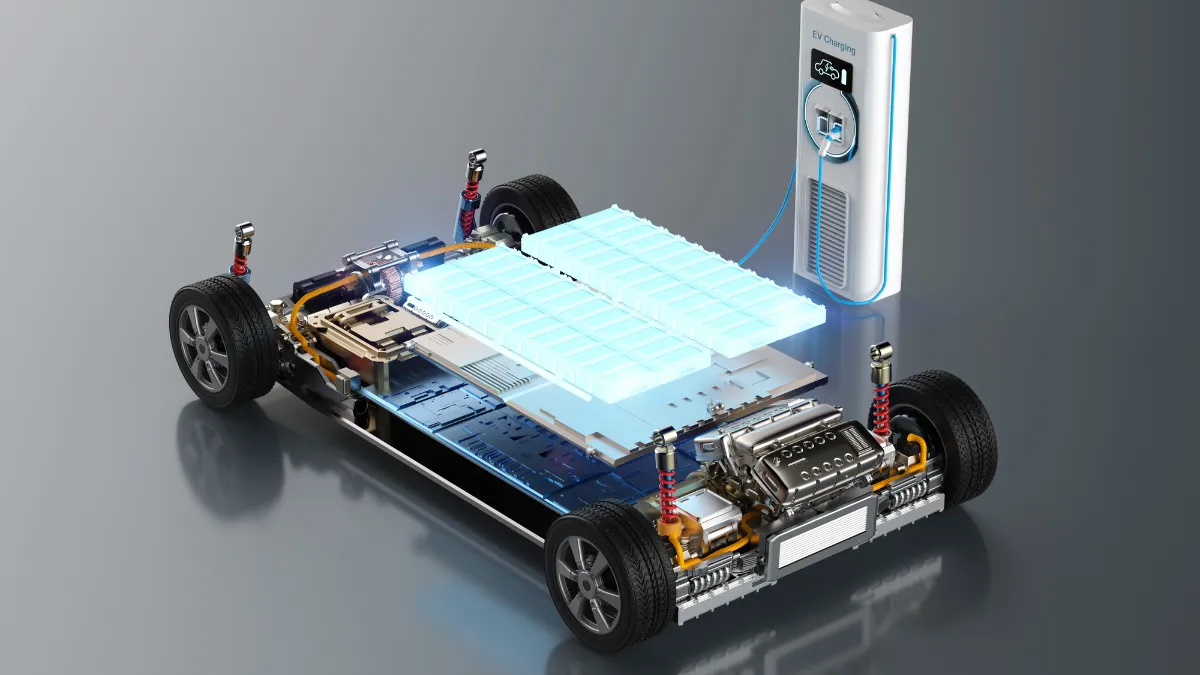
The narrative surrounding electric vehicles (EVs) often hits a speed bump when the conversation turns to end-of-life waste. “What happens to the batteries?” is the skeptic’s favourite question. In a landmark move that firmly answers this challenge, BMW Group Australia has officially launched a national high-voltage battery recycling program, promising to recover more than 90 per cent of valuable raw materials from retired EV packs.
Launched on October 30, 2025, this initiative is not just a statement of intent but a fully operational partnership with leading Australian battery recycler EcoBatt. It marks a critical maturation point for the local EV industry, shifting the focus from merely selling electric cars to taking full responsibility for their entire lifecycle.
For Australian EV enthusiasts, this program represents a tangible step towards a true “circular economy,” ensuring that the lithium, cobalt, and nickel powering today’s i4s and iX3s will eventually find their way into the EVs of tomorrow.
🤝 The Partnership: BMW and EcoBatt
The heart of this initiative is a strategic collaboration between the German luxury marque and EcoBatt, a Victorian-based recycling specialist. The program covers all high-voltage batteries from BMW and MINI electric vehicles that have either reached the end of their operational life or have been damaged.
The physical hub of this operation is EcoBatt’s state-of-the-art facility in Campbellfield, Victoria. This plant is far from a standard scrapyard; it is a high-tech processing centre designed specifically to handle the volatile and energy-dense nature of lithium-ion batteries.
“Safety and sustainability are central to the BMW Group’s global strategy,” a BMW Group Australia spokesperson noted at the launch. “By partnering with EcoBatt, we’re ensuring that valuable resources are recovered responsibly, while keeping people and the environment safe.”
⚙️ The Process: From Dealership to “Black Mass”
For the average owner, the process is seamless. When a battery needs replacement, it is recovered directly from the BMW Group dealer network. From there, it enters a sophisticated chain of custody:
- Safe Discharge: Before any physical recycling can occur, the batteries are transported to EcoBatt’s Battery Discharge Plant. Here, they are drained of residual energy to remove thermal risks. In a clever twist of efficiency, the energy recovered during this discharge phase is captured and used to power the facility itself, further lowering the carbon footprint of the operation.
- Advanced Shredding: Once safe, the batteries undergo mechanical shredding. This is where EcoBatt’s unique “Battery-in-Device Shredding” (BIDS) technology comes into play. Unlike older methods that required dangerous and labour-intensive manual dismantling, BIDS allows for safe, automated shredding.
- Separation and Recovery: The shredded material is then sorted. Plastics and casings are separated for traditional recycling, while the valuable cathode and anode materials form a powder known as “black mass.”
This “black mass” is the liquid gold of the recycling world. It contains the critical minerals—lithium, cobalt, nickel, manganese, and graphite—that are essential for battery production. BMW’s program claims a recovery rate of over 90 per cent for these materials, a figure that rivals some of the best global standards.
🇦🇺 The “Black Mass” Challenge: The Next Australian Frontier
While BMW’s initiative is a massive leap forward, it also highlights the current bottleneck in Australia’s battery supply chain. Currently, the “black mass” produced at Campbellfield is not refined into battery-grade metal on Australian soil. Instead, it is supplied to downstream refiners (typically overseas) who have the complex chemical capability to separate the mixed powder into usable lithium or cobalt sulphates.
However, the local landscape is shifting rapidly. The race is on to keep this final, high-value step onshore:
- Cobalt Blue Holdings: This Australian company is currently using its Broken Hill Technology Centre to test the viability of refining black mass domestically. Their roadmap includes a dedicated refinery in Kwinana, Western Australia, targeted for 2027, which would be capable of turning recycled black mass into battery-grade cobalt and nickel sulphate.
- Lithium Australia (Envirostream): Another key player, Envirostream, has signed offtake agreements with South Korean giant SungEel HiTech. While currently exporting mixed metal dust (MMD), they are in active discussions to upgrade their local capabilities, potentially bringing more advanced processing to Victoria.
BMW’s steady supply of high-quality feedstock from its retired fleet will likely act as a catalyst for these local refiners, proving that there is enough volume to justify the investment in domestic processing facilities.
📉 Industry Volatility: A Commitment Amidst Uncertainty
BMW’s launch comes at a time of significant volatility in the battery recycling sector, making their long-term commitment even more reassuring.
Just months prior to this launch, Neometals, a prominent player in the space, announced its exit from the battery recycling business, divesting its stake in the “Primobius” joint venture to its partner, SMS Group. This exit underscored the financial difficulties of scaling recycling operations in a market where feedstock volumes are still relatively low (as most EVs are still new and on the road).
By stepping in with a manufacturer-backed program, BMW provides the stability and guaranteed volume that recyclers like EcoBatt need to survive and scale during these early years.
🌿 Why This Matters for Aussie Drivers
For the Australian driver, this initiative offers peace of mind. The “battery waste” argument is effectively neutralized. When you buy a BMW EV, you now know there is a designated, high-tech grave—and resurrection—waiting for its power source.
Furthermore, this “closing of the loop” is essential for the long-term affordability of EVs. As global demand for lithium and cobalt outstrips mining supply, recycled materials will become a crucial buffer against price spikes. By securing a secondary supply of these metals, manufacturers can stabilize battery costs, eventually passing those savings on to the consumer.
🔮 The Road Ahead
EcoBatt isn’t stopping at Victoria. The Campbellfield plant is the first of several planned facilities, with expansion earmarked for Western Australia and New Zealand. As the first wave of mass-market EVs (sold around 2019–2021) begins to approach end-of-life later this decade, this infrastructure will be ready to catch them.
BMW’s initiative sets a high bar for other manufacturers in Australia. It moves the industry beyond simple compliance and towards a genuine circular economy. For the Australian EV enthusiast, it’s the final piece of the puzzle: a car that drives on clean energy and leaves no toxic legacy behind.
About EV Evolution
EV Evolution is the leading online platform dedicated to Australian electric vehicle owners and enthusiasts. We foster a vibrant community, delivering essential EV news and insights, and enhancing user engagement through our innovative, AI-powered chatbot for dynamic discussions. Our mission is to empower Australian electric vehicle owners and enthusiasts by fostering a vibrant, AI-driven online community that connects, informs, and advances the nation’s electric vehicle landscape.
