


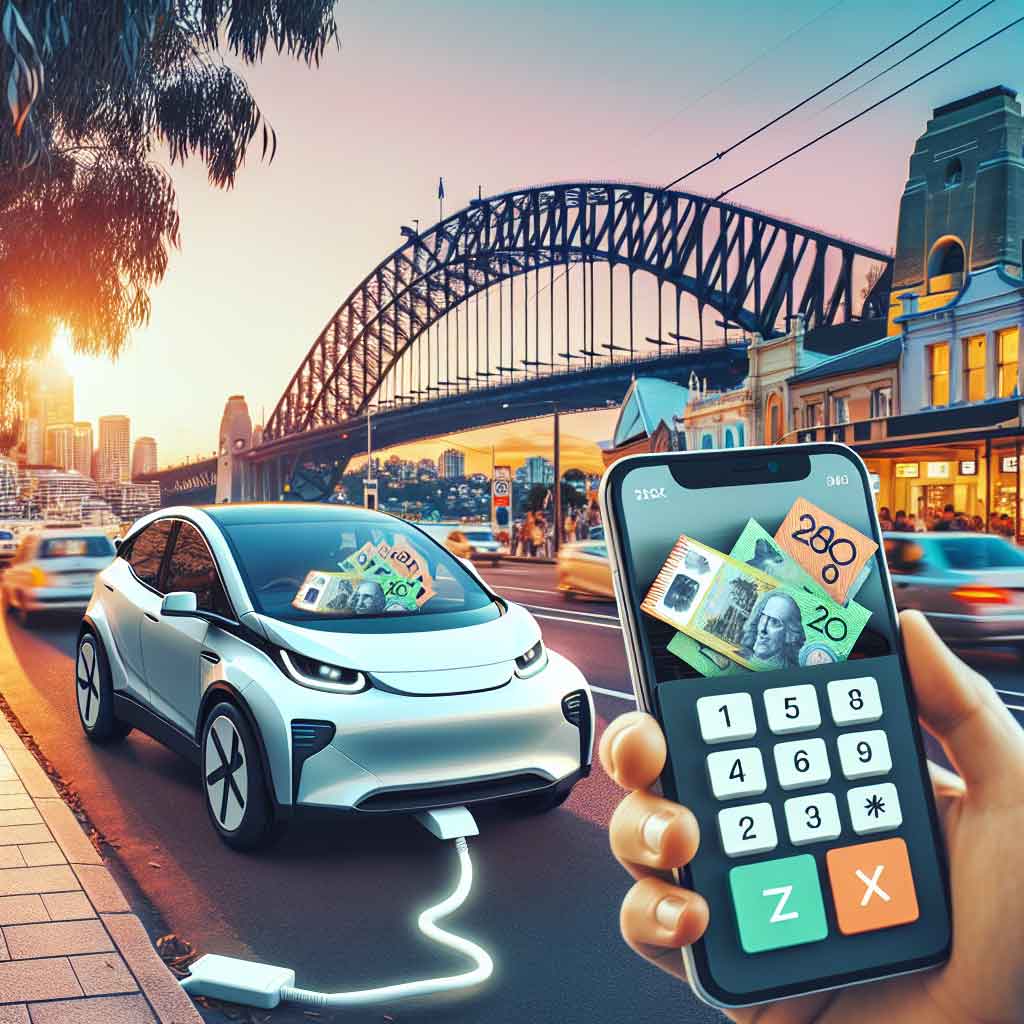
For decades, the golden rule of Aussie personal finance was simple: if you want a new car, paying cash is the ultimate flex. Avoiding interest rates and owning the asset outright was always the smartest move for high-income earners.
But in 2026, if you are buying an Electric Vehicle with your own post-tax cash, you are making a massive financial mistake.
Thanks to the Federal Government’s Electric Car Discount, the math on car ownership has been completely flipped on its head. Dealerships won’t explain it properly, and traditional finance brokers will try to confuse you with jargon so they can clip the ticket.
At EV Evolution, we don’t do dealership spin, and we certainly don’t ask for your email address before giving you the facts. Let’s look at the radical transparency behind why the FBT exemption makes a novated lease the ultimate tax hack for high-income earners in Australia right now.
The Secret Sauce: The FBT Exemption Explained
To understand the hack, you have to understand the tax.
Normally, if your employer pays for your personal car (or you package it out of your pre-tax salary), the Australian Taxation Office (ATO) hits you with a Fringe Benefits Tax (FBT) to ensure you aren’t dodging income tax. It usually makes salary packaging a standard petrol car a pretty average deal unless you drive massive kilometers for work.
But to push EV adoption, the government completely removed the FBT on eligible electric vehicles.
Here are the strict rules to qualify in 2026:
- It must be a fully electric vehicle (BEV) or hydrogen fuel cell vehicle. (Note: Plug-in Hybrids / PHEVs lost this exemption back in April 2025).+1
- The car must fall under the fuel-efficient Luxury Car Tax (LCT) threshold, which sits at $91,387 for the 2025-26 financial year.
- It must be financed through a novated lease.
If your EV fits that criteria—which includes almost every BYD, MG, Zeekr, and the Tesla Model Y and Model 3—you are sitting on a goldmine.
The Cash Trap: Paying with Post-Tax Dollars
Let’s say you earn $150,000 a year and you want to buy a $65,000 EV outright.
To get that $65,000 in cash, you actually had to earn close to $100,000 from your employer, because the ATO took their 37% cut before it ever hit your bank account.
But the bleeding doesn’t stop at the dealership. For the next five years, every time you pay your comprehensive insurance, every time you renew your registration, every time you buy new tires, and every time you charge the car, you are paying for it with money that has already been taxed.
The Novated Lease Hack: Paying with Pre-Tax Dollars
When you buy that exact same $65,000 EV on an FBT-exempt novated lease, everything changes.
Your employer deducts the finance payments for the car directly from your salary before you are taxed. But here is the real kicker: they also deduct all of your running costs.
Your insurance, registration, servicing, tires, and even your electricity charging costs (whether at home or at public fast chargers) are bundled into the lease and paid with pre-tax dollars.
Because your taxable income has now been artificially lowered by tens of thousands of dollars a year, you pay significantly less income tax. For an Aussie earning over $120,000, the income tax savings alone often completely offset the interest rate of the lease. In many scenarios, your actual take-home pay is reduced by less than what you would have spent just buying petrol and insurance for a standard SUV.
Stop guessing your tax bracket: Tax math gives everyone a headache. Instead of trying to calculate your exact marginal tax rate, you can type your exact salary and your dream EV model into our free EV Evolution AI Agent at the bottom of this page. It will instantly calculate your exact take-home pay savings to the dollar.
The “Trapdoor”: What’s the Catch?
We promised radical transparency, so let’s talk about the catch. A novated lease isn’t magic; it is a financial product, and you need to be aware of the “trapdoors.”
1. The Balloon Payment (Residual Value)
At the end of your lease (usually 1 to 5 years), you don’t automatically own the car. The ATO mandates a “residual value” (a lump sum) that is left over. You can either pay this lump sum in cash to own the car outright, sell the car to pay it off, or refinance it into a new lease. You need to plan for this balloon payment from Day 1.
2. The Review Window
The government is currently reviewing the EV Discount. While existing leases will likely be grandfathered in, if you are thinking about pulling the trigger, locking in your FBT-exempt lease while the legislation is still firmly in place for 2026 is the safest bet.
3. Leaving Your Job
Because the lease is tied to your employer, if you quit or lose your job, the lease un-novates. You are still responsible for the finance payments, but they will come out of your post-tax bank account until you novate it with your next employer.
Run Your Own Salary Through the AI
Finance brokers love to hide this math behind “Consultation Calls” and aggressive email capture forms so they can sell you high-interest packages.
We don’t play that game.
Every salary, every commute, and every car choice changes the math completely. We built the EV Evolution AI specifically for the Aussie market so you can run your own numbers in private.
Want to see exactly how much your income tax will drop if you lease a Tesla Model Y? Want to compare the pre-tax running costs of a Zeekr X against paying cash for a petrol car?
Click here to chat with the EV Evolution AI Agent for free and get your customized, live tax math in seconds. No spam, no sales calls, just the raw numbers you need to make the smartest financial move.
About EV Evolution
EV evolution is Australia’s AI-powered hub for the modern driver. Through our signature EV Strategy Suite—including the EV Vibe Check and our real-time AI Agent—we provide the transparent, fact-based data you need to switch to an EV with total confidence. Our mission is to empower every Aussie to trade the petrol pump for a plug with zero guesswork. We are committed to delivering a high-fidelity knowledge base that enables young professionals and modern families to navigate their electric transition with data-driven precision.
