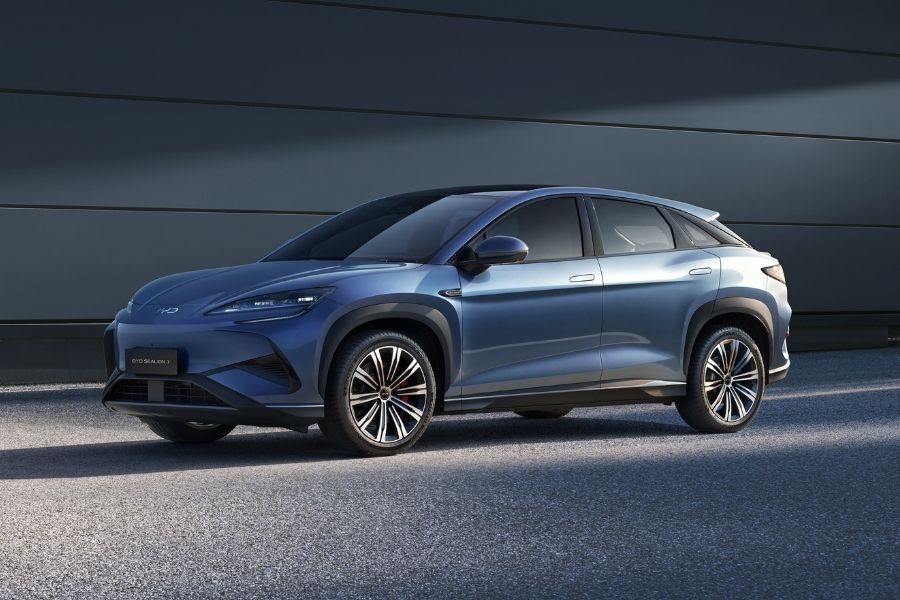



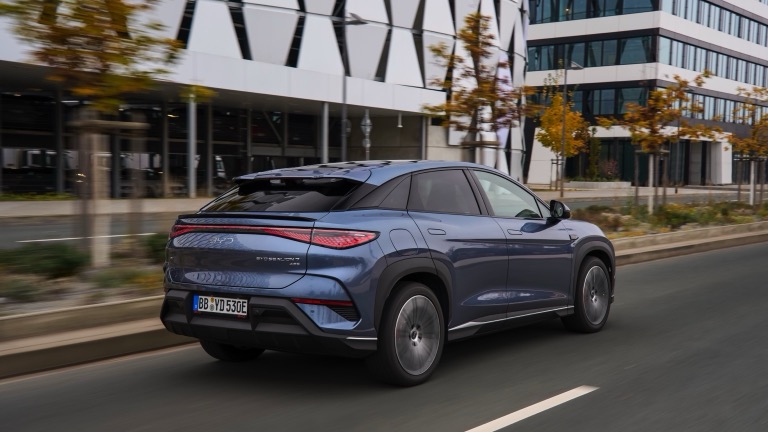
It’s February 10, 2026, and the Australian electric SUV market is no longer a one-horse race. While Tesla has enjoyed years of dominance, the challenger from Shenzhen has finally brought its “big gun” to the fight: the BYD Sealion 7.
If you’ve been scrolling through the local forums or walking through the showroom in Alexandria, you’ve heard the pitch. The Sealion 7 Premium arrives with a massive 82.5kWh “Blade” battery as standard. On paper, that sounds like enough juice to drive from Sydney to the moon and back. But as any seasoned EV owner will tell you, a big battery doesn’t always equal an endless range—especially when you’re fighting the wind on the M1 or the Hume Highway.
At EV Evolution, our brand voice is built on the “Real Road User” experience. We don’t just read the brochures; we audit the bitumen. Today, we’re putting the Sealion 7 through its paces on the classic Aussie commute to see if that “big battery” energy actually translates to real-world highway confidence.
The Heavyweight Contender: 2,225kg of Strategy
Before we talk range, we have to talk weight. The BYD Sealion 7 Premium tipped our scales at a whopping 2,225kg. To put that in perspective, it’s roughly 300kg heavier than its main rival, the Tesla Model Y RWD.
Why does that matter? Because in physics, there is no free lunch. BYD’s proprietary Blade Battery (LFP) is famous for being virtually indestructible and incredibly long-lasting, but it is dense. When you’re cruising at 110km/h on a coarse-chip Aussie highway, that weight becomes a factor.
The “Real Road User” Insight: While a lighter car might “sip” energy at high speeds, the Sealion 7 has to work harder to push that mass through the air. This results in a highway efficiency that surprised us—and not necessarily in a good way.
The Commute Audit: WLTP vs. The Hume
BYD claims a 482km WLTP range for the Premium RWD variant. In a perfect world (or a slow-moving CBD), that’s achievable. But your commute isn’t a lab test.
In our real-world highway loop—maintaining a steady 110km/h with the climate control set to a comfortable 22°C—the efficiency settled at 21.5kWh/100km.
- The Math: If you do the division on that 82.5kWh usable capacity, your realistic highway range drops to approximately 380km to 385km.
- The Reality: That’s still a solid distance, but it means that big 82.5kWh battery is actually delivering less real-world highway range than some competitors with smaller, lighter 75kWh packs.
The Verdict on Range: If your commute is purely urban, you’ll see 450km+ easily. But if you’re a regional commuter doing big kilometres at 110km/h, you need to budget for that 380km “Highway Ceiling.”
Pros & Cons: The Unfiltered Verdict
After a week of commuting, school runs, and the occasional “enthusiastic” merge, here is the real-world scorecard for the BYD Sealion 7 Premium:
✅ The Pros
- The “Luxe” Factor: The interior is miles ahead of the competition at this price point. The double-glazed acoustic glass makes it one of the quietest cabins on the market.
- The Blade Safety: There is a peace of mind that comes with the LFP Blade Battery. You can charge it to 100% every night without guilt, and its safety rating is world-class.
- Frequency Selective Damping (FSD): For the first time, a BYD feels “composed” on Aussie roads. It soaks up those sharp expansion joints on the bridge far better than the older Atto 3 ever did.
❌ The Cons
- The Efficiency Tax: It’s a thirsty beast at high speeds. The weight of the LFP battery is the trade-off for its longevity.
- Charging Speeds: Capped at 150kW DC. While okay for now, in a 2026 world where 350kW chargers are becoming the norm, a 10-80% stop takes about 32–37 minutes.
- The “Letterbox” View: That sleek coupe roofline looks great from the outside, but the rear visibility is abysmal. You’ll be relying on the (admittedly excellent) 360-degree cameras for everything.
Is the Sealion 7 the Right Move for You?
The BYD Sealion 7 is a “Big Metal for the Money” proposition. It feels like a $90,000 luxury SUV but sits comfortably in the mid-$50k to low-$60k bracket. For the Aussie family who wants a “normal” car that happens to be electric—complete with buttons, a lush interior, and a conventional dashboard—it is a formidable choice.
However, if you are a “Efficiency Nerd” who wants the maximum kilometres out of every kilowatt, the weight of that big battery might be a deal-breaker.
🚀 Build Your Strategy with the EV Evolution Suite
Don’t let the “Sticker Range” dictate your $60,000 investment. Choosing an EV in 2026 requires a Postcode-Specific Strategy. Should you go for the long-distance Sealion 7 Premium or the blisteringly fast Performance AWD? Does the weight of the car impact your specific commute through the Blue Mountains or the Adelaide Hills?
Our AI Strategy Agent is ready to crunch the numbers for you. Don’t just wonder—ask:
- “Run a 110km/h highway range audit for the Sealion 7 on my daily 80km commute.”
- “Compare the Sealion 7 Premium vs. the Tesla Model Y for a $120k salary packaging deal.”
- “Will the Sealion 7’s 150kW charging speed be an issue for my annual Sydney-to-Brisbane trip?”
Our AI Agent has access to real-world efficiency data from thousands of Aussie road users. Ask your question below and get your personalized BYD Strategy in seconds.
About EV Evolution
EV Evolution is Australia’s authoritative strategic platform for electric vehicle market, dedicated to providing a high-fidelity knowledge base for the next generation of drivers. In a year defined by the Federal statutory review of FBT exemptions and the rapid arrival of record-breaking affordable models, we serve as your professional co-pilot to ensure every automotive decision is data-driven and future-proof. Our EV Strategy Suite—including the EV Tax Savings Estimator, Vibe Check Tool, and 24/7 AI Strategy Agent—empowers young professionals and families to navigate complex technical and regulatory shifts with total transparency. At EV Evolution, we don’t just track the market, we provide the strategic roadmap for your transition to the new electric standard