


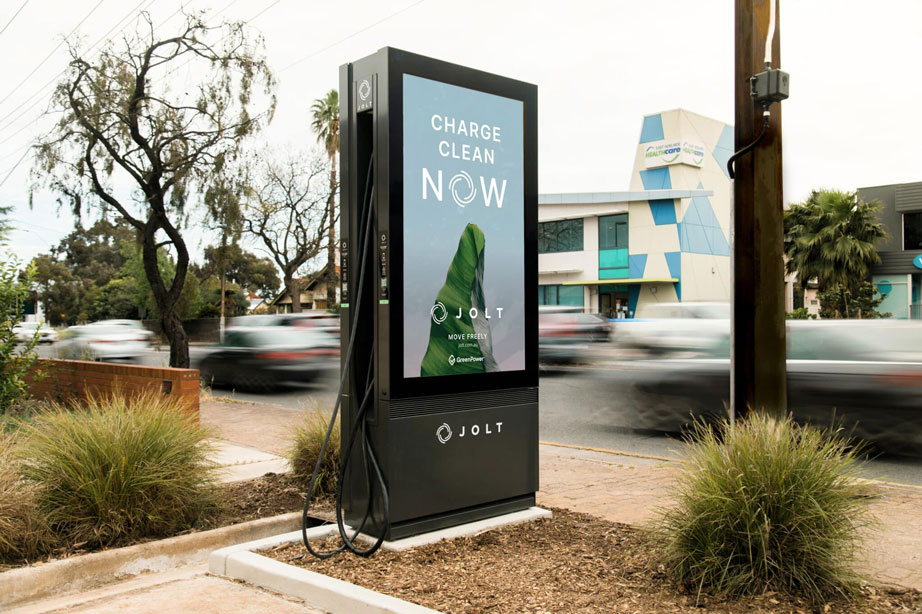
You’ve done it. You’ve convinced the partner, you’ve run the numbers on the novated lease, and you’re ready to buy your first electric car. You walk up to a public charging station to see how it works, and suddenly, you’re staring at a machine that looks like it belongs on the International Space Station.
There are cables everywhere. Acronyms like “CCS,” “CHAdeMO,” and “Type 2” are thrown around like everyday slang. It feels less like refueling a car and more like learning a new language.
Relax. It’s actually much simpler than it looks.
In Australia, the “format war” (think VHS vs. Beta) has largely been fought and won. But if you are shopping for a used EV in late 2025, there is still one “trap” you need to avoid.
Here is your 5-minute guide to the three plugs that matter, so you never get caught holding the wrong cable.
1. The Gold Standard: CCS2 (Combined Charging System)
- What it does: High-Speed DC Fast Charging.
- Where you find it: Every major highway charger (Tesla Superchargers, Chargefox, Evie, NRMA).
- Speed: 50kW to 350kW+.
If you are buying a new EV in Australia today—whether it’s a Tesla Model Y, a BYD Atto 3, or a Kia EV9—this is the plug you will use on road trips.
The “Combo” Trick:
The CCS2 plug is clever. It’s actually two plugs in one.
- The top half is a circle with a flat top (the Type 2 bit).
- The bottom half has two massive pins (the DC bit).
When you pull up to a fast charger on the Hume Highway, you pull the rubber dust cover off the bottom of your car’s charge port and shove this massive “combo” plug in. It bypasses your car’s internal onboard charger and dumps energy directly into the battery.
The EV Evolution Tip:
If a car does not have a CCS2 port, think twice before buying it. In 2026, CCS2 is the universal language of Australian charging. Without it, your road trip options shrink dramatically.
2. The Daily Driver: Type 2 (Mennekes)
- What it does: Slower AC Charging (Home, Work, Shopping Centres).
- Where you find it: Your wallbox at home, the “Bring Your Own Cable” posts at Woolworths, and destination chargers at hotels.
- Speed: 7kW to 22kW.
Remember the top half of that CCS2 plug we just talked about? That is the Type 2 socket.
When you charge at home, you are only using that top section.
- At Home: You plug your wallbox tether into the Type 2 top half.
- At the Shops: Many free chargers at shopping centres don’t have a cable attached. They just have a socket. You need to buy a “Type 2 to Type 2” cable (keep it in your boot/frunk) to bridge the gap.
The EV Evolution Tip:
Every CCS2 car can accept a Type 2 plug. They are natively compatible. If you are charging at home, you are using Type 2. If you are at a winery topping up while you have lunch, you are likely using Type 2.
3. The Fading Legacy: CHAdeMO (The One to Avoid)
- What it does: DC Fast Charging (The old way).
- Where you find it: Older Japanese EVs (Nissan LEAF, Mitsubishi Outlander PHEV, Lexus UX300e).
- Speed: Usually capped at 50kW (rarely 62kW).
Here is the controversial part. CHAdeMO is the charging standard developed in Japan. It looks like a large, round, multi-pin connector.
Ten years ago, it was the king. Today, it is the VHS tape of the EV world.
While the Nissan LEAF and the Mitsubishi Outlander PHEV are fantastic vehicles, they rely on this older plug for fast charging. The problem? Australia has stopped building infrastructure for it.
- The Decline: New charging stations from operators like Tesla and some newer Ampol/BP Pulse sites are installing CCS2-only stalls.
- The Queue: At older stations, you might find four CCS2 cables but only one CHAdeMO cable. If a Nissan LEAF is already plugged in, you are waiting 45 minutes.
- The Speed Cap: While CCS2 cars are charging at 350kW, CHAdeMO cars are often physically limited to 50kW.
⚠️ The Used Car Trap: Don’t Buy the Wrong Plug
As we enter 2026, the used market is flooded with affordable EVs. You might see a 2019 Nissan LEAF or a grey-import Japanese EV for a bargain price of $20,000.
It looks like a steal. But you need to know what you are buying.
If you buy a CHAdeMO car in 2026, you are buying a vehicle with a shrinking ecosystem.
- You cannot use most Tesla Superchargers (which are now open to non-Teslas, provided they have CCS2).
- You will struggle to find fast charging in remote regional areas where new grants mandate CCS2 plugs.
- Your resale value will plummet as the plug becomes obsolete.
The Exception:
If this is a second car that will never leave the city suburbs and will always charge at home, a CHAdeMO car is fine. You can charge it on AC (Type 2 or Type 1) overnight and never worry. But do not buy one expecting to tour the country easily.
🇦🇺 Future-Proof Your Driveway
We aren’t saying the Nissan LEAF is a bad car—it pioneered the movement! But technology moves fast.
In Australia, the war is over, and CCS2 won.
When you are scrolling through Carsales or walking the dealership floor, pop the fuel flap.
- Does it have the big “Combo” socket (CCS2)? Buy it. You are future-proofed for the next decade of infrastructure.
- Does it have two separate round sockets (Type 2 and CHAdeMO)? Pause. Negotiate hard. Understand that your road trip experience will be harder than your mate with the BYD.
Buying an EV is about freedom. Don’t limit yours by choosing the wrong plug.
🤖 Join the Evolution: Check Before You Cheque
Are you looking at a used 2020 Hyundai Ioniq and can’t figure out if it’s the “good” plug or the “old” plug? Does the Mitsubishi Eclipse Cross PHEV use Type 2 or Type 1?
Don’t get stuck at the charger.
At EV Evolution, we have trained our AI-Powered Chatbot to identify the charging port of every EV sold in Australia over the last decade.
Ask the Chatbot today:
- “Does the 2019 Hyundai Ioniq Electric use CCS2 or CHAdeMO?”
- “What charging cable do I need to buy for a 2022 MG ZS EV?”
- “List all the EVs under $30,000 that have the modern CCS2 port.”
About EV Evolution
EV Evolution is the leading online platform dedicated to Australian electric vehicle owners and enthusiasts. We foster a vibrant community, delivering essential EV news and insights, and enhancing user engagement through our innovative, AI-powered chatbot for dynamic discussions. Our mission is to empower Australian electric vehicle owners and enthusiasts by fostering a vibrant, AI-driven online community that connects, informs, and advances the nation’s electric vehicle landscape.
