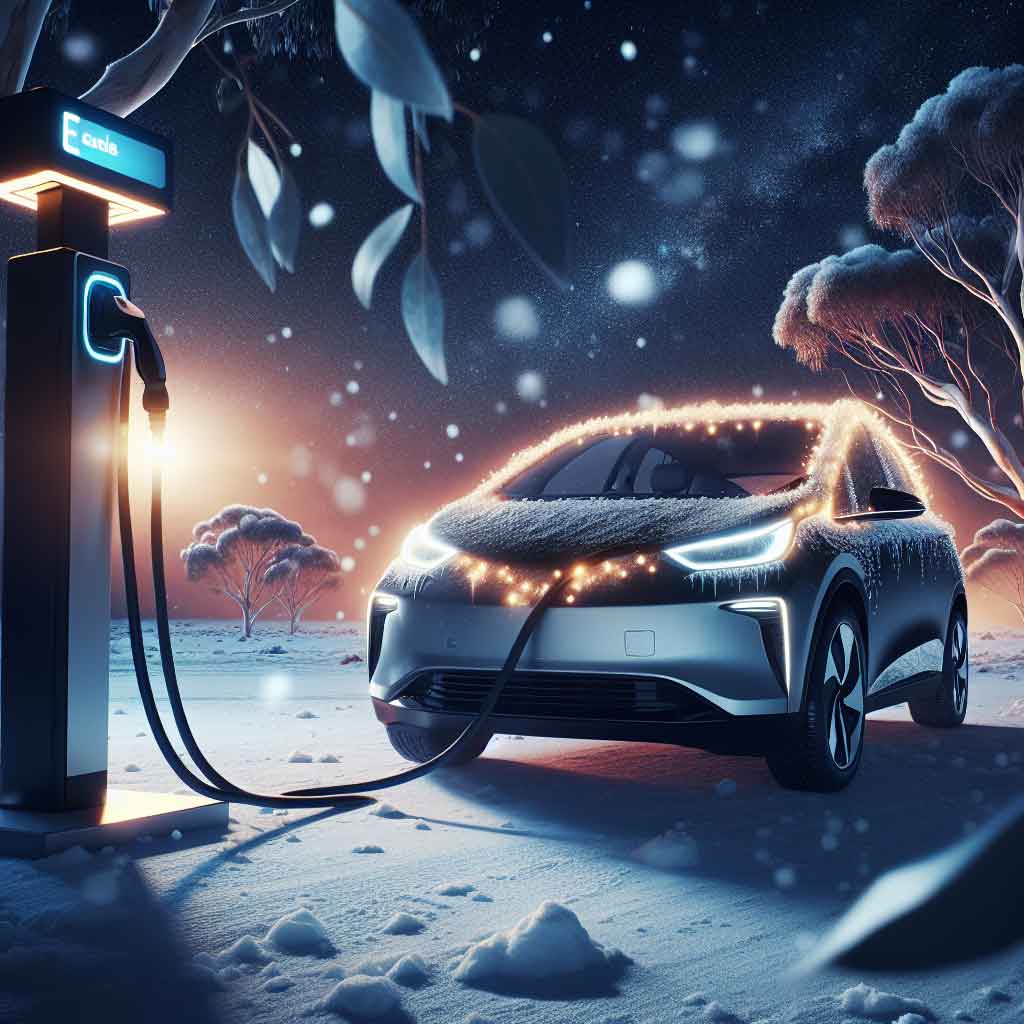


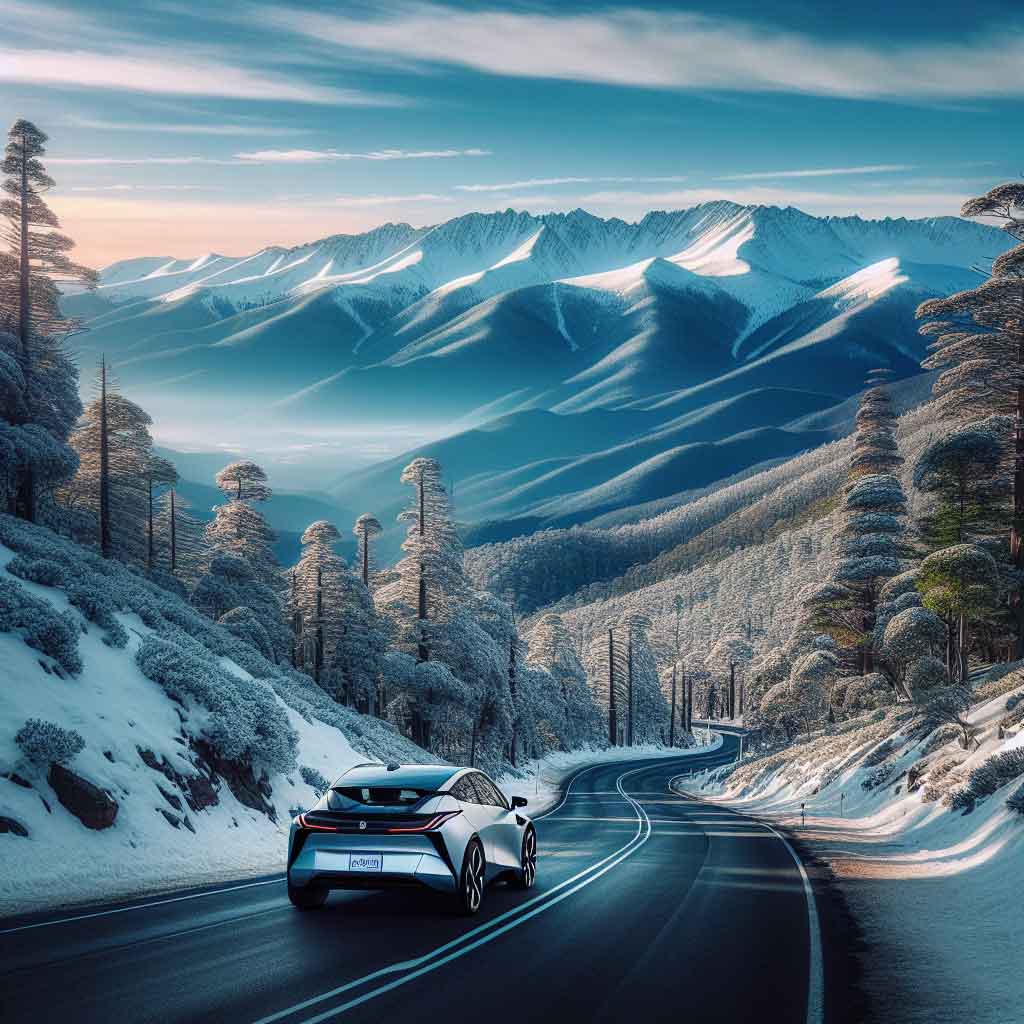
There is nothing quite like the great Aussie snow trip. Packing the car, throwing on the puffer jackets, and making the pilgrimage up the Monaro Highway to the Snowy Mountains or winding up the Great Alpine Road into the Victorian Alps.
If you’ve recently parked a new EV in your driveway—perhaps to take advantage of the massive novated lease FBT exemptions—you might be wondering if your battery is up for the alpine challenge.
Every year as winter approaches, the search engines light up with drivers asking about EV in snow Australia. It makes sense. We’ve all noticed our smartphones dying faster on a freezing day, and an EV is essentially a giant smartphone on wheels.
At EV Evolution, we don’t do guesswork. We deal in real-world data so you can drive with confidence. Here is the honest truth about electric car cold weather performance, the reality of winter EV range loss, and why you need to know about the “25% Winter Penalty” before you hit the slopes.
🥶 The Science of Winter EV Range Loss
There are three major factors working against your electric vehicle when you head to the snow:
- Battery Chemistry: Lithium-ion batteries are just like humans; they like to be at room temperature (around 20°C). When temperatures drop toward zero, the chemical reactions inside the battery slow down. This drastically increases internal resistance, meaning the car has to use more of its own energy just to keep the battery warm enough to function safely.
- Cabin Heating: In a petrol car, the engine generates massive amounts of waste heat, which is simply blown into the cabin to keep you warm. An electric motor is highly efficient and generates very little waste heat. This means your EV has to use battery power to run the cabin heater (PTC heater or heat pump) and warm your seats, actively eating into your driving range.
- The Uphill Climb: The Australian Alps are, obviously, uphill. Pushing a two-tonne vehicle thousands of metres above sea level requires a massive amount of sustained energy output.
📉 The “25% Winter Battery Penalty”
Because of these combined factors (cold weather, cabin heating, and climbing elevation at highway speeds), you cannot rely on your car’s advertised WLTP range when heading to the snow.
The EV Evolution Rule of Thumb: When doing an alpine run, you must automatically deduct 25% from your EV’s advertised range.
If your BYD Atto 3 or Tesla Model Y has a stated range of 450km, your safe, real-world winter highway range is roughly 335km. Knowing this number entirely removes range anxiety, allowing you to plan your fast-charging stops perfectly.
🗣️ What Real Drivers Are Saying on Reddit
If you want the unfiltered truth, the Australian EV and snow communities on Reddit are full of practical advice from drivers who regularly tackle the mountains.
A massive point of discussion is the reality of trying to charge at the snow. In a recent thread on r/Solterra regarding cold weather charging, users discussed the harsh reality of trying to use a standard 240V wall plug (Level 1 charging) in freezing temperatures. Because the battery is so cold, almost all the power from the wall goes simply into heating the battery, leaving nothing to actually charge it. One experienced user noted:
“At low temperatures almost all of your 1.4 kW available with L1 charging is going toward heating the battery pack… Your charger was pumping out energy all night to accomplish nothing.”
This means you cannot rely on simply plugging into a wall socket outside your ski lodge in -2°C overnight.
Over on r/AustraliaSnow, locals discussing taking new EVs down to the NSW slopes highlighted the best practical strategy for the area:
“If you’re coming from Canberra the [BYD] Sealion should make it, charge in Cooma on way home.”
The consensus is clear: don’t rely on trickle charging in the freezing snow. Use the high-speed chargers in the alpine gateway towns to ensure you have a massive buffer before you drive up the mountain.
⚡ The Alpine Gateway Chargers (Where to Stop)
Thankfully, the charging networks (Evie, Chargefox, and Tesla) have heavily invested in the towns at the base of the mountains. Here are the crucial pitstops you need to know:
NSW: Cooma and Jindabyne
If you are heading to Perisher or Thredbo, Cooma is your strategic stronghold. There are excellent fast chargers here, including a large Tesla Supercharger hub.
As for Jindabyne EV chargers, the infrastructure is rapidly improving with NRMA fast chargers right near the lake. Pro-Tip: Charge your car to 80% or 90% in Cooma or Jindabyne before you head up the mountain. You will burn energy driving up, but thanks to regenerative braking, you will actually regain a significant chunk of battery on the drive back down!
Victoria: Bright and Myrtleford
If you are driving from Melbourne to Mount Hotham or Falls Creek, the Great Alpine Road has you covered. Chargefox operates ultra-rapid stations in Myrtleford, and there are excellent fast-charging options in Bright. Stop in Bright, grab a coffee at a local roaster, and push your battery up to 80% before you tackle the grueling climb up to Hotham.
🤖 Plan Your Snow Trip with EV Evolution AI
Don’t get caught out in the cold. Our Weekend Warrior AI is programmed to automatically apply a 25% winter range penalty. Test your trip to the snow right here.
Just click below, tell the AI what car you drive and where you are heading, and it will map your exact winter charging strategy.