



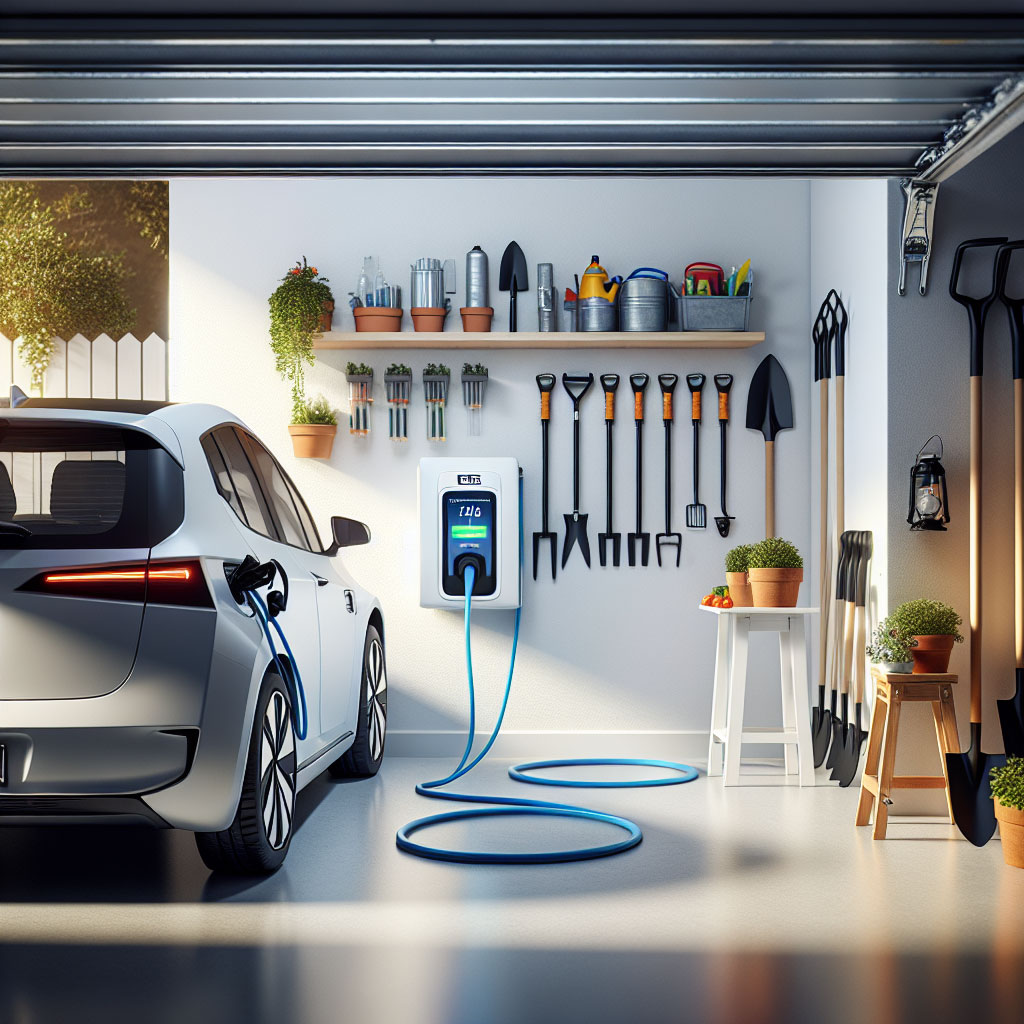
For the last five years, the “Gold Standard” of home EV charging in Australia has been simple: install a 7kW single-phase wallbox, plug in at night, and wake up to a full battery. It was the “set and forget” solution that worked for almost everyone.
But as we move into 2026, the game is changing.
A new wave of electric vehicles is hitting our shores with onboard chargers capable of swallowing electrons three times faster than before. The 22kW AC era has arrived, led by advanced models like the 2026 Subaru Solterra and the Zeekr X.
Suddenly, that 7kW wallbox feels a little bit… yesterday.
At EV Evolution, we believe in future-proofing. Before you call the electrician to install a standard charger, here is why you might want to consider upgrading your garage for “Home Charging 2.0.”
⚡ The Difference: Single-Phase (7kW) vs. Three-Phase (22kW)
To understand why this matters, we need to look at the wiring behind your plasterboard.
1. Single-Phase Charging (7kW)
Think of this as a standard garden hose.
Most Australian homes run on “Single-Phase” power. A standard wallbox draws roughly 32 Amps on this single line, delivering 7kW of power.
- Speed: Adds approx. 40km of range per hour.
- Time: A 60kWh battery (like in a BYD Atto 3) takes roughly 8-9 hours to charge from 0-100%.
- Verdict: Perfect for overnight charging, but too slow for a quick “splash and dash” during the day.
2. Three-Phase Charging (22kW)
Think of this as a fire hose.
Three-phase power uses three live wires instead of one. A 22kW charger spreads the load across all three, delivering significantly more energy without overloading a single wire.
- Speed: Adds approx. 110km – 130km of range per hour.
- Time: That same 60kWh battery can charge in under 3 hours.
- Verdict: Game-changing speed. You can come home from work with a flat battery at 5:30 PM, plug in, and have a full “tank” ready for a night out by 8:00 PM.
🚗 The New Wave: Cars That Can Use It
For a long time, only expensive European EVs (like older Teslas, Audis, and Renaults) supported 22kW AC charging. Most mass-market EVs were capped at 7kW or 11kW.
That is changing in 2026.
- 2026 Subaru Solterra: In a major update, Subaru has doubled the AC charging capability of the Solterra from 11kW to 22kW. This transforms the ownership experience, making it one of the fastest-charging family SUVs on the market for home users.
- Zeekr X: This premium compact SUV from the Geely stable arrives standard with 22kW capability, proving that Chinese manufacturers are prioritizing AC speed to give urban owners faster turnaround times.
The “Solar Sponge” Effect:
The biggest benefit of 22kW charging isn’t just speed—it’s solar utilization. If you have a large solar system (e.g., 10kW-13kW), a 7kW charger can’t catch all that sunshine. A 22kW smart charger can ramp up to soak up every single kilowatt of excess solar generation in the middle of the day, effectively giving you free fuel that a slower charger would miss.
🏠 Is Your Garage Ready?
Upgrading to 22kW isn’t as simple as swapping a plug.
- Grid Connection: You must have three-phase power connected to your property. Many modern homes and those with ducted air-conditioning already have it. If you have an older home, upgrading from single to three-phase can cost anywhere from $3,000 to $10,000 depending on your local network provider (DNSP).
- The Charger: You need a specific 22kW-rated wallbox (like those from Zappi, Ocular, or Tesla Wall Connector Gen 3 wired for 3-phase).
Is it worth the cost? If you plan to own two EVs in the future, or simply value the convenience of rapid home charging, the answer is increasingly “yes.”
💰 EV Evolution Angle: Don’t Let the Government Keep Your Savings
You might be reading this thinking, “An electrical upgrade sounds expensive.”
This is where smart financing comes in.
If you are buying your 2026 Subaru Solterra or Zeekr X using a Novated Lease, you are already unlocking massive savings thanks to the FBT Exemption.
The Math:
On a $65,000 EV, the FBT exemption can save the average salary earner upwards of $4,000 to $6,000 per year in tax compared to a private loan.
Our Advice:
Don’t just pocket that saving—reinvest it in your infrastructure.
The tax savings from just one year of your lease can comfortably cover the cost of a premium three-phase charger installation. By locking in a novated lease now, you aren’t just getting a cheap car; you are freeing up the cash flow to turn your garage into a professional-grade charging station.
Furthermore, some forward-thinking lease providers may allow you to bundle the cost of a “portable” high-power charging unit into your finance amount, maximizing your pre-tax power.
Don’t wait. The government incentives are generous, but they won’t last forever. Use the savings today to build the home setup of tomorrow.
🤖 Join the Evolution: Check Your Compatibility
Is your home three-phase ready? Does the car you want actually support 22kW, or is it capped at 11kW?
Don’t guess with electricity.
At EV Evolution, we encourage you to try chatting with our AI-powered chatbot today. It is trained on the detailed charging specs of every EV in Australia and can help you understand the costs.
- “Does the 2026 Kia EV5 support 22kW AC charging?”
- “What is the estimated cost to upgrade to three-phase power in NSW?”
- “Calculate my weekly savings if I use a 22kW charger with my 13kW solar system.”
About EV Evolution
EV Evolution is the leading online platform dedicated to Australian electric vehicle owners and enthusiasts. We foster a vibrant community, delivering essential EV news and insights, and enhancing user engagement through our innovative, AI-powered chatbot for dynamic discussions. Our mission is to empower Australian electric vehicle owners and enthusiasts by fostering a vibrant, AI-driven online community that connects, informs, and advances the nation’s electric vehicle landscape.
