



Exploring the Rise of “Kei-Style” EVs for Inner-City Gen Z: Buying a Honda Super-ONE in 2026
If you’ve spent any time trying to find a park in Surry Hills or navigating the narrow laneways of Fitzroy on a Saturday afternoon, you already know the truth: our cities weren’t built for the modern “Americanised” SUV. While the rest of the country is obsessing over 3.5-tonne towing capacities and massive “frunks,” a new sub-culture of Australian drivers is looking in the opposite direction.
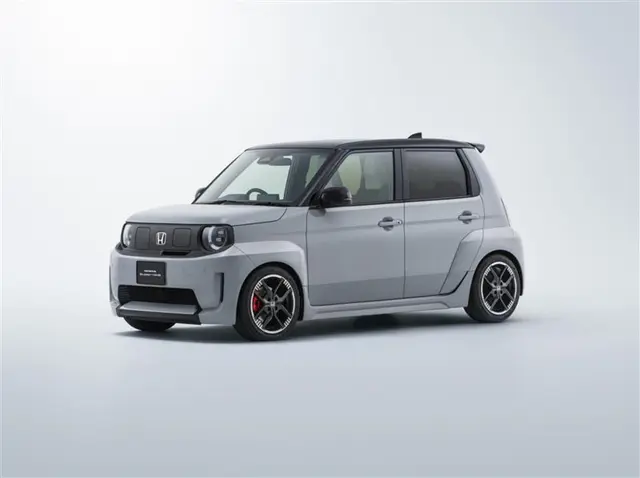
Enter the Honda Super-ONE. Arriving in Australian showrooms in the second half of 2026, this pint-sized electric hatch isn’t just a car; it’s a lifestyle hack. Derived from Japan’s legendary “Kei car” culture, the Super-ONE is designed to prove that in the urban jungle, less is officially more.
At EV Evolution, we’re calling it the “Kei-volution.” It’s the Tech Flex for a generation that values agility, style, and parkability over raw size. But is a micro-EV actually enough to handle the reality of Australian city life? Let’s dive into the most anticipated urban runabout of 2026.
Why Gen Z is Swiping Right on Micro-EVs
For a long time, the Australian car market was a “bigger is better” playground. But Gen Z and young Millennials are rewriting the rules. In 2026, the car isn’t a status symbol based on size—it’s a tool for freedom.
The Honda Super-ONE Australia launch marks the first time a major Japanese manufacturer has brought a true “Kei-style” EV to our shores. It’s boxy, it’s retro-futuristic, and it’s undeniably “cool” in a way that a generic crossover never will be. It fits the vibe of the 2026 inner-city resident: someone who lives in an apartment with a tight car stacker, shops at local markets, and wants a car that feels like a piece of high-end consumer tech rather than a heavy piece of agricultural machinery.
The Specs: Small Footprint, Big Personality
Don’t let the diminutive size fool you. While the Super-ONE measures under 3.6 metres long and 1.6 metres wide, Honda has engineered it to feel like a “grown-up” car on the inside.
- The Stance: It’s based on the Japanese N-One, but for Australia, it’s been given a “wide-body” treatment. With flared fenders and a wider track, it looks more like a “street machine” than a grocery getter.
- The “Boost” Factor: This is the headline feature for 2026. Honda has included a purple ‘BOOST’ button on the steering wheel. Tap it, and the car simulates a seven-speed transmission with virtual gearshifts and piped-in engine sounds. It’s “slow car fast” at its absolute best.
- The Range: While official WLTP figures are still being finalised, we expect a real-world range of around 250km to 280km from its 29.6kWh battery. In a city like Sydney, where the average daily commute is under 35km, that’s over a week of driving on a single charge.
The “Tightest Street” Test: Parking in 2026
In 2026, parking prices in the Sydney CBD have become truly “cooked.” If you’re driving a massive dual-cab, you’re often restricted to the “oversized” bays that cost a premium.
This is where the Super-ONE slays. Its turning circle is so tight it can practically spin on a ten-cent piece. You can nose into “half-spots” that other drivers have to pass by in frustration.
Tool Integration: Before you head out, use our EV Vibe Check tool. It doesn’t just rank suburbs by chargers; it ranks them by “Parkability.” High Vibe scores in suburbs like Paddington or Richmond mean the streets are tight, and the Super-ONE is the only car that truly fits. Vibe Check your tightest city streets—this car fits anywhere.
The Financial Flex: Is it a “Steal”?
The big question for 2026 is the Honda Super-ONE price in Australia. Honda has teased that it will be “cheaper than a Civic,” which places it in the high $30,000s to low $40,000s bracket.
While it faces stiff competition from the BYD Atto 1 ($23,990) and the Hyundai Inster ($39,990), the Honda offers something they don’t: Japanese engineering pedigree. Honda Australia has committed to a full local testing program, ensuring the suspension is tuned for our specific brand of “patchwork” urban bitumen.
Moreover, because it’s a full EV, it qualifies for the 0% FBT Novated Lease benefit. For a young professional, this means you can package a brand-new Honda for less than the cost of a weekly Myki or Opal pass.
The Verdict: Is Micro-EV Life for You?
Is the Honda Super-ONE all you really need? If you have three kids and a Golden Retriever, probably not. But for the 2.5 million Australians living in high-density urban zones, it is the ultimate “City Ninja.”
It’s easy to charge (you can top it up from 20% to 80% in 30 minutes at a standard 50kW DC station), it’s impossible to lose in a car park, and it turns heads in a way that a Tesla Model 3 simply doesn’t anymore.
Settle the Debate: Ask the AI
Still not sure if you can live with a four-seater? Or wondering how the Super-ONE handles the M4 at 110km/h?
Start the conversation with the EV Evolution AI Agent. Our AI co-pilot has been fed the early testing data from Japan and the UK. Ask it:
- “Can I fit a surfboard in a Honda Super-ONE with the seats down?”
- “How does the Super-ONE’s ‘Boost Mode’ actually feel compared to a petrol hatch?”
- “Compare the Honda Super-ONE vs. the Hyundai Inster for a Sydney city driver.”
The evolution of the Australian city car is small, electric, and incredibly fun. Don’t let the “bigger is better” crowd keep you stuck in traffic. Check the Vibe, run your tax numbers, and let the AI guide you to the smartest urban move of 2026.
About EV Evolution
EV Evolution is the leading online platform dedicated to Australian electric vehicle owners and enthusiasts. We foster a vibrant community, delivering essential EV news and insights, and enhancing user engagement through our innovative, AI-powered chatbot for dynamic discussions. Our mission is to empower Australian electric vehicle owners and enthusiasts by fostering a vibrant, AI-driven online community that connects, informs, and advances the nation’s electric vehicle landscape.
