



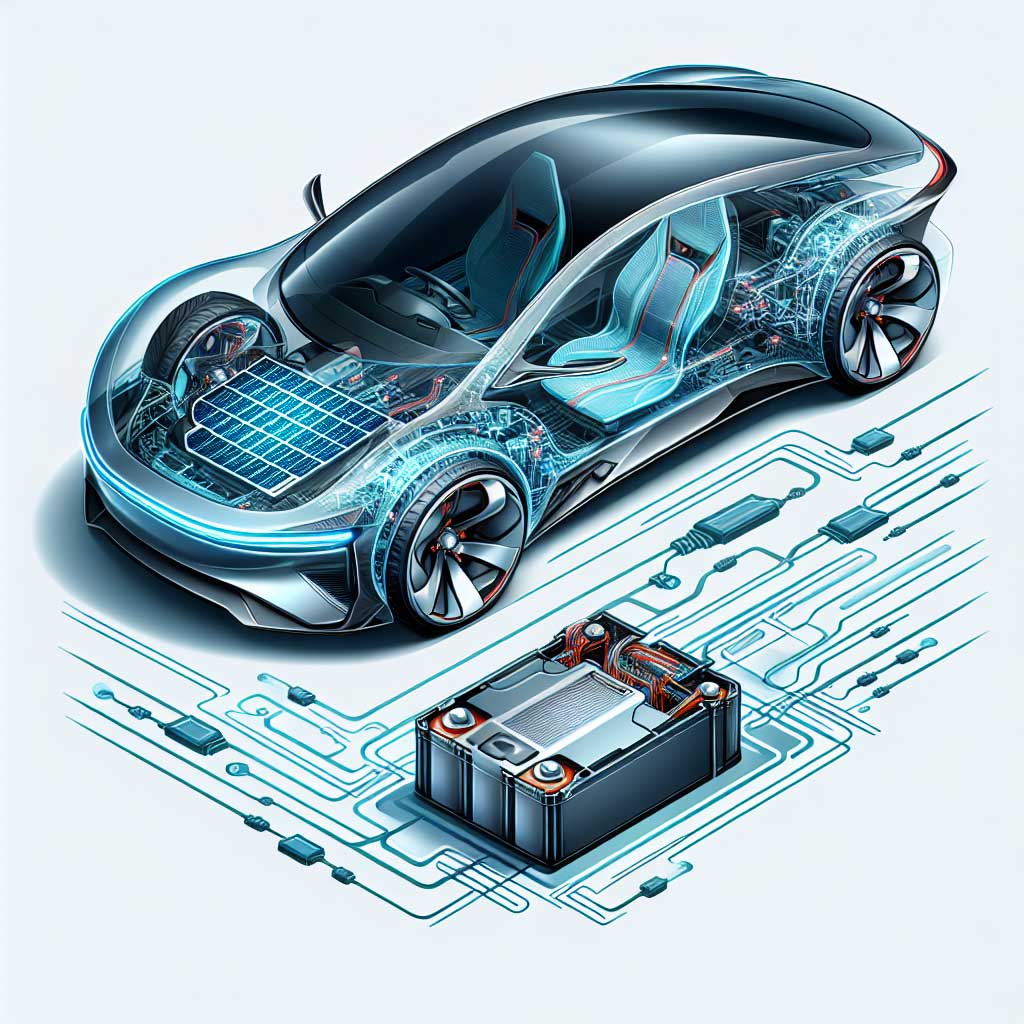
It’s February 2026, and the “Great Australian Road Trip” has officially gone electric. Whether you’re cruising the Grand Pacific Drive or tackling the heat of the Nullarbor, the car you’re driving is likely powered by one of two heavyweights in the battery world: LFP (Lithium Iron Phosphate) or NMC (Nickel Manganese Cobalt).
At EV evolution, we know that for young Aussie enthusiasts, the choice isn’t just about 0-100km/h times anymore. It’s about how that battery handles a 40°C Christmas day in Perth or a humid afternoon in Brisbane. Understanding these acronyms is the difference between a car that lasts a decade and one that feels “tired” after a few hot summers.
So, let’s break down the chemistry without the lab coat. Which battery is the true “Blue Ribbon” choice for the Australian climate?
🔋 The Contenders: Meet the Chemistries
In 2026, the Australian EV market is no longer a one-size-fits-all affair. We’ve moved past the early days of “just give me any EV” to a more strategic approach to ownership.
LFP (Lithium Iron Phosphate): The Durable Workhorse
If you’re looking at a BYD Sealion 7, a Tesla Model 3 RWD, or the new MG S5, you’re almost certainly looking at an LFP battery.
- The Vibe: Robust, safe, and incredibly chill.
- The Secret Weapon: You can charge it to 100% every single day without feeling guilty. In fact, the car actually likes it for calibration purposes.
- The Catch: It’s heavier and less energy-dense, meaning you get slightly less range for the same amount of weight compared to NMC.
NMC (Nickel Manganese Cobalt): The High-Performance Racehorse
Found in “Long Range” and “Performance” variants, such as the Tesla Model Y Performance or the high-spec Kia EV6, NMC is the tech that pushed EVs into the mainstream.
- The Vibe: Punchy, lightweight, and long-legged.
- The Secret Weapon: Superior energy density. It packs more “juice” into a smaller, lighter package, which is why your 0-100km/h sprints feel so violent.
- The Catch: It’s a bit of a diva. Manufacturers usually recommend a 20-80% daily charge limit to prevent long-term degradation.
☀️ The Aussie Heat Factor: Which Battery Wins?
Australia is a brutal testing ground for batteries. Heat is the natural enemy of lithium-ion cells, leading to a phenomenon we call battery degradation.
In 2026, the data is clear: LFP is the king of the Aussie summer. Because LFP batteries have a much higher “thermal runaway” temperature (they are much harder to set on fire) and handle high ambient temperatures with more grace, they suffer less from heat-induced degradation. If you live in QLD, NT, or WA, an LFP battery in a BYD or Tesla is likely to maintain a higher State of Health (SoH) over a 10-year period than an NMC equivalent.
NMC batteries are more sensitive to high temperatures. While modern liquid-cooling systems in 2026 models are world-class, the chemistry itself is simply more “active.” If you’re constantly fast-charging an NMC pack at a 350kW station in the middle of a heatwave, you’re putting more stress on the cells than you would with an LFP pack.
⚖️ The Trade-Off: Range vs. Reliability
When choosing EV battery types in Australia, it usually comes down to your driving habits.
- For the Commuter: If you’re doing the daily grind in Sydney or Melbourne, LFP is a no-brainer. The ability to charge to 100% means that even if the “Total Range” is lower on paper, your “Usable Daily Range” is often higher than an NMC car that you’re keeping at 80%.
- For the Interstate Crusher: If you’re regularly doing big interstate k’s, the lightweight nature of NMC is a godsend. It allows for those massive 600km+ WLTP ranges that make the “Big Lap” a breeze.
🛠️ Master the Math with the EV Strategy Suite
At EV evolution, we don’t want you to guess which tech is right for your wallet. The transition to electric is as much a financial strategy as a tech upgrade.
Before you put down a deposit, run your preferred model through our toolkit:
- EV Fuel Savings Calculator: See the real-world ROI. Whether you choose LFP or NMC, the savings compared to $2.15/L petrol are staggering.
- EV Charge Cost: Calculate exactly what a 0-100% (LFP) vs a 20-80% (NMC) charge will cost you on your specific home energy tariff.
- EV Charging Time Calculator: LFP packs can sometimes charge slightly slower at peak speeds than NMC. See how that actually impacts your 10-minute coffee break.
- The EV Vibe Check: Heading out on a hot day? Use the Vibe Check to find chargers with overhead solar canopies—keeping your car (and your battery) out of the direct sun while you top up.
🚗 2026 Trends: The Rise of “LMFP”
We can’t talk about LFP vs NMC battery tech in 2026 without mentioning the “Middle Child”: LMFP.
By adding Manganese to the LFP chemistry, brands like Mazda (with the 6e) and GAC Aion have managed to increase energy density without losing the safety and heat-tolerance benefits of iron phosphate. It’s the “Best of Both Worlds” solution that is currently taking the Aussie market by storm.
🤖 Still Torn? Ask the EV Evolution AI
Choosing between the “Workhorse” and the “Racehorse” is a big call. Does the BYD Sealion 7’s Blade Battery (LFP) really outlast the Tesla Model Y Long Range (NMC)? What happens to your resale value in five years if the battery shows 5% degradation?
Don’t leave it to guesswork—start a conversation with the EV evolution AI Agent. Our AI is the ultimate technical co-pilot. It’s updated daily with 2026 technical bulletins, real-world degradation data from Aussie owners, and the latest manufacturer warranty fine print. You can ask:
- “What is the best EV battery for heat in Northern Queensland?”
- “Compare the long-term degradation of a 2022 Tesla (LFP) vs 2022 Hyundai (NMC) after 100,000km.”
- “Is the Mazda 6e’s LMFP battery safer than a standard NMC pack?”
- “How does charging to 100% daily affect my warranty on a BYD?”
The Verdict: LFP is the Aussie Favourite
For the vast majority of Australian drivers, the best EV battery for heat and longevity is LFP. Its “set and forget” nature, lower cost, and incredible safety profile make it the perfect partner for our harsh environment.
Ready to find your perfect electric partner? Head over to our EV fuel savings calculator to see the savings, or chat with our AI Agent to get the final technical green light on your next purchase.
About EV Evolution
EV Evolution is Australia’s authoritative strategic platform for electric vehicle market, dedicated to providing a high-fidelity knowledge base for the next generation of drivers. In a year defined by the Federal statutory review of FBT exemptions and the rapid arrival of record-breaking affordable models, we serve as your professional co-pilot to ensure every automotive decision is data-driven and future-proof. Our EV Strategy Suite—including the EV Tax Savings Estimator, Vibe Check Tool, and 24/7 AI Strategy Agent—empowers young professionals and families to navigate complex technical and regulatory shifts with total transparency. At EV Evolution, we don’t just track the market, we provide the strategic roadmap for your transition to the new electric standard.
