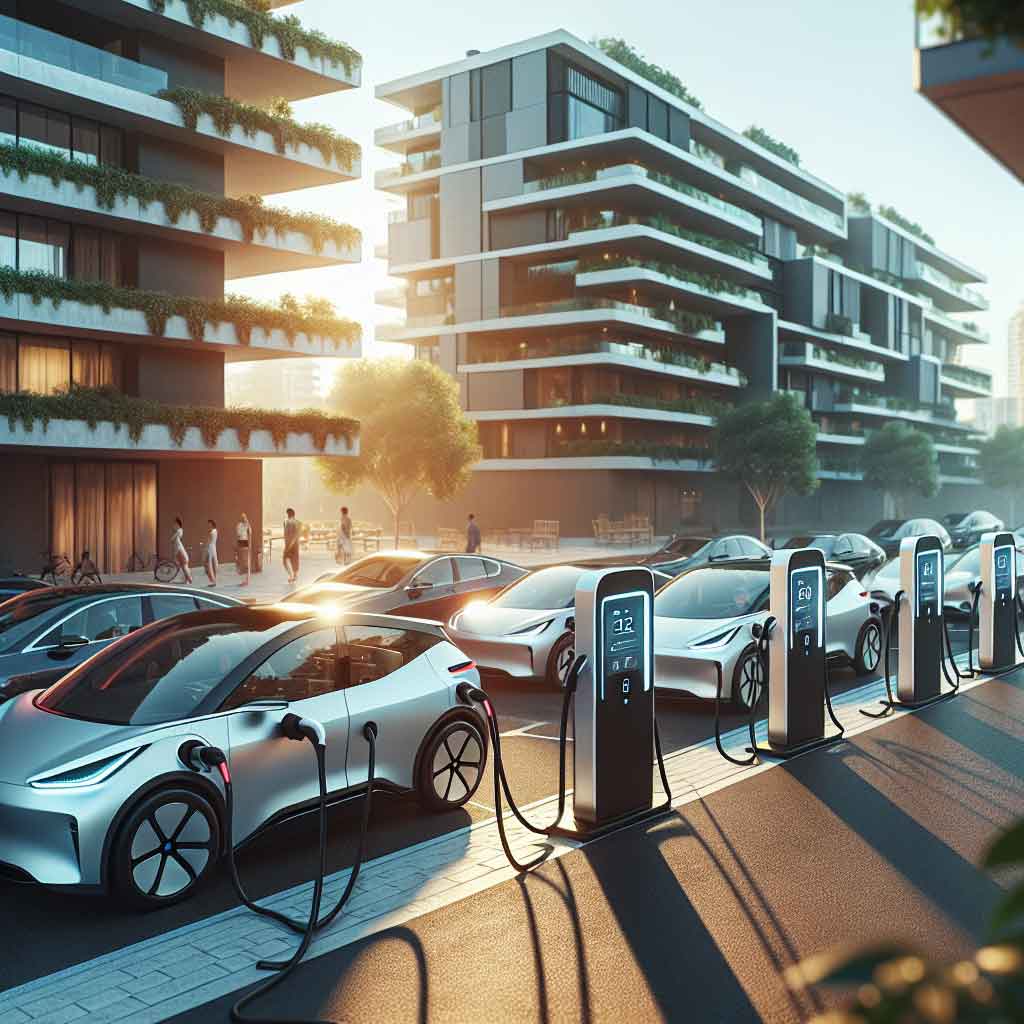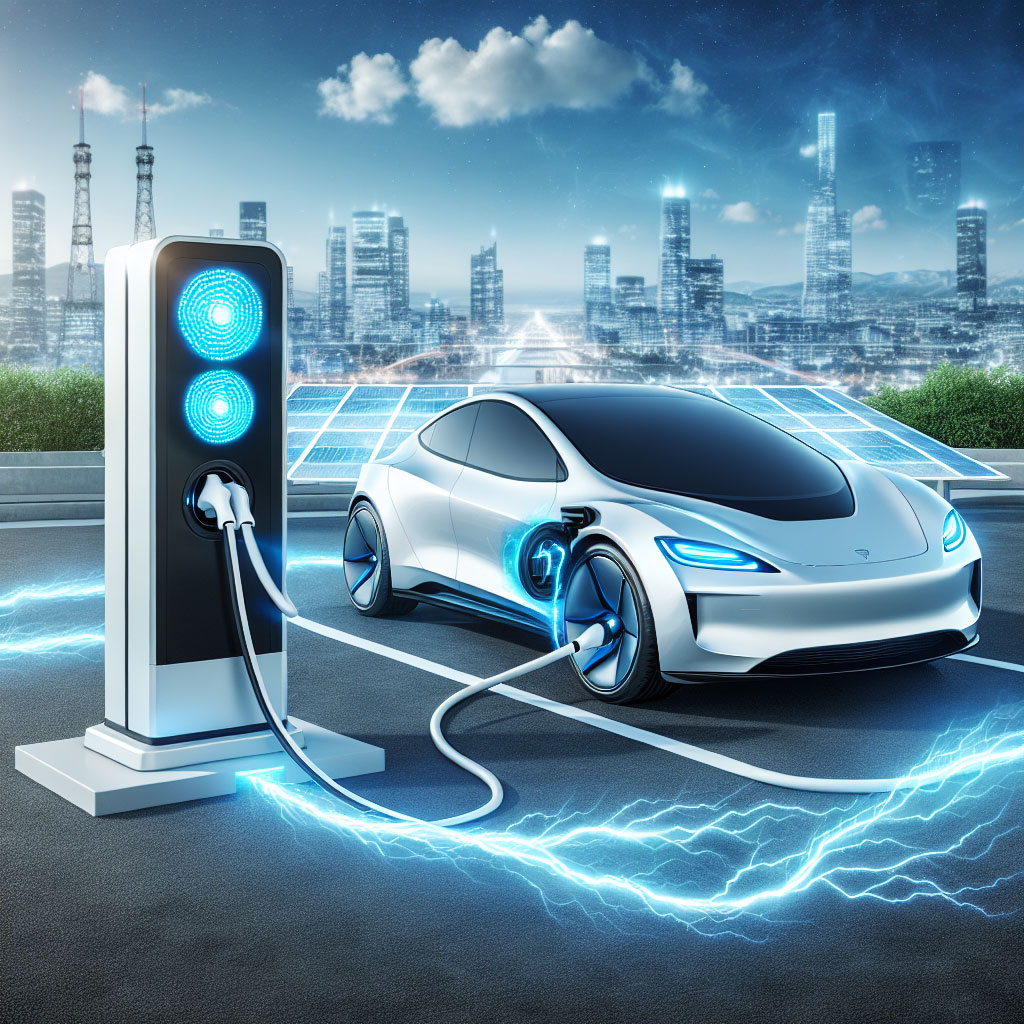




It is Sunday, 5 April 2026, and the Australian automotive landscape has officially split into two distinct speeds. If you’ve pulled up to a public charger in Richmond or Alexandria this morning, you’ve witnessed the “High-Fidelity” divide. On one side, the “Old Guard” of 400V EVs—the pioneer models of 2021–2023—are tethered to the grid for 45 minutes just to hit a 10% to 80% charge. On the other, the “New Guard” of 800V Starships like the Zeekr 7X, Kia EV9, and the freshly arrived BMW iX3 (with its staggering 400kW peak draw) are refueling in less time than it takes to order and drink a flat white.
With petrol prices stubbornly fixed at $2.40/L, the rush to electrify is no longer a choice; it’s a business necessity. But at EV evolution, we’re seeing a new “Tradie Truth” emerge that most showroom salespeople won’t tell you: the charger you “buy” today will likely be e-waste by 2028.
The era of ownership is over. To protect your 2029 wallet, you need a “Resolved” hardware strategy. You need to stop buying chargers and start leasing them. Here is the high-fidelity audit on why 800V architecture makes Charging-as-a-Service (CaaS) your only real obsolescence defense.
The Brutal Physics of the 800V Shift
To understand why your current charging hardware is at risk, we have to look at the math. In the “Old Guard” 400V systems, pushing more power into a battery required increasing the current (Amperage). The problem? Heat.
As noted by technical enthusiasts on r/electricvehicles, current is the enemy of efficiency. When you double the voltage from 400V to 800V, you can deliver the same power with half the current.
By moving to 800V, we reduce the current required for ultra-rapid charging, which dramatically reduces heat. For a fleet manager, this means your Starships can maintain their peak charging curve for longer, getting your drivers back on the road in 18 minutes instead of 50. If your depot is bolted to 400V “Old Guard” hardware, you are effectively capping your productivity at 2015 levels.
The 24-Month Obsolescence Wall
In 2026, the “Hardware Cycle” is moving faster than the depreciation on a diesel SUV. We are currently facing three massive technical hurdles that will make “bought” chargers obsolete by year-end:
- OCPP 2.1 Standard: As of 1 July 2026, new Australian standards require many commercial chargers to support OCPP 2.1. If you bought a “dumb” or 1.6-compliant charger last year, it lacks the advanced cybersecurity and V2G (Vehicle-to-Grid) protocols required for the next decade of energy trading.
- The V2H Revolution: We are entering the “Sustainability Hack” era where your EV9 or Zeekr 7X acts as a home battery. Most 400V “Old Guard” chargers cannot handle the bidirectional power flow required for V2H/V2G.
- The 400kW Peak: Models like the 2026 BMW iX3 can now pull 400kW DC. A standard 50kW or even 150kW charger that you “own” is now a permanent bottleneck for your most expensive assets.
Old Guard (400V) vs. Resolved (CaaS)
Why take the risk of ownership? Charging-as-a-Service (CaaS) is the “Resolved” financial move for 2026.
| Feature | Old Guard (Buy/CapEx) | Resolved (CaaS/OpEx) |
| Upfront Cost | $10,000 – $150,000+ | $0 (100% Funded) |
| Tech Risk | You own the obsolescence. | Provider manages tech swaps. |
| Uptime | Your problem (call a sparky). | 99% Uptime Guarantee. |
| V2G/V2H | Usually requires new hardware. | Future-proofed via subscription. |
| Tax Status | Slow depreciation. | 100% Tax-Deductible Service |
Reddit Pulse: The “No-Filter” Charging Reality
The community on r/AustralianEV and r/electricvehicles is currently obsessed with the “Zeekr Curve.” Owners are reporting that the high-fidelity 800V architecture is so fast, they can’t even finish a bathroom break before the car is ready.
“My weekly free Zeekr 400kw charging is so fast, I can’t go the toilet fast enough (inside the mall). Charging curve is amazing.” — Stewbeater, Reddit.
Meanwhile, the “Old Guard” owners are feeling the pinch. Discussion on r/electricvehicles highlights the anxiety of being “stuck” with slower tech:
“The 800V standard lets the battery charge faster and can use thinner wires… A Tesla with a 400v battery is going to produce 4x the heat from double the current… avoid 400v battery packs if you can afford it.” — tech01x, Reddit.
The “Tradie Truth” is clear: if you buy 400V charging hardware in 2026, you are buying a second-class experience for your first-class fleet.
Why Leasing (CaaS) is Your ‘Sustainability Hack’
Leasing your chargers through a Charging-as-a-Service model isn’t just about saving cash; it’s about agility. When the ISO 15118-20 standards or OCPP 2.1 updates become mandatory on July 1, a CaaS provider (like the partners at EV evolution) is contractually obligated to ensure your hardware stays compliant.
You aren’t paying for “plastic on the wall”; you are paying for Uptime and Energy Certainty. In a world of $2.40/L fuel, downtime is a liability your business cannot afford.
FAQ: 800V & CaaS Australia
Q: Does my 800V car (like a Kia EV9) work with an older 400V home charger?
A: Yes, but you won’t get the “high-fidelity” speeds. Most 800V cars use an onboard “boost converter” to step up the voltage from a 400V charger, but this generates extra heat and is less efficient. To “Resolve” your home charging, an 800V-native or high-amp CaaS solution is recommended.
Q: Why is CaaS called a “100% Funded Solution”?
A: Because the upfront CapEx for hardware, site engineering, and installation is covered by the service provider. You pay a monthly fee (OpEx) that covers everything. In 2026, this is the ultimate “Sustainability Hack” for Australian businesses looking to bypass the EOFY (End of Financial Year) cash-flow crunch.
Q: What happens to my leased charger when the technology changes in 2028?
A: Under a typical Charging-as-a-Service agreement, the provider manages the hardware lifecycle. If a significant technical shift (like a new plug standard or V2G requirement) occurs, the hardware is swapped or upgraded as part of your service, ensuring you never own “Old Guard” e-waste.
Q; Is 800V architecture safer than 400V?
A: Strictly speaking, higher voltage requires more robust insulation, but because it uses less current to deliver the same power, it generates significantly less heat. Heat is the primary cause of electrical fires and battery degradation, making 800V a more “Resolved” safety choice for heavy-use fleets.
🤖 Start the Conversation with the AI Agent
Are you still gambling on “Old Guard” 400V hardware? Or are you worried that your depot’s electrification plan is a “Data Liability” waiting to happen?
Don’t leave your 2029 wallet to guesswork—start a conversation with our EV evolution AI Agent now. Our AI is updated in real-time with the latest April 2026 CaaS benchmarks, 800V charging telemetry, and “No-Filter” reliability audits for the newest Australian EVs.
You can ask:
- “Compare the Total Cost of Ownership of buying 400V chargers vs. leasing 800V-ready CaaS.”
- “Which 100% funded CaaS solutions are currently active in my postcode?”
- “Explain the OCPP 2.1 compliance requirements for my 2026 fleet.”
Submit Your Request for CaaS
Ownership is a liability; uptime is an asset. Through our AI Agent, you can now submit a request for an EV Charging-as-a-Service solution. We’ll skip the salesperson fluff and provide a Resolved technical and financial roadmap that protects you from obsolescence.
About EV Evolution
EV evolution is Australia’s AI-powered hub for the modern driver. Through our signature EV Strategy Suite—including the EV Vibe Check and our real-time AI Agent—we provide the transparent, fact-based data you need to navigate the electric transition with total confidence. Our mission is to empower every Aussie to trade the petrol pump for a plug with zero guesswork and high-fidelity precision.