



There is a whispered fear at every Australian BBQ when the topic of electric vehicles comes up. It usually sounds something like this:
“Sure, they’re great to drive. But what happens in five years when the battery dies and the car is worth zero?”
It is the “Smartphone on Wheels” theory—the idea that like an old iPhone, an EV will be obsolete and disposable in a few years. It is a terrifying thought for anyone dropping $60,000 on a new car.
But here at EV Evolution, we deal in data, not BBQ gossip. And as we look at the Australian market in late 2025 and heading into 2026, the numbers are telling a very different story.
The verdict? The skeptics were wrong. Modern EVs are not crashing to zero; in fact, the used market has stabilised, and for many models, value retention is now rivalling—and in some cases beating—their petrol equivalents.
Here is why your EV investment is safer than you think.
1. The “Battery Cliff” is a Myth
The biggest driver of resale fear is the battery. The assumption is that at the 5-year or 8-year mark, the battery will fail, requiring a $20,000 replacement that renders the car a financial write-off.
The Reality:
Real-world data from thousands of high-mileage EVs in Australia shows that modern liquid-cooled batteries are lasting far longer than the cars themselves.
- Degradation is Slow: Most modern EV batteries lose less than 10% of their capacity after 160,000km.
- The “Million Mile” Tech: LFP (Lithium Iron Phosphate) batteries, found in popular models like the Tesla Model 3 RWD, BYD Atto 3, and the new MG4, are rated for thousands of cycles. These batteries are chemically designed to outlive the chassis of the vehicle.
When you sell your 5-year-old EV, you aren’t selling a car with a “dying” engine. You are selling a car with a battery that likely still has 90%+ of its original range and tens of thousands of kilometres left on its factory warranty (usually 8 years/160,000km).
2. Software: The “Anti-Aging” Cream
Petrol cars are static. A 2020 Toyota RAV4 is the same car today as it was when it left the factory. It hasn’t learned any new tricks.
EVs are different. Thanks to Over-The-Air (OTA) software updates, they can actually get better with age. This is a massive factor in supporting resale value.
- New Features for Free: A 2022 Tesla or Polestar can receive updates in 2026 that improve charging speed, add new entertainment apps, or even slightly increase range through better thermal management efficiency.
- Staying Fresh: This prevents the car from feeling “old.” A 4-year-old EV with the latest software interface feels just as modern as a brand-new one to a second-hand buyer.
EV Evolution Insight: In the used market, software-defined vehicles are holding value because they don’t suffer from “technological obsolescence” as fast as legacy vehicles.
3. The 2026 Market: Who are the Winners?
We are currently seeing a “flight to quality” in the used Australian market. While early, low-range EVs (like the original Nissan LEAF or early MG ZS EV) have seen steep depreciation, the modern crop of “high-tech” EVs are holding firm.
The Value Kings:
- Tesla Model 3 & Model Y: Despite price fluctuations when new, these remain the “gold standard” used buy. High demand, a reliable charging network, and excellent battery longevity mean a 3-year-old Model 3 is highly liquid—it sells fast and for a predictable price.
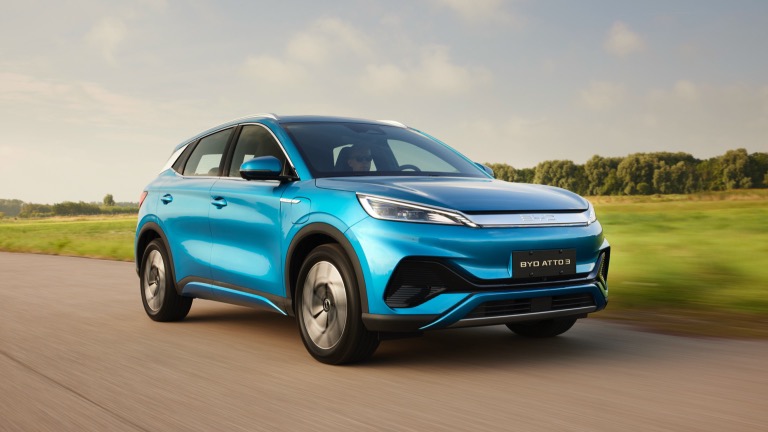
- BYD Atto 3: As one of Australia’s most popular affordable EVs, used examples are proving robust, supported by their durable Blade Battery technology.
The Data Stabilisation:
After a rocky period in 2023-2024 where prices corrected sharply (mostly because new car prices dropped), the used market in 2025 has found its floor. Depreciation curves for EVs are now starting to mirror luxury petrol cars—losing value initially, but flattening out significantly as trust in the battery tech grows.
4. The TCO Perspective: Why Resale Isn’t Everything
Finally, you cannot look at resale value in a vacuum. You must look at the Total Cost of Ownership (TCO).
Let’s say your $60,000 EV loses $5,000 more in resale value over 5 years compared to a $40,000 hybrid.
- Loss in Value: -$5,000
- Fuel Savings (5 years): +$12,000
- Maintenance Savings (5 years): +$2,000
Net Result: You are still $9,000 ahead.
Even if the resale value was slightly worse (which is becoming less likely), the massive operational savings of an EV create a “buffer” that protects your wallet.
Conclusion: Drive Without Fear
The days of worrying that your EV will be worthless are over. The Australian market has matured. We now know that batteries last, software keeps cars fresh, and the demand for second-hand EVs is surging as more Australians look for an affordable entry point into electric driving.
Your EV isn’t a disposable gadget. It’s a long-term asset that will likely serve you—and its next owner—for many years to come.
📉 Want the Real Market Numbers?
Are you curious about how much a specific model is actually selling for right now? Don’t rely on guesswork.
Our EV Evolution AI-Powered Chatbot tracks the latest market movements and resale trends in Australia.
Start a chat and ask:
- “What is the current resale value trend for a 3-year-old Tesla Model 3 in Australia?”
- “Which electric SUV holds its value best in 2026?”
- “How much does high mileage affect the price of a used BYD Atto 3?”
Click the chat icon to get the latest data and see exactly what your future trade-in might look like.
About EV Evolution
EV Evolution is the leading online platform dedicated to Australian electric vehicle owners and enthusiasts. We foster a vibrant community, delivering essential EV news and insights, and enhancing user engagement through our innovative, AI-powered chatbot for dynamic discussions. Our mission is to empower Australian electric vehicle owners and enthusiasts by fostering a vibrant, AI-driven online community that connects, informs, and advances the nation’s electric vehicle landscape.
