


When we talk about the transition to electric vehicles (EVs), the conversation usually revolves around range, charging speeds, or how much you’ll save by never visiting a petrol station again. But there is a much more important factor that often gets sidelined in the excitement of “ludicrous” acceleration: Your family’s safety.
At EV Evolution, we are obsessed with the data that shapes the Australian EV landscape. Our mission is to empower you with the truth, and the truth is this: if you’re looking for the safest vehicle to navigate Australian roads in 2026, the data points squarely at electric power.
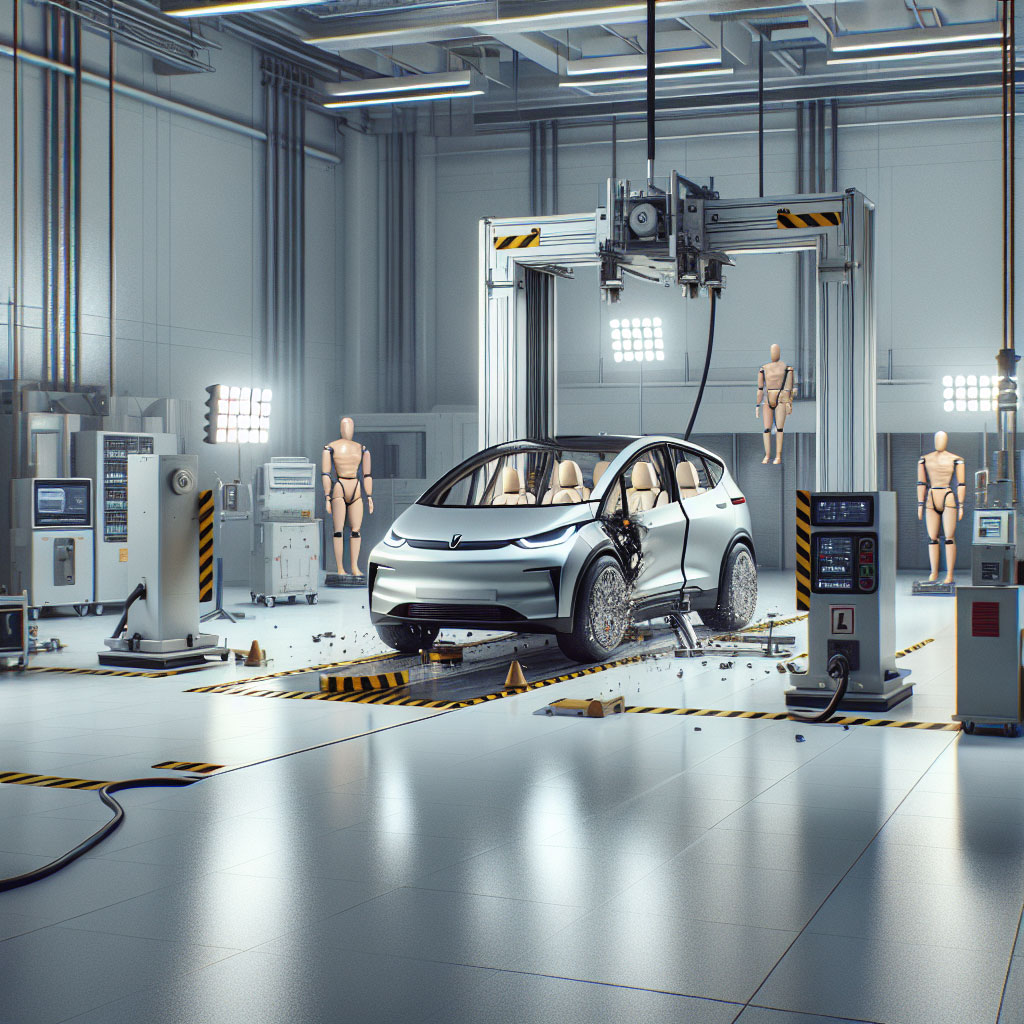
From the physics of the “skateboard” chassis to the latest ANCAP (Australasian New Car Assessment Program) scores, EVs aren’t just matching the safety of traditional cars—they are redefining the benchmark.
1. The Physics of the “Skateboard”: Why Rollovers are Rare
For decades, the “tall SUV” has been the family vehicle of choice in Australia. However, tall cars have traditionally suffered from a high centre of gravity, making them prone to rollovers during emergency swerves or off-road incidents.
The EV difference? The battery. Most modern EVs are built on what we call a “skateboard platform.” The heaviest component of the car—the battery pack—is bolted directly into the floor between the wheels. This does two remarkable things for safety:
- Ultra-Low Centre of Gravity: By placing 500kg+ of weight just centimetres from the road, engineers have created cars that are incredibly stable. In NHTSA (USA) and ANCAP testing, many EVs are so difficult to roll over that they break the testing equipment’s expectations.
- Structural Rigidity: The battery casing is often made of high-strength steel or aluminium, acting as a massive structural “spine” for the car. This makes the entire cabin more resistant to side-impact intrusion than a traditional hollow-floored petrol car.
EV Evolution Insight: When you drive an EV, you aren’t just driving a car; you’re driving a low-slung fortress. That “heavy” feeling skeptics complain about is actually your greatest ally in a high-speed emergency.
2. Reimagining the Crumple Zone
In a traditional Internal Combustion Engine (ICE) vehicle, you have a massive, solid block of iron or aluminium sitting right in front of the driver. In a head-on collision, engineers have to work incredibly hard to ensure that engine doesn’t end up in your lap.
EVs don’t have this problem.
Without a bulky engine, EV designers have a “blank canvas” at the front of the car. This allows for:
- Massive Crumple Zones: The “frunk” (front trunk) area isn’t just for groceries; it’s an empty space designed to fold and absorb impact energy far more efficiently than a car stuffed with an engine.
- Directional Energy Management: Engineers can tune the front of the car to steer crash forces around the passenger cell rather than trying to manage a solid engine block moving backward.
3. The ANCAP Standard: EVs are Acing the Test
If you follow our updates at EV Evolution, you know that ANCAP has significantly toughened its testing protocols for 2023–2025. They now look closer than ever at “Vulnerable Road User” protection and “Safety Assist” technologies.
The results speak for themselves. According to recent data, roughly 9 out of 10 new EVs launched in Australia carry a 5-star ANCAP rating. Recent 2025 tests saw newcomers like the GAC AION V and the Denza B5 (a luxury brand from BYD) secure full 5-star ratings upon their Australian debut. Even more impressively, these cars are often scoring in the mid-90s for “Adult Occupant Protection,” a feat that was rare just a decade ago.
BYD Seal vs. Toyota Camry: A Safety Showdown
Take two of the most popular sedans on Aussie roads today. The Toyota Camry (the 2024/25 Hybrid model) is a safety legend, recently crowned a top performer by ANCAP with a staggering 95% Adult Occupant Protection score.
But look at its electric rival, the BYD Seal. The Seal achieved its 5-star rating with high marks across the board (89% Adult, 87% Child), proving that the “new players” in the EV space are taking safety just as seriously as the established giants.
4. Addressing the Fire Myth with Real Data
We can’t talk about safety without addressing the elephant in the room: battery fires.
If you’ve spent any time on social media, you might think EVs are prone to spontaneous combustion. The actual Australian data tells a completely different story.
Recent reports from EV FireSafe and the NRMA confirm that:
- ICE (Petrol/Diesel) vehicles are statistically at least 20 to 80 times more likely to catch fire than an EV.
- In Australia, as of late 2025, there have been fewer than 15 confirmed EV traction battery fires from over 350,000 vehicles on the road—most of which were caused by extreme external factors like arson or catastrophic building fires.
EV batteries are encased in protective cooling shrouds and feature automated “pyro-fuses” that disconnect the high-voltage system instantly in the event of a crash.
5. Looking Ahead: ANCAP 2026
At EV Evolution, we stay ahead of the curve. You should know that ANCAP is updating its protocols again for 2026. They will be looking at:
- Physical Buttons: Penalising cars that force drivers to use complex touchscreens for basic safety functions (like wipers or hazard lights).
- eCall Systems: Rewarding cars that automatically notify emergency services of a crash location and the number of occupants.
- Submersion Safety: Testing how long electric windows and doors remain functional if a car ends up in water.
Modern EVs, with their connected car tech, are already leading the way in these “Post-Crash” safety features.
Conclusion: The Ultimate Family Upgrade
Safety isn’t just about surviving a crash; it’s about avoiding one. Because EVs are “born digital,” they almost always come standard with the highest tier of crash-avoidance tech—Autonomous Emergency Braking (AEB), lane-keep assist, and blind-spot monitoring—that often costs extra on base-model petrol cars.
When you combine the most advanced software with the laws of physics (that low centre of gravity), the result is clear: The transition to electric is a transition to a safer Australian road network.
🤖 Compare the Scores Instantly
Are you torn between a trusted hybrid or a new-age electric sedan? Don’t guess when it comes to your family’s safety.
Initiate a chat with the EV Evolution AI Chatbot now!
Our AI is purposely trained on the latest ANCAP 2024-2025 data and can give you a side-by-side breakdown of any model in the Australian market.
Try asking the AI:
- “What is the ANCAP safety score of the BYD Seal vs. the Toyota Camry?”
- “Which electric SUV has the highest Child Occupant Protection score in Australia for 2025?”
- “Show me the safety ratings for the new GAC AION V.”
Click the chat icon to get accurate, instant answers and choose your next car with total peace of mind.
About EV Evolution
EV Evolution is the leading online platform dedicated to Australian electric vehicle owners and enthusiasts. We foster a vibrant community, delivering essential EV news and insights, and enhancing user engagement through our innovative, AI-powered chatbot for dynamic discussions. Our mission is to empower Australian electric vehicle owners and enthusiasts by fostering a vibrant, AI-driven online community that connects, informs, and advances the nation’s electric vehicle landscape.
