


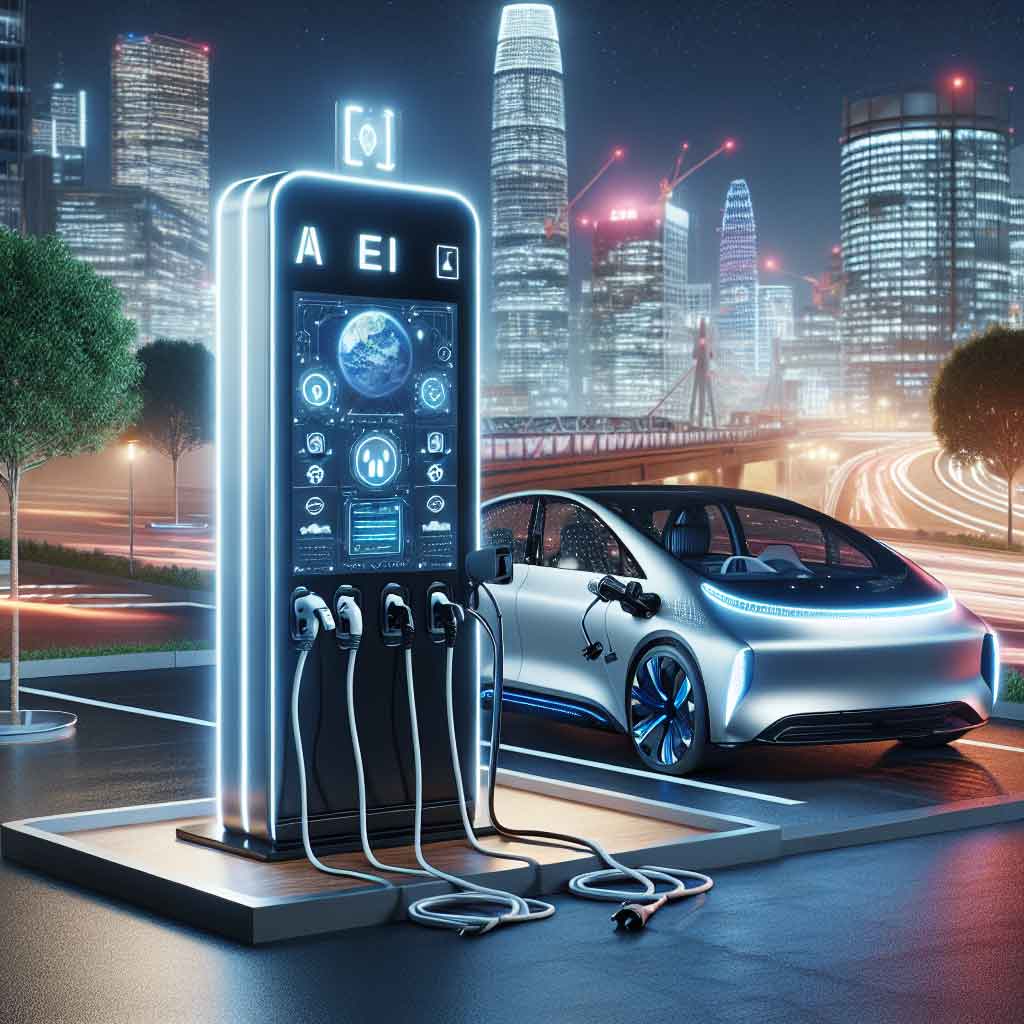
It is Friday, 27 March 2026, and the Australian driveway has officially entered its “High-Fidelity” era. If you’ve pulled up to a petrol station this morning, you’ve felt the “Old Guard” squeeze: petrol is sitting at $2.40/L, and it doesn’t care about your weekend plans. Meanwhile, the electric vehicle (EV) revolution has hit a record 12.2% market share, and for many, the focus has shifted from “Which car?” to “Which charger?”
At EV evolution, we’re seeing a new “Tradie Truth” emerge: Your EV is only as smart as the box you plug it into. The $2,000 question we get daily is whether a high-fidelity AI-integrated wallbox is a genuine Sustainability Hack or just an expensive piece of garage jewellery.
Does a $2,000 investment actually “Resolve” your energy bills, or should you stick to the “Granny Charger” that came in the boot? Let’s dive into the Smart Home ROI audit.
The “Old Guard” vs. The AI Brain
In 2026, we categorise home charging into two distinct camps:
- The “Dumb” Box: These are basic 7kW wallboxes or Level 1 “Granny” chargers. They are essentially a fancy extension cord. They turn on when you plug them in and suck power until the car is full.
- The AI Brain: High-fidelity chargers like the MyEnergi Zappi V2.1, Ohme Home Pro, or the Evnex E2. These are “Smart” in the 2026 sense—they talk to your solar inverter, monitor the grid’s carbon intensity, and hunt for the cheapest electrons like a financial strategist.
The price gap is real. A basic Tesla Wall Connector might set you back $800, while a fully installed Zappi with CT clamps for solar diversion can easily hit the $2,000 to $2,500 mark.
Expertise: The “Solar Soak” Efficiency
This is where we separate the “Expertise” from the marketing fluff. Most people think “Charge on Solar” just means plugging in during the day. That’s a 2022 mindset. In 2026, we talk about the Solar Soak.
A “dumb” charger is binary—it’s either on (pulling 7kW) or off. If your solar panels are only producing 3kW because a cloud just rolled over your suburb, a dumb charger will pull the 4kW deficit from the grid at 35c/kWh.
A high-fidelity AI charger uses Dynamic Load Balancing. It “breathes” with the sun. If your solar output drops to 1.4kW, the charger throttles the car down to exactly 1.4kW. It effectively “soaks” every spare electron from your roof without ever touching the grid.
Expertise Fact: In a typical Australian summer, a smart AI charger can achieve 95% solar self-consumption, whereas a basic timer-based charger often hovers around 60%, leaking expensive grid power during intermittent cloud cover.
The Reddit Pulse: “No-Filter” ROI Discussions
The community on r/AustralianEV and r/SolarAustralia has been the ultimate testing ground for these ROI claims. The consensus? The charger is the brain of your home energy ecosystem.
The “Zappi” Fan Club
On r/AustralianEV, users frequently highlight that the upfront cost is a “wealth-building” move:
“I paid over $1.5k for my Zappi and install… it allows excess solar charging which was the main attraction. I haven’t paid a cent in electricity for the car in 12 months.” — oakstreet2018, Reddit.
The “Tesla + App” Workaround
Conversely, some tech-savvy owners on r/Powerwall argue for a cheaper box paired with a smarter app:
“Tesla Wall Connector is $800. Pair it with an app like Charge HQ for $5/month, and it does most of what a Zappi does for half the hardware cost.” — triedoffandonagain, Reddit.
The EV evolution Verdict: If you love tinkering with APIs, the “Cheap Box + Smart App” is a valid hack. But for those who want a Resolved, set-and-forget solution that works even when the Wi-Fi drops, the dedicated AI hardware is the Authoritative choice.
EV Charging Cost: The $2,000 Math
Let’s run a high-fidelity ROI comparison for an average Australian driving 15,000km per year.
| Charging Method | Annual Cost (2026 Rates) | 5-Year Total Cost | ROI vs. Petrol |
| Petrol ($2.40/L) | $3,600 | $18,000 | $0 (The Baseline) |
| Granny Charger (Grid) | ~$750 | $3,750 | Save $14,250 |
| AI Charger (Solar Soak) | $0 – $150 | $750 | Save $17,250 |
Even after paying $2,500 for a premium AI charger and installation, the payback period compared to grid-charging is roughly 2.5 years. Compared to petrol? It pays for itself in about 8 months.
Check our EV Charging Cost guide to plug in your specific solar array size and state-based tariffs.
FAQ: Smart Home EV Charging Australia
Q: What is the best EV charger Australia 2026 for solar owners?
A: The MyEnergi Zappi V2.1 and the Evnex E2 are the top-rated models for 2026. Both offer native solar diversion (Solar Soak) and integrate with Australian energy retailers like Amber Electric to take advantage of “Negative Pricing” events.
Q: Is it worth upgrading from a ‘Granny’ charger?
A: Yes. While a 10A plug (Granny) is a fine “Survival Tool,” it is limited to roughly 10km of range per hour. An AI wallbox delivers 45km–75km per hour, ensuring your car is “Resolved” and ready for an “Outback Mission” even if you only have a few hours of sun.
Q: Does an AI charger help with V2H (Vehicle-to-Home)?
A: In 2026, the first wave of V2H-ready chargers (like the Wallbox Quasar 2) are hitting the market. If you want to use your car as a battery for your house during a blackout, investing in a high-fidelity bidirectional charger now is the ultimate future-proofing move.
Q: How much does installation cost in Sydney or Melbourne?
A: A standard installation—where the charger is within 5m of your switchboard—typically costs between $500 and $1,200. In older Sydney terraces, you might need a “Switchboard Reboot,” which can add $800 to the bill.
🤖 The Wrap-Up: Start the Conversation with the AI Agent
Are you still wrestling with the “Old Guard” electrical setup? Or maybe you’re wondering if your BYD Sealion 7 or Tesla Model Y Juniper actually needs a $2,000 brain to be efficient?
Don’t leave your energy ROI to guesswork—start a conversation with our EV evolution AI Agent. Our AI is updated in real-time with the latest EV charging cost data, 2026 electricity tariffs, and “Vibe-Checked” installer reviews from the community.
You can ask:
- “Calculate the ROI for a Zappi vs. a Tesla Wall Connector for my 6.6kW solar system.”
- “Which best EV charger Australia 2026 is compatible with my specific inverter?”
- “Explain the Solar Soak benefits for a 40km daily commute.”
Request Your VIP Test Drive
While we can’t test drive a charger, we can get you behind the wheel of a high-fidelity EV that supports 11kW–22kW AC charging to see the difference for yourself. Through our AI Agent, you can request a VIP Test Drive for your desired model. We’ll skip the showroom fluff and show you how a Resolved charging strategy transforms your life.
About EV Evolution
EV evolution is Australia’s AI-powered hub for the modern driver. Through our signature EV Strategy Suite—including the EV Vibe Check and our real-time AI Agent—we provide the transparent, fact-based data you need to navigate the electric transition with total confidence. Our mission is to empower every Aussie to trade the petrol pump for a plug with zero guesswork and high-fidelity precision.