



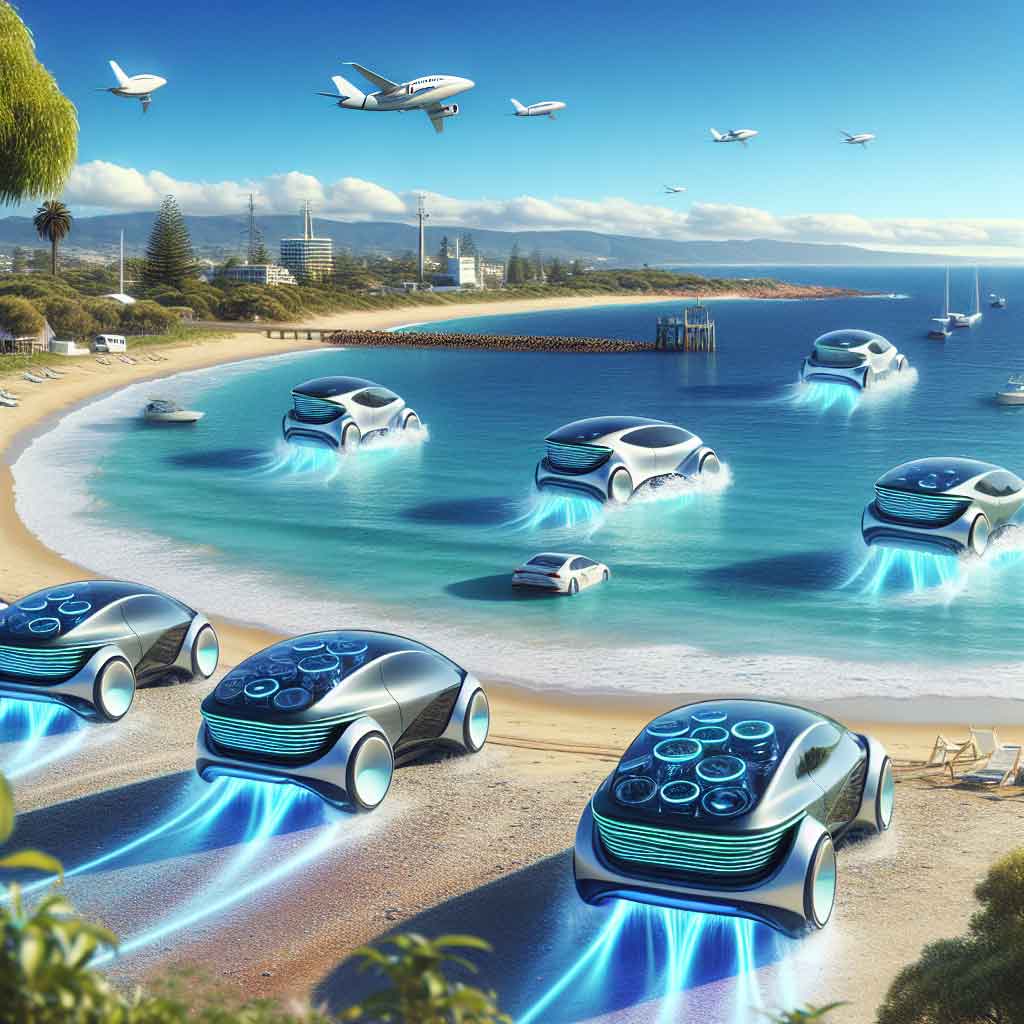
If you think the shift to electric has been fast, buckle up—the evolution is only just getting started. As we move through the first quarter of 2026, the global automotive industry isn’t just looking at the next model year; it’s staring down the barrel of a complete technological paradigm shift. 2027 is poised to be the year we stop talking about “transitioning” and start talking about “dominating.” With solid state battery cars moving from laboratories to Lexus showrooms and the long-awaited $20k EV threshold within striking distance, the next 12 to 18 months will redefine what it means to own a car in Australia.
At EV Evolution, we don’t just report on cars; we map the future. If 2025 was the year of the “Affordable SUV” and 2026 is the year of “Mainstream Acceptance,” then 2027 is the year of Technological Supremacy. We’re talking about 1,200km ranges, charging times that rival a petrol top-up, and price parity that will leave internal combustion engines (ICE) looking like an expensive hobby.
The Holy Grail Arrives: The Solid State Battery (SSB) Breakthrough
For years, the “Solid State” battery has been the automotive equivalent of nuclear fusion—always ten years away. But as we peer into the Future EVs Australia 2027 roadmap, that timeline has finally collapsed.
The Toyota & Lexus “1,200km” Flex
Toyota, once the sceptic of the EV world, is ready to reclaim its crown. By 2027, the first flagship models from Lexus are slated to feature all-solid-state batteries. Unlike the liquid or gel electrolytes used in today’s lithium-ion packs, these solid electrolytes are safer, lighter, and incredibly energy-dense.
- The Range: We’re looking at a 1,000km to 1,200km range on a single charge. That’s Sydney to Melbourne and halfway back without ever looking for a plug.
- The Charge Speed: These batteries can handle massive current without the heat-related “cook” of liquid cells. We’re expecting 10-minute 10-80% charge times.
- The Longevity: Toyota is targeting a battery life that retains 90% of its performance after 30 years. Imagine buying a car in 2027 and it still has its full range in 2057.
But Toyota isn’t alone. Chinese giants like SAIC (MG) and Dongfeng have already begun late-stage trials of semi-solid and all-solid-state packs. By 2027, we expect the first “Long Range” versions of MG’s premium line-up to land in Australia, offering 800km+ of range for a fraction of the European price.
The $20k Threshold: How the “Kei-volution” Wins the Suburbs
While the tech-heads are obsessing over 1,200km batteries, the “hip pocket” battle is being fought at the other end of the market. In 2026, we saw the BYD Atto 1 disrupt the market at $23,990. In 2027, we are predicting the first true $19,990 EV to hit Australian shores.
The Contenders for the $20k Crown
The Future EVs Australia 2027 landscape will be dominated by ultra-efficient, urban-focused machines.
- The Kia EV2: Rumoured to be the spiritual successor to the Picanto, the EV2 is built for the “city-first” driver. It’s small, stylish, and targeted at a price point that makes a used petrol hatch look like a bad investment.
- Mahindra’s NU_IQ Invasion: The Indian giant is launching a suite of compact electric SUVs (the Vision S, T, and X) built on a modular platform that slashes manufacturing costs.
- The Suzuki eVitara Counterpart: With Toyota and Suzuki deepening their EV partnership, we expect a sub-$25k urban runabout that brings Japanese reliability to the entry-level EV market.
This isn’t just about being “cheap.” These $20k cars are being built with LFP (Lithium Iron Phosphate) batteries that are designed to last a lifetime, making them the ultimate “Set and Forget” vehicles for students, retirees, and multi-car families.
Infrastructure 2.0: V2G and the 400kW Standard
The car of 2027 is more than just a vehicle; it’s a mobile energy asset. We’ve been talking about Vehicle-to-Grid (V2G) for years, but 2027 is when it becomes a standard feature across the Australian grid.
- V2G Maturity: By next year, cars like the Kia EV9 and Nissan Ariya will be fully integrated into home energy systems. Your car will charge when the sun is out (for free) and power your house during the evening peak, effectively paying for its own lease through energy savings.
- The 400kW+ Network: In 2026, we’ve seen the first ultra-fast chargers. By 2027, the national highway network will be peppered with 400kW hubs. For a car like the BMW iX3 “Neue Klasse” or a Lexus SSB flagship, a bathroom break is all the time you’ll need to add another 400km of range.
The EV Evolution Perspective
At EV Evolution, we see the 2027 horizon as the moment the “Petrol Tax” finally becomes optional for every Australian, regardless of budget. The transition is moving out of its “Early Adopter” phase and into “Market Maturity.”
If you’re still driving a petrol car in 2027, you won’t just be paying for the environment; you’ll be paying a massive financial penalty in fuel, maintenance, and plummeting resale values. The Solid state battery cars of 2027 represent the end of the “experiment” and the beginning of the era of Superior Transport.
Why the Evolution is Only Just Beginning
We often get asked, “Should I wait for 2027 or buy now?”
The truth is, the “waiting game” is a trap. The savings you’ll make in fuel and tax (thanks to the FBT exemption we’ve mapped out for 2026) starting today will likely outweigh the technological jump in 2027. However, the 2027 models will be the first to offer that “forever car” feeling—vehicles that you buy and never think about upgrading for a decade.
Don’t Get Left Behind
The 2027 market will be fast, complex, and filled with “First-Gen” tech that needs a professional eye to navigate. Whether you’re a fleet manager planning a 50-car transition or a first-time buyer looking for a $20k bargain, you need a navigator who is online 24/7.
Start a conversation with the EV Evolution AI to plan your 2026/27 transition. Our AI agent isn’t just a bot; it’s a strategic co-pilot that understands the Future EVs Australia 2027 roadmap better than anyone. It can help you:
- Identify which 2027 models are worth the wait based on your daily commute.
- Calculate if your current solar setup is “V2G Ready” for the next wave of energy-sharing cars.
- “Vibe Check” your local suburb’s 2027 infrastructure forecast.
About EV Evolution
EV Evolution is Australia’s authoritative strategic platform for electric vehicle market, dedicated to providing a high-fidelity knowledge base for the next generation of drivers. In a year defined by the Federal statutory review of FBT exemptions and the rapid arrival of record-breaking affordable models, we serve as your professional co-pilot to ensure every automotive decision is data-driven and future-proof. Our EV Strategy Suite—including the EV Tax Savings Estimator, Vibe Check Tool, and 24/7 AI Strategy Agent—empowers young professionals and families to navigate complex technical and regulatory shifts with total transparency. At EV Evolution, we don’t just track the market, we provide the strategic roadmap for your transition to the new electric standard.
