


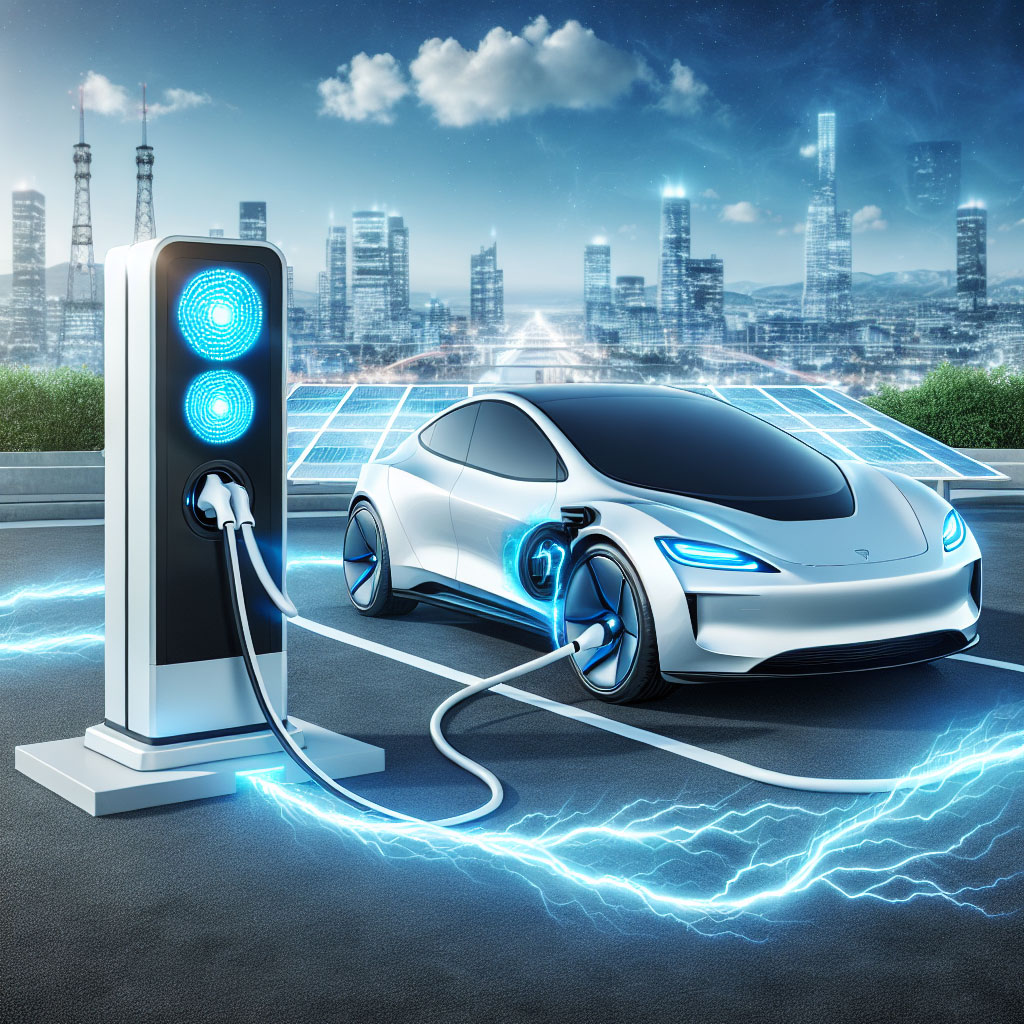
For the last decade, we’ve looked at our cars as one of two things: a necessary tool for getting from A to B, or a rapidly depreciating asset that sits idle in the driveway for 22 hours a day. In 2026, that perception is about to be shattered.
Welcome to the era of the Vehicle-Grid Network (VGN).
At EV Evolution, we’ve been tracking the slow-burn of Vehicle-to-Grid (V2G) technology for years, but 2026 is officially the “tipping point” for Australia. With the formal launch of the national VGN in December 2025 and major utility trials kicking off this January, your car is no longer just a mode of transport. It is a high-capacity, mobile power station that is finally ready to start paying you back.
What is the VGN? (And Why Should You Care?)
If you’re new to the acronym soup of the energy world, the Vehicle-Grid Network (VGN) is a federally funded collaboration led by Climate-KIC Australia and the University of Technology Sydney (UTS). Launched officially on December 1, 2025, it’s a three-year mission to bridge the gap between your car’s battery and the Australian electricity grid.
The basic concept is simple:
Most Australians charge their cars when electricity is cheap (like during the middle of a sunny day or late at night). But what if you could sell that energy back to the grid when everyone else is turning on their air conditioners at 6:00 PM and prices are through the roof?
That is V2G (Vehicle-to-Grid). In 2026, the VGN is the infrastructure and regulatory “glue” that makes this possible at scale.
2026: The Year the Trials Go Mainstream
If you feel like you’ve heard this “future energy” talk before, you aren’t wrong. We’ve had small V2G trials in South Australia and the ACT for years. But January 2026 marks the first time Australia’s biggest energy players are opening the doors to the public.
1. The AGL Landmark Trial
Starting January 1, 2026, AGL is launching a residential V2G trial across Victoria, NSW, Queensland, and South Australia.
- The Incentive: AGL is offering deeply discounted bi-directional chargers to the first participants.
- The Vehicles: They’ve partnered directly with BYD, Hyundai, Kia, and Zeekr to ensure that participating in the grid doesn’t void your car’s battery warranty—a massive hurdle that we at EV Evolution are thrilled to see cleared.
2. Origin’s “Free Power” Subscription
Origin Energy isn’t sitting still. They are rolling out a V2G subscription bundle in early 2026. For a monthly fee (often under $800 after tax savings), you get a BYD Atto 3 and a StarCharge Halo bi-directional charger. The kicker? If you leave your car plugged in for 12 hours a day, Origin effectively gives you free home charging for up to 24,000km per year.
The “Power Station in Your Driveway” Math
To understand why this is such a big deal, you have to look at the storage capacity.
- A standard home battery (like the Tesla Powerwall) holds about 13.5 kWh of energy.
- A modern EV (like the Kia EV9 or the Hyundai IONIQ 9) holds between 77 kWh and 100 kWh.
Your car literally has five to seven times the storage capacity of a home battery. In recent trials by Amber Electric, some NSW households reported earning $250 to $300 in a single 24-hour period simply by letting their car feed energy back into the grid during a period of extreme peak demand.
In 2026, your car isn’t just “saving you on petrol”; it’s potentially paying for your Christmas presents.
Hardware Check: Is Your Garage Ready?
Not every car can talk to the grid yet, but the 2026 lineup is looking strong. At EV Evolution, we recommend looking for cars that support the ISO 15118-20 standard—the international “language” for bidirectional charging.
The 2026 V2G-Ready Leaders:
- Kia: The EV9 and EV6 are already hardware-capable.
- Hyundai: The IONIQ 5 and 6 are part of the AGL V2G rollout.
- BYD: The Atto 3, Seal, and Dolphin are the primary vehicles for the Origin and Amber trials.
- The “Newcomers”: Keep an eye on the Zeekr 001 and the Volvo EX90, both of which have been designed with grid-integration in mind.
The Chargers: You can’t do V2G with a standard plastic wallbox. You need a bi-directional inverter. In 2026, we are finally seeing the commercial arrival of the Wallbox Quasar 2 (CCS2 compatible) and the RedEarth Boomerang, which allows you to switch between powering your home (V2H) and powering the grid (V2G).
Addressing the Elephant in the Room: Battery Health
The #1 question we get at EV Evolution is: “Won’t this wear out my battery?”
It’s a fair concern. Every time a battery cycles (charges and discharges), it experiences a tiny amount of wear. However, the VGN trials in 2026 are specifically designed to manage this.
- Warranty Protection: As mentioned, manufacturers like Kia and BYD are now explicitly supporting these trials within their warranty frameworks.
- Micro-Cycling: V2G doesn’t usually involve “draining” your car to zero. It typically involves “shaving” 5-10% off the top of the battery during peak times. Modern Lithium Iron Phosphate (LFP) batteries, found in many BYDs and Teslas, are rated for thousands of cycles—far more than you will likely ever use in the life of the car.
Why 2026 is the “Vision” Year
Australia has one of the highest rates of rooftop solar in the world. On a sunny Saturday in 2026, our grid will have more power than it knows what to do with. By using our cars as a “Vehicle-Grid Network,” we create a giant, distributed battery that prevents blackouts and lowers prices for everyone—even the people who don’t own an EV yet.
At EV Evolution, we don’t just see this as a technical upgrade. We see it as a financial revolution. For the first time, the “running costs” of your car could actually become a “revenue stream.”
🤖 Ask Our AI: Your VGN Consultant
The world of V2G is moving fast. Are you wondering if your current EV can be retrofitted? Or which energy provider offers the best V2G export rate in your suburb?
Start a conversation with the EV Evolution AI chatbot! Our AI is updated daily with the latest VGN protocols, AGL/Origin trial eligibility, and bidirectional hardware specs for 2026.
Ask our AI chatbot anything about the VGN network and V2G Australia, such as:
- “Which 2026 EV models have the best bidirectional charging specs?”
- “How do I sign up for the AGL V2G trial starting in January?”
- “Is the Wallbox Quasar 2 finally available for CCS2 cars in Australia?”
- “Will using V2G affect the resale value of my Tesla or BYD?”
- “Explain the difference between V2H (Home) and V2G (Grid) in simple terms.”
Click the chat icon in the corner to start exploring the future. The grid is waiting for your car—are you ready to plug in?
About EV Evolution
EV Evolution is the leading online platform dedicated to Australian electric vehicle owners and enthusiasts. We foster a vibrant community, delivering essential EV news and insights, and enhancing user engagement through our innovative, AI-powered chatbot for dynamic discussions. Our mission is to empower Australian electric vehicle owners and enthusiasts by fostering a vibrant, AI-driven online community that connects, informs, and advances the nation’s electric vehicle landscape
