


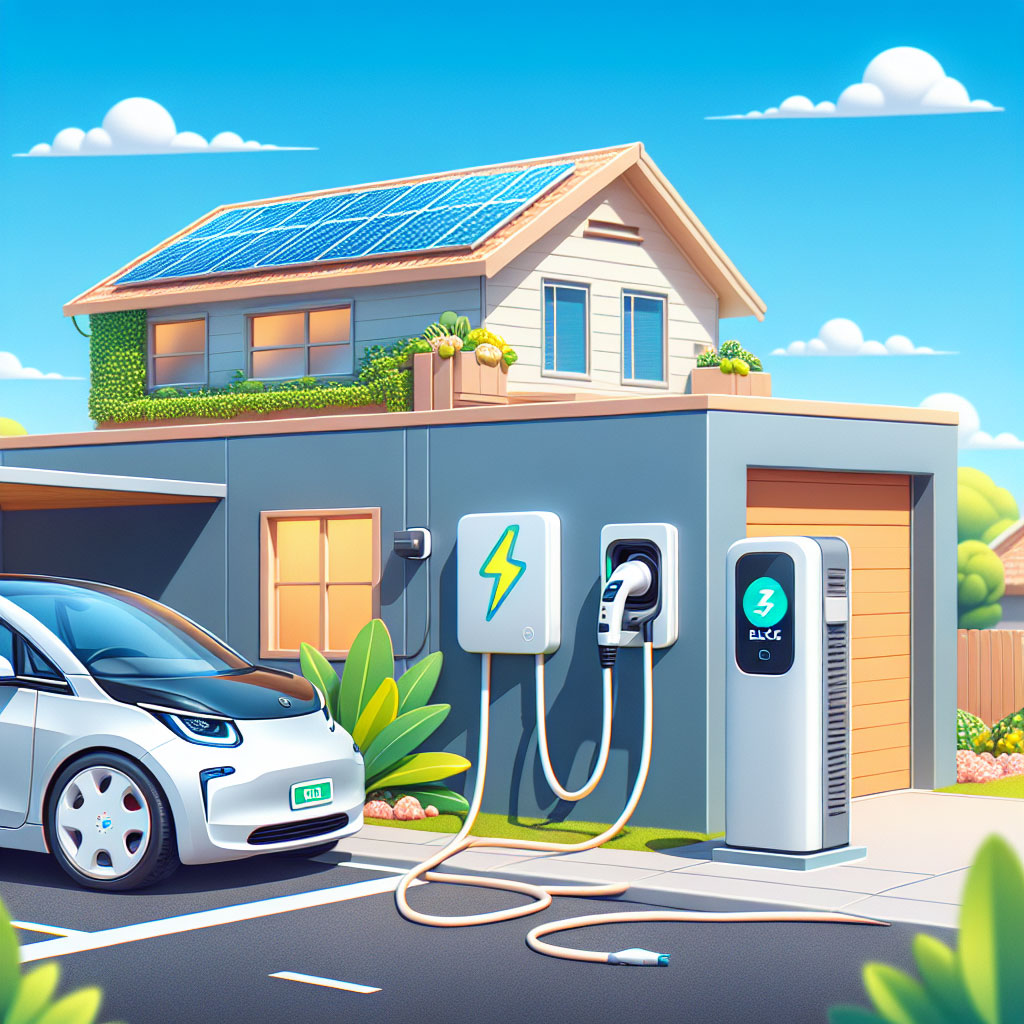
For years, the public charging network dominated the Australian EV conversation. But for seasoned enthusiasts and new owners alike, the true revolution in electric mobility is happening not on the highway, but right in your garage.
The shift is monumental. We are moving from simply ‘plugging in’ to actively managing and monetising our car’s energy. This transition is being powered by two key technological advancements: the increasing adoption of 22kW AC (3-Phase) home charging for ultra-fast top-ups, and the game-changing emergence of Vehicle-to-Grid (V2G) technology, turning your EV into a mobile power plant.
At EV Evolution, we believe understanding these home charging solutions is no longer optional—it is the key to maximizing the financial and environmental benefits of EV ownership in the evolving 2026 Australian energy landscape.
⚡️ Part 1: The AC Speed Limit Breaker: 22kW at Home
The standard home charger in Australia runs on single-phase power, typically delivering 7kW (around 35 km of range per hour). This is perfectly adequate for most daily commutes. But for drivers with longer daily distances, multiple EVs, or those who want to swiftly top-up after a weekend away, waiting 8 to 10 hours for a full charge is a drag.
Enter 22kW AC, 3-Phase charging.
Why Three-Phase is the New Gold Standard
A 22kW charger, utilizing three-phase power (common in newer Australian homes, large properties, or commercial settings), delivers power up to three times faster than a standard 7kW unit, capable of adding 100–130 km of range per hour.
| Charging Level | Power Output | Range Added Per Hour | Typical Charge Time (75kWh Battery) |
| Level 1 (Standard Outlet) | 2.2 kW | ~10 km | 30+ hours |
| Level 2 (Single-Phase Wallbox) | 7.4 kW | ~35 km | 8–10 hours |
| Level 2 (3-Phase Wallbox) | 22 kW | ~110 km | 2–3 hours |
The Case for the 22kW Upgrade:
- Future-Proofing: As batteries grow larger (80kWh+ is becoming standard), a 22kW charger ensures your home setup remains relevant. Vehicles from luxury marques like the Lexus RZ (which supports 22kW AC charging) and high-end Teslas and Porsches can already take full advantage of this speed.
- Solar Synchronisation: A larger 22kW capacity, paired with smart charging features, allows you to soak up maximum solar energy during short, peak generation windows. If your rooftop solar system is generating 10kW of surplus power at midday, a 22kW smart charger can precisely draw that entire surplus, ensuring you are charging your car for nearly zero cost.
- Dynamic Load Balancing (DLB): Modern 22kW chargers are equipped with DLB, a critical safety feature for Australian homes. DLB intelligently balances the power demand across the three phases, ensuring your charging speed is automatically limited when other high-load appliances (like air conditioning or ovens) are running, protecting your home’s main fuse box from overload.
The 22kW charger is a premium investment, often requiring a three-phase connection upgrade, but for those who want speed and true solar optimisation, it’s the definitive AC solution.
Part 2: The Energy Flip: V2G and the Mobile Power Plant
The next frontier moves beyond just charging speed to the active management of energy flow. Vehicle-to-Grid (V2G) technology, also known as bidirectional charging, flips the traditional charging equation by allowing the energy stored in your EV battery to flow back into your home (V2H) or into the public electricity grid (V2G).
This technology is moving rapidly into the commercial phase in Australia, driven by local innovators and government support.
RedEarth and the Commercialisation of V2G
Locally, Queensland-based RedEarth Energy Storage is leading the charge, having announced the commercial availability of its Australian-made, certified V2G bidirectional chargers, with customer deliveries expected from early February 2026.
This marks a significant milestone, providing a CCS2-compatible V2G solution for a wide range of popular EVs in Australia, effectively turning them into massive, mobile stationary batteries.
The Financial Impact on Household Bills
This mobile storage has a profound financial impact:
- Peak Shaving and V2H: The average Australian household uses power heavily in the evening (peak tariffs). A typical EV battery (60kWh to 80kWh) can store five times the energy of a standard home battery. V2G allows you to charge your car using free solar power during the day (or cheap off-peak grid power at night) and then use the stored energy to power your home during the expensive 4 PM to 9 PM peak period. This can slash your household electricity bills by 40–60% and provide multi-day blackout backup.
- Grid Monetisation (V2G): When aggregated, EV batteries offer immense grid stability. The Electric Vehicle Council estimates that V2G could create over $4,500 in community benefits per participating EV over five years by reducing peak demand stress on the national grid. Early adopters participating in retailer programs (like those supported by ARENA funding) can earn up to $1,000 annually by selling excess power back to the grid when wholesale prices spike. Your car is now an active income-generating asset.
V2G is not just about personal savings; it is key to integrating Australia’s massive rooftop solar capacity, transforming parked EVs from passive power consumers into active grid supporters.
Part 3: The Smart Integration
The real power of these technologies is unlocked when they work together under a smart energy management system:
- Solar Optimisation: A smart 22kW charger monitors your solar production and automatically adjusts the charging rate to ensure every kilowatt generated goes into your car first, before being exported cheaply back to the grid.
- Time-of-Use Automation: Using inputs from your electricity retailer, the charger automatically schedules V2G discharge during high-cost peak hours and grid charging only during lowest-cost off-peak hours.
- Mobility Assurance: Crucially, the V2G software allows the user to set a Minimum Charge Level (e.g., 60%). The system will never deplete the battery below this level, ensuring your car is always ready for your morning commute, regardless of its energy trading activities.
The combination of the fastest home AC charging (22kW) and the bi-directional capability of V2G fundamentally solves the charging challenge, moving the focus from public charging reliance to home energy autonomy and monetisation.
🤖 Your Home Energy Blueprint Starts Now
The complexity of setting up a future-proof charging system in Australia is immense. You need to consider three-phase availability, the compatibility of your specific EV model (is it V2G compatible?), the size of your solar array, and the variable tariffs of your electricity plan.
Don’t navigate this maze alone.
The EV Evolution AI chatbot is continuously updated with the latest Australian V2G product certifications (like the RedEarth launch), solar installation standards, and local electricity pricing models.
Ask the chatbot today to recommend the best Solar-Integrated Home Charger based on your electricity plan and solar size:
- “I have a 10kW solar system and Amber Electric’s Time-of-Use plan. Recommend a 22kW smart charger and estimate my annual savings.”
- “Which available EVs are V2G compatible in Australia right now?”
- “What is the total installation cost estimate for a 3-Phase power upgrade and a 22kW charger in Brisbane?”
About EV Evolution
EV Evolution is the leading online platform dedicated to Australian electric vehicle owners and enthusiasts. We foster a vibrant community, delivering essential EV news and insights, and enhancing user engagement through our innovative, AI-powered chatbot for dynamic discussions. Our mission is to empower Australian electric vehicle owners and enthusiasts by fostering a vibrant, AI-driven online community that connects, informs, and advances the nation’s electric vehicle landscape.
