


It’s the moment the Australian bush and suburban worksites have been waiting for. The “Unbreakable” icon has finally gone silent. But in a country where towing 3.5 tonnes isn’t just a hobby—it’s a lifestyle—can a battery-powered Toyota actually get the job done? Or does the plug-in hybrid Ford Ranger hold the secret to the ultimate 2026 dual-cab?
Welcome to the Heavyweight Duel of 2026. At EV Evolution, we don’t just review cars; we stress-test the future. Today, we’re pitting the first-ever Toyota HiLux BEV against the highly-anticipated Ford Ranger PHEV. If you’re looking for the best electric ute in 2026, the choice has never been more complex—or more exciting.
The Toyota HiLux EV: The Fleet Hero
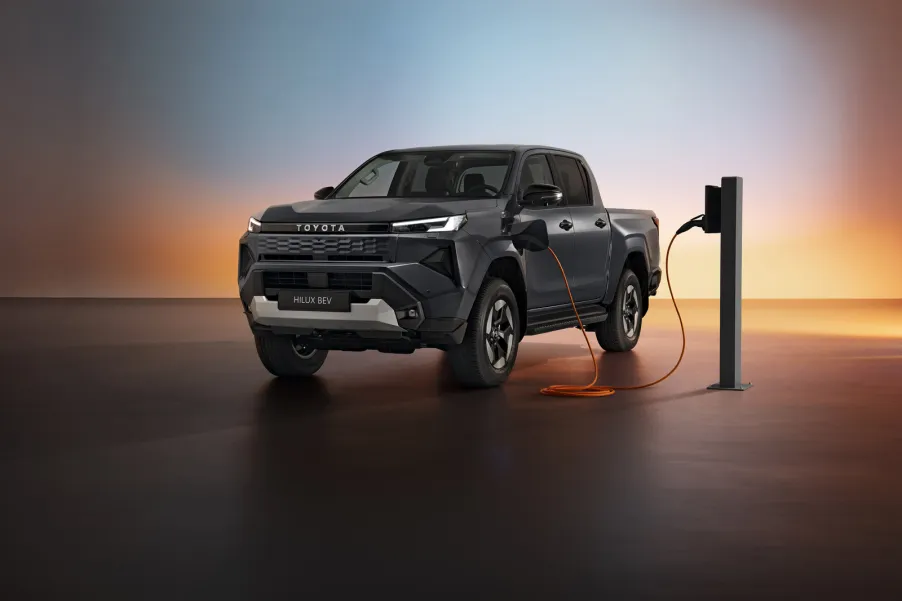
The Electric HiLux price in Australia is expected to land just under the $100,000 ceiling, primarily targeting the massive fleet demand from the mining, farming, and construction industries. While “Old Mate” at the Sunday roast might be skeptical, the data from the 2026 Toyota HiLux BEV (Battery Electric Vehicle) tells a compelling story of torque, silence, and low-cost maintenance.
- The Build: Based on the legendary SR5 4×4 dual-cab platform, the HiLux EV looks almost identical to its diesel siblings, save for the closed-off grille and a few “Electric” badges.
- The Performance: It’s whisper-quiet, but don’t let that fool you. The instant torque from its dual-motor setup makes the 0-60km/h sprint feel significantly more “Supercharged” than the traditional 2.8L turbo-diesel.
- The Charging: With 150kW DC fast-charging, it’s designed to top up during a lunch break at the job site.
The Ford Ranger PHEV: The “No-Compromise” Hybrid
While Toyota has gone full-battery, Ford has taken a different route with the Ranger PHEV. Pairing a 2.3L EcoBoost turbo petrol engine with a 75kW electric motor and an 11.8kWh battery, it offers a claimed 45km of pure electric range before the petrol engine kicks in.
- The Logic: For the driver who does 500km highway stints but wants to drive to the local shops in silence, the PHEV is a brilliant bridge.
- The Power: Combined, it pushes out a massive 207kW and 697Nm of torque, out-muscling even the 3.0L V6 diesel in the torque department.
The Towing Truth: Can They Actually Work?
This is where the “vibe check” gets real. In Australia, a ute that can’t tow is just a glorified hatchback.
Toyota HiLux EV Towing: Toyota has confirmed the HiLux BEV will maintain a 3,500kg braked towing capacity. However, as we’ve seen in our EV Strategy Suite testing, towing at the limit will significantly impact your range. If you’re towing a 3-tonne boat, expect your 400km range to drop by roughly 40-50%. It’s perfect for local work but requires planning for the big trips to the coast.
Ford Ranger PHEV Towing:
Ford also maintains the gold-standard 3,500kg towing capacity. The advantage here is the “Safety Net.” When the 11.8kWh battery is depleted, you still have a petrol engine to do the heavy lifting. You won’t get “stranded” at a charger with a trailer attached, but your fuel consumption will climb significantly once the battery is dead.
Pro Tip: Don’t guess your range. Ask the EV Evolution AI to compare the towing range of the HiLux EV vs. the BYD Shark 6. Our AI has the latest data on how these utes perform under load in Australian summer temperatures.
The “Pro Power” Flex: A Mobile Generator
One of the biggest wins for both utes in 2026 is Vehicle-to-Load (V2L).
- The Ranger PHEV offers “Pro Power Onboard,” providing up to 6.9kW of power through sockets in the tray. You can run circular saws, compressors, or even a coffee machine directly from the car’s battery.
- The HiLux EV follows suit, effectively turning your work ute into a massive mobile power station. No more carrying noisy petrol generators to the campsite or the building site.
The Math: Fuel vs. Electrons
At EV Evolution, we’re obsessed with the financial “Tech Flex.”
If you’re a tradie or a business owner, the EV Tax Savings Estimator is your best friend. In 2026, the HiLux EV falls under the FBT exemption rules for electric vehicles, potentially saving you over $5,000 per year in tax compared to a standard diesel HiLux.
While the Ranger PHEV also offers significant savings, the tax landscape for hybrids shifted in 2025. You’ll want to check the latest FBT Exemption Electric Cars Update on our site to see exactly where you stand before July.
The Verdict: Which Ute Slays in 2026?
The best electric ute in 2026 depends entirely on your “Odometer Vibe.”
- Choose the HiLux EV if: You have home or depot charging, and 90% of your driving is within 250km of your base. The fuel and maintenance savings will be massive, and the silent torque is a luxury you won’t want to give up.
- Choose the Ranger PHEV if: You do long, unpredictable regional hauls where fast-chargers are still “Cooked” or non-existent. It’s the ultimate “safety net” ute that still lets you “flex” your electric credentials in the city.
Settle the Debate with AI
Still staring at the spec sheets? The 2026 market is moving faster than a Tesla in “Ludicrous Mode.”
Start the conversation with the EV Evolution AI Agent. Our AI knows the specific charging curves, the real-world towing ranges, and the latest Australian tax hacks for both of these utes. Ask it:
- “Is the electric HiLux better for a mining fleet than the LDV eT60?”
- “What is the real-world fuel economy of the Ranger PHEV when the battery is flat?”
- “How does the HiLux EV compare to the BYD Shark 6 for a weekend camping trip?”
The evolution of the Aussie ute is here. Don’t get left in the dust of the “Old Guard.” Vibe check your suburb, run your tax numbers, and let the AI guide you to the smartest purchase of 2026.
About EV Evolution
EV Evolution is the leading online platform dedicated to Australian electric vehicle owners and enthusiasts. We foster a vibrant community, delivering essential EV news and insights, and enhancing user engagement through our innovative, AI-powered chatbot for dynamic discussions. Our mission is to empower Australian electric vehicle owners and enthusiasts by fostering a vibrant, AI-driven online community that connects, informs, and advances the nation’s electric vehicle landscape.
