


The rumble of the diesel dual-cab ute has long been the dominant sound on Australian worksites and outback roads, but a new, quieter revolution is underway. The electric ute is no longer a futuristic concept; it is here, and it’s rapidly challenging the traditional hold of the Ford Ranger and Toyota HiLux. With a surge of new and exciting models hitting our shores, the key metrics for the modern tradie and weekender—electric utes Australia, EV ute towing capacity, and driving range—are fundamentally changing the purchasing conversation.
The New Contenders: EV vs. PHEV for the Aussie Market
While some markets, particularly in the US, have fully battery-electric utes like the Ford F-150 Lightning and Rivian R1T (available in Australia through specialist importers), the local market is currently being defined by a mix of dedicated Battery Electric Vehicles (BEVs) and, crucially, Plug-in Hybrid Electric Vehicles (PHEVs). This mix is an acknowledgment of Australia’s unique challenges: vast distances, limited remote charging infrastructure, and the non-negotiable requirement for serious towing and off-road capability.
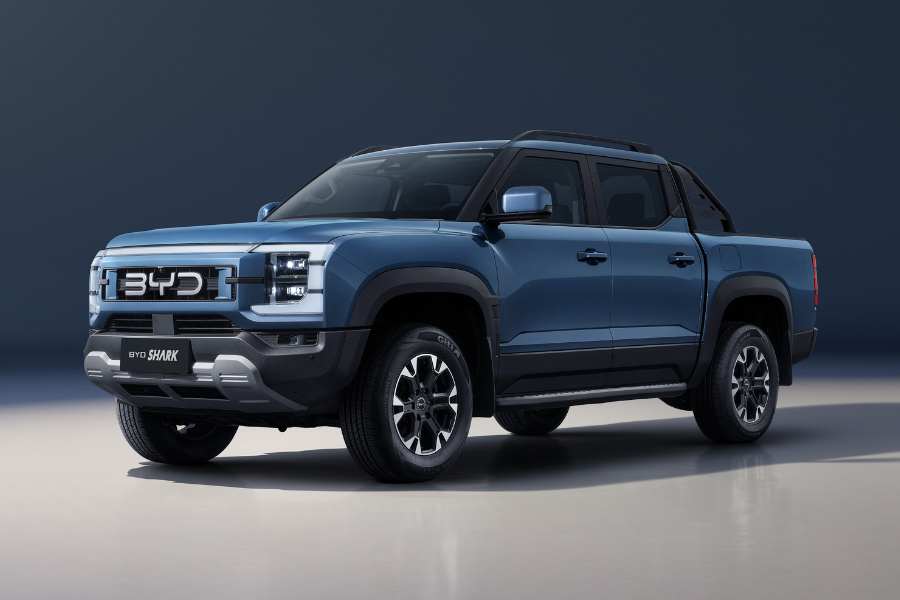
The current trailblazer in the mainstream market, and the model against which all newcomers are measured, is the BYD Shark 6. It’s not a pure EV, but a PHEV, and it has set the benchmark for hybrid dual-cab performance and value.
The Main Event: BYD Shark vs. Ford Ranger (and the looming rivals)
To understand where the EV ute segment is heading, we must compare the current frontrunners and what they offer in the crucial utility metrics. The battle for the crown of the most capable electrified ute is primarily between the Chinese newcomer, BYD, and the established icon, Ford.
BYD Shark 6 (PHEV): The Powerhouse Newcomer
The BYD Shark 6 arrived as Australia’s first major plug-in hybrid ute, and its initial success has been remarkable, vaulting it into the top-selling 4×4 ute ranks.
- Towing & Payload: The Shark 6 is rated for a 2,500kg braked towing capacity and a payload of around 790kg. While this is competitive for a lifestyle ute, it falls short of the gold standard 3,500kg towing capacity of its diesel rivals. This is an acknowledged concession to its hybrid platform and battery weight, though BYD has hinted at future upgrades to address this.
- Range & Performance: This is where the Shark shines. Its dual-motor, 1.5-litre turbo-petrol PHEV system produces a stunning combined output of 321kW of power and 650Nm of torque, making it one of the most powerful utes on the market. More importantly for daily use, its 29.6kWh battery provides an NEDC-rated 100km of pure electric-only range. For the vast majority of daily commutes and short trips, the Shark can operate as a pure EV, dramatically cutting fuel costs.
Ford Ranger PHEV: The Reigning King’s Electrified Challenge
Ford’s response is the upcoming Ranger PHEV, which leverages the legacy and popularity of the country’s best-selling vehicle.
- Towing & Payload: The Ranger PHEV maintains the crucial benchmark of 3,500kg braked towing capacity and a competitive payload. This is Ford’s ace card—it offers electrification without compromising the core utility attributes that Australian buyers demand.
- Range & Drivetrain: The Ranger combines a 2.3-litre EcoBoost turbo-petrol engine with an electric motor. While its total output of 207kW/697Nm is highly respectable, its pure EV range is more modest, estimated at under 50km from its 11.8kWh battery. Ford’s strategy is clear: the EV range is primarily for short, urban, zero-emission drives, while the full power and range of the petrol engine are retained for heavy towing and long-distance touring. It also retains the full suite of off-road features, including low-range gearing, vital for Australian conditions.
Comparing the Approaches: BYD Shark vs. Ranger PHEV
The two models represent different philosophies:
| Feature | BYD Shark 6 (PHEV) | Ford Ranger PHEV |
| Braked Towing Capacity | 2,500kg | 3,500kg |
| Pure EV Range (Approx.) | 100km (NEDC) | <50km (NEDC) |
| System Power (Combined) | 321kW / 650Nm | 207kW / 697Nm |
| Platform | Dedicated PHEV (DMO) | Modified Ladder-Frame (ICE Base) |
For buyers who rarely tow more than 2 tonnes and prioritise the maximum possible electric-only commuting range, the BYD Shark offers a compelling value proposition and performance edge. For those who absolutely need to tow a large caravan or boat (up to 3.5 tonnes), the Ford Ranger PHEV is the choice that asks for the fewest compromises.
The BEV Ute Wave: Awaiting the Pure Electric Contenders
Beyond the PHEV battle, the true electric utes Australia movement is gathering momentum with pure BEV models.
- LDV eT60: Currently the only pure EV ute widely available, its early specification is dated, with a 1,000kg towing capacity and modest range, making it primarily a fleet or urban-focused option. Its replacement, the LDV eTerron 9, promises a substantial upgrade with 3,500kg towing and over 400km of range, making it a genuine contender.
- KGM Musso EV: Set to arrive, the KGM (formerly SsangYong) Musso EV shows potential, but its initial 1,800kg towing capacity may limit its appeal to serious haulers.
- Isuzu D-MAX EV / Toyota HiLux BEV: The giants of the segment are preparing their fully electric responses, expected around 2026. If they can replicate the 3,500kg towing capacity of their diesel forebears while delivering competitive range, the market will fundamentally shift.
- Full-Size Imports: Models like the Ford F-150 Lightning (via conversion) offer immense utility (4,500kg towing) and range but come at a premium price point, positioning them as niche, high-end options.
The Range Reality: Towing and the EV Equation
The biggest obstacle for any EV or PHEV ute remains the impact of heavy towing on driving range. While a pure EV ute might boast a 500km unladen range, tests in overseas markets show that towing a large caravan can halve, or even two-thirds, that distance.
This is why the PHEV models, like the BYD Shark and Ford Ranger, are so critical for the Australian market today. They offer the low-cost, zero-emission benefit for 90% of the time (daily driving), with the internal combustion engine acting as a reliable range extender for the 10% of heavy hauling or remote travel. This “best of both worlds” approach is currently bridging the gap until battery technology and public charging infrastructure can fully support long-distance, heavy-duty pure EV towing.
Conclusion
The electric utility vehicle is finally here, transforming the Australian ute segment with unprecedented performance, power, and efficiency. The initial competition is fierce, with the BYD Shark offering class-leading EV range and explosive performance, while the Ford Ranger PHEV retains the non-negotiable 3,500kg EV ute towing capacity that keeps it firmly on the worksite and in the outback.
The future of the Australian ute is undoubtedly electric, but for the next few years, the smart buyer must carefully weigh their needs against the compromises. Do you need maximum pure-electric commuting, or do you require the full 3.5-tonne towing muscle? The answers to these questions will define whether the powerful new PHEV challengers, or the tried-and-true names, end up dominating the next generation of the Aussie workhorse.
FAQs
What is the biggest limitation of a BEV ute when towing?
Towing significantly reduces range due to extra weight and aerodynamic drag. Tests show losses of 30-60% depending on conditions. For long towing trips in regional areas, plan charging stops carefully or consider a PHEV/ICE alternative.
Are PHEV utes reliable for tradies and fleets?
Yes, many PHEVs are built to commercial standards and can be highly reliable. Their advantage is offering electric‑first running for normal days while retaining combustion power for remote work. Ensure local service support and factory warranties meet fleet needs.
How much does towing capacity differ between PHEV and diesel utes?
PHEVs introduced so far often have lower towing ratings (e.g. ~2,500 kg) than the traditional 3,500 kg of many diesel utes. Some PHEVs and future BEVs aim to reach 3,500 kg, but buyers should check the certified tow rating for each model.
Is charging infrastructure adequate for regional travel in Australia?
Charging infrastructure has expanded rapidly in major corridors, but rural and remote coverage is still variable. High‑power chargers are increasingly common between cities and some regional centres, but isolated routes can still lack reliable fast charging.
Will a BEV ute be cheaper to run than a diesel over time?
Potentially. Electricity is generally cheaper per kilometre than diesel, and electric drivetrains typically have lower maintenance. Total cost of ownership depends on purchase price, charging costs, usage pattern, incentives and resale value – do the TCO maths for your use case.
When should I choose a PHEV over a BEV ute?
Choose a PHEV if you need frequent long trips, regular heavy towing or operate in areas with limited charging. Choose a BEV if you do most driving within the electric range, have reliable access to charging and prioritise lower running costs and emissions.
About EV Evolution
EV Evolution is the leading online platform dedicated to Australian electric vehicle owners and enthusiasts. We foster a vibrant community, delivering essential EV news and insights, and enhancing user engagement through our innovative, AI-powered chatbot for dynamic discussions. Our mission is to empower Australian electric vehicle owners and enthusiasts by fostering a vibrant, AI-driven online community that connects, informs, and advances the nation’s electric vehicle landscape.
