


For the last decade, the conversation around electric vehicles in Australia has focused on a single financial metric: “How much will it cost to charge?” We obsessed over cents per kilowatt-hour, hunted for free council chargers, and debated the merits of off-peak tariffs.
But in early 2026, the script is flipping. The question isn’t how much your car costs to run—it’s how much your car can earn.
The era of Vehicle-to-Grid (V2G) has officially arrived, and it’s not coming from a Silicon Valley tech giant. It’s coming from Darra, Queensland.
Homegrown battery innovator RedEarth Energy Storage is set to begin deliveries of its certified V2G bidirectional chargers in February 2026, turning Australian EVs from passive appliances into active, income-generating assets.
At EV Evolution, we believe this is the most significant shift in home energy since the rooftop solar boom. Here is everything you need to know about turning your driveway into a power station.
🇦🇺 The “Boomerang” Effect: Aussie Tech Leading the Way
RedEarth’s new charger, aptly named the “Boomerang,” is one of the first locally manufactured, fully certified DC bidirectional chargers to hit the Australian market.
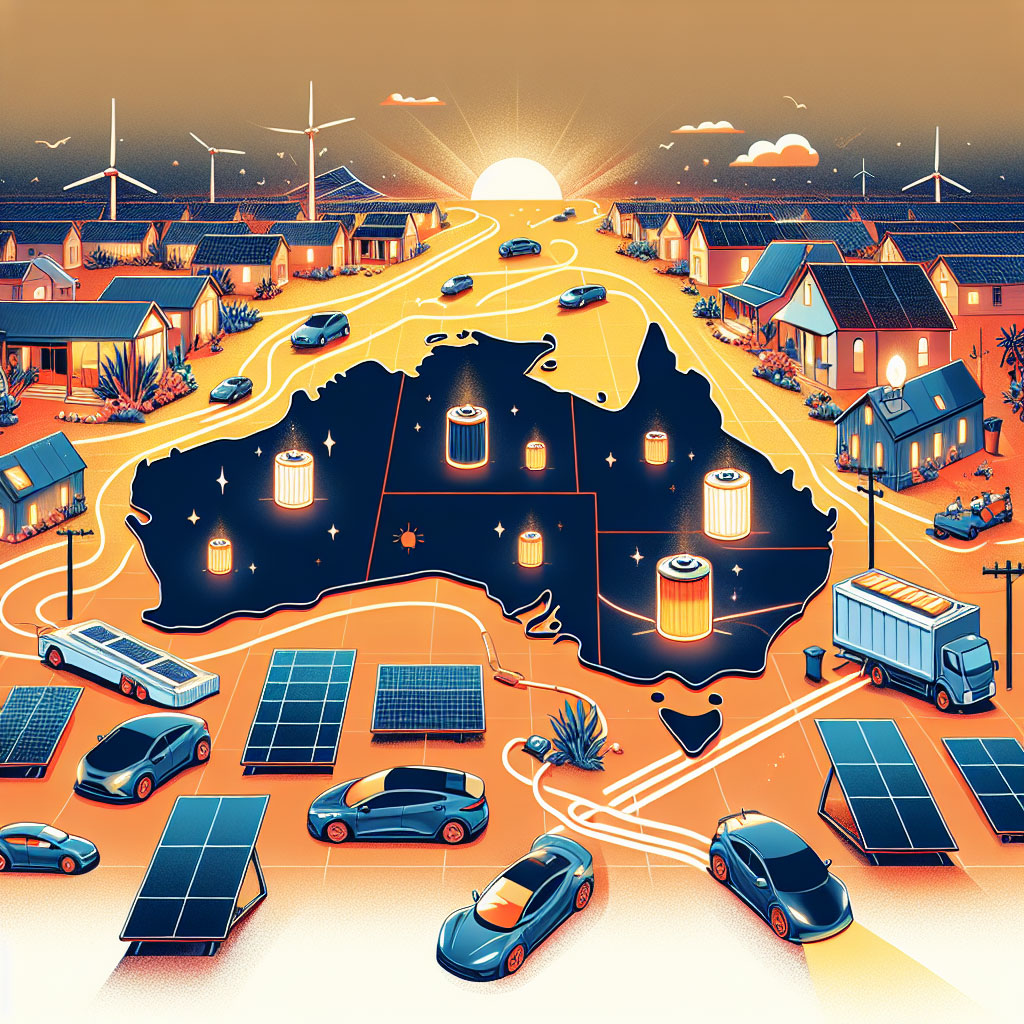
Unlike standard wallboxes that are a one-way street (grid to car), the Boomerang allows energy to flow both ways. It can pull cheap solar power into your car during the day and, crucially, push that energy back into your home (Vehicle-to-Home or V2H) or export it to the grid (Vehicle-to-Grid or V2G) when prices spike.
The Specs that Matter:
- Availability: Customer deliveries start February 2026.
- Power: 11kW Three-Phase DC (with single-phase options following).
- The Investment: Priced at roughly $9,990 (excluding GST and install), this is premium hardware. But unlike a standard charger, this is an investment designed to pay for itself.
💰 How to Monetize Your Battery
Why would you pay $10,000 for a charger? Because your EV has a battery five times larger than a Tesla Powerwall, and RedEarth wants to help you trade it.
Through RedEarth’s “Private Power Plant” ecosystem, you can connect your EV to the wholesale energy market (often via retailers like Amber Electric). Here is the math of monetization:
- The “Solar Sponge” (Daytime): You charge your EV using your own free rooftop solar or when grid prices are negative (yes, the grid often pays you to use power in the middle of the day). Cost: $0.00.
- The “Peak Shave” (Evening): When power prices hit 50c/kWh between 5 pm and 8 pm, you stop buying from the grid. Your house runs entirely off the car. Savings: Massive.
- The “Grid Trade” (V2G): When a heatwave hits and wholesale prices spike to $15/kWh, your charger automatically exports your stored energy back to the grid. You aren’t just saving money; you are earning cold hard cash.
For a household with a 60kWh BYD Atto 3 or Tesla Model Y, this could potentially erase your electricity bill entirely and generate a profit, all while leaving you with plenty of range for the morning commute.
⚠️ The Compatibility Reality Check
Before you rush to order, there is a catch. While the charger is ready, not every car is legally allowed to play.
The hardware in many modern EVs (like the Hyundai Ioniq 5, BYD Atto 3, and Nissan LEAF) is technically capable of bidirectional charging. However, the software and—crucially—the warranty terms from manufacturers are still playing catch-up.
- The Good News: Brands like Nissan and Mitsubishi (PHEV) have long supported V2G standards (CHAdeMO).
- The Shift: Newer CCS2 vehicles are now being tested and certified. RedEarth has reportedly tested the Boomerang with major models including Tesla, BYD, and Polestar, but official “warranty-approved” status varies by manufacturer. Using V2G on a car that doesn’t officially support it could void your battery warranty, so checking the fine print is essential.
🔌 EV Evolution Angle: Stop Paying for Power. Start Selling It.
Let’s be blunt: if you have solar on your roof and an EV in your garage, but you aren’t using V2G or V2H, you are leaving money on the table.
The “Boomerang” represents the missing link in the Australian energy independence dream. It transforms your car from a liability that sits depreciating in the garage for 20 hours a day into a mobile power plant that works for you.
With the launch of this technology in Brisbane, the days of fearing the electricity bill are numbered. The grid needs your battery, and for the first time, it’s willing to pay you for it.
🤖 Join the Evolution: Is Your Car V2G Ready?
The technology is here, but the compatibility list is complex. Does your 2024 BYD Atto 3 support V2G discharge? Will the new Kia EV9 work with the RedEarth system?
Don’t risk your warranty without the facts.
At EV Evolution, we have updated our AI-Powered Chatbot with the latest compatibility lists, manufacturer warranty statements, and V2G certification updates.
Ask the Chatbot today:
- “Which current EVs are officially compatible with RedEarth V2G chargers?”
- “Does using V2G void the warranty on a Tesla Model Y in Australia?”
- “Calculate the potential annual earnings of V2G using a 60kWh battery.”
About EV Evolution
EV Evolution is the leading online platform dedicated to Australian electric vehicle owners and enthusiasts. We foster a vibrant community, delivering essential EV news and insights, and enhancing user engagement through our innovative, AI-powered chatbot for dynamic discussions. Our mission is to empower Australian electric vehicle owners and enthusiasts by fostering a vibrant, AI-driven online community that connects, informs, and advances the nation’s electric vehicle landscape.
