



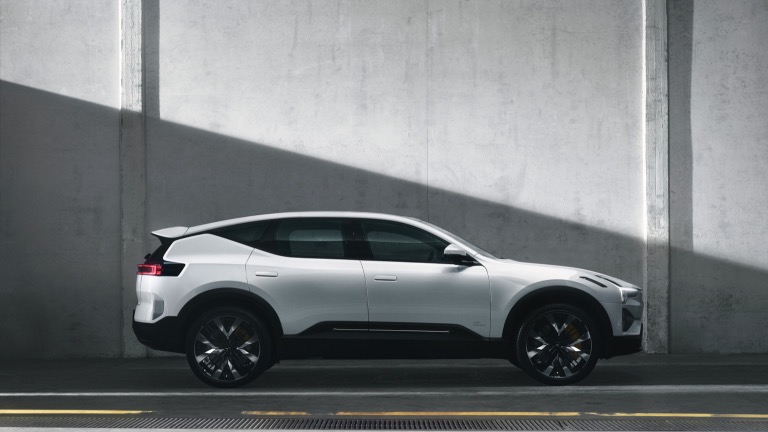
For the Australian driver, the phrase “range anxiety” has long been a shadow hanging over the electric vehicle (EV) conversation. Our vast continent, with its long stretches of open road, demands an EV that can truly go the distance. Enter the 2025 Polestar 3 Long Range Single Motor (LRSM), a luxury electric SUV that arrived on our shores with an almost audacious claim: a certified WLTP range of up to 706km.
This isn’t just an incremental step—it’s a leap that, on paper, positions the Polestar 3 LRSM as the longest-legged EV currently available to Australian buyers. But the question that really matters to local owners is: Can it really travel further than any other EV between charges in the real world? We dive into the review landscape to find the up-to-date, on-the-ground answer.
🗺️ The 706km Claim: WLTP vs. The Australian Reality
The headline figure of 706km is a product of the Worldwide Harmonised Light Vehicle Test Procedure (WLTP). While WLTP is more realistic than older standards, it remains a laboratory test. It provides an excellent benchmark for comparison but rarely reflects the unpredictable nature of Australian conditions, which include higher average highway speeds, varied topography, and the inevitable use of climate control.
Australian road tests of the 2025 Polestar 3 LRSM have been clear and consistent: the 706km figure is not the real-world expectation, but the actual, achievable range is still genuinely groundbreaking.
- Real-World Consensus: The majority of comprehensive Australian reviews point to a realistic, mixed-driving range figure of around 550km to 600km per full charge.
- A Game-Changing Figure: While falling short of the official claim, a consistent, real-world 600km range is still a powerful trump card in the Australian market, significantly easing the planning required for major inter-city road trips. As one reviewer noted, on a long-distance drive, the car consistently returned a range of over 550km across a mix of freeways, suburbs, and city traffic, effectively banishing range anxiety.
This impressive real-world range is the direct result of a combination of factors: the sizeable 111kWh gross battery pack (107kWh usable) and the inherent efficiency of the single-motor, rear-wheel-drive configuration. By shedding the second motor and all-wheel-drive hardware of its Dual Motor sibling, the LRSM variant is lighter and has a lower energy consumption rate, translating directly into more kilometres.
🌟 Scandinavian Subtlety Meets Australian Utility
Beyond the range, the Polestar 3 LRSM offers a compelling package for the discerning Australian family and luxury SUV buyer.
Design and Interior
The Polestar 3 maintains the brand’s signature minimalist, Scandinavian aesthetic. It presents as a large, coupé-like SUV, shorter in length than many rivals but with a wide, purposeful stance.
- Cabin Quality: The interior is a standout, feeling genuinely premium. High-quality materials, sustainable Bio-attributed WeaveTech upholstery (with Nappa leather as an option), and a clean, uncluttered design provide a calming environment.
- Tech Focus: The centrepiece is the large 14.5-inch portrait touchscreen running the Google-developed Android Automotive OS. This system features Google Maps and Google Assistant built-in, offering superior voice control and mapping integration that is intuitive and highly valued for navigating Australia’s varied streetscape.
- Practicality: While its sloping roofline might suggest a compromise, the Polestar 3 seats five in comfort. Storage is decent, with 484 litres in the boot (expanding to 1411L with seats folded) and a handy 32-litre ‘frunk’ (front boot) perfect for charging cables.
Driving Dynamics: Confident, Not Comedic
The Single Motor variant is not built for headline-grabbing speed—its 0-100km/h sprint of 7.8 seconds is brisk, but far from the neck-snapping acceleration many associate with performance EVs. This is intentional.
- Refined Drive: The LRSM focuses on a smooth, quiet, and confident drive. The 220kW and 490Nm from the rear-mounted motor are more than sufficient for everyday duties and highway overtaking.
- Handling: Despite its 2.4-tonne-plus kerb weight, the Polestar 3 feels remarkably nimble. The steering is sharp and nicely weighted, making it surprisingly at home in tight city environments. The rear-drive setup provides a genuinely engaging, rear-biased feel that keen drivers will appreciate.
- Suspension Note: Unlike the Dual Motor variants, the LRSM uses passive dampers and coil springs (rather than adaptive air suspension). Reviewers have noted the ride can be on the firmer side, which helps body control but may feel less forgiving over poorer city streets and patched-up regional highways, especially for rear passengers.
🆚 The Competition: The Single Motor’s True Advantage
The Polestar 3 LRSM competes in a crowded luxury SUV segment, facing off against established players like the BMW iX, Mercedes-Benz EQE SUV, and Audi Q8 e-tron.
| Model (Approx. Equivalent) | WLTP Range (km) | Real-World Range (Est. km) |
| Polestar 3 LRSM | 706 | 550–600 |
| Mercedes-Benz EQE 300 SUV (RWD) | ~590 (WLTP max) | ~450–500 |
| BMW iX xDrive40 (AWD) | ~420 (WLTP) | ~350–400 |
| Audi Q8 50 e-tron (AWD) | ~490 (WLTP) | ~400–450 |
As the table shows, the Polestar 3 LRSM’s range advantage is significant. It essentially moves the luxury EV SUV conversation into new territory, offering a range figure that previously required an expensive, high-efficiency sedan. For Australian families considering replacing a large, long-range diesel SUV, the Polestar 3 LRSM makes a genuinely compelling case.
⚡ Charging and Ownership: The Practicalities
The practicality of EV ownership is as much about charging as it is about range.
- Fast Charging: The Polestar 3 LRSM maintains a strong maximum DC fast-charging rate of 250kW. This translates to a rapid 10–80% top-up in about 30 minutes, adding hundreds of kilometres of range in a typical rest stop. This speed is vital for long-distance travel and helps mitigate the long charge times associated with its massive battery.
- Ownership Peace of Mind: Polestar offers a five-year, unlimited-kilometre warranty and covers the battery for eight years or 160,000km to 70% state of health. Servicing is also low-hassle, with five years of included servicing and two-year/30,000km intervals.
⭐ The Final Verdict for Australia
The Polestar 3 Long Range Single Motor’s real-world driving range of around 550km to 600km firmly answers the titular question: Yes, the Polestar 3 LRSM can realistically travel further than its direct luxury SUV rivals and most other EVs between charges in an Australian context.
It achieves this not through aggressive performance or flimsy compromises, but through the efficient pairing of a huge battery with a simpler, rear-wheel-drive configuration. This is the Polestar 3 for the pragmatist, the road-tripper, and the buyer who values a truly usable, long-distance luxury EV.
It is a stunning, sophisticated, and safety-focused luxury SUV with all the high-tech features expected at this price point. Crucially, the Long Range Single Motor variant finally delivers the one thing the Australian EV market has been waiting for: a genuine, five-seater electric option that makes our legendary highways feel manageable
Polestar 3 Long Range Single Motor 2025 vs. BMW iX and Mercedes-Benz EQE SUV: A Price and Feature Comparison
Please note that as the Polestar 3 LRSM is a very recent addition to the lineup (due early 2025 in Australia), some pricing and specifications are preliminary or target figures.
⚡️ Electric Luxury SUV Comparison: Price & Key Features
| Feature | 2025 Polestar 3 LRSM | BMW iX xDrive40 | Mercedes-Benz EQE 300 SUV |
| Price (Estimated AUD MLP) | From $118,420 | From $135,900 | From $136,600 |
| Drivetrain | Rear-Wheel Drive (RWD) | All-Wheel Drive (AWD) | Rear-Wheel Drive (RWD) |
| Power (Target) | 220 kW / 490 Nm | 240 kW / 630 Nm | 180 kW / 550 Nm |
| 0-100 km/h (Claimed) | 7.8 seconds | 6.1 seconds | 7.6 seconds |
| Battery Capacity (Usable) | 111 kWh | 77 kWh | 89 kWh |
| WLTP Driving Range | ~706 km | 420 km | 446 km |
| DC Max Charging Speed | 250 kW | 150 kW | 170 kW |
| Length (Approx.) | 4,900 mm | 4,953 mm | 4,863 mm |
| Boot Space (VDA) | 484L (plus 32L frunk) | 500L | 520L |
All prices exclude on-road costs and options.
💰 Price Comparison: Polestar 3 vs. Rivals
The 2025 Polestar 3 Long Range Single Motor clearly positions itself as the most price-competitive option among these three luxury contenders.
- The Polestar 3 LRSM entry price of around $118,420 is significantly lower than the starting price of both the BMW iX xDrive40 ($135,900) and the Mercedes-Benz EQE 300 SUV ($136,600).
- The Polestar’s price advantage is particularly notable given its huge battery capacity and class-leading driving range.
🔑 Key Feature Standouts
Polestar 3 Long Range Single Motor (LRSM)
- Range Champion: The Polestar 3 LRSM’s 706 km WLTP range is its biggest differentiator and, for the moment, positions it with the longest driving range of any EV sold in Australia.1 This is thanks to its massive 111 kWh battery and efficient single-motor setup.
- Charging: Offers a very high 250 kW DC fast charging capability, allowing for quicker top-ups at compatible stations compared to the rivals’ entry-level models.2
- Design & Tech: Features a sleek, coupe-SUV design, a minimalist, Scandinavian-inspired interior, and a native Android Automotive OS infotainment system with Google services built-in.3
BMW iX xDrive40
- Drivetrain: The entry-level iX xDrive40 comes standard with All-Wheel Drive (AWD), providing better traction and a punchier 0-100 km/h sprint time than the single-motor RWD rivals.
- Performance: Faster acceleration than both the Polestar 3 LRSM and the EQE 300 SUV.
- Interior: Known for its futuristic, expansive interior design, the distinctive hexagonal steering wheel, and BMW’s robust iDrive controller system.
Mercedes-Benz EQE 300 SUV
- Luxury & Comfort: Mercedes-Benz is known for its high level of interior material quality, quietness, and a focus on ride comfort, often featuring standard active air suspension.
- Technology: Features the latest MBUX infotainment system, which can include the striking MBUX Hyperscreen as an option on higher trims (not standard on the 300 but available on the platform).
- Efficiency: The RWD drivetrain is highly efficient for day-to-day driving, offering competitive battery consumption for its size.
🎯 Summary
The Polestar 3 LRSM offers a compelling value proposition by undercutting its rivals on price while delivering an industry-leading driving range and very fast DC charging.
However, if you prioritise All-Wheel Drive and faster acceleration as standard, the BMW iX xDrive40 might be preferred. If ultimate luxury, a technologically rich cabin, and supreme ride comfort are your top priorities, the Mercedes-Benz EQE 300 SUV remains a strong contender, despite its higher starting price.
Moving up to the higher-spec Polestar 3 variants—specifically the Long Range Dual Motor and the Performance Pack—puts it in direct competition with the formidable, more powerful versions of the BMW iX and Mercedes-Benz EQE SUV.
Below is a comparison focusing on key specifications for the Polestar 3 Dual Motor (and Performance Pack) against the BMW iX xDrive50 and the Mercedes-Benz EQE 500 4MATIC SUV, considering the Australian market context.
⚡ Polestar 3 vs. BMW iX vs. Mercedes-Benz EQE SUV: High-Spec Comparison
| Feature | Polestar 3 Dual Motor (Long Range) | Polestar 3 Dual Motor (Performance Pack) | BMW iX xDrive50 Sport (or similar high-spec) | Mercedes-Benz EQE 500 4MATIC SUV |
| Indicative Starting Price (AUD) | ~$132,900 + ORCs | ~$141,900 + ORCs | ~$185,400 + ORCs | ~$170,000 – $180,000 + ORCs (Estimate) |
| System Power (kW) | $360 \text{ kW}$ | $380 \text{ kW}$ | $385 \text{ kW}$ | $300 \text{ kW}$ |
| System Torque (Nm) | $840 \text{ Nm}$ | $910 \text{ Nm}$ | $765 \text{ Nm}$ | $858 \text{ Nm}$ |
| 0-100 km/h (Claimed) | $5.0 \text{ seconds}$ | $4.7 \text{ seconds}$ | $4.6 \text{ seconds}$ | $4.7 \text{ seconds}$ |
| Usable Battery Capacity | $107 \text{ kWh}$ | $107 \text{ kWh}$ | $108.8 \text{ kWh}$ | $90.6 \text{ kWh}$ |
| WLTP Driving Range | $610 \text{ km}$ | $560 \text{ km}$ | $620 \text{ km}$ | $547 \text{ km}$ |
| Max DC Charging Rate | $250 \text{ kW}$ | $250 \text{ kW}$ | $195 \text{ kW}$ | $170 \text{ kW}$ |
| Luggage Capacity (Rear/Max) | $484 \text{ L} / 1,411 \text{ L}$ | $484 \text{ L} / 1,411 \text{ L}$ | $500 \text{ L} / 1,750 \text{ L}$ | $520 \text{ L} / 1,675 \text{ L}$ |
| Frunk (Front Trunk) | Yes (32 L) | Yes (32 L) | No | No |
| Towing Capacity (Braked) | $2,200 \text{ kg}$ | $2,200 \text{ kg}$ | $2,500 \text{ kg}$ | $1,800 \text{ kg}$ |
(Note: Pricing and specifications can vary depending on optional packages, time of order, and state-specific on-road costs. The EQE 500 power figures represent the Australian model; international specs sometimes differ.)
🔑 Key Takeaways & Comparison Points
1. Performance and Power
- Polestar 3 Performance Pack is a torque monster, delivering the highest torque figure in this group (1$910 \text{ Nm}$), which translates to immense in-gear acceleration.2 Its 3$0-100 \text{ km/h}$ time is very competitive at 4$4.7 \text{ seconds}$.5
- The BMW iX xDrive50 edges out the other two for peak power (6$385 \text{ kW}$) and the quickest acceleration (7$4.6 \text{ seconds}$).8
- The EQE 500 is slightly down on power compared to the high-spec rivals, but its $4.7 \text{ second}$ sprint is still rapid and competitive with the Polestar 3 Performance.
2. Range and Efficiency
- The BMW iX xDrive50 boasts the largest claimed WLTP range ($620 \text{ km}$), leveraging a large battery and excellent efficiency.
- The Polestar 3 Long Range Dual Motor is also a long-range contender (9$610 \text{ km}$), putting it very close to the BMW.10 Opting for the Performance Pack sacrifices some range (11$560 \text{ km}$) for power.12
- The Mercedes-Benz EQE 500 has the smallest usable battery capacity ($90.6 \text{ kWh}$) and subsequently the lowest WLTP range in this group ($547 \text{ km}$), though it is still competitive.
3. Charging Speed
- The Polestar 3 is the clear leader in DC fast-charging, offering a maximum rate of 13$250 \text{ kW}$, which can translate to quicker charging times on capable chargers compared to the BMW (14$195 \text{ kW}$) and Mercedes (15$170 \text{ kW}$).16
4. Design and Practicality
- Design Philosophy: The Polestar 3 offers a distinct, coupe-like profile and minimalist Scandinavian aesthetic, positioning itself as a driver-focused luxury SUV. The BMW iX is known for its polarizing yet futuristic design and focus on an opulent, tech-heavy interior. The Mercedes-Benz EQE SUV follows the smooth, “electric-era” luxury styling of the EQ lineup, prioritizing interior space and comfort.
- Practicality: The BMW iX offers the best overall cargo capacity, and the highest braked towing capacity (17$2,500 \text{ kg}$).18 The Polestar 3 is the only one in this group to include a frunk (front trunk). The Mercedes-Benz EQE SUV also offers a large cargo area.
5. Pricing and Value
- The Polestar 3 models (even with the Performance Pack) are positioned as the more value-oriented option in this premium segment, with a substantial price difference of $40,000 – $50,000+ AUD compared to its direct German rivals.
🎯 Conclusion
- Choose the BMW iX xDrive50 if you prioritize the absolute longest range, best towing capacity, and a truly opulent, unique interior experience at the highest price point.
- Choose the Mercedes-Benz EQE 500 4MATIC SUV if you value ultimate comfort, a classic luxury brand experience, and a tech-forward, screen-heavy “Hyperscreen” style cabin (depending on options).
- Choose the Polestar 3 Dual Motor (especially with the Performance Pack) if you want a sleek, modern design, top-tier performance figures (especially torque and $0-100 \text{ km/h}$), class-leading fast charging capability, and a lower purchase price compared to the main German rivals.
About EV Evolution
EV Evolution is the leading online platform dedicated to Australian electric vehicle owners and enthusiasts. We foster a vibrant community, delivering essential EV news and insights, and enhancing user engagement through our innovative, AI-powered chatbot for dynamic discussions. Our mission is to empower Australian electric vehicle owners and enthusiasts by fostering a vibrant, AI-driven online community that connects, informs, and advances the nation’s electric vehicle landscape.
