



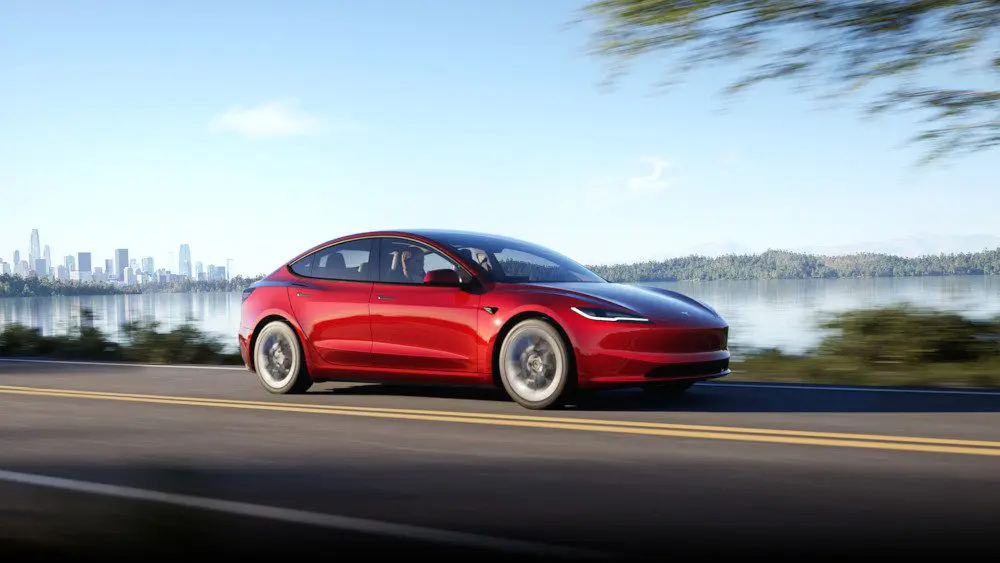
Let’s address the elephant in the room—or more accurately, the elephant in the driveway. If you’ve been scrolling through Australian automotive news lately, you’ve likely seen the headlines: “Used EV Prices Tank,” or “Electric Cars Shedding Value Faster Than Petrol.” It’s enough to make any first-time buyer pause. After all, a car is the second-largest purchase most of us will ever make. If you buy a $60,000 asset today and it’s worth $45,000 by Christmas, is that a “bad investment”?
At EV Evolution, we’re not here to give you a sales pitch wrapped in sunshine. We’re here for the truth. The truth is that EVs do depreciate differently than the internal combustion engine (ICE) cars we grew up with. But “different” doesn’t mean “bad.” In fact, for the savvy buyer in 2026, this depreciation curve is actually creating the greatest opportunity the Australian car market has seen in decades.
📉 The “25% Reality Check”: Why EVs Drop Early
According to recent 2025 data from the Australian Automotive Dealer Association (AADA), a new EV can lose roughly 25% of its value in the first 12 months. Compare that to a petrol SUV, which typically drops around 11-12%, and it looks like a disaster on paper.
But why is this happening? It isn’t because the cars are “failing.” It’s actually because they are succeeding too fast.
- The Price War Effect: Throughout 2024 and 2025, we saw massive, aggressive price cuts from manufacturers like MG, BYD, and Tesla. When Tesla drops the price of a new Model 3 by $5,000 overnight, the value of every used Model 3 on the market drops by $5,000 instantly. You’re not seeing “wear and tear” depreciation; you’re seeing “market correction” depreciation.
- The Technology Leap: Think of an EV like a high-end smartphone on wheels. In 2026, a new model might have 15% better range or 20% faster charging than the 2023 version. In the early days of a tech shift, the older “hardware” loses value faster as newer, more efficient versions arrive.
- Government Incentives: In many states, subsidies made new EVs artificially cheap to buy but didn’t apply to used ones. This created a “valuation gap” that the market is still smoothing out.
💰 Investment vs. Utility: The “Total Cost” Secret
Here is where the “EV Evolution” perspective differs from the standard car review. If you view a car purely as a financial instrument (like a stock), a 25% drop is tough. But a car is a utility.
If you save $2,500 a year on petrol and another $600 on servicing, over three years you’ve “recouped” nearly $10,000 of that depreciation. When you factor in the FBT Exemption (which can save a professional $15,000+ over a lease), the “resale value” at the end matters significantly less because the cost to own the car was so much lower.
In 2026, we are seeing that while the resale price is lower, the Total Cost of Ownership (TCO) is still firmly in the EV’s favor. You might lose more when you sell it, but you kept much more while you drove it.
💎 The “Used Goldmine”: Why 2026 is the Year to Buy Second-Hand
If you are a first-time buyer who is nervous about depreciation, there is a simple solution: Let someone else pay for it.
The rapid depreciation of the last two years has turned the used EV market into a goldmine. You can now pick up 2-year-old models—cars that are still under their 8-year battery warranty and have 90%+ battery health—for nearly half their original sticker price.
Why these are “Safe” Goldmines:
- Battery Resilience: Data from thousands of Australian EVs shows that batteries are holding up far better than the skeptics predicted. Most 3-year-old EVs still show a State of Health (SoH) of 92-95%.
- Solar Synergy: If you have solar panels at home, a used EV is the ultimate “battery on wheels.” Buying a used BYD Atto 3 for $32,000 and “fueling” it for free from your roof is the smartest financial move an Australian household can make in 2026.
🏆 How to Pick the “Value Holders”
Not all EVs are created equal when it comes to holding their value. If you want to minimize your losses, you need to look for three specific traits:
- Over-the-Air (OTA) Updates: This is the Tesla and Polestar advantage. A 2023 Tesla Model 3 in 2026 actually has more features today than when it was bought because of software updates. This stops the car from feeling “old” and keeps resale values higher than “static” cars that never change.
- Battery Chemistry (LFP): Models using Lithium Iron Phosphate (LFP) batteries (like the entry-level Tesla Model 3/Y and BYD models) are holding value better. Why? Because they can be charged to 100% every day without degrading the battery, making them much more attractive to second-hand buyers.
- Established Infrastructure: Brands that plug into the most reliable networks (or have their own, like Tesla) always command a premium.
🔍 Resale Reality Check: The 2023 Tesla Model 3
Let’s look at the most traded EV in Australia: the 2023 Tesla Model 3 RWD.
In early 2023, these were selling for roughly $64,000 drive-away. As of late 2025, you can find them for between $37,000 and $44,000. That is a significant drop. However, the market has finally found its “floor.” Since mid-2024, these prices have stabilized. The “shock” of the price cuts is over, and we are now seeing a much more traditional, slower depreciation curve.
If you buy that car for $39,000 today, you are getting a world-class vehicle for the price of a mid-spec petrol Corolla. That is why the used market is surging.
🏁 The Final Verdict: Is it a Bad Investment?
If your goal is to buy a car and sell it in 12 months for a profit, an EV is a terrible investment. But then again, so is almost any modern car.
If your goal is to lower your cost of living, drive a safer, faster vehicle, and exit the “petrol price roller-coaster,” an EV is an exceptional investment. The trick is to stop looking at the “Sale Price” in isolation and start looking at your bank balance at the end of every month.
With the “FBT Hack” for new cars and the “Depreciation Discount” for used ones, there has never been a better time to be an EV buyer in Australia.
🤖 Join the Evolution: Get the Real Numbers
Resale values move fast. What was true last month might not be true today as new models land at the docks in Brisbane and Melbourne.
Don’t rely on old stickers.
At EV Evolution, our AI is plugged into the latest Australian auction and trade-in data to give you a real-world look at the market.
Ask the Chatbot today:
- “What are the current trade-in value trends for a 2023 Tesla Model 3 RWD in Sydney?”
- “Compare the 3-year depreciation of a BYD Atto 3 vs. a Toyota RAV4 Hybrid.”
- “What is the current ‘market floor’ price for a used 2022 MG ZS EV?”
- “Which 2026 EV models are predicted to hold their value best over 5 years?”
About EV Evolution
EV Evolution is the leading online platform dedicated to Australian electric vehicle owners and enthusiasts. We foster a vibrant community, delivering essential EV news and insights, and enhancing user engagement through our innovative, AI-powered chatbot for dynamic discussions. Our mission is to empower Australian electric vehicle owners and enthusiasts by fostering a vibrant, AI-driven online community that connects, informs, and advances the nation’s electric vehicle landscape.
