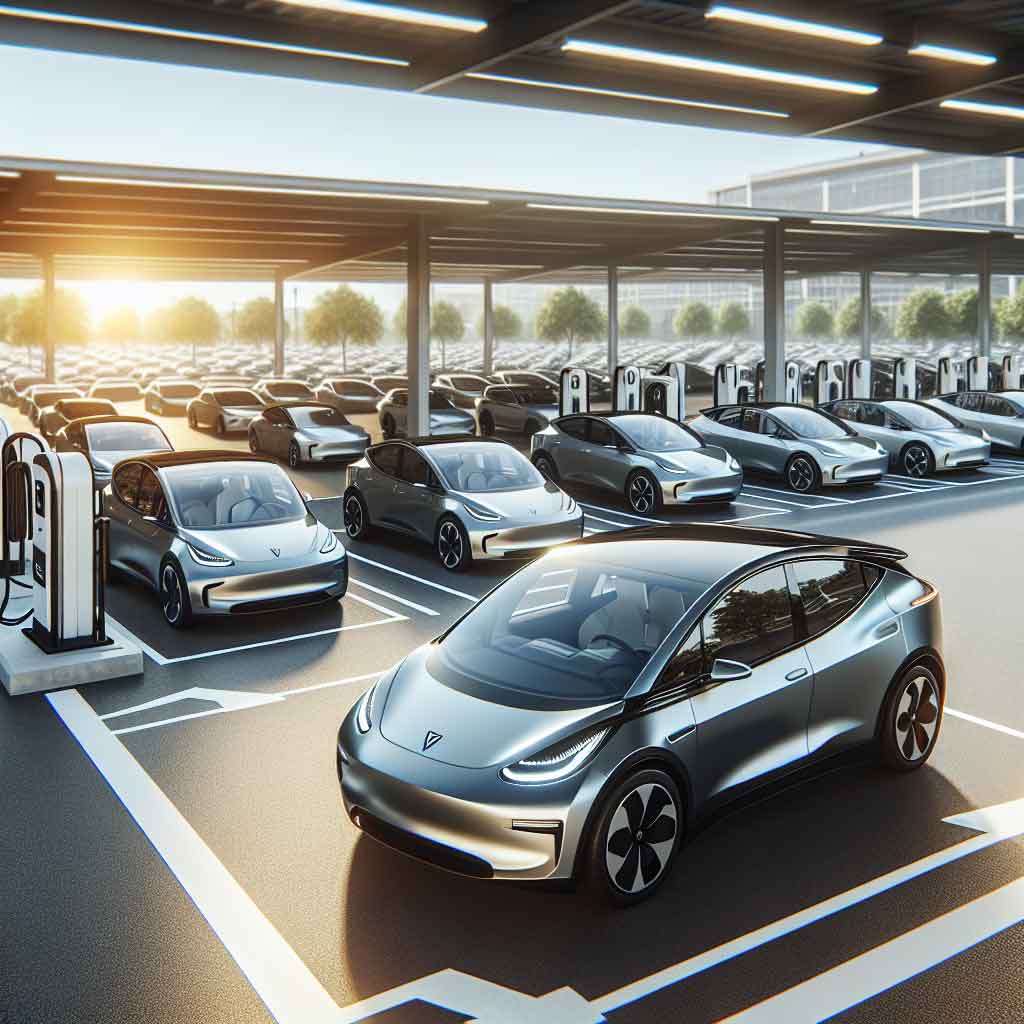




It is Saturday, 4 April 2026. If you’re a Fleet Manager or a business owner in Australia today, you’re likely staring at two numbers that refuse to play nice: $2.40/L (the current “Old Guard” cost of petrol) and the rising electricity bill of your star employee, let’s call him Jim.
Jim is a legend. He hits his KPIs, manages his territory from his home office in the Dandenongs or the Sutherland Shire, and he’s just taken delivery of his high-fidelity Zeekr 7X company car. But now, Jim has a question that’s making your HR and Payroll teams break out in a cold sweat: “How do I get paid back for the power I’m using to ‘fuel’ the company car in my garage?”
In the “Old Guard” era, this was a manual nightmare of spreadsheets, blurred photos of electricity bills, and “guesstimates” that made auditors cringe. At EV evolution, we’ve seen businesses stall their electrification plans simply because they couldn’t solve the “Jim Puzzle.”
The good news? In 2026, this problem has been officially Resolved. Through Charging-as-a-Service (CaaS), we’ve moved from manual reconciliation to automated, high-fidelity reimbursement.
Solving the “How Do I Pay Jim?” Puzzle
The “Old Guard” would tell you to ask Jim for a copy of his quarterly Origin or AGL bill, try to calculate what percentage of that bill went to the car versus his air conditioning, and then manually process a reimbursement. It’s an administrative sinkhole.
The New Guard Solution: ATO Shortcut vs. Actual Metering
As of the 2026–27 FBT year, the Australian Taxation Office (ATO) has updated its guidelines (PCG 2024/2) to simplify this. While the original shortcut rate was 4.2 cents per kilometre, the latest 2026 data shows many employers are now utilizing a refined 5.47 cents per kilometre rate for home charging reimbursement to better reflect the $0.35/kWh average residential energy cost.
How CaaS Automates the ATO Rate:
Under a 100% Funded CaaS model, Jim gets a high-fidelity smart wallbox installed at his home at zero upfront cost to him or the business.
- Data Link: The charger is linked to your corporate fleet dashboard.
- Odometer Sync: The software pulls Jim’s kilometres directly.
- Auto-Calculation: It applies the ATO rate (e.g., 10,000 km x 5.47c = $547.00) and pushes the reimbursement directly to Jim’s nominated account or offsets it against his novated lease budget.
The ‘Full Tank’ as an Employee Perk
In 2026, the “School Gate Flex” isn’t just about the car; it’s about the convenience. Offering an employee a company EV is a great start, but offering them automated home charging is the ultimate “Sustainability Hack” for talent retention.
Imagine Jim’s experience: He pulls into his driveway, plugs in, and walks inside. He doesn’t have to hunt for a “Cheap Tuesday” petrol station or stand in the rain at a public charger. He knows that his employer has “Resolved” his fueling costs.
For the business, this is a Compliance Asset. Because the CaaS provider manages the home hardware, you have a verified data stream for your AASB S2 Mandatory Disclosures. You aren’t “guessing” Jim’s carbon footprint; you have a high-fidelity report ready for the board.
Reddit Pulse: The “No-Filter” Reality of Manual Claims
The community on r/NovatedLeasingAU and r/AusFinance is currently a front line of frustration for employees trying to navigate the “Old Guard” reimbursement path.
The “SG Fleet Dashboard” Struggle
User Pure_Champion_1047 recently shared their confusion on r/NovatedLeasingAU regarding how to actually get their money back:
“I’ve checked my fleet intelligence, and looks like reimbursements are paid for out of my available account balance, but I thought this money came from the Government?? … Where did the money come from? Does it get deposited in your bank account or just added to the SG fleet account balance?”
The Tradie Truth: This confusion is exactly why businesses are moving to CaaS. Employees don’t want to play “accountant” with their own money. They want a “Resolved” system where the reimbursement is as silent and efficient as the car itself.
The “Insane Not To” Logic
Over on r/AusFinance, the “New Guard” is making it clear that once the charging puzzle is solved, there is no looking back:
“Even at 20% interest… the 47% discount on car outlay, servicing, fuel (the tax reduction is about 3x what charging at home actually cost), tyres and insurance make it basically insane not to.” — Fantastic_Profit_970, Reddit.
Why 100% Funded CaaS Wins
Why should a business “own” the headache of Jim’s home charger? In 2026, you shouldn’t.
- Zero CapEx: We provide the home wallbox and installation as part of the service.
- Asset Mobility: If Jim leaves the company, the CaaS agreement handles the transition—whether that’s removing the charger or transferring the service to the next “Starship” pilot.
- Risk Mitigation: If Jim’s home charger trips a circuit at 2:00 AM, it’s our problem to fix, not yours.
FAQ: Home Charging Reimbursement Australia
Q: How do I pay an employee for charging a company EV at home in NSW?
A: The most “Resolved” way is using the ATO’s PCG 2024/2 shortcut rate. For the 2026–27 year, this is typically 5.47 cents per kilometre. Managed CaaS platforms automate this by syncing with the vehicle’s odometer and processing the payment through your payroll or fleet provider.
Q: Does the employer pay for the home charger installation?
A: Under the EV evolution CaaS model, the installation is 100% funded. There is no upfront CapEx for the business or the employee. The cost is wrapped into a predictable monthly operating expense (OpEx).
Q: Is home charging reimbursement FBT exempt?
A: Yes. Fuel expenses—including electricity—for an eligible electric vehicle are exempt from Fringe Benefits Tax (FBT) in Australia as of 2026. This includes the reimbursement paid to employees for home charging.
Q: What if Jim has solar panels at home?
A: This is a “Sustainability Hack.” The ATO shortcut rate applies regardless of whether Jim uses solar or grid power. This means Jim can charge for “free” from his solar and still receive the per-kilometre reimbursement—making it a powerful Employee Perk.
🤖 Start the Conversation with the AI Agent
Are you still drowning in Jim’s electricity receipts? Or maybe your Payroll team is “stuck in 2015” trying to manually calculate FBT-exempt fuel logs?
Don’t leave your fleet’s “WfH” strategy to guesswork—start a conversation with our EV evolution AI Agent now. Our AI is updated in real-time with the latest April 2026 ATO rates, 100% funding availability for home installs, and “Vibe-Checked” reimbursement workflows.
You can ask:
- “Generate an Employee Reimbursement Policy based on the 5.47c ATO rate.”
- “How does 100% funded CaaS work for a fleet with 10 remote employees?”
- “Explain the AASB S2 data requirements for home charging.”
Submit Your Request for CaaS
Manual admin is a liability; automation is an asset. Through our AI Agent, you can now submit a request for an EV Charging-as-a-Service solution that includes your entire “Work-from-Home” fleet. We’ll skip the showroom fluff and provide a Resolved technical and financial roadmap.
About EV Evolution
EV evolution is Australia’s AI-powered hub for the modern driver. Through our signature EV Strategy Suite—including the EV Vibe Check and our real-time AI Agent—we provide the transparent, fact-based data you need to navigate the electric transition with total confidence. Our mission is to empower every Aussie to trade the petrol pump for a plug with zero guesswork and high-fidelity precision.