


Vehicle-to-Grid (V2G): Transforming Electric Vehicles into Distributed Energy Resources: parked cars become mobile batteries that can power homes, support the electricity network and, in many cases, generate revenue for their owners. For Australians – with among the highest rooftop solar penetration in the world and a fast-moving transition to renewables – V2G promises a practical, home‑scale way to cut bills, increase resilience and help stabilise the grid.
What is V2G?
At its simplest, V2G refers to bi‑directional energy flow between an EV battery and an external load – typically a home or the electricity grid. That flow can occur in two primary modes:
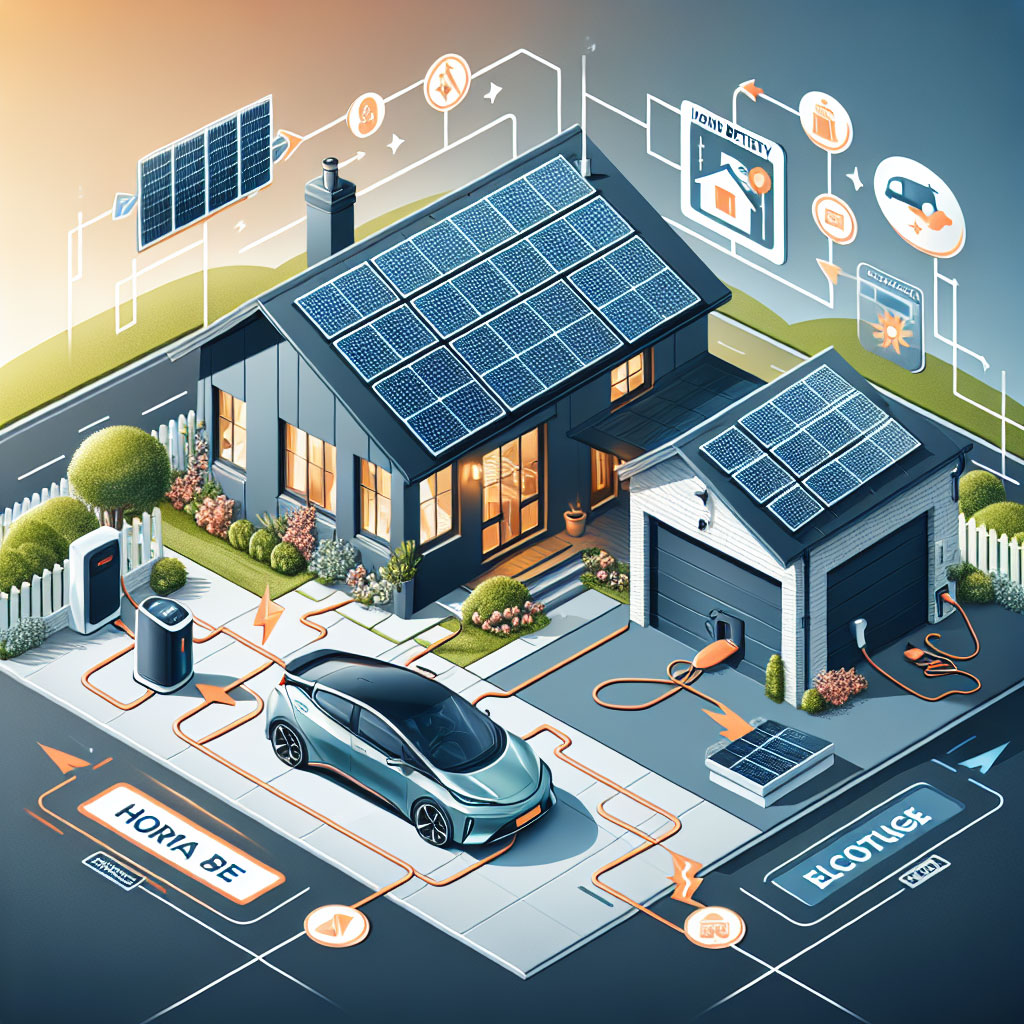
- Vehicle-to-Home (V2H): The car supplies power directly to household circuits, acting as an emergency backup or a daily supplement during peak-rate periods.
- Vehicle-to-Grid (V2G): The car exports electricity back to the grid to provide energy or ancillary services, often at times of high demand when prices and system value are greatest.
V2G is part of a broader Vehicle-to-Everything (V2X) category, which also includes vehicle-to-load (V2L) functions that power appliances directly from the vehicle. The key enabler of V2G is a bi‑directional charger that can both charge the EV and invert DC battery energy back to AC for household or grid use, coupled with software that manages when and how that energy flows.
Why V2G matters for Australia
There are three intersecting forces making V2G especially relevant here:
- Rooftop solar abundance: Australia has one of the highest rates of residential solar installation globally, which creates large midday generation surpluses and steep late‑afternoon demand ramps (the “duck curve”). EV batteries can absorb excess solar during the day and supply it in the evening.
- Large EV battery capacity: Modern EVs commonly carry two to six times the energy of typical residential stationary batteries, offering substantial distributed storage capacity when aggregated across many vehicles.
- Grid flexibility needs: As more renewables connect to the system, fast, distributed flexibility becomes more valuable. V2G can provide frequency support, peak shaving and other grid services that reduce reliance on costly peaker plants and delay network upgrades.
Benefits for households and the grid
- Lower power bills and potential income: Homeowners can charge cheaply (or from rooftop solar) and discharge during expensive peak periods, reducing household grid consumption and – where market arrangements exist – earning export credits. Early pilots and modelling suggest meaningful bill reductions for participants when technical and market conditions align.
- Improved resilience: With V2H, an EV can act as an emergency power source during outages, potentially supporting essential loads for hours or days depending on battery capacity and load profile.
- Cleaner electricity supply: By smoothing peaks and absorbing solar oversupply, V2G reduces the need for fossil‑fuelled peaking generation and supports higher shares of renewables.
- Grid services at scale: Aggregated EV fleets can provide frequency control and other ancillary services to electricity markets, creating value for both vehicle owners and system operators.
Where Australia stands today (deployment and policy)
V2G has moved from research to demonstration and early commercial rollout in Australia. Key developments include:
- Pilot programs and trials run by energy companies, vehicle manufacturers and research institutions, many supported or monitored by bodies such as ARENA and AEMO, have tested technical integration, commercial models and customer behaviour.
- Industry stakeholders – including some automakers, charger suppliers and retailers – are progressing V2G‑capable hardware, software platforms and retailer offerings. Early bi‑directional chargers were limited and costly, but device availability and diversity are increasing.
- Market and technical arrangements are evolving. Distribution Network Service Providers (DNSPs), AEMO and retailers are working on connection requirements, export limits, metering and settlement arrangements needed for residential V2G to scale.
What you need to use V2G at home
To participate in residential V2G, a household generally needs:
- A V2G‑capable EV: Not all EVs support bi‑directional energy flow. Support is growing, but compatibility varies by make, model and region.
- A certified bi‑directional charger: This device performs controlled two‑way power conversion and communicates with vehicle and home energy management systems.
- Appropriate metering and approvals: Exporting to the grid usually requires network approvals and suitable metering. Some DNSPs may impose conditions or limits.
- A market arrangement or retailer plan: To earn credits or provide services to the grid, you’ll need an energy retailer or aggregator that can settle exports and/or bid your battery into markets or demand response programs.
- Software and controls: A Home Energy Management System (HEMS) or aggregator platform coordinates charging and discharging to meet household needs and market opportunities while protecting battery health.
Technical and commercial hurdles
V2G is promising, but adoption faces practical challenges:
- Upfront cost: Bi‑directional chargers and integration work have been pricier than standard EV chargers. Prices have been falling, but initial costs and installation complexity remain barriers for many households.
- Compatibility and fragmentation: There is no single “plug‑and‑play” ecosystem yet. Vehicle support, charger standards, retailer offers and DNSP rules must align for a seamless customer experience.
- Regulatory and market arrangements: Distributed export to the grid raises questions about metering, settlement, grid safety protections and tariffs. Policy and market frameworks are adapting, but nationwide consistency is still progressing.
- Perceived battery degradation: Owners worry about long‑term impacts of cycling on EV batteries. Research to date indicates that with smart management strategies (limiting depth of discharge and prioritising mobility needs), additional degradation is generally modest and can be outweighed by financial or resilience benefits; warranties and manufacturer guidance should be checked.
Practical tips for homeowners considering V2G
- Assess your EV capability: Check if your current or prospective EV supports bi‑directional charging or V2L functionality that may be useful for home backup.
- Understand your goals: Are you prioritising bill savings, backup power, or participating in grid markets? Different objectives call for different setups and business models.
- Talk to your retailer and DNSP early: Ask about export rules, required approvals, connection limits and whether they offer V2G‑friendly tariffs or aggregation services.
- Consider a staged approach: You can often start with solar and a standard smart charger, then upgrade to bi‑directional capability when it becomes more affordable or better supported.
- Monitor warranties and battery management: Ensure any V2G use complies with manufacturer recommendations and that your energy management system keeps sufficient reserve for mobility needs.
What research and pilots show about battery wear and economics
Multiple trials and modelling studies have tested V2G scenarios. Common findings include:
- Managed V2G that prioritises mobility needs and limits depth of discharge generally results in limited additional battery degradation.
- The economics depend on local retail tariffs, feed‑in arrangements, the availability of high‑value grid services and the cost of equipment and installation. In markets where peak prices and service payments are significant, household financial outcomes are more compelling.
- Aggregation is often the key: When EVs are aggregated and bid into grid markets, the combined value stream (capacity, frequency services, arbitrage) becomes more attractive than individual household exports alone.
The outlook: scaling V2G in Australia
V2G is positioned to grow as vehicle fleets electrify and policy and market mechanisms mature. Key drivers that will shape uptake:
- Vehicle fleet composition: As more manufacturers introduce V2G‑capable models, the pool of eligible vehicles grows.
- Equipment costs and supply: Greater competition and manufacturing scale for bi‑directional chargers will lower barriers.
- Market structures: Clearer rules from DNSPs, AEMO and retailers on export, metering and aggregation will make the proposition simpler and more profitable for owners.
- Consumer awareness and services: User‑friendly HEMS platforms and retailer products that bundle hardware, installation and market access into one package will accelerate adoption.
Conclusion
Vehicle‑to‑Grid represents a practical, near‑term pathway to harness the storage capacity sitting idle in millions of parked EVs. For Australian households with solar, it offers a compelling combination of bill reduction, backup resilience and participation in the energy transition. The technology is no longer hypothetical: trials have moved into commercial pilots, standards and market arrangements are evolving, and practical solutions are emerging. Barriers remain – costs, compatibility and regulatory complexity – but momentum is building. For Australians looking to future‑proof their homes and contribute to a cleaner, more resilient grid, V2G is an important development to watch and, increasingly, to consider adopting.
FAQs
What is the difference between V2G, V2H and V2L?
V2G is export of vehicle energy to the grid; V2H supplies your home from the vehicle; V2L powers external devices directly from the vehicle. They share the same bi‑directional principle but differ by destination and use case.
Will using V2G ruin my EV battery?
Managed V2G use, which limits depth of discharge and prioritises keeping enough range for driving, has shown only modest additional degradation in trials. Always check manufacturer warranty terms and use intelligent energy management to protect battery health.
Do all EVs support V2G?
No. Vehicle capability varies by make and model. Some vehicles support V2L (vehicle‑to‑load) for powering appliances, but full V2G (export to grid) requires specific vehicle and charging hardware compatibility. Check specifications or dealer guidance before assuming your EV is V2G‑capable.
How much can I save or earn with V2G?
Savings depend on your local electricity tariff, the timing of exports, the size of your EV battery, and whether you participate in aggregated services. In areas with significant peak pricing or market payments for grid services, household economics look more attractive. Running scenarios with your retailer or an aggregator will give a clearer estimate for your situation.
What approvals do I need to export power from my EV to the grid?
Exporting usually requires appropriate metering and network approval from your DNSP. Your installer or aggregator should advise on local requirements and handle applications where necessary.
About EV Evolution
EV Evolution is the leading online platform dedicated to Australian electric vehicle owners and enthusiasts. We foster a vibrant community, delivering essential EV news and insights, and enhancing user engagement through our innovative, AI-powered chatbot for dynamic discussions. Our mission is to empower Australian electric vehicle owners and enthusiasts by fostering a vibrant, AI-driven online community that connects, informs, and advances the nation’s electric vehicle landscape.
