



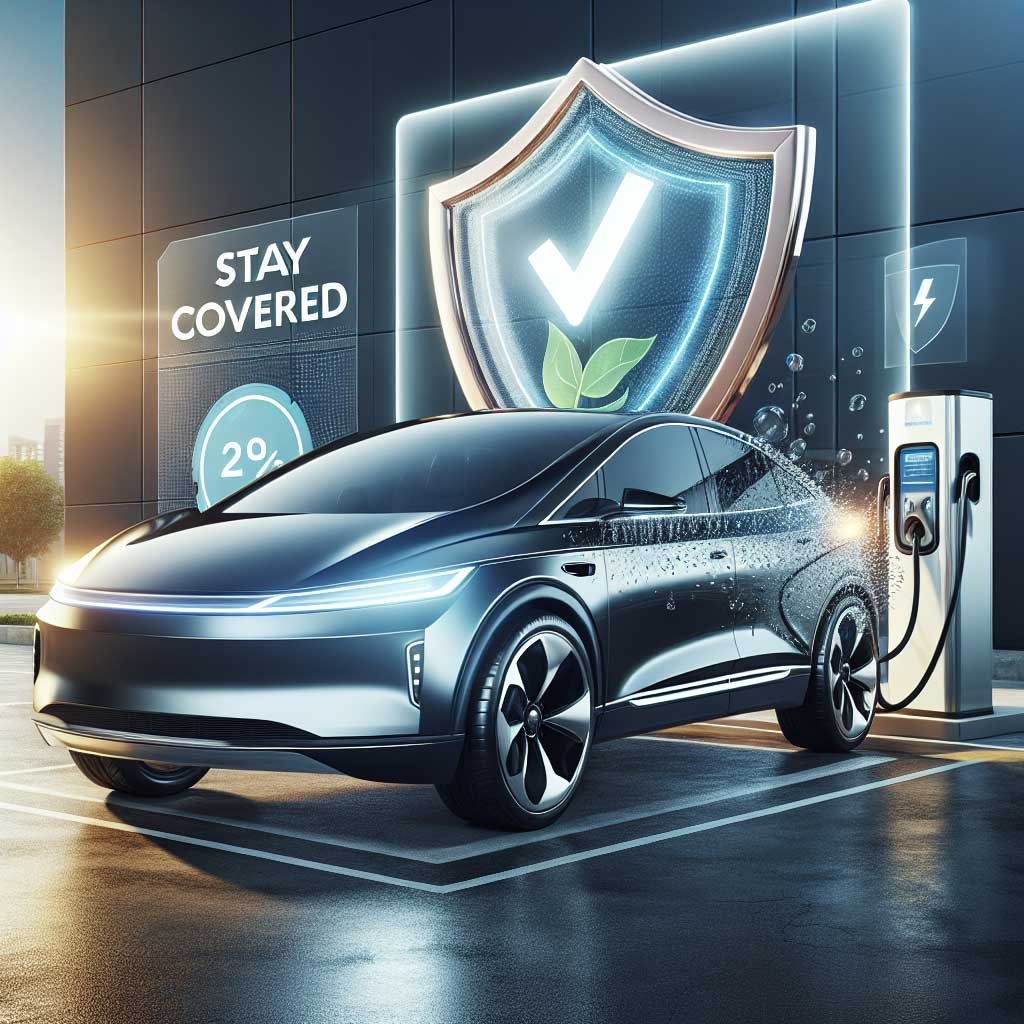
You’ve done the math. You’ve seen the fuel savings. You’ve felt the instant torque. But then you hit the “Get Quote” button on an insurance site, and the number that stares back at you feels like a personal attack. In 2026, while EV prices are crashing, insurance premiums for some models are staying stubbornly “cooked.” We’re exposing the insurers still charging a “tech tax” and revealing who is actually playing fair in the Australian market.
At EV Evolution, we’ve spent the last month digging into the algorithms of Australia’s biggest underwriters. What I found was a market in total transition. On one hand, you have “Old Guard” insurers who are terrified of batteries; on the other, you have a new wave of data-driven providers who realize that EVs are, in many ways, safer and more reliable than the petrol cars they replace.
If you’re tired of being slugged with a “disloyalty tax” or a “tech premium,” it’s time to arm yourself with the facts. Here is how to navigate the electric car insurance comparison landscape in 2026 and find the cheapest EV insurance in Australia.
Why the Premiums Feel “Cooked”
To understand why your premium might be 30% higher than your old Corolla’s, you have to look at how an insurer sees your car. They don’t see a “silent revolution”; they see a “high-voltage repair bill.”
1. The “Write-Off” Culture
In 2026, the biggest issue is still the battery. In many EVs, the battery pack is integrated directly into the chassis to save weight and improve handling. While this makes the car a dream to drive, it makes it a nightmare to repair after a moderate side-impact.
Insurers are often “lazy.” Rather than risking a complex battery repair that requires specialized (and expensive) technicians, they find it cheaper to simply write the car off. They price their premiums to cover the high probability of a “Total Loss” claim for what would be a minor panel beat on a petrol car.
2. The “Parts Lag” Penalty
Australia still suffers from a shortage of EV-certified smash repairers. If you have an accident in a BYD or a Zeekr, your car might sit in a holding yard for six weeks waiting for a specific sensor or a high-voltage cable to arrive from overseas. During those six weeks, your insurer is often paying for your “Hire Car” at $80 a day. That $3,000 hire car bill is baked directly into your premium.
3. The “ADAS” Complexity
Modern EVs are packed with Advanced Driver Assistance Systems (ADAS). Those sleek bumpers are hiding ultrasonic sensors, lidars, and cameras. Even a “fender bender” in a car park can require thousands of dollars in recalibration.
Exposing the Gap: The “Shocking” Quote Discrepancy
Our 2026 EV Evolution Insurance Index revealed something startling: for the exact same car and the exact same driver, the gap between the highest and lowest quotes can be over $2,500.
Take the Tesla Model 3 RWD. In Sydney, we saw quotes ranging from $1,644 (via specialized EV-friendly underwriters) all the way up to $4,150 from traditional insurers who clearly don’t want the risk on their books.
The Verdict: If you haven’t shopped around in the last six months, you are almost certainly paying a “loyalty tax.” Insurers are currently testing the market to see what owners will bear. Don’t be the one who bears it.
How to Get a Fair Quote: The EV Evolution Strategy
Getting the cheapest EV insurance in Australia isn’t just about luck; it’s about presenting yourself as a “Low Vibe” risk to the insurer’s algorithm.
1. Dial in the Kilometres
Most EVs in 2026 are used for city commuting. If you’re doing less than 12,000km a year, make sure you declare it. Many insurers like AAMI or Youi offer significant “low-km” discounts that can slash your premium by up to 15%.
2. The “Bundling” Hack
If you have home and contents insurance, check if your provider offers a “Green Discount.” In 2026, several major Aussie insurers are offering a 10% “Multi-Policy” discount specifically if one of those policies is for a Battery Electric Vehicle.
3. Increase Your Excess
This is the fastest way to drop a premium. If you have a clean driving record and “Pocket Money” saved up, increasing your basic excess from $600 to $1,500 can often reduce your annual premium by $400 or more.
4. Telematics – The “Smooth Driver” Flex
For younger drivers, telematics apps (which track your braking and acceleration) are becoming the only way to get a fair price. If you can prove to the insurer that you aren’t “launching” your Tesla at every green light, they will reward you with a “Safe Driver” discount.
The “Gems” of 2026: EVs That Are Cheap to Insure
Not every EV is expensive to cover. We’ve noticed a trend where “Budget EVs” are actually undercutting hybrids.
- BYD Dolphin/Atto 1: These are often cheaper to insure than a Toyota RAV4 Hybrid. Why? Because the “Sum Insured” (the value of the car) is lower, reducing the insurer’s total loss risk.
- MG4 Excite: This remains one of the most insurance-friendly EVs in the country, with average quotes sitting around $1,342 in late 2025/early 2026.
Use the Strategy Suite to Settle the Math
We know that insurance is the “hidden” cost that can kill the vibe of your new car. That’s why we’ve integrated insurance estimation into our EV Strategy Suite.
Before you sign a lease, use our EV Tax Savings Estimator. It doesn’t just look at your tax; it allows you to input your insurance quotes to see the true impact on your take-home pay.
Start the Conversation with the AI Agent
Got a “cooked” quote and want to know if it’s normal? Or maybe you’re wondering if your “agreed value” is too high for a 2023 Model Y?
Ask the EV Evolution AI chatbot. Our AI agent is updated with the latest 2026 pricing trends across all Australian states. It can help you:
- Compare insurance premiums for a BYD Sealion 7 vs. a Tesla Model Y.
- Explain the difference between “Choice of Repairer” and “EV Certified Repairer.”
- Identify which insurers offer specific cover for your home charging wallbox and cables.
The Verdict: The insurance market is currently a “wild west,” but the power is in your hands. Don’t accept a premium that feels cooked. Shop around, use the data, and let our AI co-pilot find the fair deal you deserve.
Comparison Cheat Sheet of the top 5 EV-friendly insurer
In 2026, the Australian insurance market is a “postcode lottery.” Depending on where you park your Tesla or BYD, one insurer might treat you like a pioneer while another treats you like a risk they’d rather not touch.
To help you cut through the noise, we’ve put together the 2026 EV Evolution Insurance Cheat Sheet. These picks are based on current market competitiveness, EV-specific policy inclusions (like battery and charger cover), and local state-based service performance.
🗺️ State-by-State: Top 5 EV-Friendly Insurers
| State / Territory | Top 5 Recommended Insurers (2026) | Why They Slay |
| NSW | NRMA, ROLLiN’, Youi, Allianz, AAMI | NRMA offers elite local rescue; ROLLiN’ wins on month-to-month flexibility for Gen Z. |
| VIC | RACV, ROLLiN’, Allianz, Youi, GIO | RACV is the state benchmark for service; GIO offers sharp “Low-KM” discounts. |
| QLD | RACQ, ROLLiN’, Budget Direct, Youi, Allianz | RACQ has the best regional towing network; Budget Direct is winning the “Price War.” |
| WA | RAC, Bingle, Youi, Allianz, Budget Direct | Bingle is the value king in the West; RAC offers unmatched local member benefits. |
| SA | RAA, ROLLiN’, Youi, Allianz, AAMI | RAA is deeply integrated with local charging; Youi includes roadside assist as standard. |
| ACT | NRMA, GIO, Youi, Allianz, AAMI | NRMA dominates the ACT market with specialized EV-certified repairer access. |
| NT | TIO, Australia Post, Youi, Allianz, AAMI | TIO understands the Territory climate; Australia Post is the surprise value winner here. |
| TAS | RACT, ROLLiN’, Youi, Allianz, AAMI | RACT offers the best support for the Tassie “EV Highway” road-trippers. |
🛡️ The “Must-Have” EV Features
When you’re comparing these providers, don’t just look at the premium. Check the PDS (Product Disclosure Statement) for these three specific EV protections:
- Thermal Runaway Cover: Does the policy explicitly cover battery fires? (Allianz and NRMA are currently the gold standard here).
- Charger & Cable Protection: If someone trips over your cable or your wallbox gets struck by lightning, are you covered? Look for a limit of at least $1,500 – $2,000.
- Tow to Charger: If you “run out of juice” (it happens!), will they tow you to the nearest charger, or just the nearest mechanic? Youi and RACV include this as a standard feature.
💡 Pro Tip: Don’t Get “Cooked” by the Algorithm
Insurers change their “risk appetite” almost monthly. If you got a quote in 2025, it is likely already out of date. Before you sign, always check for the “Online Discount” (usually 10-15% for new customers) and consider a higher excess to drop your base premium.
🤖 Settle the Debate with AI
Still staring at two different quotes and can’t decide which one “slays”?
Ask the EV Evolution AI chatbot. You can literally paste the key features of your two quotes into the chat and ask: “Which of these is better for a 2026 BYD Sealion 7 in Sydney?” Our AI co-pilot will break down the “hidden” gaps in coverage so you aren’t left stranded.
About EV Evolution
EV Evolution is the leading online platform dedicated to Australian electric vehicle owners and enthusiasts. We foster a vibrant community, delivering essential EV news and insights, and enhancing user engagement through our innovative, AI-powered chatbot for dynamic discussions. Our mission is to empower Australian electric vehicle owners and enthusiasts by fostering a vibrant, AI-driven online community that connects, informs, and advances the nation’s electric vehicle landscape.
