



It is Thursday, 2 April 2026. If you are a business owner in Australia today, you’ve likely looked at the petrol boards flashing $2.40/L and decided that the “Old Guard” of internal combustion is a financial anchor you can no longer drag around. But as you look to electrify your fleet, there is a secondary trap waiting: the DIY Infrastructure Trap.
At EV evolution, we’re seeing a surge in “Tradie Truths” coming to light. Well-meaning fleet managers are buying a dozen chargers off a wholesaler, hiring a local sparky to “bolt ’em to the wall,” and thinking they’ve “Resolved” their energy future. In reality, they’ve just signed up for a high-stakes game of Operational Risk that they are almost certain to lose.
In 2026, EV charging isn’t just a fancy power point; it’s a high-fidelity energy node. If you “buy” hardware today without a managed service, you are essentially purchasing e-waste that will be obsolete in 24 months. Here is the audit on why DIY is a losing game.
The Technical ‘Minefield’ of 2026
In 2015, you could arguably get away with a basic wallbox. In 2026, the goalposts have moved into a different stadium. Compliance with the NCC 2025 and AS/NZS 3000 standards is now a mandatory hurdle that many DIY setups fail on Day 1.
The “No Daisy-Chain” Reality
Under the latest standards, every single charging port requires its own dedicated final sub-circuit. The “Old Guard” method of daisy-chaining chargers is now a major fire risk and a direct breach of compliance. If your DIY installer misses this, your insurance company won’t just walk away during a claim—they’ll run.
Type B RCDs: The Hidden Cost
Standard safety switches (Type A) are “blind” to the DC leakage that modern EVs can produce. To be Resolved for 2026, you need Type B RCDs. These units are significantly more expensive and technical to install, but without them, a minor fault in one van can “blind” your entire building’s safety system, preventing it from tripping during a lethal electrical fault.
Operational Risk: The 24-Month Obsolescence Wall
The biggest “pitfall” of buying hardware outright is the blistering speed of EV Technology 2026. We are currently in the middle of a massive architectural shift from 400V to 800V.
- The 400V Anchor: Most “cheap” DIY chargers are 400V systems. While they worked for the “Old Guard” Teslas of 2022, they are a bottleneck for the New Guard.
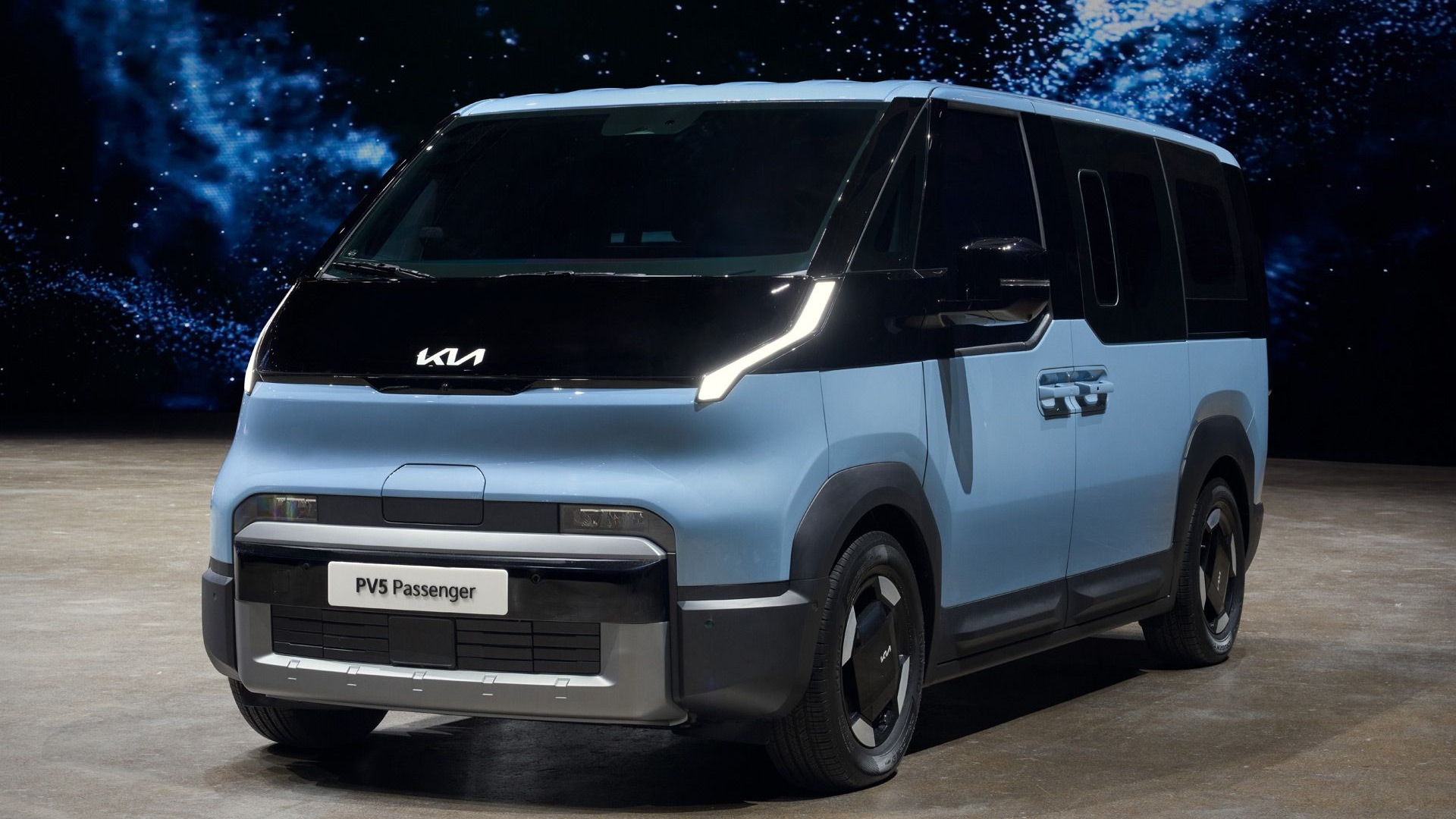
- The 800V Starships: Modern fleet favorites like the Zeekr 7X, Kia EV9, and Hyundai Ioniq 6 are native 800V. If you bolt 400V hardware to your wall today, you are capping your fleet’s productivity.
- The Math: Using the power formula$$P = V \times I$$, we see that an 800V system can deliver double the power ($$P$$) at the same current ($$I$$) compared to a 400V system.
Buying hardware means you own that bottleneck. When your competitors are “Resolved” with 800V-ready managed infrastructure that charges their vans in 18 minutes, your DIY fleet will still be sitting in the depot, tethered to “2015 tech” for 50 minutes.
The ‘Losing Game’ of Ownership
Why would you want to own a depreciating electrical asset that requires 24/7 uptime? If a DIY charger fails at 3:00 AM, who is on the hook?
- The Fleet Manager: Calling around for a sparky who “understands the software.”
- The Driver: Sitting at a public charger (paying $0.70/kWh) because the depot unit is “bricked.”
- The CFO: Explaining why the $100k CapEx investment is now a pile of plastic on the wall.
Charging-as-a-Service (CaaS) is the “Sustainability Hack” for your balance sheet. It moves the risk from your ledger to ours. If the tech changes in 24 months, the provider swaps the hardware. If the software glitches, it’s fixed remotely before your drivers even clock on.
The Reddit Pulse
The community on r/electricvehicles and r/AustralianEV is currently a front line of “DIY Heartache.”
“I run a small business in the trades. The biggest headache would be setting up the infrastructure to charge your fleet overnight. I ran two 50 amp circuits to my parking lot… I couldn’t imagine setting up to charge 10-20 at a time.” — username-in-the-box, Reddit.
Another user on r/EVAustralia highlights the reliability gap:
“Most of the crappy networks aren’t run by big organisations… leaving them up to the local council or a DIY setup is a temporary strategy at best.” — thanatosau, Reddit.
The “Vibe Check” is clear: Business leaders are realizing that owning the wires is a full-time job they didn’t apply for.
FAQ: Commercial EV Charging Australia
Q: Is DIY EV charging illegal for Australian businesses?
A: It’s not illegal if performed by a licensed electrician, but it is often non-compliant with the latest AS/NZS 3000 and NCC 2025 standards. Most general sparkies aren’t equipped to handle Smart Load Management, which is essential to stop your fleet from tripping the main building breaker during peak demand.
Q: What is the “Sustainability Hack” for avoiding CapEx on chargers?
A: The answer is Charging-as-a-Service (CaaS). In 2026, this is a 100% Funded Solution. You pay a monthly fee (OpEx) for a guaranteed charging service, while the provider covers the upfront cost of the hardware, installation, and software upgrades. It’s “Resolved” energy for your balance sheet.
Q: How often does EV charging hardware become obsolete?
A: In the current “Starship” era of 2026, we are seeing major tech cycles every 24 to 36 months. Between the shift to 800V architecture and the adoption of the NACS plug standard across Australia, hardware bought today will likely need significant modification or replacement by 2028.
Q: Will DIY charging void my commercial insurance?
A: If the installation doesn’t meet the specific Type B RCD and ventilation requirements for commercial premises, your insurer has a high-fidelity “out” to deny a claim in the event of an electrical fire. Managed CaaS solutions include a compliance audit and professional liability as part of the service.
🤖 Start the Conversation with the AI Agent
Are you still gambling on “Old Guard” DIY hardware? Or maybe your CFO is balking at the $2.40/L fuel tax but is terrified of the infrastructure risk?
Don’t leave your fleet’s uptime to guesswork—start a conversation with our EV evolution AI Agent. Our AI is updated in real-time with the latest April 2026 CaaS benchmarks, 100% funding availability, and “No-Filter” reliability audits for 800V systems.
You can ask:
- “Generate an Operational Risk Report for a DIY vs. CaaS setup for my 15-van fleet.”
- “What are the AS/NZS 3000 compliance costs for a commercial site in Sydney?”
- “How do I submit a request for a 100% funded CaaS audit for my depot?”
Submit Your Request for CaaS
Ownership is a liability; uptime is an asset. Through our AI Agent, you can now submit a request for an EV Charging-as-a-Service solution. We’ll skip the showroom fluff and provide a Resolved technical and financial roadmap that protects your business from the “Losing Game” of DIY.
About EV Evolution
EV evolution is Australia’s AI-powered hub for the modern driver. Through our signature EV Strategy Suite—including the EV Vibe Check and our real-time AI Agent—we provide the transparent, fact-based data you need to navigate the electric transition with total confidence. Our mission is to empower every Aussie to trade the petrol pump for a plug with zero guesswork and high-fidelity precision.