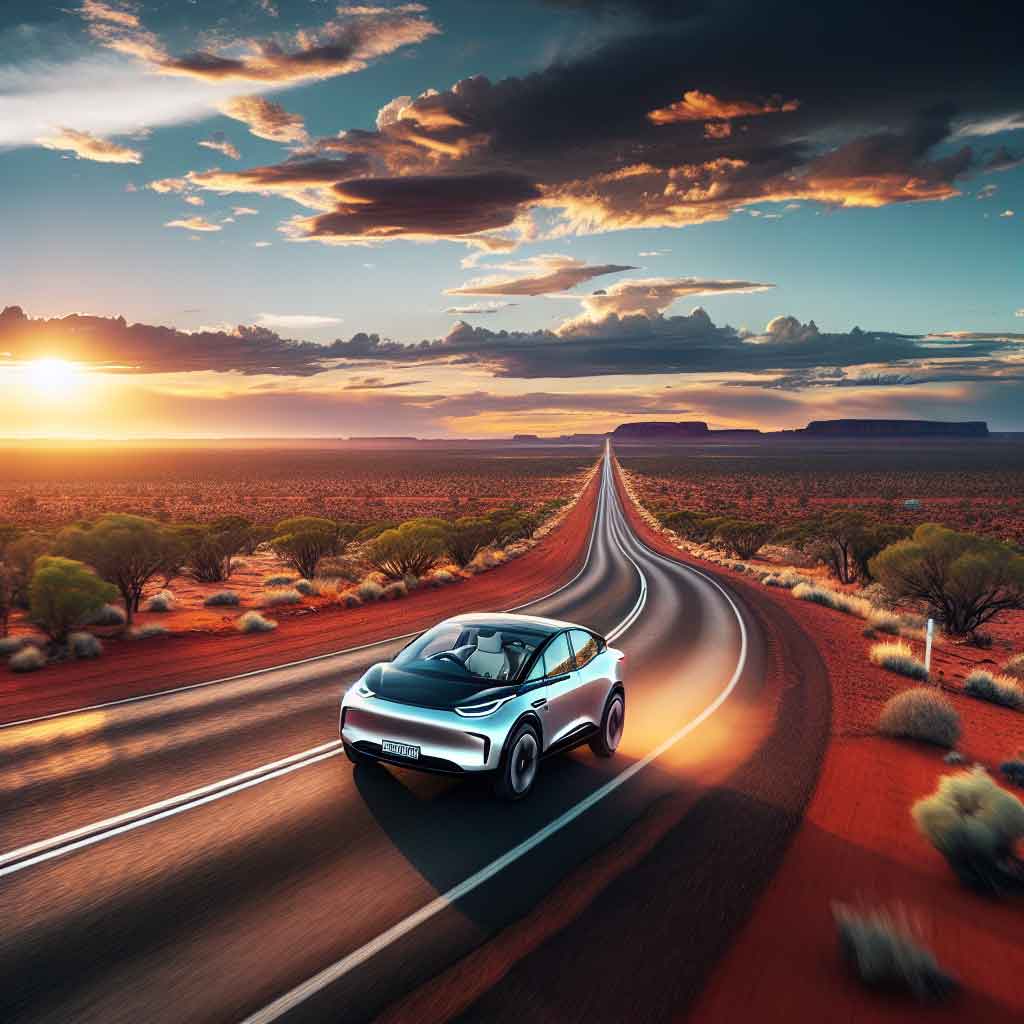


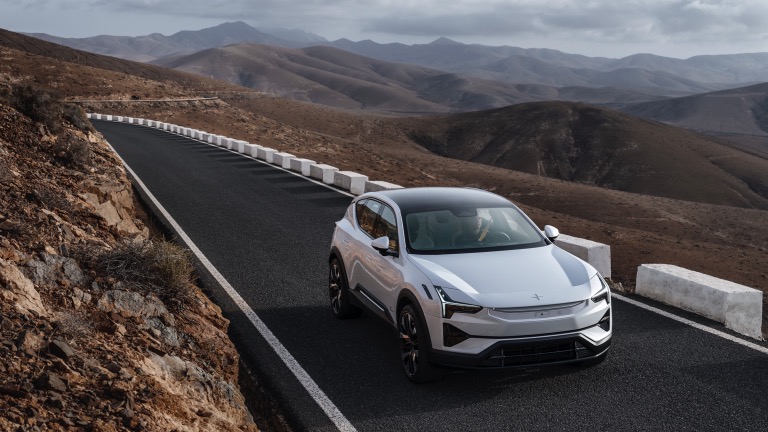
It is March 2026, and the great Australian road trip has undergone a high-fidelity transformation. The hum of the diesel engine is increasingly being replaced by the silent whir of electric motors on our nation’s most iconic transit arteries. But while the brochures promise a seamless transition, the “boots on the ground” reality for Aussie drivers on the M1 and A1 corridors is a nuanced mix of ultra-fast convenience and occasional logistical “headaches.”
At EV evolution, we’ve been monitoring the telemetry of Australia’s charging rollout. We’ve moved past the pioneering days of “hoping for the best” and into an era of massive infrastructure investment. However, as EV adoption in Australia hits new peaks in 2026, the question remains: Can our charging corridors actually keep up with the stampede?
We’ve dissected the latest network data and scoured the community hubs to bring you the definitive EV charging Australia 2026 reality check.
The Backbone of the East Coast: M1 & A1 Overview
The M1 (linking Sydney to Brisbane and Melbourne) and the A1 (the Bruce Highway in QLD and beyond) are the lifeblood of Australian tourism and commerce. In 2026, these routes are the best-serviced corridors in the country. The “Charging Desert” that once existed between regional hubs has largely been filled by co-funded projects from the NSW and Queensland governments, alongside private giants like Evie, Chargefox, and AmpCharge.
However, the “State of the Network” varies wildly depending on your specific machine. If you’re piloting a car with 800V architecture—like the Hyundai Ioniq 5 or Kia EV6—you are looking for the “Holy Grail” of fast chargers M1 offers: the 350kW to 400kW ultra-rapid units.
For those planning their first coastal run, we recommend starting with our EV Charging Time Calculator. Knowing whether your “pit stop” is 15 minutes or 50 minutes is the difference between a relaxing coffee and a frustrated wait in a highway roadhouse.
Fast Chargers M1: The 400kW Revolution
2026 has been the year of the “Ultra-Rapid.” We’ve seen the opening of massive charging hubs, such as the Ampol Eastern Creek facility, which features twin German-made 400kW fast chargers. These units are capable of delivering enough juice for a 300km “splash and dash” in roughly the time it takes to order a sandwich.
According to recent industry news, several 2026 models like the Volvo EX60 and the Zeekr 7X are now capable of accepting speeds upwards of 370kW. But as many Aussie drivers have noted on r/AustralianEV, actually hitting those speeds requires the “perfect storm” of battery temperature and charger availability.
“Charged my 7X at the 350kW chargers at the Viva Energy hub in Geelong yesterday. Max speed was 280kW… I figure to actually reach 400kW+ will require a 600kW+ charger.” — m276_de30la, Reddit.
Reality Check: The “Queue and Etiquette” Era
The biggest challenge for EV charging Australia 2026 isn’t a lack of plugs—it’s the volume of cars and the etiquette of the drivers. As EV sales bounce back to 12% of the total market, popular stops like Coffs Harbour, Port Macquarie, and Goulburn are seeing significant queues during school holidays.
The “80% Rule” has become a flashpoint in the community. Since DC fast charging speeds drop significantly once a battery hits 80%, “campers” who stay plugged in to hit 100% are causing friction at busy hubs.
“I travelled down the east coast… at locations where there was only one fast charger I had to wait an extra 45 mins for people to charge from 80-96%. With my small battery it takes 12 minutes to get to 80%… the stops took 4 times longer than they needed to.” — viper233, Reddit.
Another Reddit user recounted a nightmare run from Brisbane to Hervey Bay in a Tesla Model 3. While the drive is only ~300km, a combination of busy chargers and detours added nearly 2.5 hours to their journey compared to a petrol car. You can read the full “reality check” thread here on r/AustralianEV.
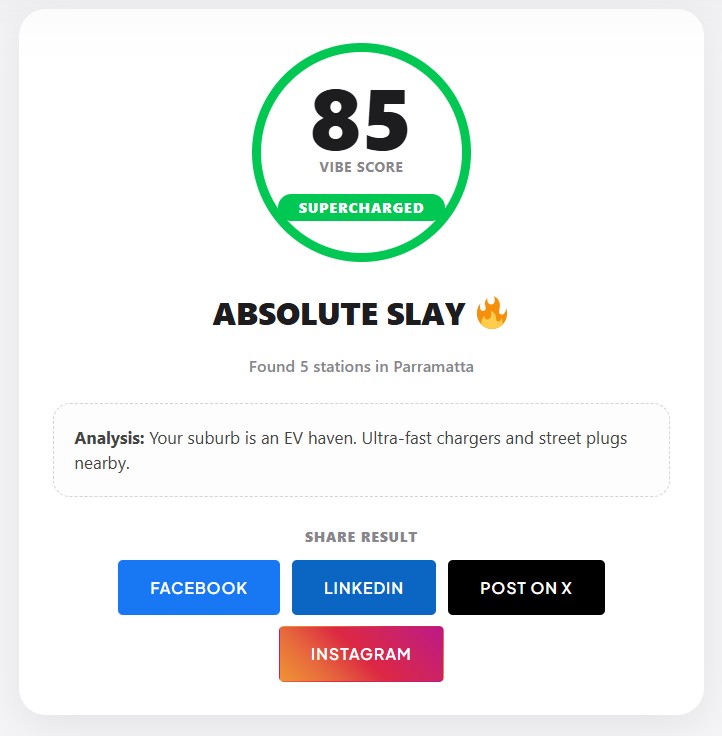
To avoid these “Charge Rage” scenarios, use The EV Vibe Check. Our community-driven map lets you see which chargers are currently “vibe-checked” for reliability and, more importantly, which ones have enough stalls to avoid a holiday queue.
Range Anxiety Australia: A Ghost of the Past or a Regional Reality?
For inner-city dwellers, range anxiety Australia is effectively a memory. With most 2026 models offering a real-world range of 400km+, the “daily grind” is solved. However, the moment you point your nose inland or away from the M1/A1, the “anxiety” returns with a vengeance.
While the “East Coast Highway” is well-serviced, once you go a few hundred kilometres inland (think Western QLD or Central NSW), the infrastructure hasn’t scaled with adoption.
“Range anxiety is bullshit… unless you drive long trips. Driving from Sydney to Hunter in my EV was a headache… there are few chargers in the Hunter.” — Phofighter12, Reddit.
At EV evolution, we advise regional travellers to treat their battery like a “half-full” tank. If you see a charger, use it. To calculate the financial benefit of these stops versus the cost of petrol, check our EV Fuel Savings Calculator. Even with the occasional public charging fee, the savings on a 1,000km road trip are still massive.
Strategies for the 2026 Road Tripper
To survive the M1 and A1 in 2026, you need more than just a car; you need a strategy. At EV evolution, we’ve refined the “Pro-Driver” workflow:
- The “Splash and Dash”: Don’t wait until you’re at 5%. Stop when you’re at 30% at an ultra-rapid charger, grab 15 minutes of juice, and keep moving.
- Diversify Your Apps: Don’t rely on just one network. Have Chargefox, Evie, AmpCharge, and Tesla apps ready to go.
- Check the Cost: Public charging prices have seen some volatility in 2026. Use our EV Charge Cost tool to see if that “convenient” charger is actually a rip-off compared to the one 10km down the road.
- The Tesla Hack: If your car has a NACS or CCS2 port, many Tesla Superchargers are now open to all brands. They are often the most reliable “Plan B” on the coast.
🤖 Start the Conversation with the AI Agent
Are you planning a trip from Melbourne to Sydney and worried about the “Holbrook bottleneck”? Or perhaps you’re wondering if the new 400kW chargers will actually work with your 2022-model EV?
Don’t leave your holiday to guesswork—start a conversation with our EV evolution AI Agent. Our AI is updated daily with the latest charger “Out-of-Order” reports, Reddit sentiment, and 2026 infrastructure maps. You can ask:
- “What is the best route from Brisbane to Sydney using only 350kW+ chargers?”
- “Are there any new fast chargers M1 planned for the NSW Central Coast in late 2026?”
- “Which EV charging Australia 2026 networks currently offer the best subscription discounts for road trippers?”
- “How do I avoid the range anxiety when heading into the Blue Mountains with a full load?”
The Verdict: A Network in Transition
The State of the Network in 2026 is one of “Resolved Progress.” The hardware is better than ever, the speeds are breathtaking, and the East Coast is finally “unlocked.” However, the human element—queuing, etiquette, and regional gaps—remains the final frontier.
For the modern Aussie driver, the transition is no longer about “will I make it?” but “how can I make it better?” By using the data-driven tools at EV evolution, you can ensure your next road trip is defined by the destination, not the plug.
About EV Evolution
EV evolution is Australia’s AI-powered hub for the modern driver. Through our signature EV Strategy Suite—including the EV Vibe Check and our real-time AI Agent—we provide the transparent, fact-based data you need to navigate the electric transition with total confidence. Our mission is to empower every Aussie to trade the petrol pump for a plug with zero guesswork and high-fidelity precision.