


We recently broke down the “Driveway Math”—how charging your car at home on an off-peak tariff, or utilizing the “[Aussie Solar Sync]” makes your daily commute practically free. We’ve also proved that whether you are living in an apartment, navigating the Great Ocean Road, or driving to the snow, range anxiety is a thing of the past.
But inevitably, when you tell your mates at the pub about your massive novated lease savings, someone will lean over their beer and say: “Yeah, but wait until you have to spend $25,000 replacing the battery in five years. That’ll wipe out your petrol savings.”
It is the ultimate EV myth that simply refuses to die.
At EV Evolution, we base our advice on 2026 data, not outdated fears from 2012. Today, we are breaking down the truth about the EV battery replacement cost Australia, why modern batteries are outliving the cars themselves, and how understanding LFP battery degradation will put your mind entirely at ease.
📱 The “Smartphone Myth” vs. Thermal Management
The fear of degradation stems from our smartphones. After two years, your iPhone battery struggles to hold a charge. So, logically, a giant car battery should do exactly the same thing, right?
Wrong. The earliest electric cars (like the original 2011 Nissan Leaf) lacked “active thermal management.” They didn’t have liquid cooling systems to protect the battery pack from the harsh Australian heat. Because they effectively “cooked” themselves during hot summers and fast-charging sessions, they experienced rapid and permanent degradation.
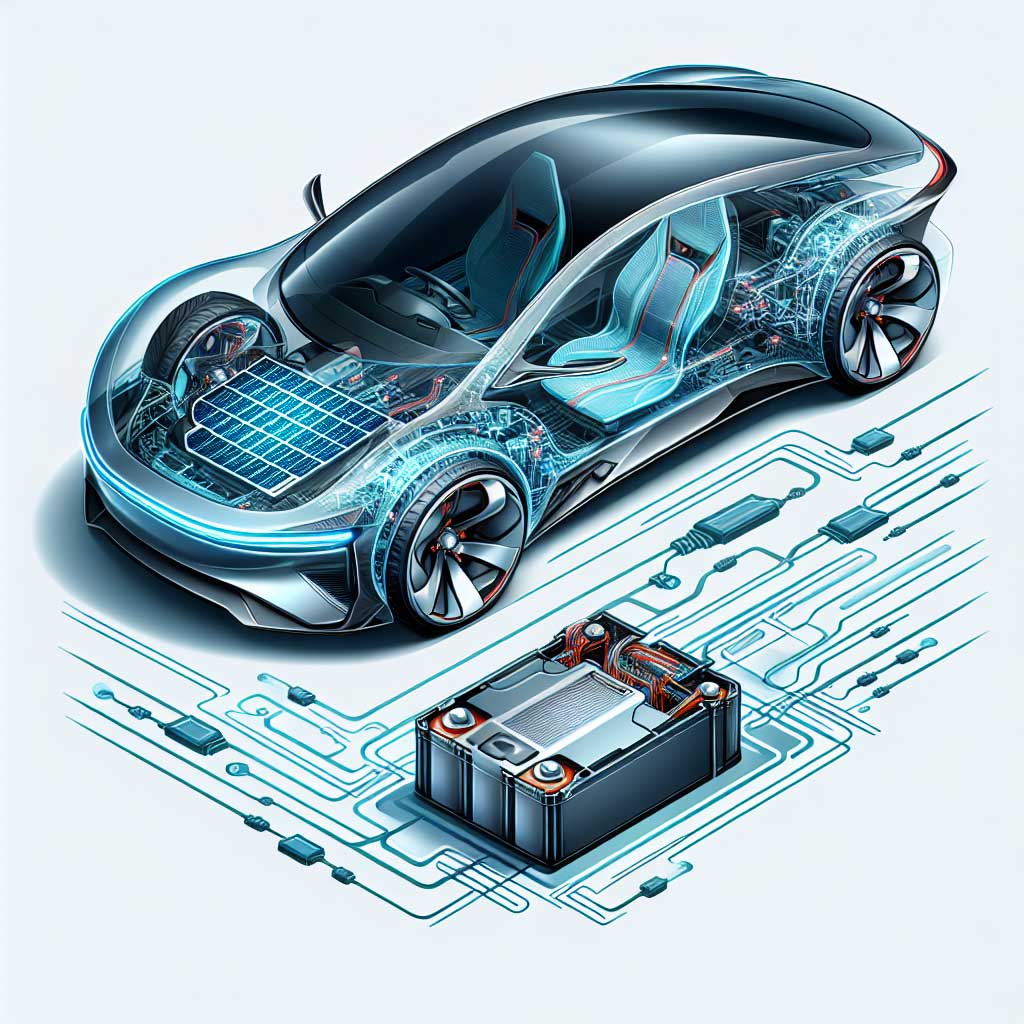
Modern EVs (from your BYD Atto 3 to the Tesla Model Y) feature incredibly advanced, liquid-cooled Battery Management Systems (BMS). They actively heat and cool the individual cells to ensure they remain at the perfect temperature, drastically extending their lifespan.
🔋 LFP vs. NMC: The 2026 Game Changer
The real secret to modern battery longevity is the chemistry itself. While some high-performance models use NMC (Nickel Manganese Cobalt) batteries, the mass market has overwhelmingly shifted to LFP (Lithium Iron Phosphate).
LFP battery degradation is remarkably slow. These batteries are incredibly robust, don’t use controversial cobalt, and actually prefer to be charged to 100% regularly to balance the cells.
More importantly, LFP batteries are rated for roughly 4,000 to 6,000 full charge cycles. If your EV gets 400km per charge, 4,000 cycles equates to 1.6 million kilometres of driving. The chassis of the car, the suspension, and the seats will physically disintegrate long before the battery ever dies.
🗣️ What the Aussie EV Community is Actually Saying
If you look past the media scare campaigns and check out the highly active Australian Reddit communities, the reality of Tesla battery life expectancy and general EV longevity becomes very clear.
When the topic of the EV battery replacement cost Australia comes up on r/AustralianEV regarding old Nissan Leafs, users are quick to point out that massive $20,000 replacement quotes almost exclusively apply to out-of-warranty, decade-old cars with no cooling systems. As one user noted:
“I’d be cautious about buying a Nissan Leaf with a battery swap in mind. They are cheap for a reason. You’re looking at $10-20k for a battery swap which is honestly not worth it. It’s dead money… Now you can buy a first gen MG ZS EV for $15K and a range of 200Km and a DC charge socket that actually exists in the wild.”
In a discussion on r/electricvehicles regarding modern LFP batteries, the math was firmly established by actual EV owners:
“LFP is good for 4000-6000 charges, literally a million miles… Even if after 1000 cycle the battery only holds 80%, it still has 200 miles of range if the original range is 250 miles.”
And when discussing real-world Tesla battery life expectancy over on r/TeslaModel3, the consensus confirms that degradation slows down massively after the first year:
“The standard degradation applies: 5-10% in the first 2 years (total), 1% in the following years… Degradation is 90% age dependent. The remaining 10% is caused by abuse.”+1
🛡️ The Ultimate Safety Net: The Battery Warranty
Even if you are a total cynic, the manufacturers are putting their money where their mouth is.
Almost every new EV sold in Australia in 2026 comes with an iron-clad electric car battery warranty of at least 8 years or 160,000km. This warranty guarantees that the battery will retain at least 70% of its original capacity. If it drops below that, the manufacturer replaces it for free.
If you are packaging your EV through a 3-to-5-year novated lease, the battery is completely covered for the entire duration of your ownership. You simply enjoy the FBT tax savings and hand the car back (or upgrade to a newer model) before the warranty even gets close to expiring!
🤖 The Tech Matchmaker: Find Your Perfect Battery
You don’t need to be a battery chemist to choose the right car, you just need the right advice.
Confused by battery jargon? Drop your daily driving habits into the chat below, and our AI will tell you if you need an LFP or NMC battery for your next lease.