


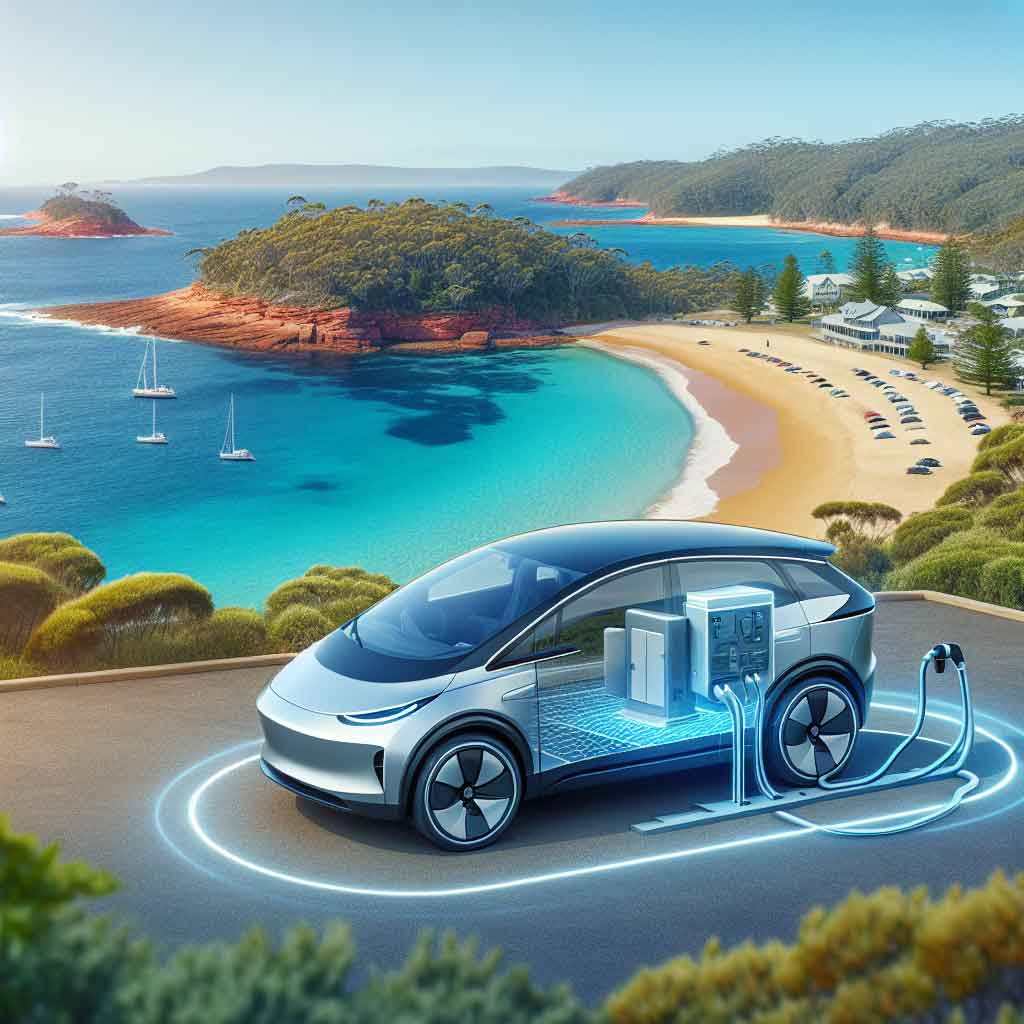
It is March 2026, and the great Australian energy landscape is undergoing a high-fidelity revolution. For years, we viewed our electric vehicles purely as transport—a cleaner way to get from A to B. But today, the “big battery on wheels” in your driveway is no longer just a car; it’s a sophisticated energy asset capable of keeping your lights on when the grid goes dark and slashing your power bills when the sun goes down.
At EV evolution, we’ve moved past the “trial phase.” Vehicle to Home (V2H) is officially here, and for the savvy Aussie homeowner, it represents the ultimate “Resolved” energy strategy. Why spend $15,000 on a dedicated 13.5kWh home wall battery when your BYD Atto 3 or Kia EV9 is sitting right there with 60kWh to 100kWh of untapped potential?
We’ve spent the week analyzing the latest 2026 bidirectional hardware, consulting with VPP (Virtual Power Plant) experts, and diving into the Reddit community to see how real-world drivers are turning their cars into home power stations.
EV Fuel Savings Calculator: The Economics of V2H in 2026
The financial case for Vehicle to Home Australia has become a “no-brainer” for those with rooftop solar. In 2026, feed-in tariffs have continued their downward trend, meaning the most profitable thing you can do with your solar energy is keep it on-site.
By using V2H, you “soak up” excess solar during the day into your EV battery and then discharge it to power your home during the expensive 5 PM to 9 PM peak.
- Daily Savings: Average households are seeing a reduction in daily grid imports of up to 70%.
- Annual Potential: Between $1,200 and $2,500 in avoided energy costs, depending on your state’s tariff structure.
When you add these energy savings to your EV Fuel Savings Calculator results, the “payback period” of an EV compared to an ICE (Internal Combustion Engine) car drops dramatically. You aren’t just saving on petrol; you’re effectively “erasing” your home electricity bill.
EV Charge Cost: V2H Compatible Cars 2026
To play the V2H game, you need the right hardware. Not every EV on the road is “bidirectional-ready.” For 2026, the list of V2H compatible cars 2026 has expanded significantly as manufacturers update their software and warranties to support home discharge.
| Brand / Model | Bidirectional Mode | Battery Capacity |
| Kia EV9 (GT-Line) | V2H / V2G / V2L | 99.8 kWh |
| Nissan Leaf (e+) | V2H / V2G (CHAdeMO) | 39 / 59 kWh |
| Mitsubishi Outlander PHEV | V2H / V2G (CHAdeMO) | 20 kWh |
| Cupra Born | V2H / V2G (CCS2) | 77 kWh |
| Volkswagen ID.4 / ID.5 | V2H (DC) | 77 kWh |
| Polestar 3 / Volvo EX90 | V2H / V2G (ISO 15118-20) | 111 kWh |
Note: While many models like the BYD Sealion 7 and Hyundai Ioniq 6 support V2L (Vehicle-to-Load), full V2H integration often requires a specific DC bidirectional wallbox and manufacturer firmware approval.
To see how much it costs to “refill” these massive batteries so they can power your home all night, use our EV Charge Cost tool to calculate the cost per kWh on your specific plan.
EV Charging Time Calculator: The Hardware Reality Check
The biggest hurdle for V2H in Australia remains the charger. A standard 7kW “dumb” wallbox cannot send power back into your home. You need a bidirectional charger that complies with the updated AS/NZS 4777.2:2020 Amd 2:2024 standards.
In early 2026, the market has finally matured with several “Resolved” options:
- Wallbox Quasar 2: The “Starship” of bidirectional chargers. It supports CCS2 and can provide up to 11.5kW of discharge—enough to run a whole house, including the AC.
- Sigenergy SigenStor: A hybrid system that integrates solar, home battery, and EV charging into one ecosystem.
- RedEarth Boomerang: An Australian-made solution retailing for roughly $9,990 plus GST, specifically tuned for our local grid conditions.
Use our EV Charging Time Calculator to understand the “flow” of energy. If you discharge 20kWh into your home overnight, you need to know how long it will take to “replenish” that energy the next morning via your solar panels before your commute.
Real-World Review: What Aussie Redditors are Saying
At EV evolution, we value the “no-filter” truth. We’ve been monitoring the r/AustralianEV and r/AusElectricians threads to see how drivers are finding the V2H lifestyle.
“I’ve been part of the AGL trial with my EV9. It’s a game changer during blackouts. We had a storm last month that took out the local substation for 6 hours—the car just picked up the load seamlessly. The kids didn’t even notice the TV turned off.” — VoltageViking, Reddit.
“The cost of the bidirectional charger is still the sticking point. $10k for a wallbox is a lot, but when you consider it replaces a $15k Tesla Powerwall and gives you 4x the capacity, the math eventually wins.” — SolarDad_NSW, Reddit.
The Pros:
- Massive Capacity: A typical EV home battery (60-80kWh) can power an average Australian home for 3–4 days during an emergency.
- Grid Resilience: By discharging during peak times, you’re helping to stabilise the local grid and preventing “brownouts” in your street.
- Future-Proofing: Cars with ISO 15118-20 support (like the new Volvo EX90) are ready for the next decade of energy tech.
The Cons:
- Degradation Fears: Some owners still worry about “cycling” their car battery too much. However, studies show that V2H discharge rates (typically 5-7kW) are so low compared to driving (50kW+) that the impact on battery health is negligible.
- Installation Complexity: You need a specialized electrician to install the grid-isolation switch. This isn’t a DIY job.
🤖 Start the Conversation with the AI Agent
Are you still torn between buying a Tesla Powerwall 3 or waiting for the Wallbox Quasar 2 to hit your local dealer? Or maybe you want to know if the 2026 BYD Shark 6 really supports full home backup?
Don’t leave your $10k energy investment to guesswork—start a conversation with our EV evolution AI Agent. Our AI is updated daily with the latest 2026 charger certifications, manufacturer warranty updates, and Reddit sentiment. You can ask:
- “Which V2H compatible cars 2026 currently have the best warranty protection for bidirectional use?”
- “Compare the Sigenergy SigenStor vs the RedEarth Boomerang for an off-grid setup.”
- “How many days can a 77kWh Cupra Born battery power a standard 4-bedroom Aussie home?”
- “Explain the new AS4777.2 standards—does my current solar inverter need replacing?”
The Verdict: The Home Energy Game, Resolved
The 2026 V2H landscape is a high-fidelity evolution of the “Solar + Battery” dream. By leveraging the massive storage you already own—your car—you can turn a depreciating asset into a revenue-generating, blackout-busting powerhouse.
While the upfront cost of bidirectional chargers remains a hurdle, the sheer capacity and resilience offered by an EV home battery make it a formidable alternative to traditional stationary storage. It is a smart, data-driven move for any Australian looking to lead their own energy evolution.
About EV Evolution
EV evolution is Australia’s AI-powered hub for the modern driver. Through our signature EV Strategy Suite—including the EV Vibe Check and our real-time AI Agent—we provide the transparent, fact-based data you need to navigate the electric transition with total confidence. Our mission is to empower every Aussie to trade the petrol pump for a plug with zero guesswork and high-fidelity precision.